 Learn Arabic
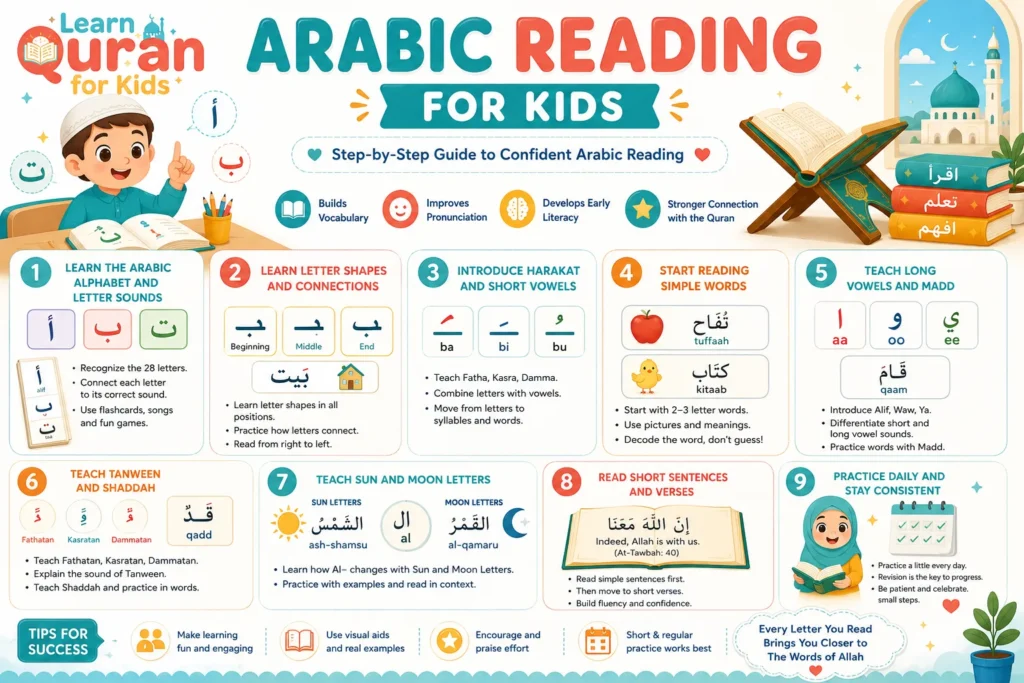
Learning to read Arabic is a crucial skill for children, enabling them to build vocabulary, develop pronunciation, and establish early literacy skills while fostering a deeper connection with the Arabic language. For Muslim children, learning to read Arabic also provides a crucial foundation for reading the Quran with confidence.
The best approach is gradual and age-appropriate. Children can begin with letters and sounds, then move to connected letters, short vowels, words, and simple sentences. With consistent practice, engaging activities, and patience, parents can help their children develop accurate and confident Arabic reading skills.
Learning to read Arabic is easiest when children progress through clear, manageable stages. Starting with the basic steps and gradually building new skills helps children develop accurate reading habits without feeling overwhelmed.
1- Learn the Arabic Alphabet and Letter Sounds
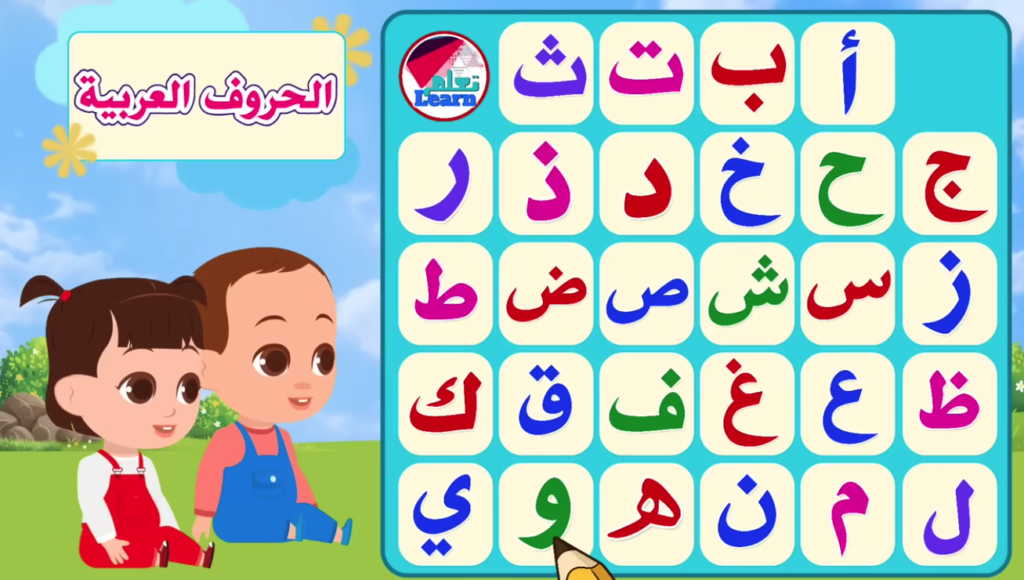
Begin by teaching children to recognize the 28 Arabic letters and connect each letter with its correct sound. Practice the letters in their isolated forms and help children distinguish between letters that look or sound similar.
Regular repetition through visual and interactive activities can strengthen recognition and pronunciation before moving on to connected letters and words.
For example, Learn – تعلّم YouTube Channel offers many videos presenting the correct pronunciation of the Arabic Alphabet.
Read also: Arabic Alphabet Learning for Kids
Read also: How To Learn Quranic Arabic For Kids?
2- Learn Arabic Letter Shapes And Connections
Once children recognize the Arabic letters, they need to learn how each letter changes shape when it appears alone, at the beginning, middle, or end of a word. They should also practice how letters connect and begin reading them within simple words.
At this stage, introduce right-to-left reading to help children develop correct Arabic reading habits.
Teaching the Arabic Alphabet app- تعليم الحروف العربية – أ ب ت can be used as a helpful interactive tool to reinforce these forms, show how letters connect, and practice reading them within simple words.
Read also: Best 10 Apps to Learn Arabic for Kids
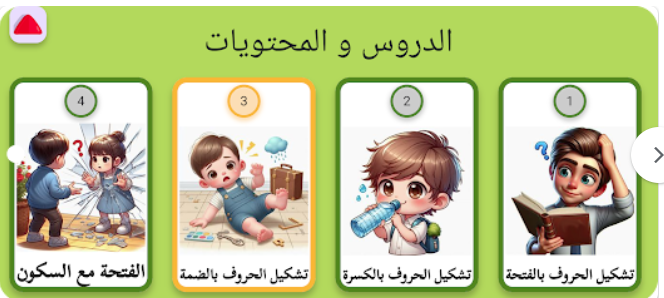
3- Introduce Harakat And Short Vowels
After learning the Arabic letters and their different forms, children can begin learning Harakat (short vowels). Start with Fatha, Kasra, and Damma, followed by Sukoon, and teach children how each vowel changes the sound of a letter.
Gradually, help them combine letters with vowels, moving from individual sounds to simple syllables and words through repetition and practice.
Letters and Learning to Read الحروف وتعلم القراءة App can be a good assistant and an interactive method to boost this step.
Read also: How to Teach a Child to Memorize the Alphabet?
4- Start Reading Simple Arabic Words
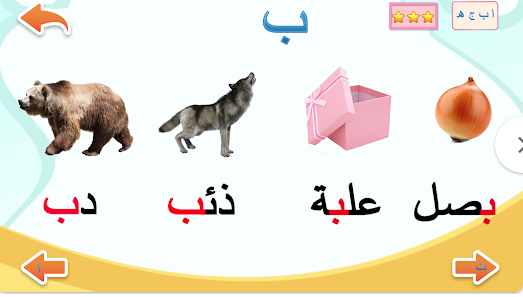
Once children understand letters and short vowels, they can begin reading simple Arabic words by combining letters and their sounds. Start with familiar two- and three-letter words, using pictures to connect each word with its meaning.
Encourage children to decode words sound by sound and repeat the practice regularly, rather than relying on guessing or memorizing whole words.
This YouTube Channel, Reading arabic for kids and beginners, can provide you with useful videos to aid your kid’s learning process.

5- Teach Long Vowels And Madd
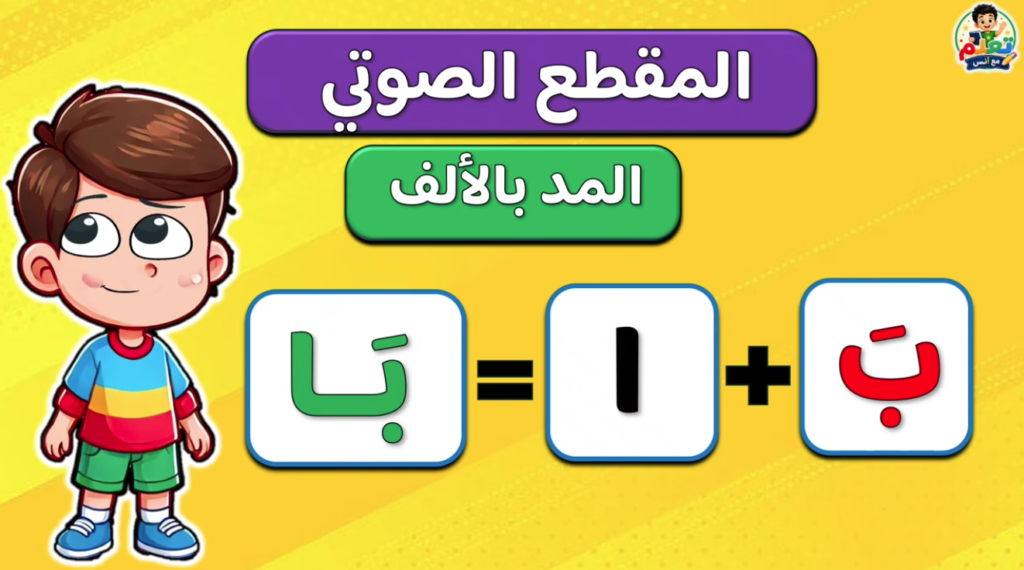
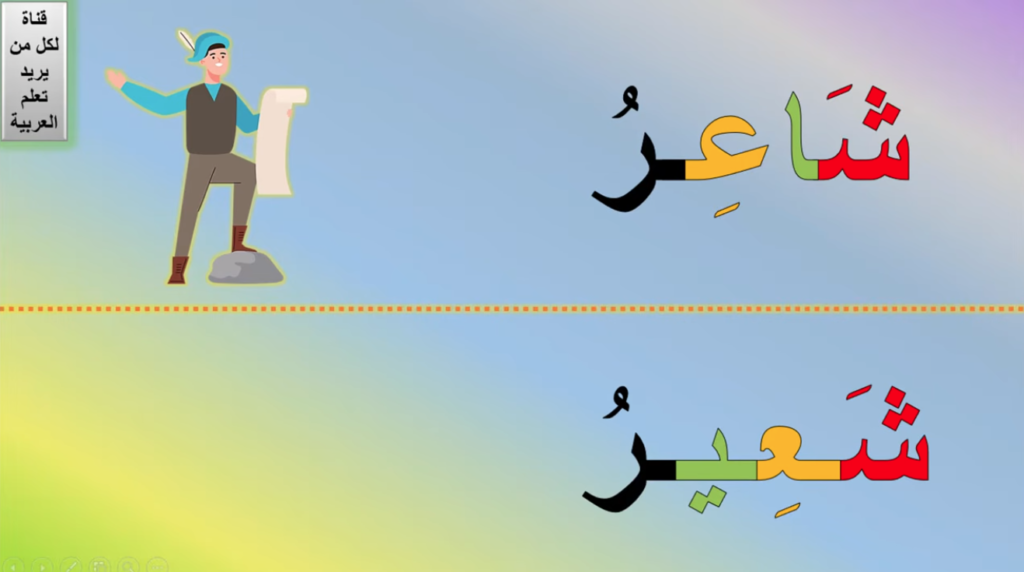
Once children can read simple words, introduce long vowels (Madd) using Alif, Waw, and Ya. Teach them to distinguish between short and long vowel sounds, then practice reading simple words that contain Madd. Gradual repetition helps children recognize and pronounce these longer sounds accurately.
Many YouTube channels, such as Learn with Anas and Learn Arabic لكل من يريد تعلم العربية, offer
videos to assist your kid in learning how to read words with Madd.
Read also: Who Is Allah for Kids?
See Our Classes in Action!
Wondering what a typical lesson looks like? Take a peek inside our virtual classrooms below to see how our patient teachers keep students smiling, engaged, and learning every step of the way.
6- Teach Tanween And Shaddah
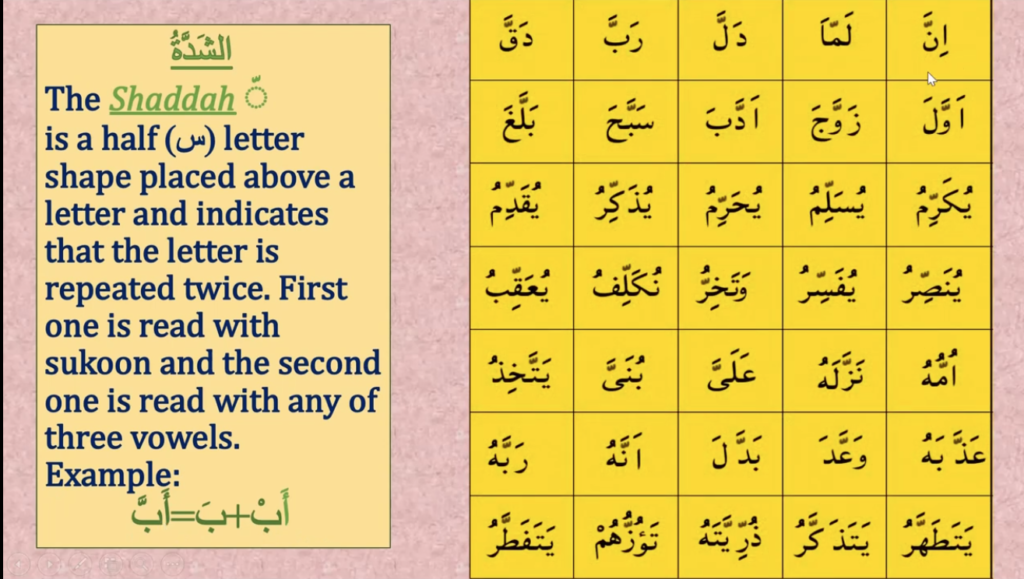
After mastering long vowels, children can learn Tanween and Shaddah to read more advanced Arabic word patterns. Introduce Fathatan, Kasratan, and Dammatan, explain the sound of Tanween, and teach children to recognize and pronounce Shaddah correctly. Practice these patterns in simple words through repetition until children can read them confidently.
You can find helpful videos on this YouTube channel.
Read also: How to Speak Arabic for Kids?
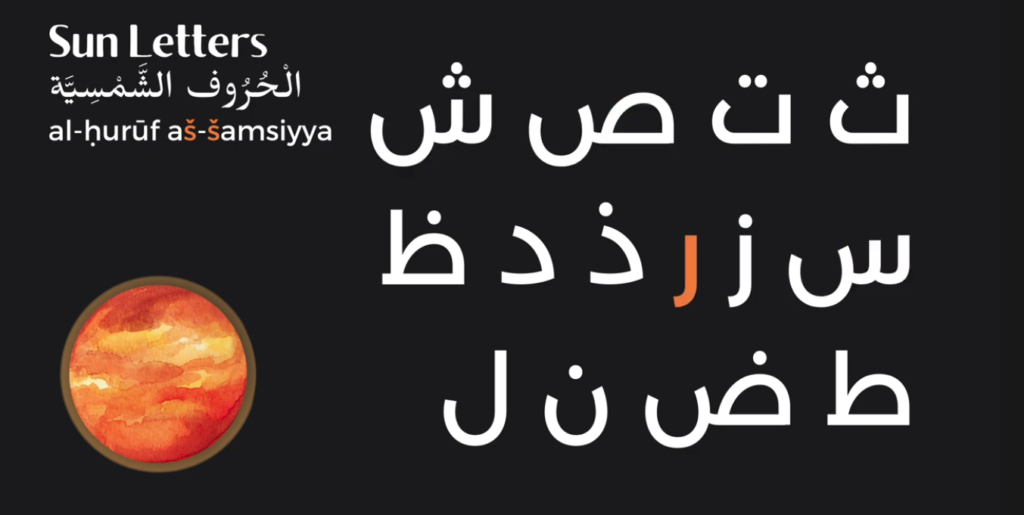
7- Teach Sun And Moon Letters
Teach children the difference between Sun Letters and Moon Letters when reading words with Al- ال. Help them understand how the pronunciation changes with each type, then practice familiar examples and read them in context.
Repeated practice will help children recognize these patterns naturally and pronounce words correctly.
Platforms such as kiddle and YouTube channels like Sundro can be helpful to your kid.
8- Move From Words To Sentences
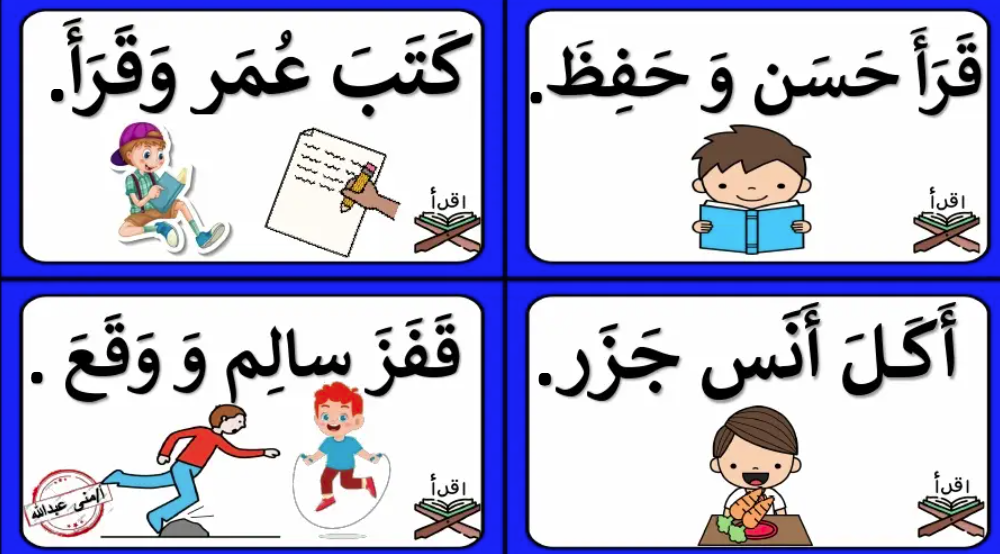
Once children can read individual words confidently, help them move to short, fully vowelled sentences and simple phrases. Encourage them to read aloud regularly to build fluency, while also asking simple questions to make sure they understand what they are reading, not just pronounce the words correctly.
Scribd platform can be helpful in this step.
Read also: Arabic Sentences for Kids
9- Introduce Short Arabic Stories
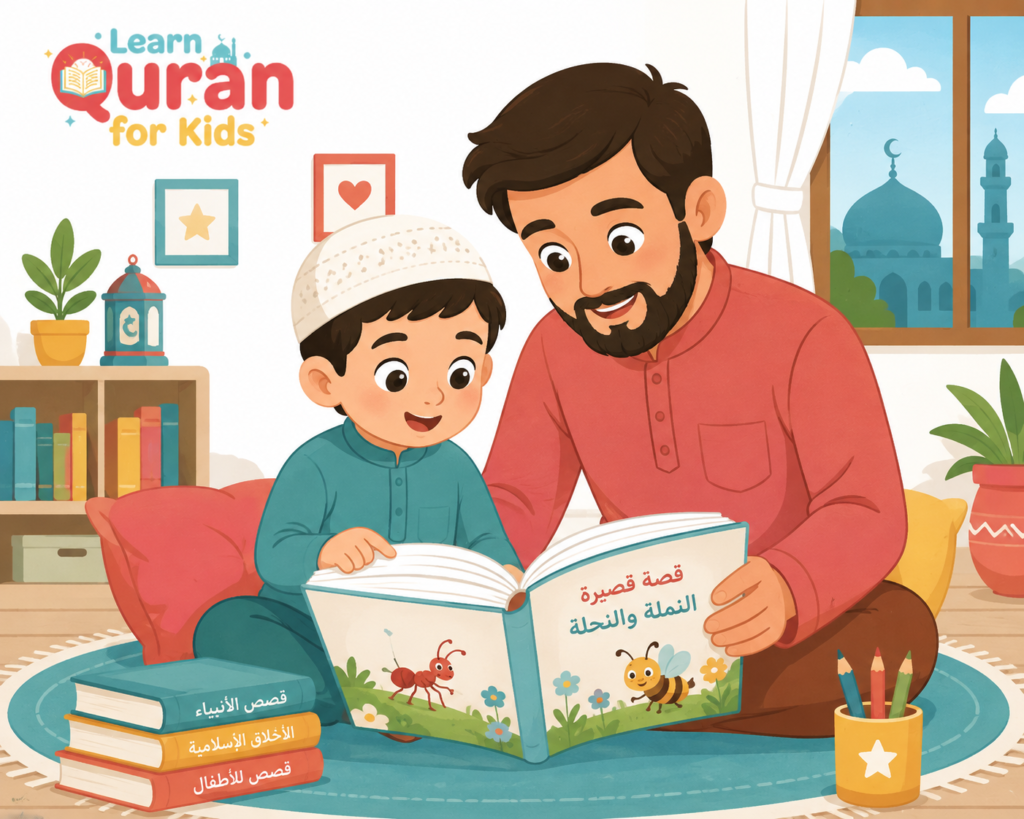
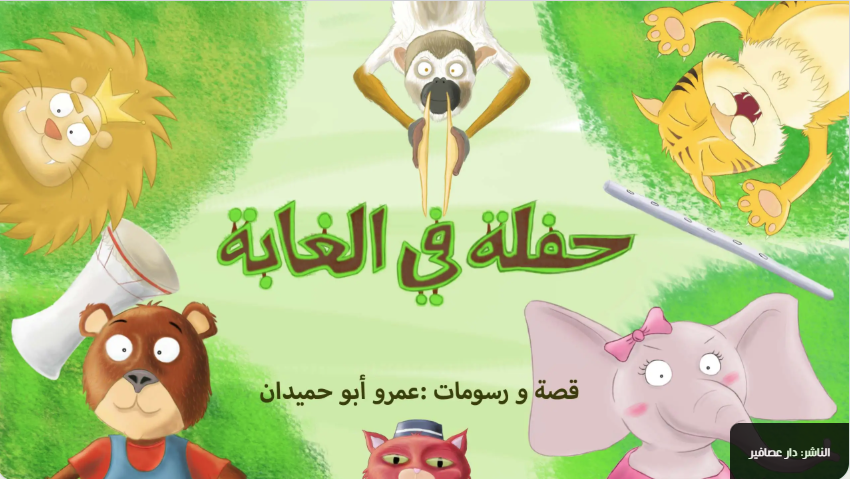
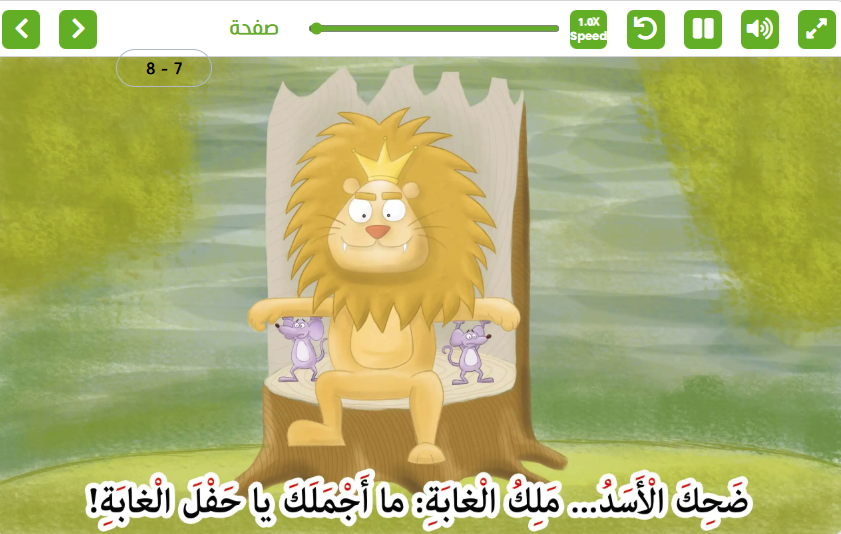
Once children can read simple sentences, introduce short, fully vowelled Arabic stories supported by pictures to make reading more engaging and easier to understand.
Encourage repeated reading to build fluency, ask simple comprehension questions about the story, and gradually introduce longer or more challenging texts as their reading skills improve.
3asafeer platform offers free short stories for kids that can be helpful and enjoyable for your kid.
Read also: Arabic Story for Kids
Read also: 10 Best Kids Islamic Poems
Fun Ways To Practice Arabic Reading For Kids
Making Arabic reading enjoyable helps children stay motivated and practice more consistently. Try simple, interactive activities that turn reading practice into a fun part of their daily routine.
1. Play The Arabic Alphabet Games
Arabic alphabet games can make letter recognition more engaging and memorable for kids. Use matching games, letter puzzles, or flashcards to help children identify letters and their sounds. Keep activities short and playful, with frequent repetition to reinforce learning.
Read also: Arabic Games for Kids
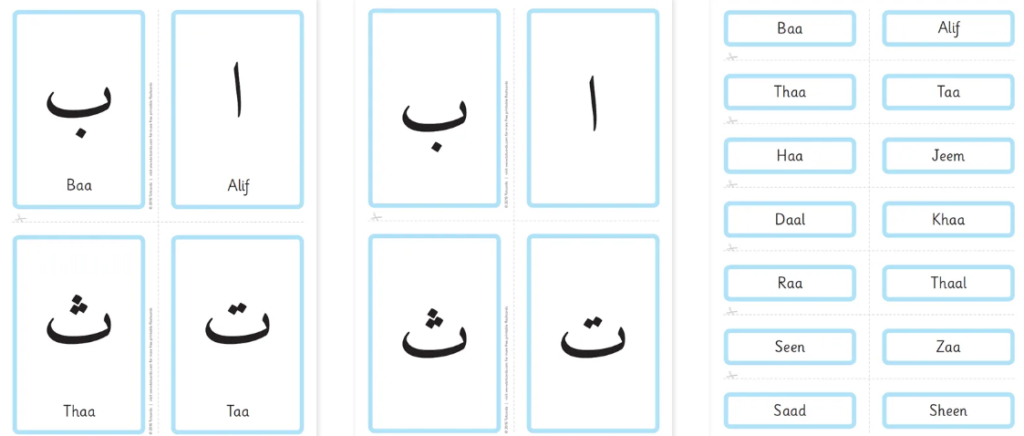
2. Learn With Letter And Word Flashcards
Letter and word flashcards provide a simple way to reinforce Arabic letter recognition and vocabulary. Use them to practice letter sounds, connected forms, and familiar words. Regular short sessions can help children build reading confidence and recall.
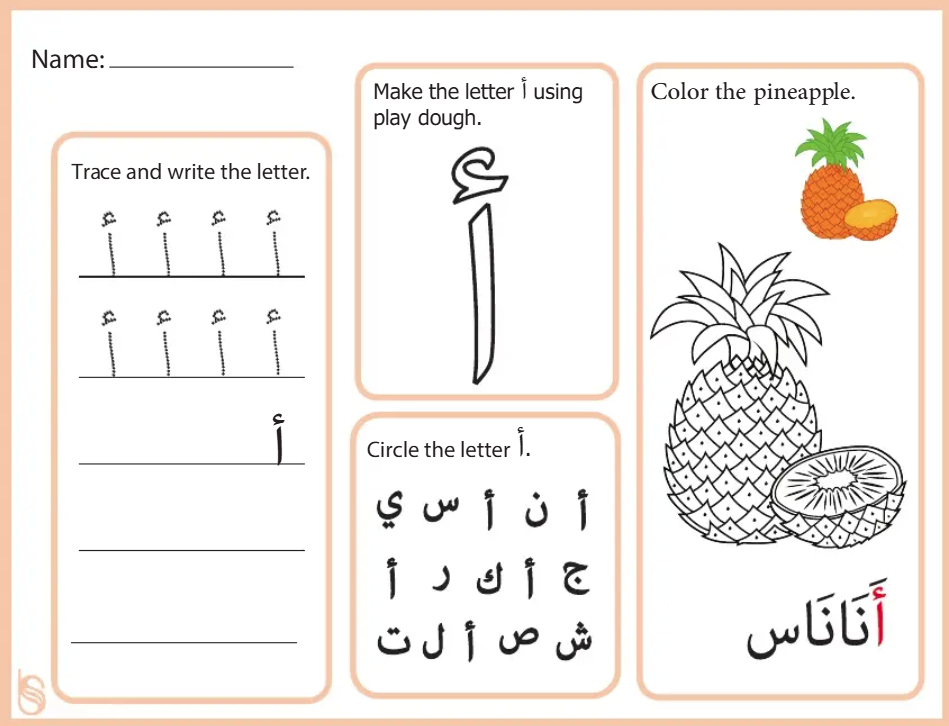
3. Practise Tracing And Writing Activities
Tracing and writing activities help children become more familiar with Arabic letter shapes and how they are formed. Encourage them to trace letters first, then write them independently in different positions. This also reinforces letter recognition and prepares them for reading connected words.
Read also: Islamic Worksheets for Kids
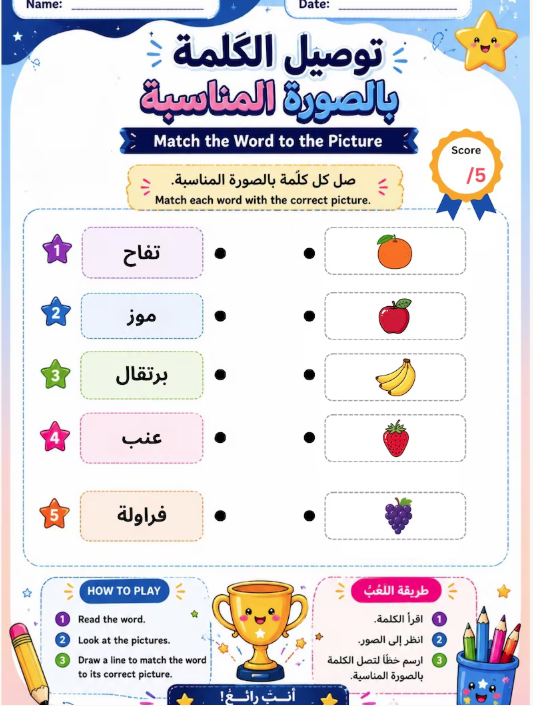
4. Picture-to-Word Matching
Picture-to-word matching helps children connect Arabic words with their meanings in a simple, visual way. Match familiar pictures with their corresponding words to reinforce vocabulary, recognition, and reading skills.
5. Reading Games And Challenges
Reading games and simple challenges can make Arabic practice more exciting and encourage children to participate actively. Use activities such as word races, reading challenges, or finding specific letters and words in a text. Keep the challenges age-appropriate and focused on progress rather than speed.
Read also: Arabic Books for Kids
6. Arabic Songs And Rhymes
Arabic songs and rhymes can make reading practice more enjoyable while helping children remember letters, sounds, and simple words. Choose age-appropriate songs with clear pronunciation and encourage children to repeat the words and sounds along with them.
7. Reading Children’s Stories Together
Reading children’s stories together makes Arabic practice more enjoyable while building fluency and comprehension. Take turns reading aloud, discuss the pictures and characters, and ask simple questions to help children understand and engage with the story.
8. Interactive Digital Activities
Interactive digital activities can make Arabic reading practice more engaging and hands-on for children. Use educational apps, interactive letter exercises, and digital reading games to reinforce letter recognition, sounds, word reading, and basic comprehension while keeping practice enjoyable.
Read also: Best Islamic 11 Games for Kids
How Parents Can Make Arabic Reading A Daily Habit
Make Arabic reading a consistent and enjoyable part of your child’s day by setting a short daily reading routine and reading aloud together. Let your child choose age-appropriate books, repeat favorite stories, and keep distractions to a minimum.
Focus on steady progress rather than speed, and encourage every small achievement to build confidence and motivation.
Read also: How to Speak Arabic for Kids?
How To Help A Child Who Struggles With Arabic Reading
If your child struggles with Arabic reading, first identify whether the difficulty is with letters, sounds, Harakat, or blending, then return to the last skill they mastered.
Use short, frequent practice sessions with visual and auditory activities, and avoid moving to words until the basic letter-sound foundations are secure. Above all, provide positive feedback, repetition, and enough time for your child to build confidence.
Common Mistakes Parents Make When Teaching Kids To Read Arabic
Parents can make Arabic reading more effective by avoiding a few common mistakes that may slow progress or discourage children. These include teaching letter names without their sounds, moving to words too quickly, introducing too many rules at once, relying on memorization instead of decoding, and overlooking connected letter forms.
It is also important to balance worksheets with interactive activities, correct mistakes positively rather than discouragingly, and maintain a consistent reading routine.
A Simple Daily Arabic Reading Routine For Kids
| Time | Activity | Goal |
| 5 min | Letter & Sound Review | Reinforce letter recognition and sounds |
| 5 min | Harakat & Decoding | Practice short vowels and blending |
| 5–10 min | Words & Sentences | Build reading accuracy and fluency |
| 5 min | Story or Fun Activity | Make reading enjoyable and engaging |
| Weekly | Review & Progress Check | Track improvement and identify areas for practice |
Experience the Magic Firsthand
Watch these short clips from our live classes to see our interactive teaching tools, vibrant student-teacher interactions, and the fun, stress-free ways we make learning easy for kids!
Start Your Child’s Quran Learning Journey Today!
Join Kids Learning Quran Academy and help your child read the Quran with confidence through fun and guided lessons.
Book a Free Trial ClassHelp Your Child Learn To Read Arabic With Confidence
Don’t let your child struggle with Arabic letters, sounds, and reading alone. Give them the right guidance from the start with Learn Quran for Kids. Our engaging, step-by-step lessons help children build strong Arabic reading skills while preparing them to read the Quran accurately and confidently.
Start your child’s Arabic reading journey today and give them a foundation that lasts. Enroll now with Learn Quran for Kids.
Our Courses Include:
- Tajweed for Kids
- Quran Memorization for Kids
- Quran Recitation Course for Kids
- Quran Classes for Toddlers
- Quran Tafseer for Kids
- Qaida for Kids
- Quran Reading Course for Kids
- Online Arabic Classes for Kids
- Quranic Arabic for Kids
- Islamic Studies Courses for Kids
- Islamic Studies for Kindergarten
- 5 Pillars of Islam for Kids
- Islamic Education for Kids
Start Your Child’s Quran Learning Journey Today!
Join Kids Learning Quran Academy and help your child read the Quran with confidence through fun and guided lessons.
Book a Free Trial ClassConclusion
Teaching Arabic reading for kids is most effective when children progress step by step, from recognizing letters and sounds to reading words, sentences, and simple stories. With consistent, enjoyable practice and age-appropriate activities, children can gradually build accuracy, fluency, and confidence.
Every child learns at a different pace, so patience and positive encouragement are essential. By focusing on steady progress rather than speed, parents can help their children move from basic decoding to confident, independent Arabic reading.
Frequently Asked Questions
How Can I Teach My Child To Read Arabic At Home?
Start with the Arabic alphabet and letter sounds, then gradually teach connected letters, Harakat, words, and simple sentences. Keep lessons short and engaging with games, flashcards, stories, and regular reading practice.
What Is The Best Age To Learn Arabic Reading?
There is no single best age, but children can be introduced to Arabic from an early age through listening, songs, books, and simple activities. Formal reading instruction can begin when they are developmentally ready, often around 4–6 years old.
How Long Does It Take For A Child To Learn To Read Arabic?
The time varies depending on the child’s age, prior Arabic exposure, and practice consistency. With regular, structured practice, many children can develop basic Arabic reading skills within a few months, while fluency takes longer.
What Should Kids Learn First When Learning To Read Arabic?
Kids should first learn to recognize the Arabic letters and their sounds, including how letters look in isolation. Once this foundation is secure, they can move on to connected letters, Harakat, and simple words.
Should Children Learn Arabic Letters Or Sounds First?
Children should learn Arabic letters and their sounds together. First, help them recognize each letter and associate it with its correct sound, then practice combining letters and sounds to begin decoding simple words.
What Are Harakat In Arabic Reading?
Harakat are Arabic vowel marks that show children how letters should be pronounced. The main Harakat are Fatha, Kasra, Damma, and Sukoon, which help children read letters correctly and combine them into sounds and words.
How Do You Teach Arabic Letter Connections To Kids?
Teach children how each Arabic letter changes shape when it appears at the beginning, middle, or end of a word. Use simple examples, visual exercises, and repeated practice to help them recognize connected forms and read them from right to left.
How Can I Help My Child Read Arabic Words?
Help your child read Arabic words by practicing letter sounds, Harakat, and connected letters before moving to simple two- and three-letter words. Encourage sound-by-sound decoding, use pictures for meaning, and repeat familiar words regularly to build accuracy and confidence.
Is Arabic Reading Difficult For Kids?
Arabic reading may seem challenging at first because of its unique letters, connected forms, and vowel marks. However, with a gradual approach, regular practice, and age-appropriate activities, most children can develop their reading skills confidently.
What Is The Best Way To Teach Arabic Reading To Non-Arabic-Speaking Children?
The best approach is to teach Arabic gradually, starting with letters and sounds, then connected forms, Harakat, simple words, and sentences. Use visual activities, repetition, stories, and short daily practice to make learning clear and enjoyable for non-Arabic-speaking children.
Can Learning Arabic Reading Help My Child Read The Quran?
Yes. Learning Arabic reading gives children an important foundation for reading the Quran by developing letter recognition, pronunciation, Harakat, and decoding skills. However, children should also learn Quran-specific skills such as Tajweed and correct recitation as they progress.
What Is The Difference Between Learning Arabic And Learning To Read Arabic?
Learning Arabic involves developing broader skills such as speaking, listening, vocabulary, grammar, and reading comprehension. Learning to read Arabic focuses specifically on recognizing letters, sounds, Harakat, connected forms, and decoding written words.
Related Articles
Learn Arabic