 Learn Islam
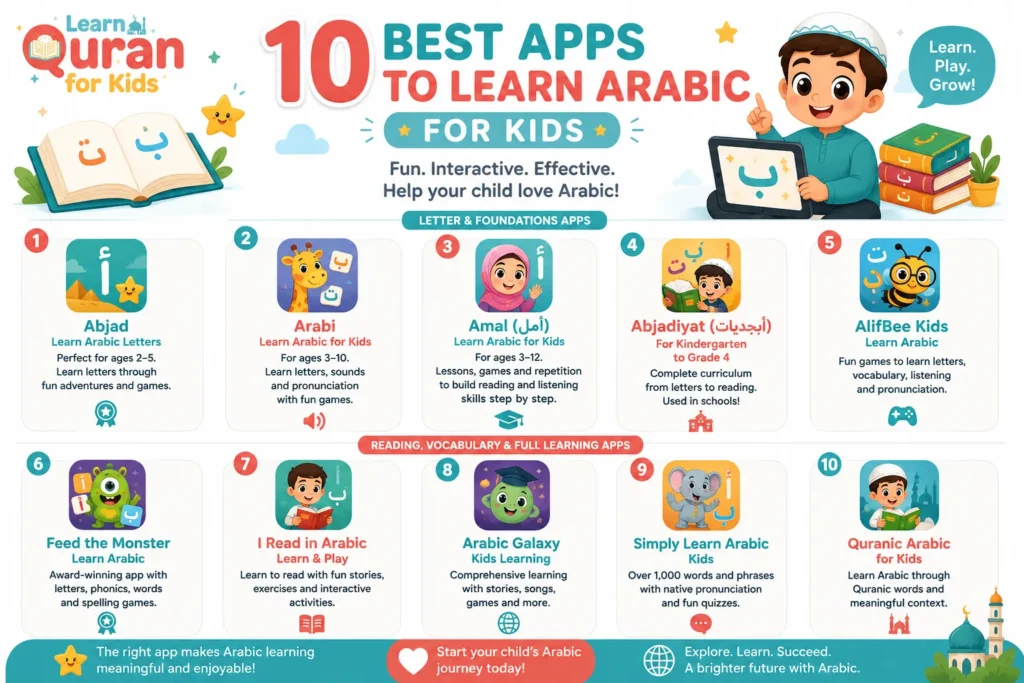
Most parents searching for an Arabic learning app hit the same wall: the app store shows dozens of colorful icons promising to teach kids Arabic, but almost none tell you what your child will actually be able to do after using it. The best app to learn Arabic for kids depends on your child’s age, their starting point, and whether you need reading, listening, speaking, or writing skills built first.
This guide breaks down the real options — free and paid, alphabet-focused and full-curriculum — based on what each app actually teaches, not just its store description.
1. Abjad — Learn Arabic Letters
Abjad App is a letter-recognition app designed for children aged 2–5. It structures the alphabet as a guided adventure through four themed worlds — desert, oasis, sea, and mountains — where children collect stickers and coins for completing letter-tracing and recognition tasks.
The strength here is pacing: sessions stay short and reward-driven, which suits a preschooler’s attention span. The limitation is scope — it stops at letter recognition and does not extend into words, sentences, or reading fluency, so most children outgrow it by age 5 or 6.
2. Arabi — Learn Arabic for Kids
Arabi – Learn Arabic for Kids App covers a wider age band, 3–10, and layers in letter sounds and pronunciation alongside recognition through interactive games. It uses colorful visuals and audio cues so a child hears the correct sound every time they select a letter, not just its name.
Because it spans a wider age range than Abjad, Arabi can carry a child a bit further — into basic recognition-and-sound pairing — but like most alphabet apps, it does not build toward connected reading or writing practice on its own.
Read also: Arabic Books for Kids
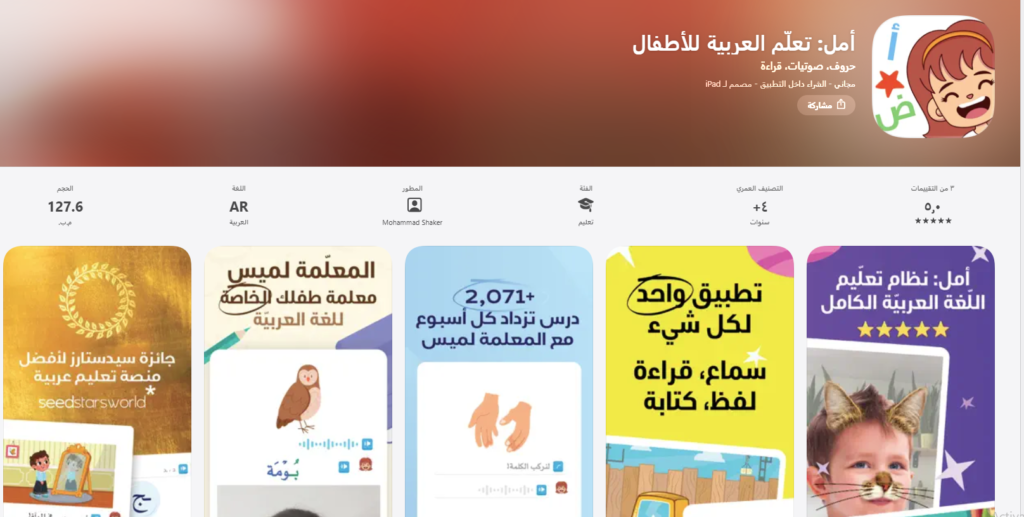
3. (Amal) أمل — Learn Arabic for Kids
Amal Learn Arabic for Kids App targets ages 3–12 and works even when neither parent speaks Arabic at home, which makes it a genuine option for diaspora families. It offers a free trial (duration varies by plan, shown clearly before checkout) and structures learning around letter shapes with guided pronunciation, basic reading vocabulary, listening practice, and spaced repetition to lock in retention.
Amal’s free “Starter” tier gives a limited set of lessons and basic drills to test the app before committing; the paid subscription unlocks the full curriculum, progress tracking, and family profiles. This tiered structure is worth noting as a common mistake parents make: assuming the free tier represents the full teaching sequence, then finding their child has plateaued at exactly the point the curriculum requires payment.
Read also: Seasons in Arabic for Kids
Read also: Best 12 Islamic Apps for Kids
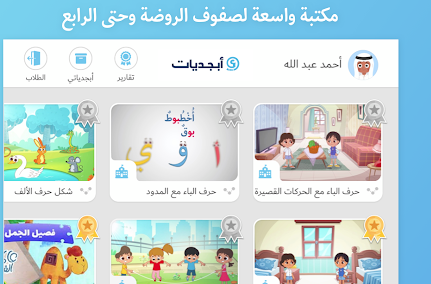
4. Abjadiyat أبجديات — Kindergarten Through Grade 4
Abjadiyat App is built by academic specialists — a team of educators, illustrators, engineers, and linguists — specifically for kindergarten through fourth-grade Arabic instruction. It holds a 4.4 rating across 2.35 thousand reviews and over 500,000 downloads, and is used directly by schools as a classroom tool, not only by individual families.
What sets it apart from the alphabet-only apps is scope: it functions as a structured digital library spanning multiple grade levels, so a child can progress from first letters through early reading comprehension inside one continuous curriculum instead of switching apps as they grow.
See Our Classes in Action!
Wondering what a typical lesson looks like? Take a peek inside our virtual classrooms below to see how our patient teachers keep students smiling, engaged, and learning every step of the way.
Start Your Child’s Quran Learning Journey Today!
Join Kids Learning Quran Academy and help your child read the Quran with confidence through fun and guided lessons.
Book a Free Trial Class5. AlifBee Kids Learn Arabic
AlifBee Kids App makes learning Arabic fun and engaging through interactive games and child-friendly activities. It helps children recognize Arabic letters and sounds, build basic vocabulary, improve listening and pronunciation, and develop early reading skills while learning at their own pace in an enjoyable environment.
Read also: Colors in Arabic for Kids – with Examples
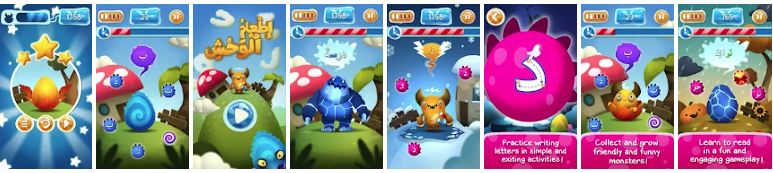
6. Feed the Monster — Learn Arabic
Feed the Monster is an award-winning literacy app built specifically to prepare children for Arabic reading and writing at an early age. It combines letter games, syllable puzzles, memory and vocabulary games, reading and writing drills, and phonemic awareness challenges inside one app.
Practical details matter here: it supports multiple user profiles with individual progress tracking, generates a parent progress report, requires no internet connection, and contains no ads — a combination that’s genuinely rare among free kids’ apps.
Read also: Best Islamic 11 Games for Kids
7. I Read in Arabic أقرأُ بالعربية
I Read in Arabic app helps young learners develop strong Arabic reading skills step by step. It introduces Arabic letters and sounds, gradually builds word-recognition and pronunciation skills, and provides reading practice suited to different learning levels, helping children become more accurate, fluent, and confident Arabic readers.
8. Read Along
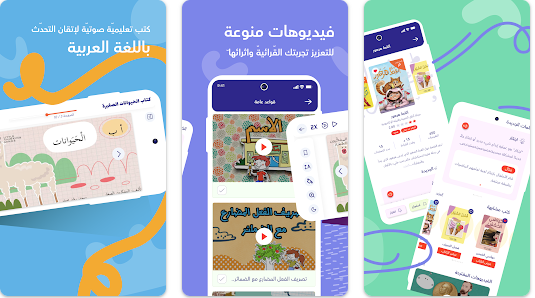
Read Along App helps children strengthen their Arabic reading skills through interactive stories and real-time reading feedback. The app listens as children read aloud, offers support when they struggle, and rewards correct reading, helping them improve pronunciation, fluency, word recognition, and confidence while making regular Arabic reading practice enjoyable.
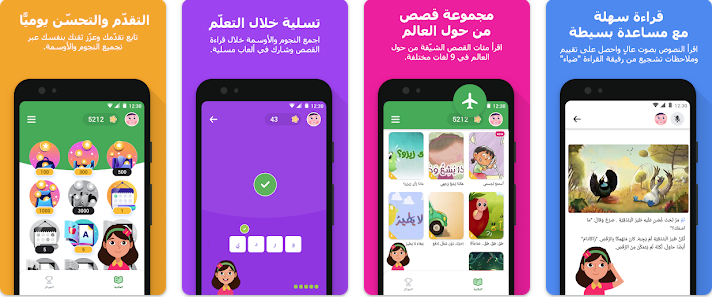
9. Lamsa Kids App
The Lamsa Kids App helps children strengthen their Arabic listening skills through engaging audio stories, educational songs, narrated videos, and interactive activities. By listening to clear Arabic and connecting sounds with words and images, children can improve their listening comprehension, recognize new vocabulary, distinguish sounds, and develop better focus in a safe, ad-free learning environment.
Read also: Islamic Animation for Kids
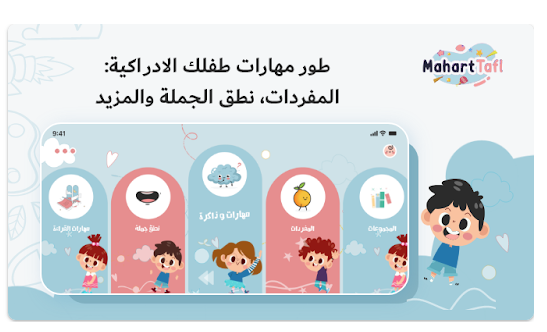
10. Maharat Tifl App
The Maharat Tifl App helps children improve their Arabic speaking skills through interactive activities focused on vocabulary, pronunciation, and sentence formation. By practicing words and everyday expressions, children can develop clearer pronunciation, expand their vocabulary, and gain confidence in expressing themselves in Arabic.
Read also: Seerah for Kids – The Complete Guide to Teaching Prophet Muhammad’s Life
What Makes an Arabic Learning App Actually Work for Kids
An effective Arabic learning app for kids sequences letter recognition, sound, and writing in that order, matched to the child’s age and attention span. Apps that skip this sequence — jumping straight to words or sentences — tend to produce children who can guess at letters but not sound them out independently.
This matters because Arabic letters change shape depending on their position in a word (isolated, beginning, middle, end). An app that only teaches the isolated form leaves a gap that shows up the moment a child tries to read a real word or a page of the Quran.
Read also: The Benefits of Reading Quran for Kids
Age Ranges Matter More Than App Ratings
A 4.4-star rating tells you nothing about whether an app suits a 3-year-old or an 8-year-old. Apps built for ages 2–5 rely on tracing, big touch targets, and short sessions of 5–10 minutes.
Apps built for ages 6–10 introduce joined letters, short words, and light gamified quizzes. Treat the stated age range as a filter before you look at anything else — a beautifully designed app aimed at teenagers will frustrate a preschooler, and vice versa.
Free Tier vs. Full Curriculum
Several popular apps use a “free forever” model with a small starter pack, then move core lessons behind a subscription. Others offer a free trial window — commonly 3 to 12 days — with pricing shown before checkout, and any discount applied automatically at purchase or trial end.
Read the in-app subscription terms before your child gets attached to an app you haven’t decided to pay for; most auto-renewal subscriptions 24 hours before the renewal date unless cancelled first.
Learn Quran for Kids takes a different approach: rather than gamifying letters in isolation, our trained instructors connect every letter your child learns to the Quranic words they’ll eventually read — so the alphabet has a purpose from day one.
Read also: Arabic Reading for Kids
How to Choose the Right App for Your Child’s Age and Level
This section answers: a practical decision process for matching an app to where your child actually is, not just their birth year.
A Simple Decision Framework
Match the app to the skill gap, not the age label alone. Ask three questions in order:
- Can my child recognize and name Arabic letters independently?
If no, start with a pure alphabet app (Abjad, Arabi, or Amal’s Starter tier). - Can they sound out a joined word slowly but correctly?
If no, move to phonics-and-writing apps (Feed the Monster, or Amal’s full subscription). - Can they follow a short story with some independent reading?
If yes, storybook apps and Abjadiyat’s later modules become useful for reinforcement.
Skipping ahead of this sequence is the single most common mistake we see — a child dropped into a full-curriculum app before mastering letter forms tends to guess at words based on shape rather than actually decoding them, a habit that’s hard to unlearn later.
Where Apps Reach Their Limit
Apps are excellent at repetition, gamified motivation, and letter drilling — tasks that reward consistency more than nuance. What no app currently does well is real-time correction of a child’s live pronunciation the way a trained ear can, catching a swapped makhraj (articulation point) the instant it happens rather than after a pattern has set in.
This is precisely where Learn Quran for Kids fits alongside — not instead of — a good alphabet app. Our certified instructors work with your child in live one-on-one sessions, catching pronunciation errors in real time and connecting every Arabic letter and word your child learns directly to the Quran they’re working toward, so the alphabet isn’t an abstract exercise — it has a destination.
See Our Classes in Action!
Wondering what a typical lesson looks like? Take a peek inside our virtual classrooms below to see how our patient teachers keep students smiling, engaged, and learning every step of the way.
Start Your Child’s Quran Learning Journey Today!
Join Kids Learning Quran Academy and help your child read the Quran with confidence through fun and guided lessons.
Book a Free Trial ClassStart Your Child’s Arabic Journey with a Live Instructor Today
Apps can teach letter shapes. They can’t yet replace a trained instructor who hears your child stumble on a sound and corrects it before it becomes a habit.
Book a free trial class with Learn Quran for Kids and give your child structured, live Arabic instruction that builds directly toward Quranic reading — taught by qualified instructors who specialize in teaching non-Arabic-speaking children.
Our Courses Include:
- Tajweed for Kids
- Quran Memorization for Kids
- Quran Recitation Course for Kids
- Quran Classes for Toddlers
- Quran Tafseer for Kids
- Qaida for Kids
- Quran Reading Course for Kids
- Online Arabic Classes for Kids
- Quranic Arabic for Kids
- Islamic Studies Courses for Kids
- Islamic Studies for Kindergarten
- 5 Pillars of Islam for Kids
- Islamic Education for Kids
Start Your Child’s Quran Learning Journey Today!
Join Kids Learning Quran Academy and help your child read the Quran with confidence through fun and guided lessons.
Book a Free Trial ClassRead also: Explaining Religion to a Child – The Complete Islamic Parent’s Guide
Conclusion
The best app to learn Arabic for kids isn’t a single winner — it depends on whether your child needs letter recognition (Abjad, Arabi), a full academic curriculum (Abjadiyat), free supplementary practice, or literacy-building games (Feed the Monster). Diaspora families with no Arabic at home tend to do best starting with Amal or Arabi before layering in a storybook app.
What apps consistently cannot do is correct a child’s pronunciation in real time or connect the alphabet to a meaningful goal like Quranic reading. Combining a well-matched app for daily practice with a live instructor for weekly correction gives most children the fastest, most durable progress — and avoids the common mistake of a child plateauing on an app because no one caught an early mistake.
Frequently Asked Questions
What Is The Best App To Learn Arabic For Kids?
There’s no single best app for every child — Amal and Arabi work well for ages 3–10 needing alphabet basics, while Abjadiyat suits kindergarten through Grade 4 students needing a full curriculum. Match the app to your child’s current skill level using the three-question framework above rather than picking by star rating alone.
What Is The Best App To Learn Arabic Alphabet For Kids?
Abjad is the strongest dedicated alphabet app for ages 2–5, using a guided adventure map to teach letter recognition and tracing. For a slightly wider age range with sound pairing included, Arabi (ages 3–10) is a solid alternative.
Are There Apps To Learn Arabic For Free?
Yes — Feed the Monster is free to progress through with no ads. Most other apps, including Amal and Abjadiyat, offer a free trial or limited free tier before requiring a subscription for the full curriculum.
What Is The Best App To Learn Arabic Grammar For Kids?
Abjadiyat is the strongest option for grammar-adjacent structure, since it’s built by academic specialists as a continuous curriculum through Grade 4 rather than a standalone alphabet drill. Most dedicated “alphabet” apps (Abjad, Arabi) do not cover grammar at all — grammar instruction is better suited to structured lessons with a live instructor once basic reading is established.
Can An App Fully Replace A Live Arabic Tutor For Kids?
No single app currently offers real-time pronunciation correction the way a live instructor does. Apps excel at repetition and motivation, but catching a mispronounced letter as it happens — before it becomes a habit — still requires a trained ear, which is why most families get the best results combining an app with live instruction.
Related Articles
Learn Islam