 Learn Arabic
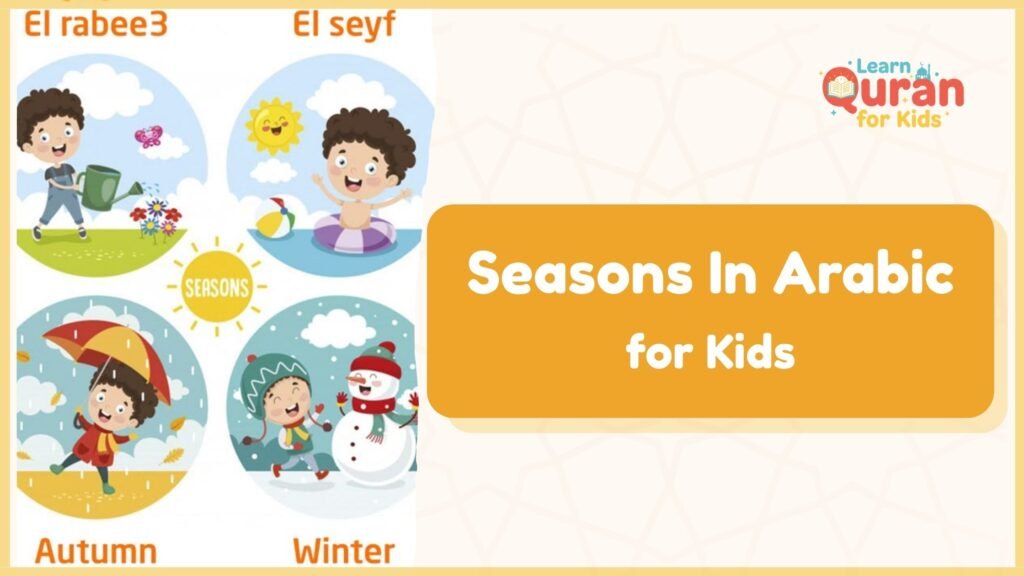
Learning Arabic vocabulary becomes much easier when children connect new words to things they already see in daily life. Seasons are a perfect topic because kids can talk about the sun, rain, flowers, cold weather, summer holidays, winter clothes, and outdoor activities. This guide to seasons in arabic for kids introduces the four seasons in a simple, friendly way, with Arabic words, pronunciation, English meanings, example sentences, weather vocabulary, and practice activities.
The Arabic language has clear words for the four seasons: spring, summer, autumn, and winter. These words are used in everyday conversations about weather, school, travel, clothes, family trips, and favorite times of the year. Learning them early helps children build useful Arabic vocabulary step by step. The four main season words are الربيع, الصيف, الخريف, and الشتاء, and they are commonly taught with pronunciation and simple examples for beginners.
What Are the Four Seasons in Arabic?
The four seasons are called الفصول الأربعة in Arabic, which means “the four seasons.” The singular word for “season” is فصل, and the plural word is فصول. Children can start by learning one word at a time, then connect each season to weather, colors, clothes, and activities.
| English | Arabic | Transliteration | Simple Meaning |
| Spring | الربيع | ar-rabīʿ / Ar-Rabee’ | The season of flowers |
| Summer | الصيف | aṣ-ṣayf / As-Sayf | The hot season |
| Autumn / Fall | الخريف | al-kharīf / Al-Khareef | The season of falling leaves |
| Winter | الشتاء | ash-shitāʾ / Ash-Shita’ | The cold or rainy season |
For children, it is better not to teach these words as a dry list only. Instead, each season should be linked to a picture, a movement, a sound, or an activity. For example, when saying الربيع, children can pretend to smell flowers. When saying الصيف, they can pretend to swim. When saying الخريف, they can move their hands like falling leaves. When saying الشتاء, they can pretend to wear a warm coat.
Why Learning seasons in arabic for kids Matters?
Season vocabulary is useful because children hear and use weather words almost every day. They may talk about whether it is hot, cold, sunny, rainy, windy, or cloudy. When they learn the Arabic names of the seasons, they also start building simple sentences naturally.
Learning seasons also helps children understand Arabic stories, songs, classroom activities, and cultural conversations. In Arabic-speaking countries, people often talk about the weather, travel plans, school breaks, family visits, and outdoor activities using seasonal vocabulary. Weather words such as حارّ for hot, بارد for cold, مشمس for sunny, and مُمطر or ماطر for rainy are closely connected to the seasons.
For young learners, this topic can support:
- Basic Arabic vocabulary
- Speaking confidence
- Listening practice
- Memory through repetition
- Weather and nature awareness
- Simple sentence building
The goal is not only memorization. The goal is helping children use the words in real situations, such as saying, “It is hot in summer,” or “Flowers grow in spring.”
Spring in Arabic: الربيع
Spring in Arabic is الربيع. It is pronounced ar-rabīʿ or Ar-Rabee’. Spring is often connected with flowers, green trees, fresh weather, and outdoor walks.
A simple sentence children can learn is:
في الربيع تتفتح الزهور.
Fi ar-rabīʿ tatafattaḥ az-zuhūr.
In spring, flowers bloom.
Children can remember الربيع by thinking of flowers, gardens, butterflies, and green leaves. A teacher or parent can show a picture of a flower and repeat the word slowly: الربيع، الربيع، الربيع.
Easy Spring Words for Kids
Spring is a great season for adding nature vocabulary. Children do not need to memorize everything at once, but they can learn a few simple words.
| English | Arabic | Transliteration |
| Flower | زهرة | zahrah |
| Tree | شجرة | shajarah |
| Garden | حديقة | ḥadīqah |
| Green | أخضر | akhḍar |
| Butterfly | فراشة | farāshah |
A simple activity is to ask children to point to something green and say أخضر. Then they can draw a flower and write زهرة next to it. This makes the word more memorable because the child sees, says, and uses it.
Shots Videos from Our Courses
Start Your Child’s Quran Learning Journey Today!
Join Kids Learning Quran Academy and help your child read the Quran with confidence through fun and guided lessons.
Book a Free Trial ClassSummer in Arabic: الصيف
Summer in Arabic is الصيف. It is pronounced aṣ-ṣayf or As-Sayf. Summer is usually linked with hot weather, sun, swimming, cold drinks, holidays, and light clothes.
A useful sentence for children is:
الجو حار في الصيف.
Al-jawwu ḥārrun fi aṣ-ṣayf.
The weather is hot in summer.
Another simple sentence is:
أحب السباحة في الصيف.
Uḥibbu as-sibāḥah fi aṣ-ṣayf.
I like swimming in summer.
Summer is one of the easiest seasons for children to understand because they can connect it with heat, sunshine, and fun activities. In many Arab countries, summer can be very hot, especially in Gulf countries, so the word حارّ is important when teaching الصيف.
Easy Summer Words for Kids
Summer words should be practical and visual. Children can learn them through pictures, toys, or classroom flashcards.
| English | Arabic | Transliteration |
| Sun | شمس | shams |
| Hot | حارّ | ḥārr |
| Water | ماء | māʾ |
| Swimming | سباحة | sibāḥah |
| Ice cream | آيس كريم | ice cream / āys krīm |
Autumn in Arabic: الخريف
Autumn, or fall, in Arabic is الخريف. It is pronounced al-kharīf or Al-Khareef. This season is often connected with falling leaves, cooler weather, wind, brown and orange colors, and a calm atmosphere.
A simple sentence is:
تسقط أوراق الشجر في الخريف.
Tasquṭu awrāq ash-shajar fi al-kharīf.
The leaves of the trees fall in autumn.
Autumn is a useful season for teaching children colors and nature words. They can learn words like أوراق for leaves, ريح for wind, and غائم for cloudy.
Easy Autumn Words for Kids
Autumn vocabulary helps children describe what they see outside.
| English | Arabic | Transliteration |
| Leaves | أوراق | awrāq |
| Wind | ريح | rīḥ / reeh |
| Cloudy | غائم | ghāʾim |
| Brown | بني | bunni |
| Orange | برتقالي | burtuqālī |
A fun classroom activity is to give children paper leaves and ask them to drop them while saying الخريف. They can repeat the sentence:
الأوراق تسقط.
Al-awrāq tasquṭ.
The leaves fall.
This kind of movement-based learning is especially helpful for young children because it turns vocabulary into action.
Help Your Child Learn Arabic Beyond the Seasons
Learning the seasons in Arabic is a great first step, but children make stronger progress when they continue learning Arabic in a structured way. At Kids Learning Quran Academy, our Online Arabic Classes for Kids help young learners read, write, and speak Arabic with confidence through engaging, age-appropriate lessons. Children learn the Arabic alphabet, Harakat, word formation, simple grammar, and basic conversation while also building a deeper connection with the language of the Quran.
Through supportive teachers and child-friendly methods, kids move from simple vocabulary like seasons, weather, and daily words to reading Arabic text and understanding Quranic vocabulary step by step.
Start your child’s Arabic learning journey with Kids Learning Quran Academy’s Online Arabic Classes for Kids.
Winter in Arabic: الشتاء
Winter in Arabic is الشتاء. It is pronounced ash-shitāʾ or Ash-Shita’. Winter is connected with cold weather, rain, warm clothes, clouds, and sometimes snow in mountainous areas.
A simple sentence is:
الجو بارد في الشتاء.
Al-jawwu bāridun fi ash-shitāʾ.
The weather is cold in winter.
Another useful sentence is:
في الشتاء ينزل المطر.
Fi ash-shitāʾ yanzil al-maṭar.
In winter, the rain falls.
Children can remember الشتاء by thinking of jackets, blankets, rain, and warm drinks. In many Arabic-speaking regions, winter may be mild compared to very cold countries, but rain and cold weather are still commonly associated with the season.
Read also: The Benefits Of Reading Quran For Kids
Easy Winter Words for Kids
Winter vocabulary can be taught with clothes, weather cards, and real objects.
| English | Arabic | Transliteration |
| Cold | بارد | bārid |
| Rain | مطر | maṭar |
| Snow | ثلج | thalj |
| Coat | معطف | miʿṭaf |
| Cloud | غيمة | ghaymah |
Weather Words Children Should Learn With the Seasons
Weather vocabulary makes season learning more complete. Children should not only know the season names; they should also know how to describe each season. Words like hot, cold, sunny, rainy, windy, cloudy, and stormy are useful in daily Arabic conversation.
Here are simple weather words for young learners:
| English | Arabic | Transliteration |
| Weather | الطقس / الجو | al-ṭaqs / al-jaww |
| Hot | حارّ | ḥārr |
| Cold | بارد | bārid |
| Sunny | مشمس | mushmis |
| Rainy | ماطر / ممطر | māṭir / mumṭir |
| Cloudy | غائم | ghāʾim |
| Windy | عاصف | ʿāṣif |
| Rain | مطر | maṭar |
| Snow | ثلج | thalj |
| Storm | عاصفة | ʿāṣifah |
Children can use these words with a very simple structure:
الجو + weather word
Examples:
الجو حار.
Al-jawwu ḥārr.
The weather is hot.
الجو بارد.
Al-jawwu bārid.
The weather is cold.
الجو مشمس.
Al-jawwu mushmis.
The weather is sunny.
الجو ماطر.
Al-jawwu māṭir.
The weather is rainy.
This structure is easy and useful because children can change only one word and create many sentences.
Start Your Child’s Quran Learning Journey Today!
Join Kids Learning Quran Academy and help your child read the Quran with confidence through fun and guided lessons.
Book a Free Trial ClassSimple Arabic Sentences About the Seasons
Sentence practice helps children move from memorizing words to actually using Arabic. Start with short, predictable sentences, then repeat them often.
Here are child-friendly examples:
أنا أحب الربيع.
Ana uḥibbu ar-rabīʿ.
I love spring.
أنا أحب الصيف.
Ana uḥibbu aṣ-ṣayf.
I love summer.
أنا أحب الخريف.
Ana uḥibbu al-kharīf.
I love autumn.
أنا أحب الشتاء.
Ana uḥibbu ash-shitāʾ.
I love winter.
You can also teach children to say what happens in each season:
في الربيع تتفتح الزهور.
In spring, flowers bloom.
في الصيف نذهب إلى البحر.
In summer, we go to the sea.
في الخريف تسقط الأوراق.
In autumn, leaves fall.
في الشتاء نلبس المعاطف.
In winter, we wear coats.
These sentences are simple enough for beginners but still meaningful. They allow children to talk about real life, not just repeat isolated vocabulary.
Fun Activities for seasons in arabic for kids
Activities make Arabic learning more enjoyable and help children remember words through practice. The more children interact with the vocabulary, the easier it becomes to recall.
1. Season Matching Game
Prepare four cards with Arabic season names:
- الربيع
- الصيف
- الخريف
- الشتاء
Then prepare four picture cards:
- Flowers
- Sun
- Falling leaves
- Rain or snow
Ask the child to match the Arabic word with the correct picture.
2. Weather Sorting Activity
Give children weather cards such as:
- حارّ
- بارد
- مشمس
- ماطر
- غائم
- عاصف
Ask them to place each weather word under the season where it fits best. Some words can fit more than one season, which is a good chance to start a simple conversation.
3. Draw Your Favorite Season
Ask the child to draw their favorite season. Then help them write one sentence under the drawing.
Example:
أنا أحب الربيع.
I love spring.
Or:
أنا أحب الشتاء.
I love winter.
4. Act the Season
Say one season in Arabic and ask the child to act it out.
- الربيع: smell flowers
- الصيف: swim
- الخريف: falling leaves
- الشتاء: wear a coat
This is especially useful for young learners because physical movement strengthens memory.
Pronunciation Tips for Children
Arabic pronunciation can feel new for children, so it should be taught gently and slowly. The definite article ال appears at the beginning of many Arabic nouns, including the season names. Sometimes the sound changes slightly because of Arabic pronunciation rules.
For example:
- الصيف is pronounced aṣ-ṣayf, not simply al-sayf
- الشتاء is pronounced ash-shitāʾ, not simply al-shita
- الربيع is pronounced ar-rabīʿ
- الخريف is pronounced al-kharīf
Children do not need a complex grammar explanation at first. They only need to hear the word clearly and repeat it often. A good method is the “listen and echo” method:
Parent or teacher: الصيف
Child: الصيف
Parent or teacher: الجو حار في الصيف
Child: الجو حار في الصيف
Short repetition is better than long correction. The aim is confidence first, accuracy gradually.
Read also: Dua For Child Protection In Arabic
Months and Seasons in Arabic
Children can also connect seasons with the months of the year. Arabic uses month names such as: You do not need to teach all months in one lesson. Start with the child’s birthday month, the current month, or the months connected to a season they already know. For example, if you are teaching winter, you may introduce ديسمبر, يناير, and فبراير.
The months of the year in Arabic are:
January is يناير
February is فبراير
March is مارس
April is أبريل
May is مايو
June is يونيو
July is يوليو
August is أغسطس
September is سبتمبر
October is أكتوبر
November is نوفمبر
December is ديسمبر
يناير في الشتاء.
Yanāyir fi ash-shitāʾ.
January is in winter.
July is in summer.
يوليو في الصيف.
This helps children understand time vocabulary in a natural way.
Our Students Reviews
Start Your Child’s Quran Learning Journey Today!
Join Kids Learning Quran Academy and help your child read the Quran with confidence through fun and guided lessons.
Book a Free Trial ClassHelp Your Child Learn Arabic With Kids Learning Quran Academy.
Learning the names of the seasons is a simple first step, but children make stronger progress when Arabic is taught through clear lessons, repetition, and child-friendly practice. At Learn Quran For Kids, young learners can build their Arabic and Quran reading skills with structured online classes designed for children. Whether your child is starting with basic Arabic words, improving pronunciation, or learning Quran recitation step by step, the academy provides supportive lessons that make learning easier, more consistent, and more enjoyable.
Start your child’s Arabic and Quran learning journey today with Learn Quran For Kids and help them build confidence one lesson at a time.
Our Courses Include:
- Tajweed for Kids
- Quran Memorization for Kids
- Quran Recitation Course for Kids
- Quran Classes for Toddlers
- Quran Tafseer for Kids
- Qaida for Kids
- Quran Reading Course for Kids
- Online Arabic Classes for Kids
- Quranic Arabic for Kids
- Islamic Studies Courses for Kids
- Islamic Studies for Kindergarten
- 5 Pillars of Islam for Kids
- Islamic Education for Kids
Don’t wait to invest in your child’s Akhirah and future. Enroll today and watch your child grow with confidence, knowledge, and love for the Quran.
Join Kids Learning Quran Academy now and start your child’s learning journey today!
Start Your Child’s Quran Learning Journey Today!
Join Kids Learning Quran Academy and help your child read the Quran with confidence through fun and guided lessons.
Book a Free Trial ClassConclusion
Teaching the four seasons in Arabic gives children practical vocabulary they can use in daily life. They learn how to talk about weather, nature, clothes, activities, and favorite times of the year. By starting with simple words like الربيع, الصيف, الخريف, and الشتاء, then adding weather words and short sentences, children can build Arabic confidence step by step.
With this seasons in arabic for kids guide, parents and teachers can turn a basic vocabulary lesson into a fun learning experience. Use pictures, songs, drawings, movement, and simple questions to make the words memorable. The more children hear and use Arabic in natural ways, the more confident they become in understanding and speaking the language.
FAQs About Arabic
How Do You Say “Seasons” in Arabic?
“Seasons” in Arabic is فصول. The singular word is فصل, which means one season.
What Are the Four Seasons in Arabic?
The four seasons are الربيع for spring, الصيف for summer, الخريف for autumn, and الشتاء for winter.
What Is the Easiest Way to Teach Seasons in Arabic?
The easiest way is to use pictures, actions, repetition, and simple sentences. Children learn better when they connect the word to something they can see or do.
Should Kids Learn Weather Words With the Seasons?
Yes. Weather words make the lesson more useful. Children can say simple sentences like الجو حار and الجو بارد, which helps them use Arabic in daily conversation.
How Often Should Children Review Arabic Season Vocabulary?
Short daily review is best. Five minutes of repetition, matching, drawing, or speaking can be more effective than one long lesson.
Related Articles
Learn Arabic