 Arabic Learning Resources
Arabic often feels distant in non-Arabic speaking homes, yet it holds a deep spiritual and cultural connection for Muslim children. The right learning tools can turn that distance into familiarity, replacing hesitation with curiosity and transforming early struggles into a meaningful, engaging experience.
The most effective Arabic books for kids combine visuals, phonetics, and structured progression, guiding children from simple letters to confident reading. From Noorani Qaida’s Quranic foundation to bilingual vocabulary books and full curricula like Arabic Between Your Hands, each stage builds lasting fluency through consistent daily practice.
1. Noorani Qaida Is the Most Trusted Foundation for Arabic and Quranic Reading
Noorani Qaida was written by Sheikh Noor Muhammad Haqqani in the late 19th century and has been used to teach Quranic Arabic pronunciation to children worldwide for over a century.
What makes it unique is that it teaches children the alphabet, correct pronunciation, and even the Tajweed rules of the Quran simultaneously, rather than in separate stages.
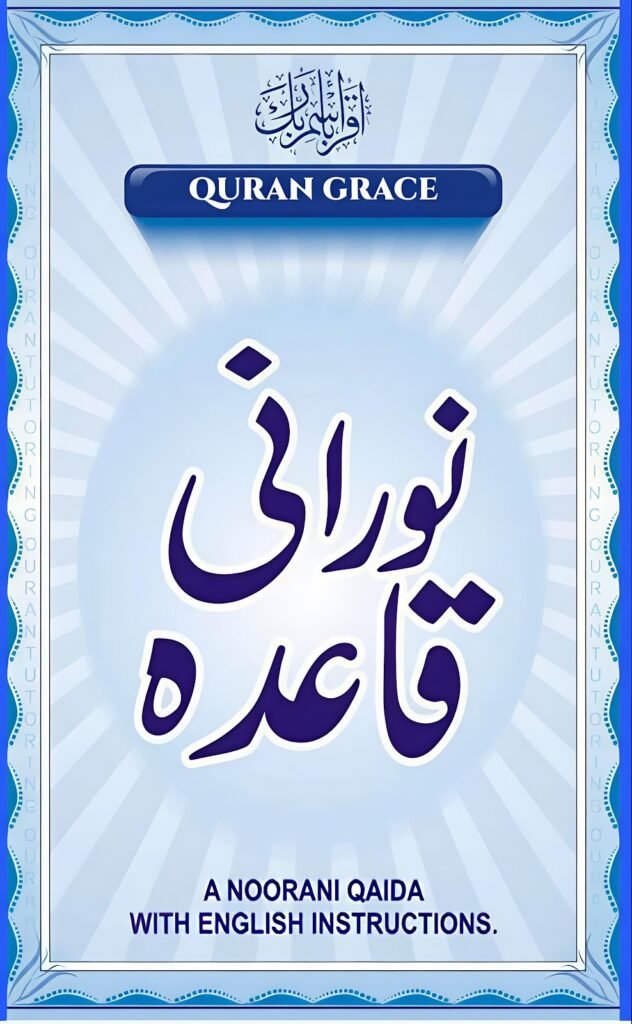
It begins with Arabic alphabets and introduces Tajweed rules step by step for pronouncing Arabic words correctly.
The book is structured in a logical sequence: single letters first, then joined letters, then short vowels, then full words drawn directly from the Quran.
Every word a child practices is a real Quranic word, which means they are building both Arabic literacy and Quranic familiarity at the same time.
You do not need to know a word of Arabic to begin this program, yet when finished with it, a learner will be able to read and recite the Quran from cover to cover.
Colorful editions with large, clear text make it particularly accessible for children as young as 5. For any Muslim child beginning their Arabic journey, this is the single most important Arabic book for kids to start with.
Kids Learning Quran Academy’s Noorani Qaida for Kids course uses Noorani Qaida as the foundational text, guided by certified instructors who teach letter articulation, correct pronunciation, and basic Tajweed through interactive one-on-one sessions designed specifically for young non-Arabic speakers.
Enroll your child in Noorani Qaida for kids with a free trial class
2. Alif Baa Taa Introduces the Arabic Alphabet Through Animals and Stories Children Love
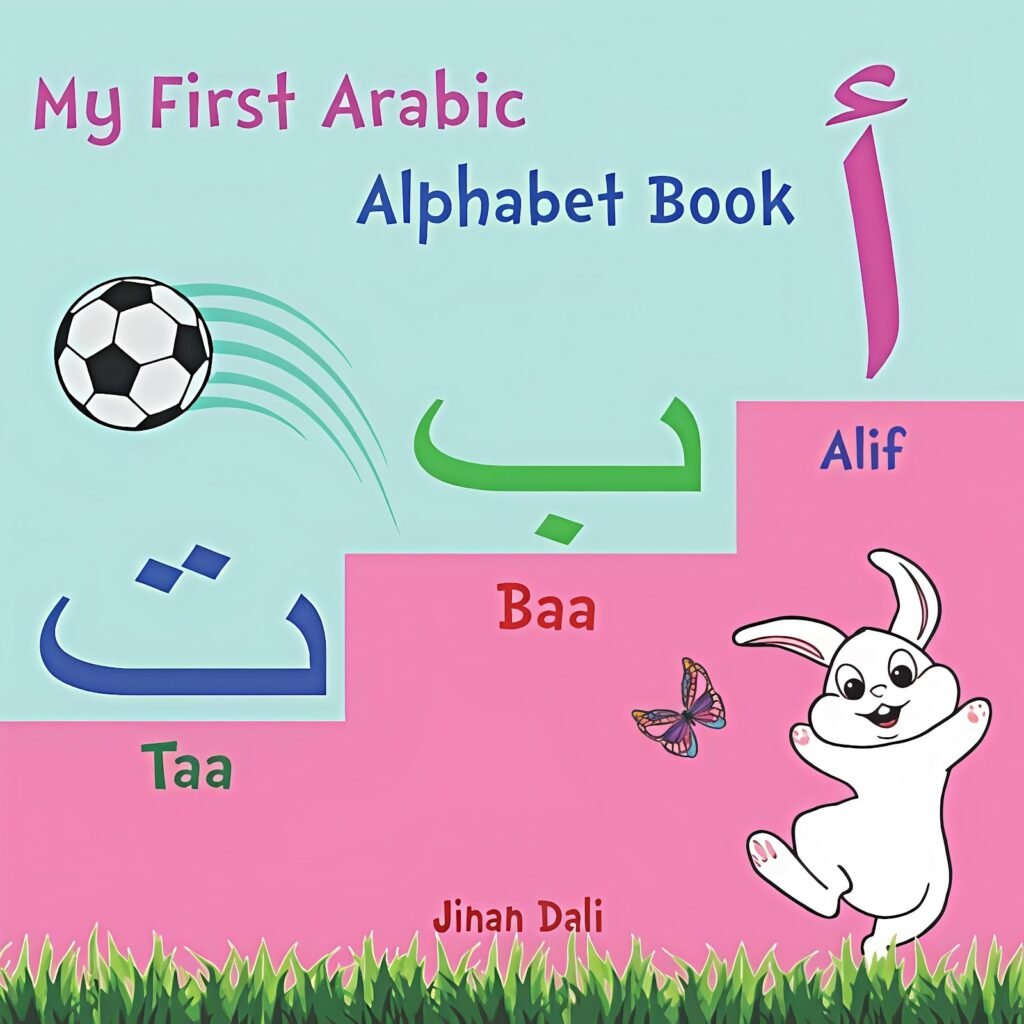
In Alif Baa Taa, children are introduced to the Arabic alphabet through a fun and unique approach. Each Arabic letter is represented by an adorable animal character and a short story, helping kids easily remember the letters and enjoy their learning experience.
The book also includes pronunciation tips, ensuring that children master the sounds of each letter.
This approach solves one of the most common problems parents face with standard alphabet books: children memorize the letter shapes but cannot recall them reliably because there is nothing memorable attached to each one.
Alif Baa Taa gives every letter a living character and a story, which means the brain stores the letter alongside a vivid, emotional memory rather than as an isolated shape on a page.
It is a lively illustrated book that teaches children the basics of the language with a simple and attractive explanation, and it includes English translations to ensure that non-native speakers can learn Arabic easily.
This makes it an ideal first Arabic book for kids for children between the ages of 4 and 8 who are encountering Arabic letters for the very first time.
Shots Videos from Our Courses
Start Your Child’s Quran Learning Journey Today!
Join Kids Learning Quran Academy and help your child read the Quran with confidence through fun and guided lessons.
Book a Free Trial Class3. Arabic Between Your Hands
Arabic Between Your Hands is one of the most famous books for teaching the Arabic language to non-native speakers.
It consists of four parts, covering all aspects of the Arabic language. The series relies on the classical Arabic language and is distinguished by its easy and clear style and its use of pictures and illustrations to explain concepts.
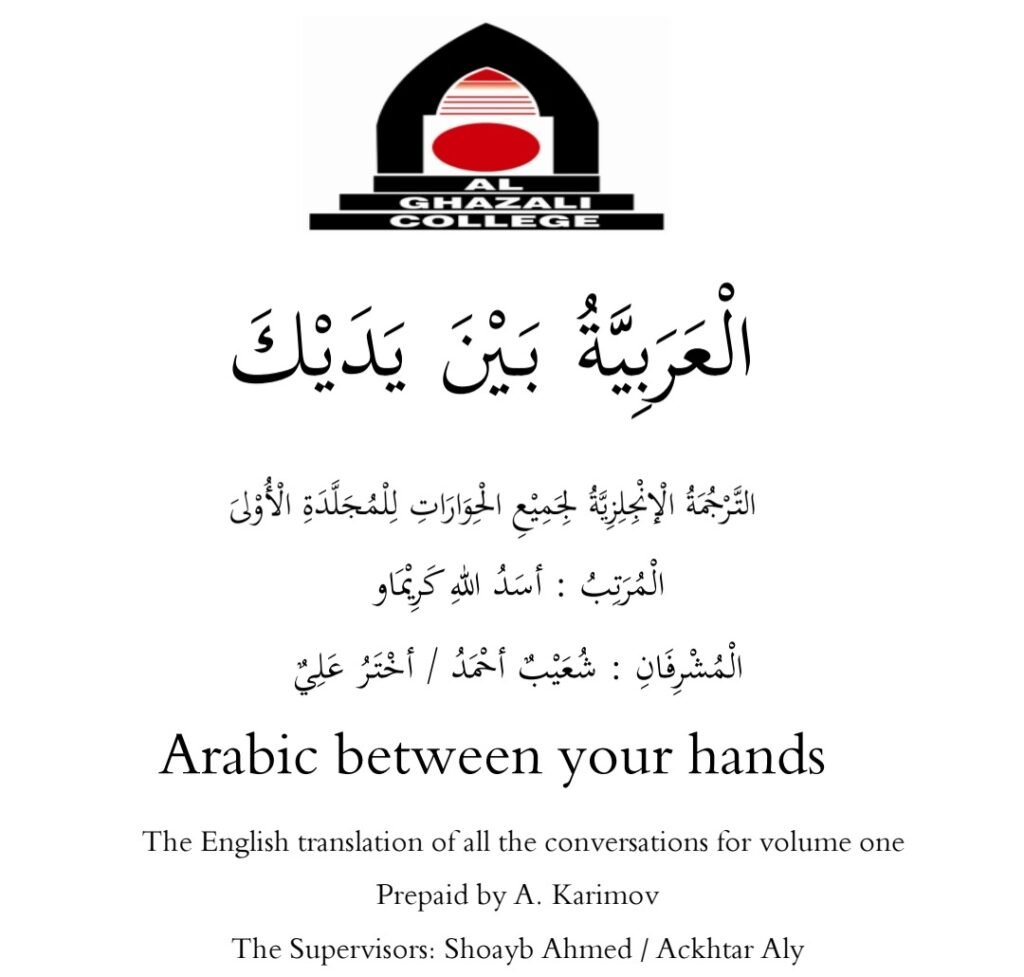
The series introduces a comprehensive curriculum for teaching Arabic to non-Arabic speakers, beginning from the basic level and continuing until students master the Arabic language.
Each level comes with a textbook and a workbook, allowing children to learn new content and immediately practice it through structured exercises.
The four skills of listening, speaking, reading, and writing are all developed together rather than in isolation.
This Arabic kids book series is best suited for children aged 10 and above who have already mastered the Arabic alphabet and are ready to move into real reading comprehension, vocabulary building, and basic sentence construction.
It is widely used in Islamic schools, Arabic language programs, and homeschooling curricula across the Arab world and Western Muslim communities alike.
| Book Series | Best Age Range | Skill Focus | Level Count |
| Noorani Qaida | Ages 5 and above | Alphabet, Tajweed, Quranic reading | 1 foundational book |
| Alif Baa Taa | Ages 4 to 8 | Alphabet recognition and letter sounds | 1 illustrated book |
| Arabic Between Your Hands | Ages 10 and above | All four language skills, full curriculum | 4 levels |
| My First Arabic Words | Ages 3 to 7 | Vocabulary, everyday words, bilingual | 1 bilingual book |
| Al-Menhaj Book | Ages 6 and above | Quranic Arabic, reading, Islamic content | Structured curriculum |
| Juha Stories Series | Ages 6 to 12 | Reading comprehension, cultural vocabulary | Multiple story volumes |
| My First English-Arabic Learning Library | Ages 2 to 6 | First words, letter recognition, bilingual | 10-book box set |
| Alyasameen Arabic Books | Ages 4 to 10 | Writing, tracing, vocabulary, coloring | Leveled series |
Start Your Child’s Quran Learning Journey Today!
Join Kids Learning Quran Academy and help your child read the Quran with confidence through fun and guided lessons.
Book a Free Trial Class4. My First Arabic Words
My First Arabic Words is a colorful and educational book that presents children with everyday Arabic words across various topics such as colors, numbers, animals, and family members.
Each word is accompanied by a vibrant illustration and a sentence, providing context for young learners to build their vocabulary and understand how to use words in everyday situations.
The bilingual Arabic-English format makes this one of the most accessible Arabic books for kids for households where parents themselves have limited Arabic knowledge.
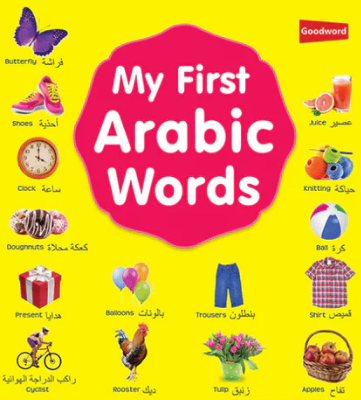
The English alongside each Arabic word removes the barrier of uncertainty. Parents do not need to know how to pronounce every word perfectly before introducing the book because the transliteration and English meaning are always present.
Children between 3 and 7 years build their first Arabic vocabulary through repeated exposure to the same words across daily reading sessions.
In our experience at Kids Learning Quran Academy, children who enter their Online Arabic Classes for Kids with even 50 to 100 familiar Arabic vocabulary words absorb new grammar and sentence structure noticeably faster than those starting with zero prior exposure.
A book like My First Arabic Words builds exactly that foundational vocabulary base at home before formal instruction begins.
Start your kid’s Arabic journey with a free lesson
Read also: Quran books for kids
5. The Al-Menhaj Book Connects Arabic Learning to Quranic and Islamic Knowledge
The Al-Menhaj Book by Luqman ElKasabany is a structured learn-to-read-Quran curriculum designed specifically for non-Arabic speaking Muslim children and adults.
It focuses on key language skills and Islamic lessons, starting with the Arabic alphabet and word formation, and facilitates Quranic reading comprehension. It incorporates lessons on Islamic creed, Hadiths, and Quranic language.
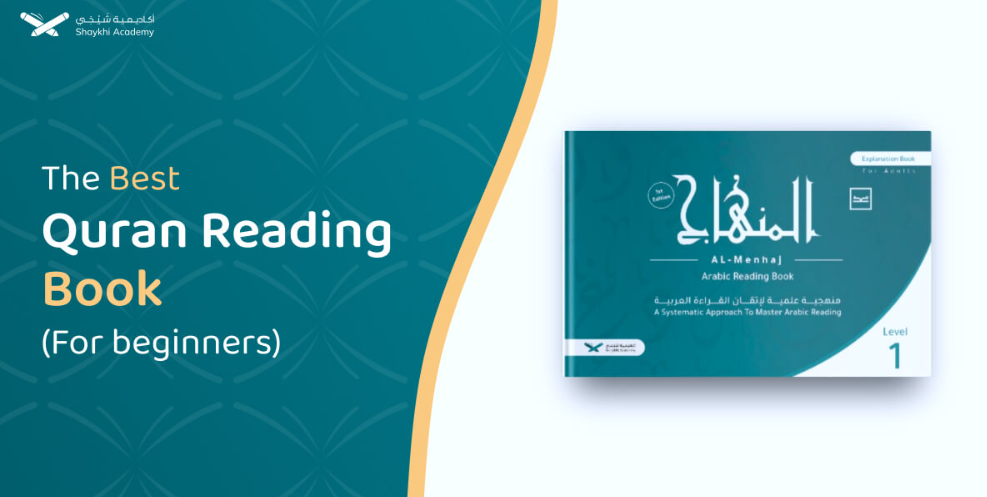
What distinguishes the Al-Menhaj Book from standard Arabic alphabet books is its explicit Islamic purpose. Every reading exercise, every vocabulary word, and every sentence example is drawn from the language and content of the Quran and Islamic practice.
A child learning to read through this book is not practicing with neutral sentences about cats and houses. They are practicing with the words and phrases they will encounter in Salah, in Quranic recitation, and in daily Islamic life.
This makes the Al-Menhaj Book the most purpose-built Arabic book for kids for Muslim families whose primary goal is Quranic reading fluency and Islamic literacy rather than general Arabic conversational ability.
It is available as a free online resource, making it one of the most accessible starting points for families beginning their child’s Arabic journey at home.
Kids Learning Quran Academy’s Online Arabic Classes for Kids build directly on the foundation established by books like the Al-Menhaj Book, taking children from basic letter recognition through structured reading comprehension in Classical Arabic.
Certified instructors use interactive, game-based methods that keep children engaged throughout every session. Start your child’s Arabic journey with Online Arabic Classes for Kids at Kids Learning Quran Academy with a free trial session today.
6. The Juha Stories Series
The Juha Tales series is one of the most famous children’s Arabic stories series that presents funny and wise situations. Its hero Juha embodies intelligence and simplicity at the same time. The series enhances critical thinking in children.
What is special about this series is that it makes children relate to the character of Juha as if they know him, which makes them very attentive to every situation he encounters.
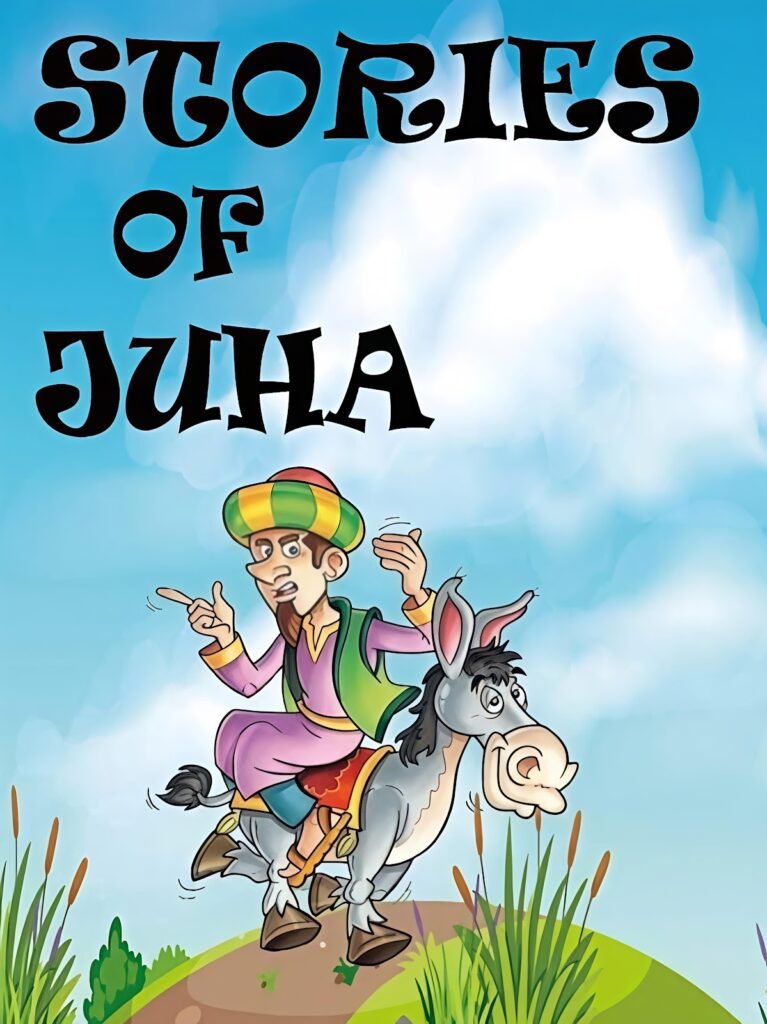
Juha has been the Arab world’s most beloved comic character for over a thousand years, known from Morocco to Iraq.
Every story in the series is self-contained, short, and structured around a single surprising twist that children find genuinely funny. Because children want to find out what happens, they stay engaged with the Arabic text far longer than they would with a grammar exercise or a neutral reading passage.
This makes the Juha Stories Series one of the most effective Arabic books for kids for developing reading fluency through authentic Arabic literature.
Children who read Juha stories develop Arabic vocabulary, sentence pattern recognition, and reading stamina through content they actually want to read rather than content they are required to read. The series is widely available in illustrated editions designed specifically for children aged 6 to 12.
| Story Title | Topic | What It Teaches the Child |
| Juha, His Son, and the Donkey | You cannot please everyone | Explains that people will always criticize. It teaches children to trust their own judgment. |
| The Pot That Gave Birth | The consequences of greed | Shows how greed makes people foolish. Juha tricks his neighbor into believing a pot gave birth, then died. |
| The Clothes Eat First | Do not judge by appearances | Teaches children not to judge by clothes. Juha is ignored in old clothes, so he returns in fancy robes and feeds the clothes. |
| Juha, the Walnut, and the Pumpkin | Contentment and trusting nature | Juha learns not to question nature when a tiny walnut falls on his head instead of a huge pumpkin. |
| Juha’s Nail | Beware of manipulation | Teaches kids to set boundaries. Juha sells his house but keeps one nail to invade the buyer’s privacy. |
| Juha and the Thief | Quick wit | A thief finds nothing in Juha’s house. Juha hides in a closet and says he is hiding out of shame for having nothing to steal. |
| Juha’s Quilt | Minding your own business | Juha tries to stop a street fight wrapped in his quilt. Someone steals it and the fight ends, proving it was just a trick to rob him. |
Our Students Reviews
Start Your Child’s Quran Learning Journey Today!
Join Kids Learning Quran Academy and help your child read the Quran with confidence through fun and guided lessons.
Book a Free Trial Class7. My First English-Arabic Learning Library
My First English-Arabic Learning Library is a box set of 10 books covering everyday topics in both English and Arabic with colorful illustrations that match the vocabulary on every page.
Each of the ten books covers a different category: numbers, colors, animals, the body, food, transportation, and more.
The consistent bilingual format means Arabic and English always appear together, giving very young children their first understanding that Arabic is a real language used for real things they already know.
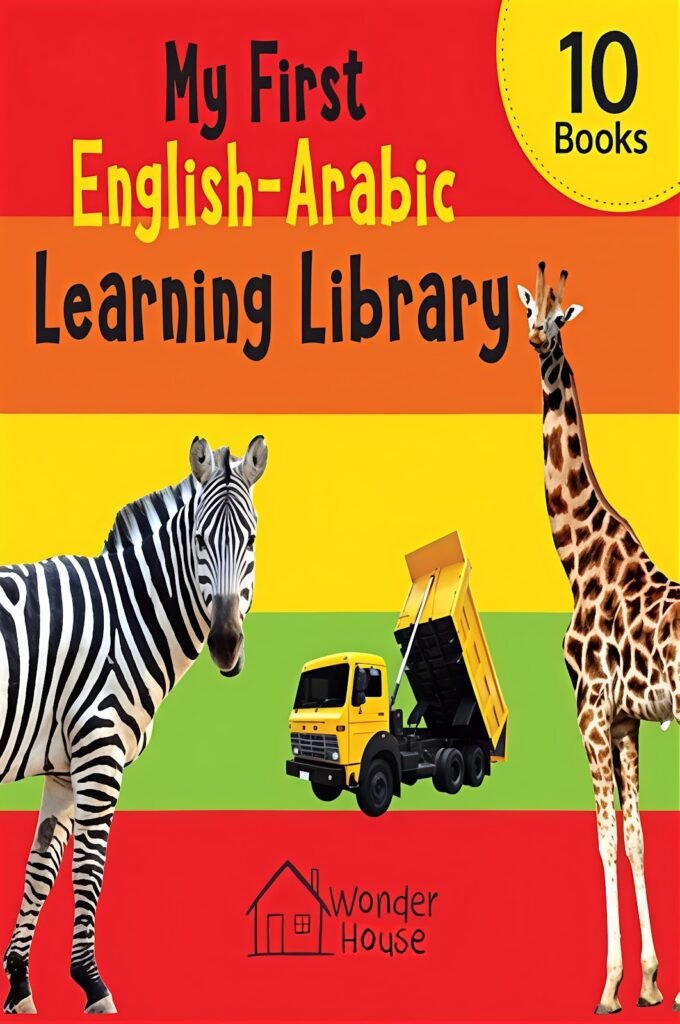
This box set is the earliest appropriate entry point in this entire list. Children as young as 2 can engage with it through read-aloud sessions with a parent, pointing at illustrations and hearing both the Arabic and English names for familiar objects.
By the time a child is 5 or 6, they will have built a genuine receptive Arabic vocabulary through repeated exposure to the same ten books across hundreds of read-aloud sessions.
| Book Title | What It Teaches |
| 1. ABC | Introduces toddlers to the English alphabet from A to Z using simple examples. |
| 2. Arabic Alphabet | Teaches the Arabic letters, helping children connect shapes to everyday words. |
| 3. Numbers | Introduces basic counting and number recognition in both languages. |
| 4. Colors | Helps toddlers identify and name colors by associating them with familiar objects. |
| 5. Shapes | Explains basic geometric shapes (circle, square, triangle) through illustrations. |
| 6. Farm Animals and Pets | Familiarizes children with the names and pictures of common domestic animals. |
| 7. Wild Animals | Introduces the names of jungle and safari animals to expand vocabulary. |
| 8. Birds | Teaches toddlers about different types of birds and builds observational skills. |
| 9. Fruits | Helps children recognize various fruits by their shapes and colors. |
| 10. Vegetables | Introduces common vegetables, providing daily vocabulary for everyday life. |
Kids Learning Quran Academy’s Islamic Studies Courses for Kids build on the cultural and linguistic foundation these early Arabic kids books establish, helping children connect their first Arabic words to the Quranic and Islamic knowledge that gives those words their deepest meaning and purpose.
Book a Free Session for Your Child in the Best Islamic Studies Courses for Kids
Enroll Your Child at Kids Learning Quran Academy and Build Their Arabic Foundation Today
Every Arabic book for kids in this list builds one layer of a complete Arabic and Quranic education. Structured online instruction with qualified teachers builds the complete foundation beneath all of it.
Kids Learning Quran Academy provides:
- Certified instructors specialized in teaching Arabic to non-Arabic speaking children with warmth and expertise
- Age-appropriate, engaging teaching methods designed for every learning stage and attention span
- 1-on-1 personalized attention tailored to each child’s current level and learning pace
- Flexible scheduling for busy families across all time zones worldwide
- Safe, monitored online learning environment with qualified supervision
- Interactive sessions that make Arabic genuinely enjoyable for children
- Progress tracking so parents stay fully informed after every session
- Free trial session with no commitment required
Check out our top courses for children in Hifz Quran, Arabic language skills, and Islamic studies:
- Online Arabic Classes for Kids
- Noorani Qaida for Kids
- Tajweed for kids
- Quran Reading Course for Kids
- Quran Memorization Course for Kids
- Quran Tafseer for Kids
- Islamic Studies Courses for Kids
Start Your Child’s Quran Learning Journey Today!
Join Kids Learning Quran Academy and help your child read the Quran with confidence through fun and guided lessons.
Book a Free Trial ClassFrequently Asked Questions About Arabic Kids Books
At What Age Should a Child Start With Arabic Books for Kids?
For beginners, young children should start with simple bilingual Arabic books for kids. Older children can begin structured alphabet books like Noorani Qaida to build pronunciation and reading foundations effectively.
Which Arabic Book for Kids Is Best for a Child With Zero Prior Arabic Exposure?
Children can start bilingual Arabic kids books from age 2 through listening and pictures. From age 5, alphabet books become suitable as children develop focus and basic reading skills. The Al-Menhaj Book is the best choice when the primary goal is Quranic reading rather than general Arabic fluency.
How Many Pages Should a Child Read From an Arabic Book for Kids Each Day?
Children aged 5–8 should read one to two pages daily, while older children can read more. Short daily sessions improve retention and fluency better than long, less frequent sessions.
Can Parents With No Arabic Use These Arabic Books for Kids at Home?
Yes, many Arabic Kinds Books include English support and transliteration. Parents can guide learning without Arabic knowledge, especially when combined with audio or online instruction for correct pronunciation.
Related Articles
Arabic Learning Resources