 Learn Arabic
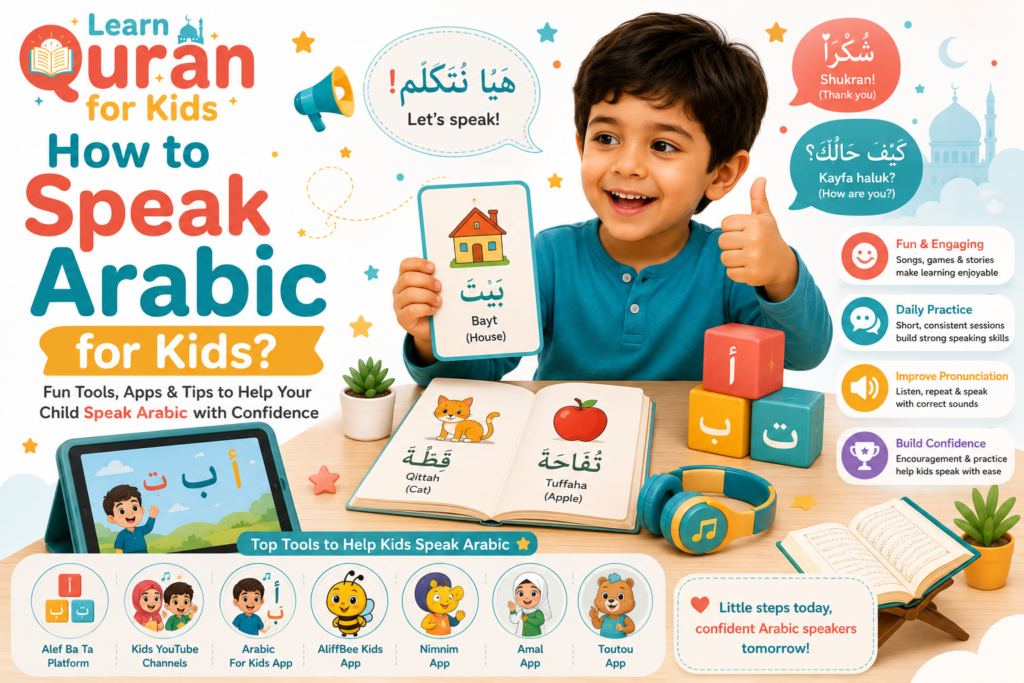
Getting a child to speak Arabic is different from memorizing it. A child may know the alphabet but still struggle to say a full sentence aloud.
The key is building comfort with Arabic sounds, rhythm, and everyday words before focusing on grammar.
Today, free apps, interactive websites, and kids’ YouTube channels make this easier through games, songs, and stories. This guide explains how to teach children to speak Arabic, which free tools work best, and how to keep them practicing at home.
1. Learn With Alef Ba Ta (أ ب ت) Platform
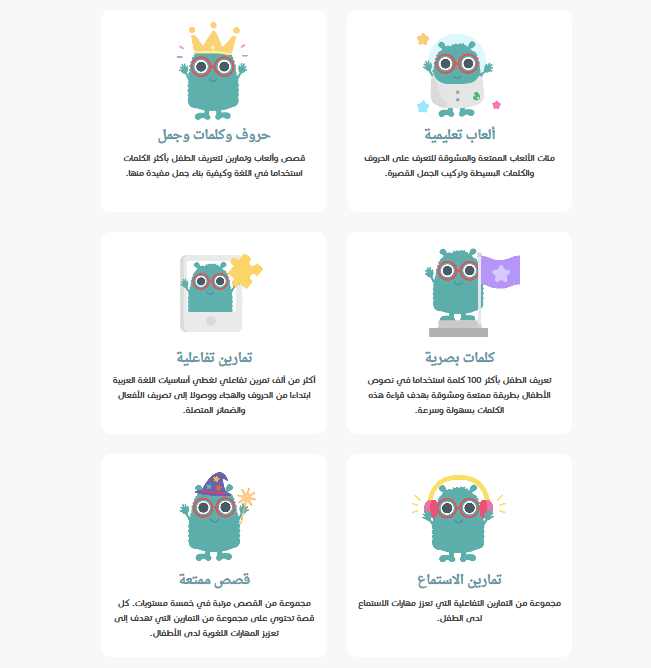
Alef Ba Ta is a dedicated platform for teaching Arabic to children through interactive exercises and games that build early words and visual sentences.
It’s structured around short, repeatable activities rather than long lessons, which suits a child’s attention span far better than a 30-minute video.
The platform’s exercises are built to be replayed — a child hearing the same short phrase five times across different games absorbs the sound pattern without the repetition feeling tedious, because the context around it keeps changing.
Read also: Learn Arabic for Kids
Read also: How to Teach Kids Arabic? – A Step-by-Step Parent’s Guide
2. Involve Kids InChildren’s YouTube Channels For Arabic Nasheeds And Phonics
Popular children’s channels such as With Rahma, Learn With Zakaria, Super Muslim Kids, and Eman Channel focus on nasheeds (songs) and letter-sound repetition give kids constant, low-pressure exposure to spoken Arabic.
Songs work particularly well for speech because melody makes pronunciation patterns stick — a child who can sing a phrase correctly can usually say it correctly too.
The mechanism here isn’t mysterious: rhythm and repetition are how children acquire their first language as well, so applying the same pattern to a second language produces the same result.
At Learn Quran for Kids, our live online sessions build directly on this exposure — a tutor gives a child real-time correction on pronunciation that a video simply can’t, which matters most for the throat-based letters that are hardest to self-correct.

3. Arabic For Kids App
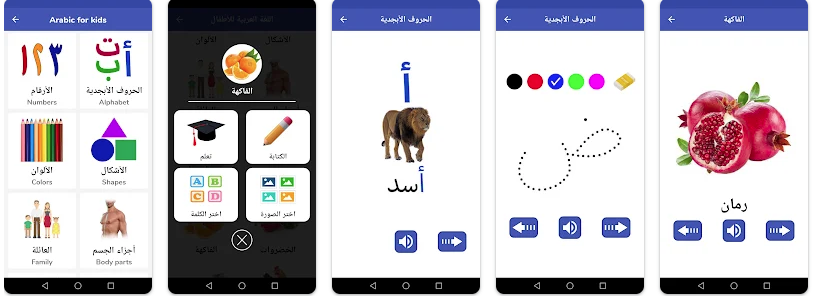
Arabic for Kids App makes learning Arabic fun, interactive, and easy for kids. It helps children learn Arabic letters, numbers, colors, shapes, family members, body parts, animals, and everyday vocabulary through attractive visuals, tracing activities, pronunciation sounds, and interactive exercises.
It’s simple, child-friendly design encourages independent learning while helping kids build vocabulary, recognize Arabic letters, improve pronunciation, and engagingly develop basic Arabic language skills.
Read also: Arabic Alphabet Learning for Kids
See Our Classes in Action!
Wondering what a typical lesson looks like? Take a peek inside our virtual classrooms below to see how our patient teachers keep students smiling, engaged, and learning every step of the way.
Start Your Child’s Quran Learning Journey Today!
Join Kids Learning Quran Academy and help your child read the Quran with confidence through fun and guided lessons.
Book a Free Trial Class4. AliffBee Kids Learning Arabic App
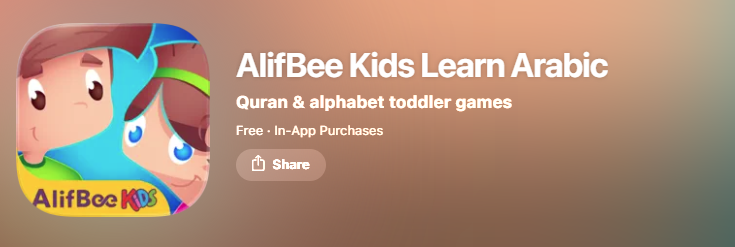
AlifBee Kids Learning Arabic App makes learning Arabic fun and engaging for young children through interactive games, Arabic letters, vocabulary, Quran-related activities, and colorful visuals.
It helps kids build their vocabulary, recognize and practice Arabic letters, and most importantly, improve their Arabic pronunciation through pronunciation-focused activities and audio.
The playful approach keeps children motivated while building a strong foundation in Arabic from an early age.
Read also: Arabic Sentences for Kids
5. Nimnim App
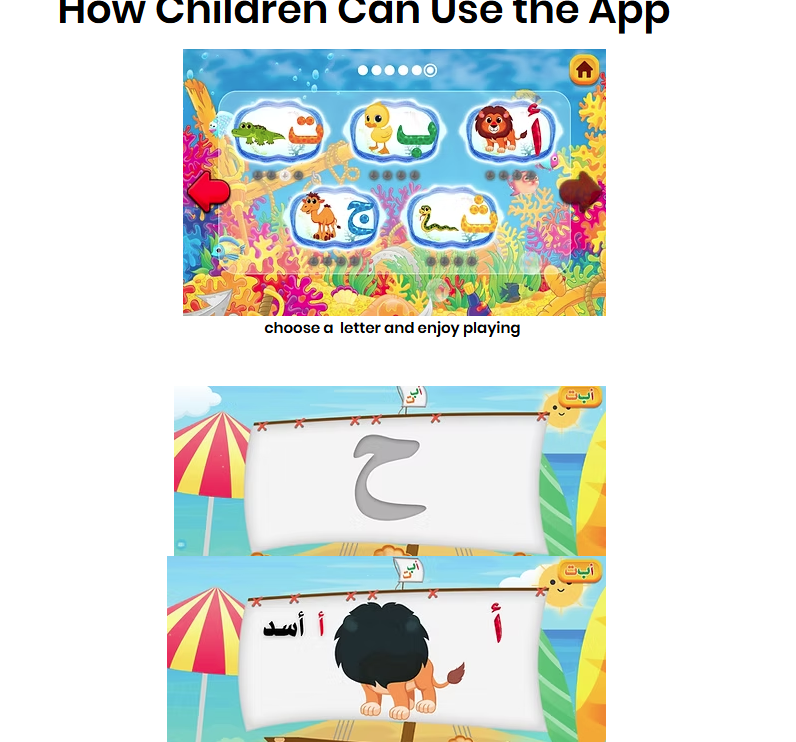
Nimnim App makes learning Arabic fun and interactive through colorful games that introduce children to the Arabic alphabet, phonics, vocabulary, and letter recognition.
Its engaging activities help kids learn new words, connect letters with sounds, and develop accurate Arabic pronunciation through phonics-based practice.
By combining play, repetition, and visual learning, Nimnim helps children enjoyably build essential Arabic literacy skills.
Read also: How to Learn Arabic for Kids
6. Amal App
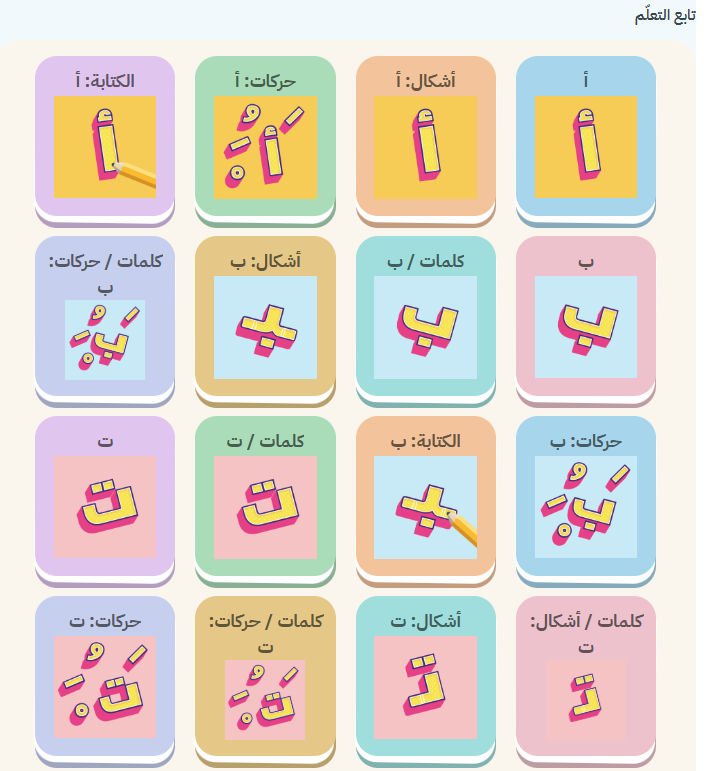
Amal – Arabic Reading for Kids helps children build strong Arabic reading skills through interactive letter, shape, vowel, and word exercises.
It teaches children how to recognize Arabic letters, practice harakat (vowel marks), improve reading fluency, and develop clear and accurate pronunciation through audio-based practice.
Its colorful, child-friendly activities make learning Arabic engaging while helping children read words correctly and confidently.
7. Learn Arabic For Kids – Toutou App
Learn Arabic for Kids – Toutou provides a fun, structured way for children to learn Arabic through progressive levels and interactive games.
It introduces Arabic letters, sounds, words, and simple sentences while helping children practice correct pronunciation through audio and listening activities. Its colorful visuals, puzzles, and engaging exercises support letter recognition, vocabulary development, listening skills, and early Arabic reading in an enjoyable, child-friendly way.
Read also: Arabic Games for Kids
Read also: How To Learn Quranic Arabic For Kids?
Keeping Sessions Short And Consistent
A common mistake parents make is scheduling long app sessions a few times a week instead of short daily ones. Fifteen to twenty minutes a day produces better speaking results than an hour once a week, because spoken language retention depends on frequency of exposure more than total duration.
A child’s brain needs to re-encounter a sound or word within a day or two of first hearing it, or the memory of it fades before it’s reinforced.
Set a fixed time — right after breakfast, or right before bed — so the app becomes a habit rather than another thing to negotiate.
1. Building Confidence To Speak, Not Just Recognize Words
This is the step most families skip, and it’s the one that determines whether a child ends up able to speak Arabic or just able to recognize it passively.
A child can watch dozens of videos and never say a word back if no one asks them to.
2. Encourage Repeating Songs And Phrases Out Loud
After a video or app session, ask the child to repeat the phrase or song line back to you, even if the pronunciation is imperfect at first.
This single habit — saying it back, out loud, to a real person — is what converts passive listening into active speaking ability. Silent viewing builds recognition; verbal repetition builds speech.
3. Use New Words In Daily Household Conversations
A word learned once in an app and never used again is usually forgotten within days. Working new Arabic vocabulary into ordinary moments at home — asking for water, naming foods at dinner, greeting family members — gives the word a second, real-world context that makes it stick.
This is the same principle that makes immersion effective for any language: repetition across different situations, not repetition of the same drill.
Common mistake to avoid: praising only correct pronunciation and staying silent on attempts that are close but not perfect. Kids stop trying to speak out loud the moment they sense that mistakes get a different reaction than successes.
Correct gently and keep the child talking.
Read also: Best 5 Quran Memorization Apps for Kids
A Simple Weekly Framework For Building Spoken Arabic
Parents often ask for structure rather than a pile of separate tools. Here’s a decision framework that works across most free resources:
Days 1–2: Introduce 3–5 new words or one short phrase through a video or app, focused purely on listening.
Days 3–4: Repeat the same words through a different format — a game, a song, a picture-matching app — so the child hears them in a new context.
Days 5–6: Prompt the child to use the words out loud, unprompted by media — during a meal, in the car, at bedtime.
Day 7: Light review, no new material. Let the previous week’s words settle.
This “hear it twice, use it once” rhythm keeps vocabulary from piling up faster than a child can actually speak it, which is the most common reason kids stall out on free apps: too much new material, not enough repetition of the old.
Structured live sessions can compress this timeline. In a guided class with a tutor, correction happens in real time instead of waiting for a child to self-notice a mispronunciation days later, which is often the difference between a phrase a child can recognize and one they can confidently say.
Read also: Arabic Words for Kids
Read also: 10 Best Kids Islamic Poems
Experience the Magic Firsthand
Watch these short clips from our live classes to see our interactive teaching tools, vibrant student-teacher interactions, and the fun, stress-free ways we make learning easy for kids!
Start Your Child’s Quran Learning Journey Today!
Join Kids Learning Quran Academy and help your child read the Quran with confidence through fun and guided lessons.
Book a Free Trial ClassGive Your Child Real Speaking Practice with a Live Tutor
Free tools build recognition. A real tutor builds speech, correcting pronunciation as your child talks, in real time, session after session.
Book a trial class with Learn Quran for Kids and give your child the guided practice that free apps can’t replicate.
Our Courses Include:
- Tajweed for Kids
- Quran Memorization for Kids
- Quran Recitation Course for Kids
- Quran Classes for Toddlers
- Quran Tafseer for Kids
- Qaida for Kids
- Quran Reading Course for Kids
- Online Arabic Classes for Kids
- Quranic Arabic for Kids
- Islamic Studies Courses for Kids
- Islamic Studies for Kindergarten
- 5 Pillars of Islam for Kids
- Islamic Education for Kids
Start Your Child’s Quran Learning Journey Today!
Join Kids Learning Quran Academy and help your child read the Quran with confidence through fun and guided lessons.
Book a Free Trial ClassConclusion
Teaching a child how to speak Arabic works best as a mix of exposure, repetition, and encouragement to actually use the language out loud — not as a single app or channel used in isolation. Free platforms like Alef Ba Ta, well-chosen YouTube channels, and short daily app sessions all build the same underlying skill: comfort with Arabic sounds and words.
The piece most families miss is the speaking step itself — prompting a child to say words back, and using new vocabulary in daily life at home. Free tools can build recognition on their own, but converting that into real spoken Arabic still needs an adult or a tutor, prompting the child to actually talk.
If your child has built a foundation through free apps and videos and you want that progress to turn into real conversation and correct pronunciation, a structured program with live guidance can take it the rest of the way.
Frequently Asked Questions
How Can I Teach My Child To Speak Arabic Online For Free?
You can teach a child to speak Arabic online for free by combining interactive websites like Alef Ba Ta, children’s Arabic YouTube channels for songs and phonics, and free vocabulary apps.
The key is prompting the child to repeat words out loud after each session rather than only watching or listening passively.
What Is The Best Age To Start Teaching A Child To Speak Arabic?
The best age to start is as early as toddlerhood, since young children pick up unfamiliar sounds — like Arabic’s throat letters ح، خ، ع، غ — more naturally than older learners. Starting with listening and speaking before reading builds a stronger foundation.
How Much Time Should A Child Spend Practicing Spoken Arabic Each Day?
Fifteen to twenty minutes of daily practice produces better results than longer sessions once or twice a week. Spoken language retention depends on frequent, short exposure, so consistency matters more than total time spent.
Are Free Apps Enough To Make A Child Fluent In Spoken Arabic?
Free apps and videos build strong recognition and vocabulary but rarely produce fluent speech on their own, because they can’t correct a child’s pronunciation in real time. Pairing free resources with live guidance from a tutor closes that gap.
Why Does My Child Understand Arabic Words But Won’t Say Them Out Loud?
This usually means the child has built passive recognition without practice speaking, which is a distinct skill. Prompting repetition out loud after each lesson, and gently encouraging imperfect attempts helps convert recognition into active speech.
Related Articles
Learn Arabic