 Learn Arabic
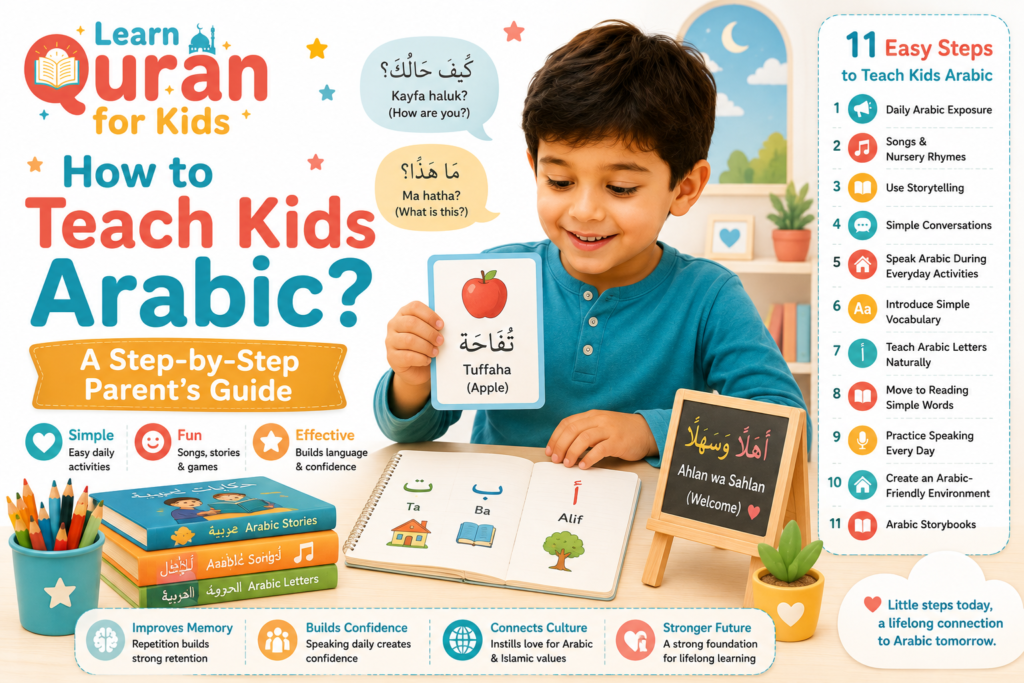
Teaching Arabic at home can feel overwhelming, especially for parents raising bilingual children or living in non-Arabic-speaking countries. The good news is that children learn languages naturally when they hear, use, and enjoy them in everyday life.
Starting Arabic at an early age helps build strong listening, speaking, reading, and cultural connections that last a lifetime. Rather than relying on long, formal lessons, short and consistent daily practice leads to better results and keeps children motivated.
Simple activities, such as conversations, stories, songs, and games, can make Arabic a natural part of your child’s routine. In this guide, you’ll discover exactly how to teach kids Arabic step by step using practical, enjoyable, and parent-friendly strategies.
1. Daily Arabic Exposure
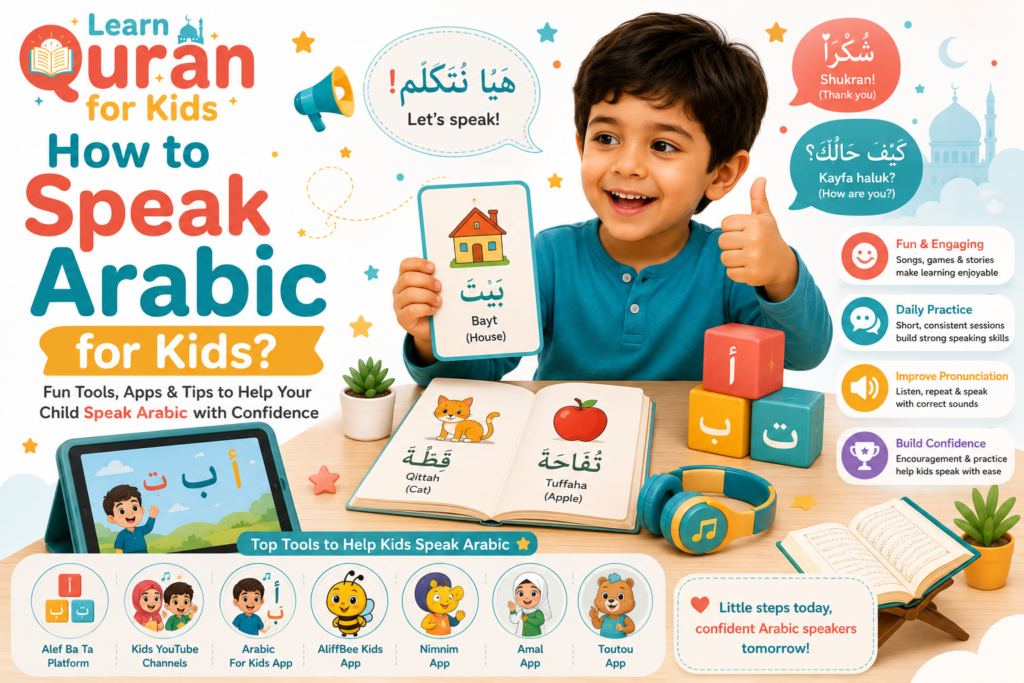
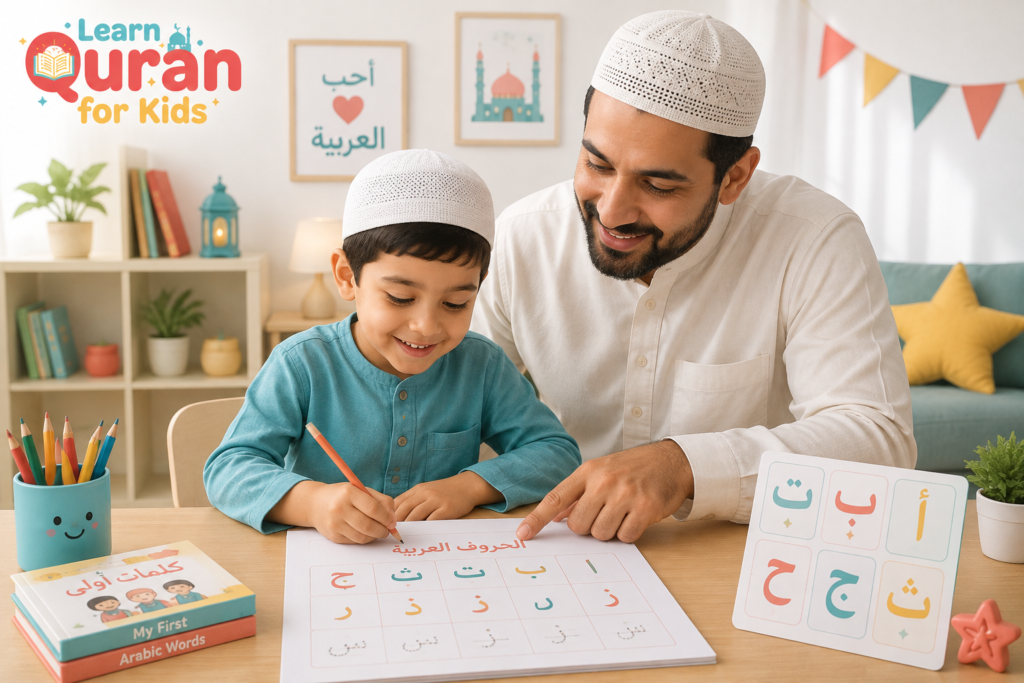
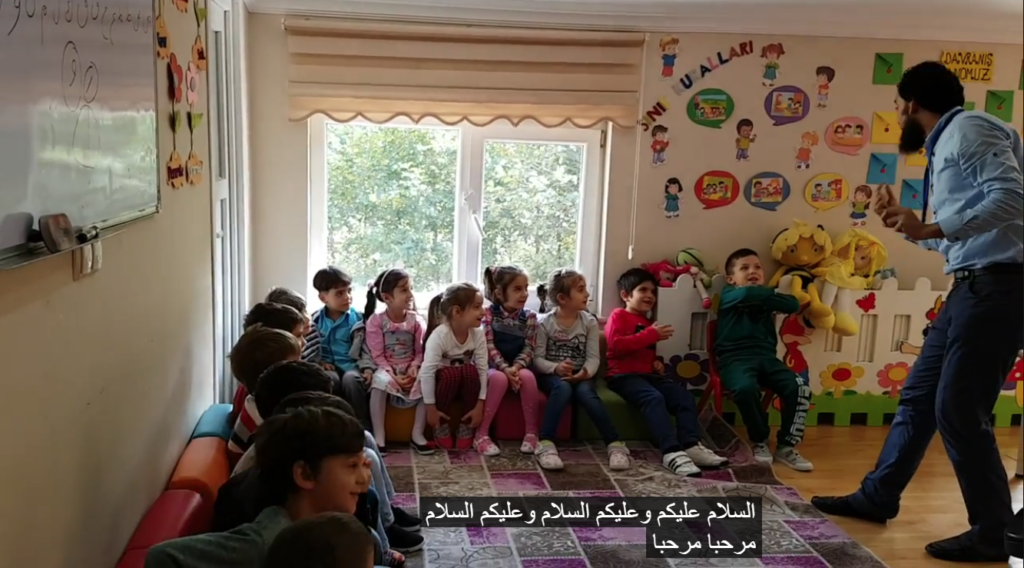
Speak simple Arabic throughout the day during normal routines. For example, say “Assalamu Alaikum,” “Bismillah,” “Shukran,” “Afwan,” or “Hayya bina” instead of using another language.
Read also: Arabic Sentences for Kids
2. Songs And Nursery Rhymes
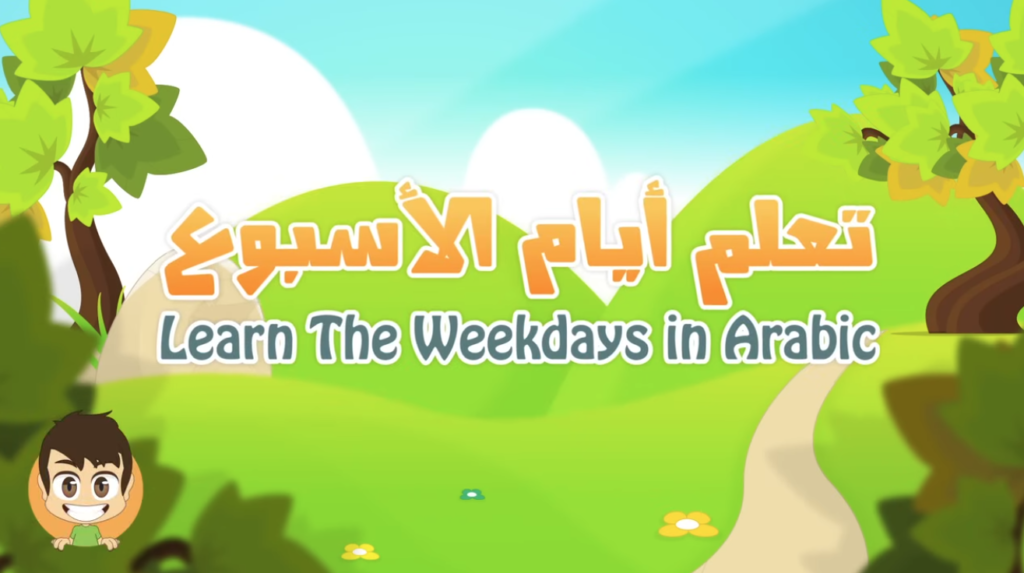
Play simple Arabic children’s songs every day to help your child recognize pronunciation and common vocabulary.
Songs like the Arabic Alphabet Song, Numbers Song, and Days of the Week Song, help children remember new words naturally through repetition and rhythm.
Use simple Arabic nursery rhymes with repetition and actions to build listening and vocabulary naturally.
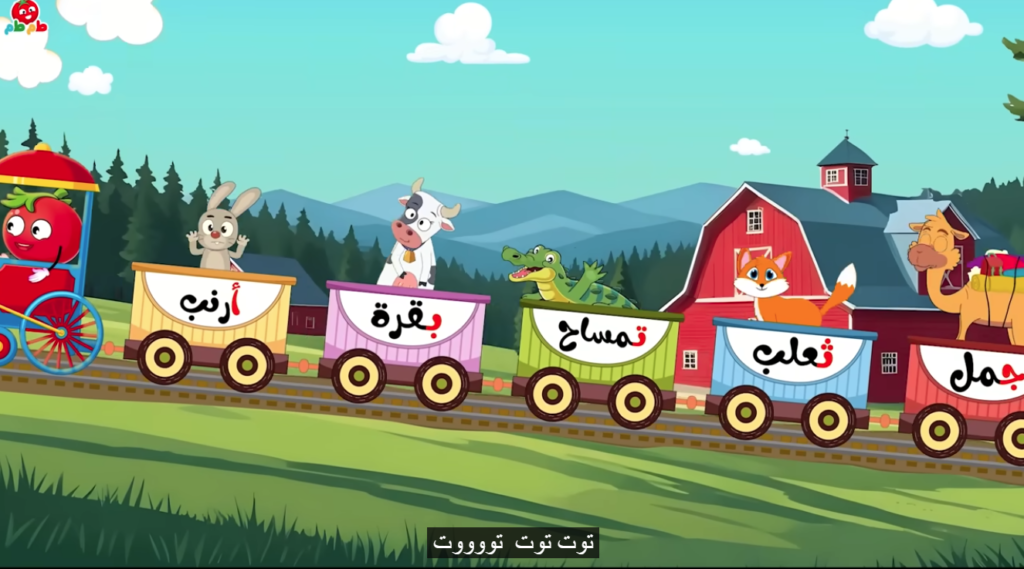
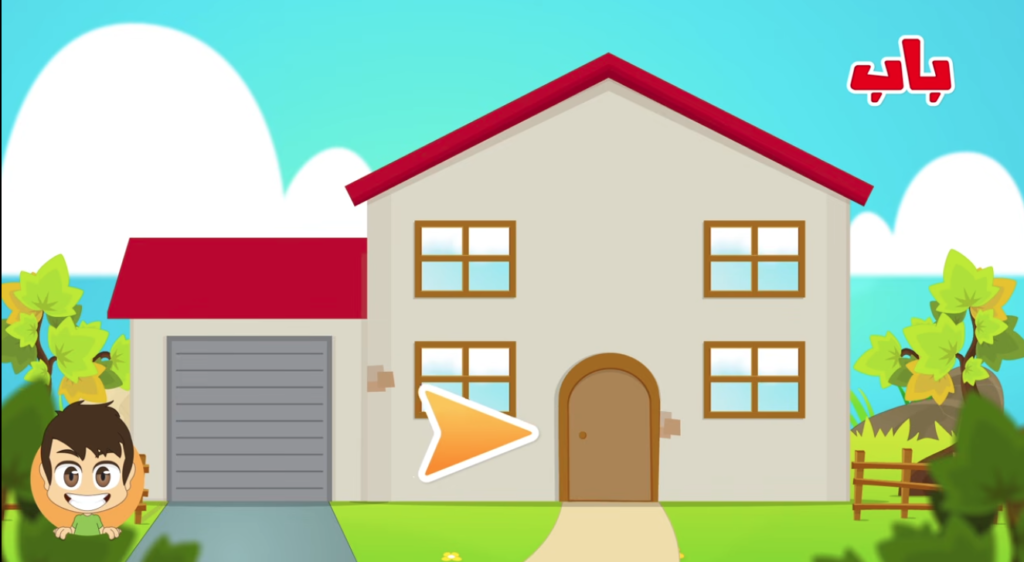
Examples include “Tut Tut Hatha Qitar (توت توت هذا قطار),” and “Daqqa Daqqa albab (دق دق الباب)“. Singing together helps children remember words more easily.
Read also: Best 5 Quran Memorization Apps for Kids
3. Use Storytelling
Read short Arabic picture books every day and point to the illustrations as you read.
Pause to ask simple questions like “Where is the cat?” or “What color is the ball?” to encourage listening, vocabulary, and speaking.
Read also: Islamic Story books for Kids
4. Simple Conversations
Use short Arabic phrases during everyday activities to encourage natural speaking.
For example, ask “Kayfa haluk?” (How are you?), “Ma hatha?” (What is this?), “Ayna al-kitab?” (Where is the book?), or “Hal turid ma’an?” (Do you want water?) and give your child time to answer.
5. Speak Arabic During Everyday Activities
Make Arabic part of your child’s daily routine by using simple words and phrases throughout the day.
Greet them with “Assalamu Alaikum,” use mealtime words like “ma'” (water), “khubz” (bread), and “tafaddal” (please/help yourself), describe household routines with phrases like “hayya bina” (let’s go) and “waqt an-nawm” (bedtime), and talk during play by asking “Ma hatha?” (What is this?) or “Ayna al-kura?” (Where is the ball?).
Regular, real-life conversations help children learn Arabic naturally.
Read also: How To Teach A Child To Memorize The Alphabet?
6. Introduce Simple Arabic Vocabulary
Start with everyday words your child sees and uses regularly.
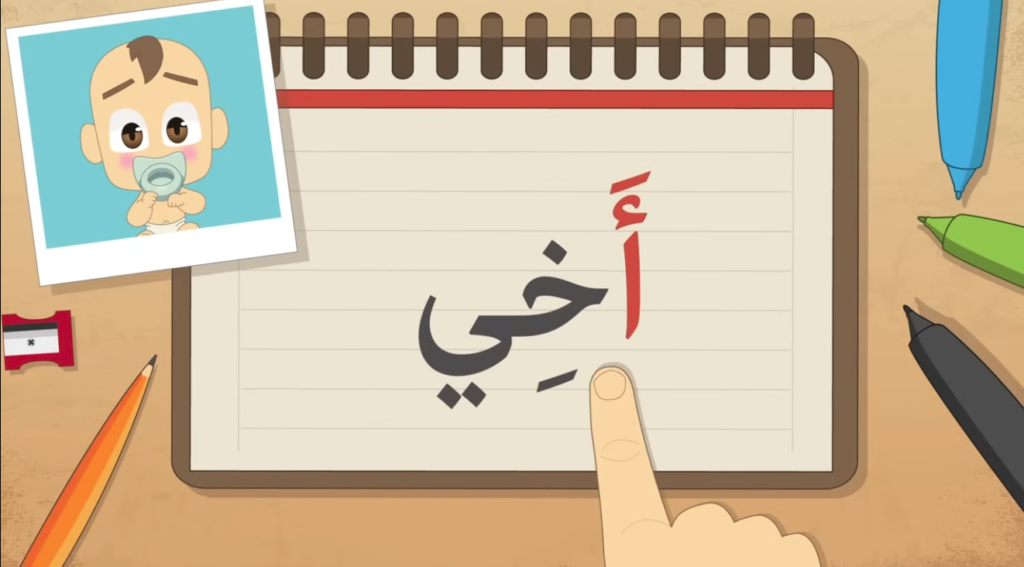
Teach family members like Ummi (mother), Abi (father), Akhi (brother), and Ukhti (sister); colors such as Ahmar (red), Azraq (blue), and Akhdar (green); numbers from Wahid (1) to Ashara (10); animals like Qittah (cat), Kalb (dog), and Usfur (bird); and common objects such as Kitab (book), Bab (door), and Kursi (chair).
Introduce new words through real-life objects, pictures, and repetition.
7. Teach Arabic Letters Naturally
Introduce Arabic letters by teaching their sounds before their names, then help your child recognize them in books and around the home.
Start with the letters in your child’s own name—for example, Ahmed begins with أ (Alif) and Maryam with م (Meem).
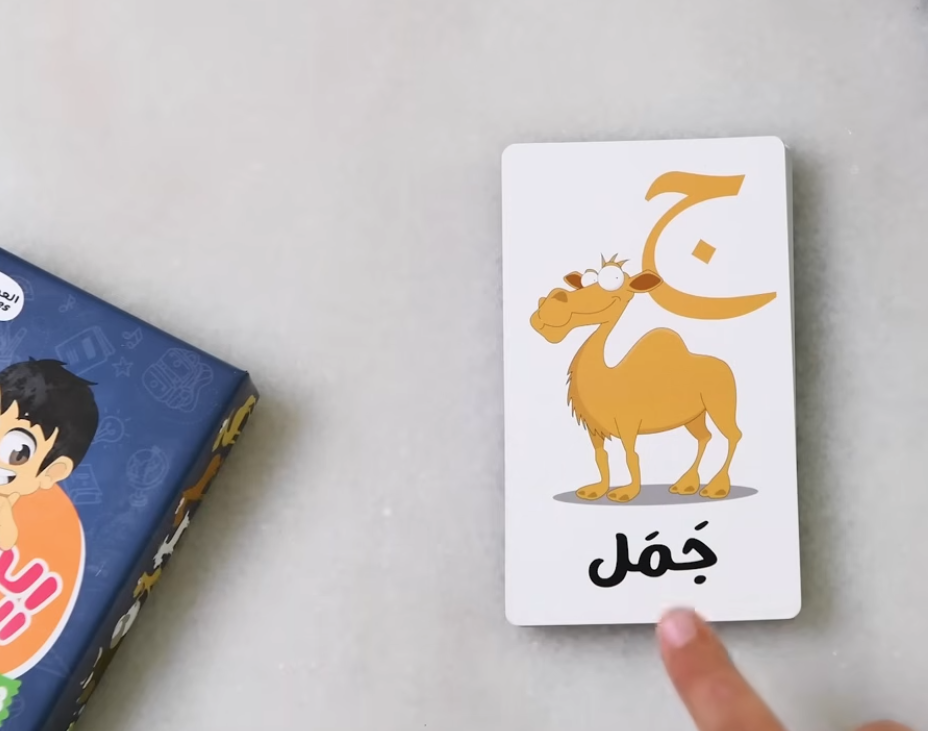
Use songs, picture cards, and everyday words instead of asking children to memorize the alphabet without meaningful context.
Experience the Magic Firsthand
Watch these short clips from our live classes to see our interactive teaching tools, vibrant student-teacher interactions, and the fun, stress-free ways we make learning easy for kids!
Start Your Child’s Quran Learning Journey Today!
Join Kids Learning Quran Academy and help your child read the Quran with confidence through fun and guided lessons.
Book a Free Trial Class8. Move To Reading Simple Words
Once your child recognizes basic letters and sounds, begin reading simple Arabic words using picture books, flashcards, and short sentences.
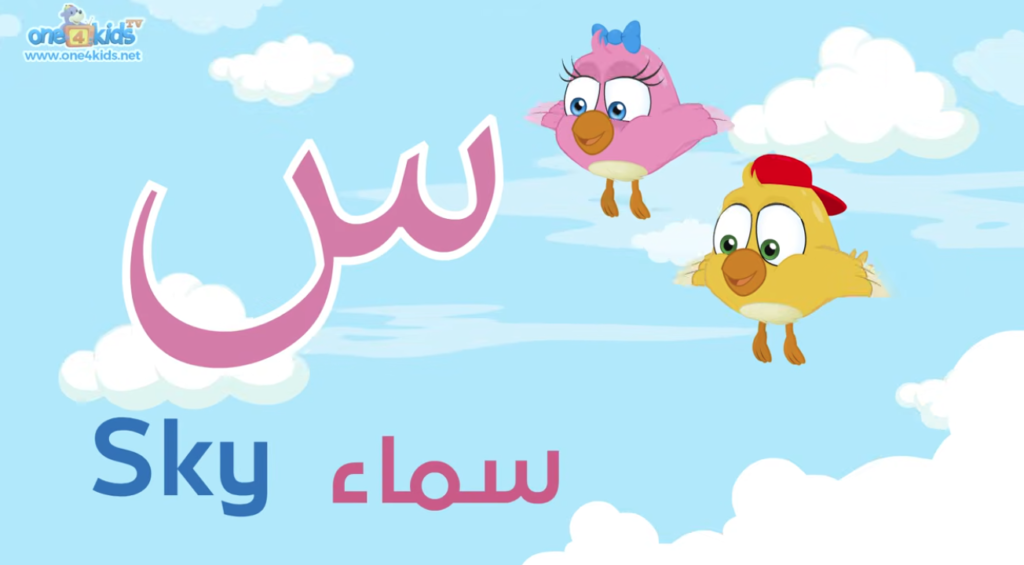
Focus on high-frequency vocabulary such as بيت (house), كتاب (book), باب (door), سماء (sky), قلم (pen), أنف (nose), and فم (mouth). Repetition and daily reading help children build confidence and fluency.
Read also: Body Parts in Arabic for Kids
Read also: Best 5 Quran Memorization Apps for Kids
9. Practice Speaking Every Day
Encourage your child to speak Arabic every day by asking simple questions, describing pictures, and having short conversations.
For example, ask “Ma hatha?” (What is this?), “Ayna al-qittah?” (Where is the cat?), or “Ma lawnu hatha?” (What color is this?).
Repeat the same words and phrases daily to build confidence, improve pronunciation, and strengthen vocabulary.
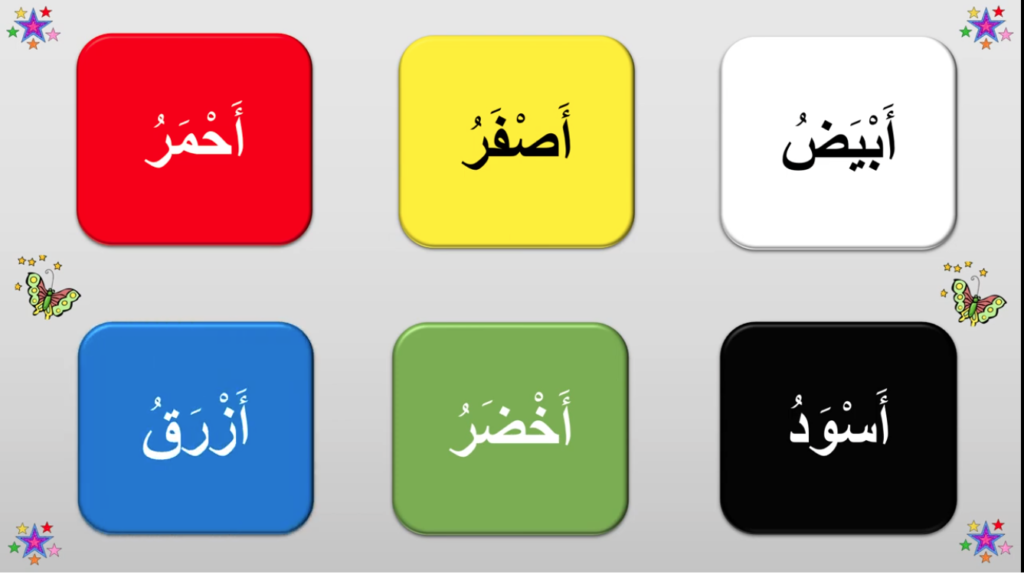
Read also: Colors in Arabic for Kids – with Examples
10. Create An Arabic-Friendly Environment
Surround your child with Arabic throughout the day by labeling household items, reading Arabic books, playing Arabic songs, and using simple phrases during daily routines.
For example, label باب (door), كرسي (chair), and كتاب (book), greet with “Assalamu Alaikum,” and encourage everyday expressions like “Bismillah” and “Alhamdulillah.”
This regular exposure makes Arabic a natural part of everyday life.
11. Arabic Storybooks
Read short Arabic picture books every day to introduce new vocabulary in a fun and meaningful way.
Select books with colorful illustrations and simple sentences, and then ask questions such as “Who is this?” or “What is happening?” to encourage listening, speaking, and comprehension.
You can also choose age-appropriate Arabic picture books with simple vocabulary, colorful illustrations, and repetitive phrases.
Reading together for 10–15 minutes each day helps children build vocabulary, improve pronunciation, and develop a love for the Arabic language.
Read also: Arabic Books for Kids
12. Interactive Games
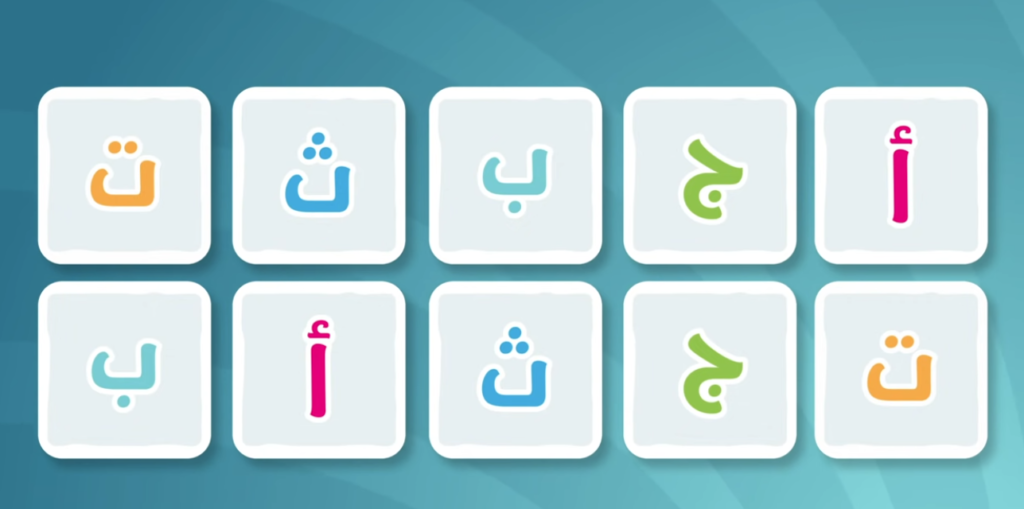
Turn learning into play with interactive Arabic games such as matching cards, memory games, letter puzzles, word bingo, and treasure hunts.
For example, ask your child to find كتاب (book) or match أ with أسد (lion). These activities reinforce vocabulary and letter recognition while keeping children engaged.
Read also: Best Islamic 11 Games for Kids
13. Arts And Crafts
Make Arabic hands-on by combining language with creative activities.
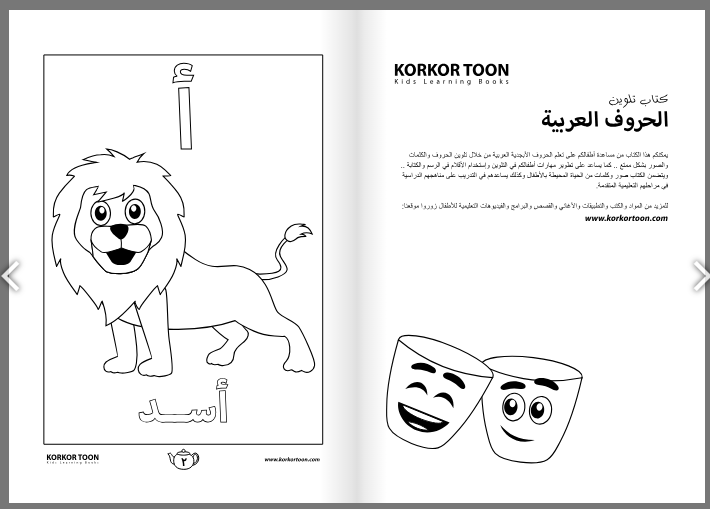
Let your child color Arabic letters, make alphabet crafts, create word collages, or draw pictures and label them with simple Arabic words like شمس (sun), شجرة (tree), and بيت (house).
Craft activities help children remember vocabulary while having fun.
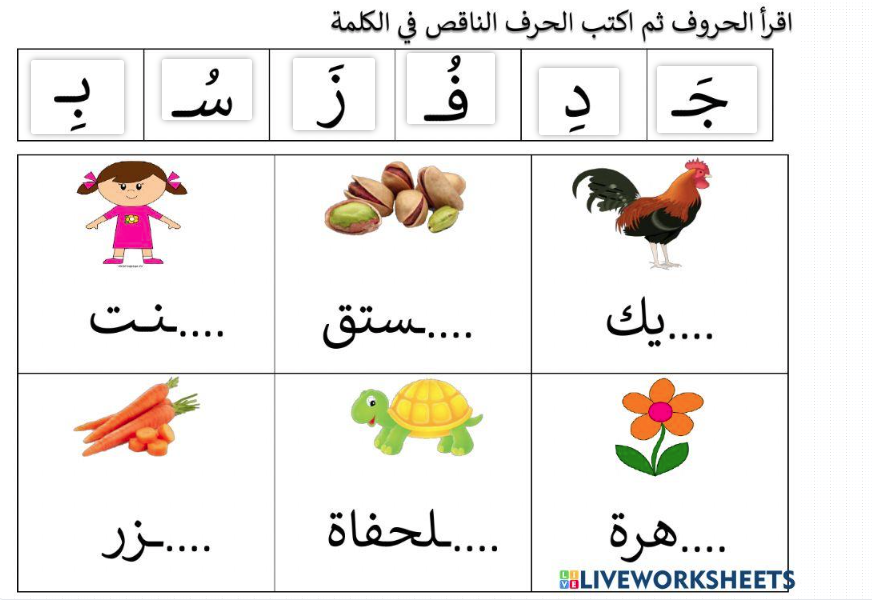
Printable worksheets also provide structured practice for Arabic letters, tracing, matching, coloring, and simple vocabulary.
Use fun activities like letter tracing, word matching, and picture labeling to reinforce what your child learns through daily reading and conversation.
14. Role Playing
Encourage your child to practice Arabic through everyday role-playing activities.
Pretend to visit a shop, restaurant, or doctor’s office, and use simple phrases like “Kam ath-thaman?” (How much is it?), “Uridu…” (I want…), or “Shukran” (Thank you).
Role play builds speaking confidence and helps children use Arabic in real-life situations.
15. Educational Apps
Educational apps make learning Arabic interactive through games, quizzes, letter tracing, pronunciation practice, and vocabulary activities.
Choose apps designed for children with colorful visuals, audio support, and short lessons to keep learning engaging and fun.
16. Arabic Cartoons
Arabic cartoons help children improve listening skills, pronunciation, and vocabulary through fun stories and everyday conversations.
Choose age-appropriate shows with clear Modern Standard Arabic (MSA) and watch together, pausing occasionally to discuss new words and simple phrases.
Read also: Islamic Cartoons for Kids
Read also: Islamic Worksheets for Kids
17. Online Arabic Classes
Online Arabic classes provide structured lessons with qualified teachers who guide children through speaking, listening, reading, and writing.
At Learn Quran for Kids, children benefit from interactive activities, personalized one-on-one or small-group lessons, and age-appropriate learning materials that keep them engaged while building Arabic skills with confidence and consistency.
Should You Teach Modern Standard Arabic Or Spoken Arabic?
For most children, Modern Standard Arabic (MSA) is the best place to start because it is the language of the Quran, books, schools, and media, giving them a strong foundation in reading and writing.
Spoken dialects are useful for everyday conversations with family and friends, but they vary from one country to another.
A practical learning path is to begin with MSA to build core language skills, then gradually introduce your family’s local dialect to support natural communication.
Common Mistakes Parents Make When Teaching Arabic
Many parents unintentionally slow their child’s progress by starting with grammar rules instead of conversation, teaching letters before developing listening skills, and expecting quick results.
Others correct every mistake, which can reduce a child’s confidence, rely on long, boring lessons that overwhelm young learners, or practice only occasionally.
The most effective approach is to focus on daily listening, speaking, reading, and enjoyable activities, allowing children to learn Arabic naturally through consistent exposure and encouragement.
Read also: Seasons in Arabic for Kids
Read also: The Best Islamic Gifts for Kids – 6 Types
See Our Classes in Action!
Wondering what a typical lesson looks like? Take a peek inside our virtual classrooms below to see how our patient teachers keep students smiling, engaged, and learning every step of the way.
Start Your Child’s Quran Learning Journey Today!
Join Kids Learning Quran Academy and help your child read the Quran with confidence through fun and guided lessons.
Book a Free Trial ClassHelp Your Child Learn Arabic with Expert Guidance
Whether your child is a complete beginner or already knows the basics, our personalized online classes at Learn Quran For Kids are designed to match their age, learning style, and pace.
Book your FREE trial lesson today and see how enjoyable learning Arabic can be.
Give your child the gift of a language that connects them to the Quran, their faith, and millions of Arabic speakers around the world.
Start your child’s Arabic learning journey today!
Our Courses Include:
- Tajweed for Kids
- Quran Memorization for Kids
- Quran Recitation Course for Kids
- Quran Classes for Toddlers
- Quran Tafseer for Kids
- Qaida for Kids
- Quran Reading Course for Kids
- Online Arabic Classes for Kids
- Quranic Arabic for Kids
- Islamic Studies Courses for Kids
- Islamic Studies for Kindergarten
- 5 Pillars of Islam for Kids
- Islamic Education for Kids
Start Your Child’s Quran Learning Journey Today!
Join Kids Learning Quran Academy and help your child read the Quran with confidence through fun and guided lessons.
Book a Free Trial ClassConclusion
Teaching Arabic to your child doesn’t have to be complicated. By following a step-by-step approach—starting with listening, introducing everyday vocabulary, teaching letters naturally, practicing reading, and encouraging daily conversation—you can build strong language skills over time.
Focus on giving your child regular exposure to Arabic instead of aiming for perfection, and make learning enjoyable with stories, songs, games, and interactive activities.
With patience, consistency, and encouragement, your child can develop a lifelong love for the Arabic language and the confidence to use it every day.
Frequently Asked Questions
How Do I Teach Arabic To A Child Who Doesn’t Speak Any Arabic?
Start with simple everyday words and phrases, using songs, stories, pictures, and games to make learning enjoyable.
Focus on listening and speaking before reading, practice for 5–10 minutes daily, and gradually introduce new vocabulary through consistent, real-life conversations.
How Long Does It Take A Child To Learn Arabic?
The timeline varies based on your child’s age, practice, and exposure to the language.
With consistent daily practice, many children begin understanding and using simple Arabic words and sentences within a few months, while developing strong reading and speaking skills typically takes longer.
Should I Teach Arabic Letters Or Speaking First?
Start with speaking and listening first, so your child becomes familiar with the sounds of Arabic.
Once they can recognize common words and phrases, gradually introduce Arabic letters and reading for a more natural learning experience.
Can Non-Arabic-Speaking Parents Teach Arabic?
Yes. Non-Arabic-speaking parents can support their child’s learning by using Arabic books, educational apps, songs, videos, and online classes.
Learning together and practicing simple words every day creates a positive environment and helps children make steady progress.
What Is The Best Age To Start Learning Arabic?
The best time to start learning Arabic is as early as possible.
Babies and young children naturally absorb language through listening and daily interaction, but children of any age can successfully learn Arabic with consistent practice and engaging activities.
How Many Minutes Should Children Study Arabic Each Day?
For most young children, 5–10 minutes of focused practice each day is enough to build strong language skills.
Short, consistent sessions with stories, songs, games, and conversation are more effective than long, occasional lessons.
What Are The Best Arabic Learning Resources For Beginners?
The best resources include Arabic picture books, printable worksheets, educational apps, Arabic cartoons, songs, flashcards, and interactive online Arabic classes.
Using a variety of engaging resources keeps children motivated while developing their listening, speaking, reading, and vocabulary skills.
Related Articles
Learn Arabic