 Learn Arabic
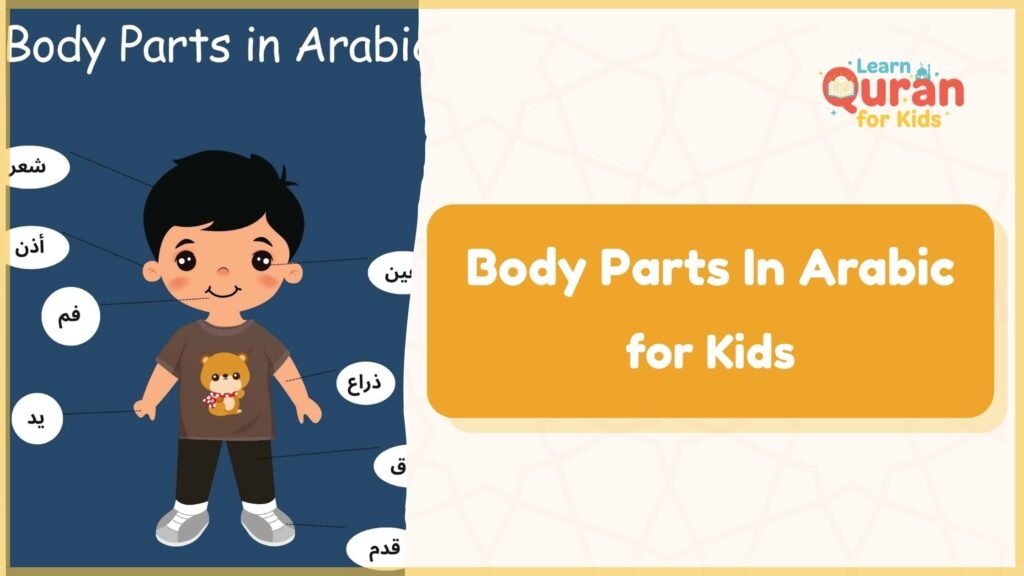
Learning Arabic becomes easier when children start with simple words they can see, touch, and use every day. One of the best beginner topics is body parts in arabic for kids because children can quickly connect each Arabic word with a real part of their body.
This guide helps children learn common body parts in Arabic with English meanings, simple pronunciation, easy examples, and fun activities. Parents and teachers can use it at home, in class, or during daily routines to make Arabic learning clear, natural, and enjoyable.
Arabic is a rich and beautiful language, but young learners need a simple starting point. Body vocabulary is perfect because it appears in songs, games, classroom instructions, stories, and daily conversations.
What Are Common Body Parts In Arabic For Kids?
Children usually learn faster when they begin with words they can point to and repeat. Body parts are ideal because the child can hear the Arabic word, see the meaning, and use movement at the same time.
Common Arabic body parts include رأس meaning head, عين meaning eye, أنف meaning nose, فم meaning mouth, يد meaning hand, ساق meaning leg, and قدم meaning foot. Children can practice these words by touching each body part while repeating the Arabic word aloud.
This makes body parts in arabic for kids a practical beginner topic because it combines vocabulary, pronunciation, movement, and real-life understanding.
Why Learning Body Parts In Arabic Is Important For Kids?
Teaching children body vocabulary is one of the easiest ways to introduce them to Arabic. These words are simple, visual, and connected to actions that children already understand.
When children learn Arabic body parts, they do more than memorize vocabulary. They begin to understand instructions, answer simple questions, and use Arabic during daily routines.
Main Benefits For Young Learners
Body vocabulary gives children a strong foundation in Arabic. It also makes learning feel natural because kids can practice the words while playing, washing, dressing, or singing.
Learning body parts in Arabic helps children:
- Build useful beginner vocabulary.
- Improve pronunciation through repetition.
- Understand simple Arabic commands.
- Connect words with real actions.
- Learn through movement and play.
- Feel more confident when speaking Arabic.
For example, when a child says يد while raising the hand, the word becomes easier to remember because the meaning is linked to a real action.
Arabic Body Parts Vocabulary For Kids
Children should start with the most common body parts first. It is better to teach a small group of words and repeat them often instead of giving children too many words at once.
The following list includes beginner-friendly Arabic body vocabulary with English meanings and simple pronunciation.
| English | Arabic | Pronunciation |
| Body | جسم | Jism |
| Head | رأس | Ra’s |
| Hair | شعر | Sha‘r |
| Face | وجه | Wajh |
| Eye | عين | ‘Ayn |
| Eyes | عيون | ‘Uyoon |
| Ear | أذن | Udhun |
| Nose | أنف | Anf |
| Mouth | فم | Fam |
| Tongue | لسان | Lisaan |
| Teeth | أسنان | Asnaan |
| Neck | رقبة | Raqabah |
| Shoulder | كتف | Katif |
| Chest | صدر | Sadr |
| Back | ظهر | Zahr |
| Arm | ذراع | Dhiraa‘ |
| Hand | يد | Yad |
| Finger | إصبع | Isba‘ |
| Fingers | أصابع | Asaabi‘ |
| Stomach | بطن | Batn |
| Leg | ساق | Saaq |
| Knee | ركبة | Rukbah |
| Foot | قدم | Qadam |
| Feet | قدمين | Qadamayn |
| Toes | أصابع القدم | Asaabi‘ Al-Qadam |
Parents can introduce this vocabulary gradually. Start with five words, review them for a few days, then add more words when the child becomes comfortable.
Help Your Child Move From Basic Arabic Words to Understanding Quranic Arabic
After learning simple topics like body parts in Arabic for kids, your child can take the next step by understanding the Arabic used in the Quran itself. The Quranic Arabic Course for Kids at Kids Learning Quran Academy helps children build Quranic vocabulary, learn basic grammar, and recognize common Quranic phrases in a simple, age-appropriate way.
This course turns Arabic learning from memorizing words into understanding meaning during recitation, prayer, and future Tafseer study.
Enroll your child today and help them grow from beginner Arabic vocabulary to a stronger connection with the words of Allah.
Shots Videos from Our Courses
Start Your Child’s Quran Learning Journey Today!
Join Kids Learning Quran Academy and help your child read the Quran with confidence through fun and guided lessons.
Book a Free Trial ClassHead And Face Parts In Arabic
The head and face are usually the easiest body parts for children to learn. Children can point to them while looking in the mirror, which makes the lesson clear and visual.
This section is a good starting point because words like eye, nose, mouth, and ear are used often in daily life and children’s songs.
Useful Head And Face Words
Start with the most familiar words first. These words are easy to repeat and simple to use in short sentences.
Important head and face words include:
- Head — رأس — Ra’s
- Hair — شعر — Sha‘r
- Face — وجه — Wajh
- Eye — عين — ‘Ayn
- Eyes — عيون — ‘Uyoon
- Ear — أذن — Udhun
- Nose — أنف — Anf
- Mouth — فم — Fam
- Teeth — أسنان — Asnaan
Simple Mirror Practice
A mirror activity helps children see the body part while hearing the Arabic word. This makes the meaning easier to understand and remember.
Ask the child to stand in front of a mirror. Point to one body part and say the Arabic word clearly.
For example:
- Point to the nose and say أنف.
- Point to the eye and say عين.
- Point to the mouth and say فم.
- Point to the head and say رأس.
Repeat this activity for a few minutes each day. Short, regular practice is better than one long lesson.
Upper Body Parts In Arabic
After learning the face and head, children can move to upper body vocabulary. These words are useful in daily routines, physical activities, and classroom instructions.
Children can practice upper body words through simple actions such as raising the hand, touching the shoulder, or moving the arm.
Useful upper body words include:
- Neck — رقبة — Raqabah
- Shoulder — كتف — Katif
- Chest — صدر — Sadr
- Back — ظهر — Zahr
- Arm — ذراع — Dhiraa‘
- Hand — يد — Yad
- Finger — إصبع — Isba‘
- Fingers — أصابع — Asaabi‘
Lower Body Parts In Arabic
Lower body vocabulary is fun for children because it connects naturally with walking, jumping, running, and playing. Movement makes these words easier to remember.
Introduce these words slowly and repeat them during playtime or exercise activities. Children usually enjoy this part because it includes movement.
Important lower body words include:
- Stomach — بطن — Batn
- Leg — ساق — Saaq
- Knee — ركبة — Rukbah
- Foot — قدم — Qadam
- Feet — قدمين — Qadamayn
- Toes — أصابع القدم — Asaabi‘ Al-Qadam
Finger Names In Arabic
Finger names are a fun topic for children because they can use their hands while learning. This lesson can also be connected with counting games and hand activities.
Children may not need to memorize all finger names at the beginning, but introducing them gradually can make their vocabulary stronger.
Arabic Finger Names
Each finger has its own name in Arabic. Teach them one at a time and let the child repeat while pointing.
The finger names are:
- Thumb — إبهام — Ibhaam
- Index Finger — سبابة — Sabaabah
- Middle Finger — وسطى — Wustaa
- Ring Finger — بنصر — Binsar
- Little Finger — خنصر — Khinsir
Easy Hand Game To Practice Finger Names
Hand games help children learn through sight, movement, and repetition. This makes the lesson simple and memorable.
Ask the child to raise one finger at a time. Say the Arabic name, then ask the child to repeat it. You can also count the fingers in Arabic to add another useful skill.
Easy Arabic Sentences Using Body Parts
Children should learn how to use vocabulary in short sentences. This helps them move from memorizing single words to understanding Arabic in real communication.
Simple sentences also make Arabic more useful during daily routines.
Beginner-Friendly Sentences
Use these examples slowly and repeat them often. Parents can say the Arabic sentence first, then explain the meaning in English.
Examples:
- هذه عيني — This is my eye.
- هذا أنفي — This is my nose.
- هذا فمي — This is my mouth.
- عندي يدان — I have two hands.
- عندي قدمان — I have two feet.
- أرفع يدي — I raise my hand.
- ألمس رأسي — I touch my head.
- أغسل وجهي — I wash my face.
- أنظف أسناني — I brush my teeth.
- أفتح عيني — I open my eyes.
How To Use These Sentences?
Do not teach all sentences at once. Choose two or three sentences and repeat them during the right daily moment.
For example, use أغسل وجهي when the child washes their face. Use أنظف أسناني when brushing teeth. This makes Arabic feel connected to real life.
Read also: Colors In Arabic For Kids – With Examples
Start Your Child’s Quran Learning Journey Today!
Join Kids Learning Quran Academy and help your child read the Quran with confidence through fun and guided lessons.
Book a Free Trial ClassArabic Pronunciation Tips For Kids
Arabic pronunciation may feel new for children at first, especially if they speak English as a first language. However, kids usually improve quickly with listening, repetition, and simple practice.
The goal at the beginning is not perfect pronunciation. The main goal is confidence, understanding, and regular use.
1. Listen Before Speaking
Children should hear each Arabic word several times before trying to say it. Listening helps them become familiar with the sound and rhythm of Arabic.
Parents can use short Arabic songs, simple vocabulary videos, or voice recordings. For example, before asking the child to say عين, let them hear the word slowly and clearly more than once.
2. Repeat Words Slowly
After listening, children should repeat each word slowly. It is better to practice a few words every day than to rush through a long list.
Good words for slow practice include:
- عين — ‘Ayn — Eye
- أنف — Anf — Nose
- يد — Yad — Hand
- قدم — Qadam — Foot
- رأس — Ra’s — Head
Slow repetition helps children notice sounds and remember meanings more clearly.
3. Use Actions While Speaking
Movement makes pronunciation practice easier and more memorable. When children say the Arabic word and touch the correct body part, they connect sound with meaning.
For example:
- Say رأس while touching the head.
- Say عين while pointing to the eye.
- Say يد while raising the hand.
- Say قدم while pointing to the foot.
- Say فم while opening the mouth.
This method keeps children engaged and makes the lesson more enjoyable.
Build a Strong Quran Reading Foundation With Noorani Qaida for Kids
After your child learns simple Arabic words like body parts in Arabic for kids, the next step is learning how Arabic letters are read correctly in the Quran. The Noorani Qaida for Kids course at Kids Learning Quran Academy teaches children Arabic letters, vowel sounds, joining rules, Makharij, and basic Tajweed in a structured, child-friendly way.
This helps young learners move from recognizing Arabic words to reading Quranic Arabic with confidence and correct pronunciation.
Enroll your child today and give them a strong foundation for accurate Quran recitation from the very beginning.
Fun Activities To Teach Body Parts In Arabic
Children learn faster when lessons feel like games instead of studying. Activities make Arabic easier, more exciting, and more memorable.
Parents and teachers can use these activities at home, in class, or during short daily practice sessions.
Simon Says In Arabic
This game combines movement, listening, and vocabulary. The parent or teacher gives a command in Arabic, and the child follows the action.
Examples:
- Touch your head — المس رأسك
- Touch your nose — المس أنفك
- Raise your hand — ارفع يدك
- Open your eyes — افتح عينيك
- Move your legs — حرك ساقيك
This game helps children understand Arabic commands even before they can speak perfectly.
Start Your Child’s Quran Learning Journey Today!
Join Kids Learning Quran Academy and help your child read the Quran with confidence through fun and guided lessons.
Book a Free Trial ClassArabic Body Parts Songs
Songs are one of the best ways to teach children vocabulary. Rhythm and repetition help kids remember words naturally.
Parents can choose simple Arabic songs that include body parts such as head, eyes, ears, mouth, hands, knees, and feet. While singing, children should point to each body part as they hear the Arabic word.
Drawing And Coloring
Creative activities are perfect for children who learn visually. Parents can print a simple body outline and ask the child to label body parts in Arabic.
For example:
- عين = Eye
- يد = Hand
- قدم = Foot
- أنف = Nose
- رأس = Head
Coloring makes learning feel relaxed and enjoyable. It also helps children remember the shape, meaning, and position of each word.
Guess The Body Part Game
This game helps children understand meaning instead of only memorizing translations. The parent describes a body part, and the child guesses the Arabic word.
Examples:
- You use this to see — عين
- You use this to hear — أذن
- You use this to walk — قدم
- You use this to speak — فم
- You use this to hold things — يد
This activity builds listening, thinking, and speaking skills.
Daily Practice Routine For Parents
Parents do not need long lessons to teach Arabic at home. Short daily practice is often more effective than one long lesson once a week.
The best method is to use Arabic naturally during routines the child already knows.
Morning Practice
Morning activities are a great chance to use Arabic body vocabulary. Children can hear the same words every day while washing, brushing, and getting ready.
Useful expressions include:
- Wash your face — اغسل وجهك
- Brush your teeth — نظف أسنانك
- Comb your hair — مشط شعرك
- Open your eyes — افتح عينيك
- Wash your hands — اغسل يديك
These phrases help children connect Arabic with real situations.
Playtime Practice
Playtime is perfect for movement-based learning. Children can practice Arabic while jumping, running, clapping, and moving.
Useful examples include:
- Clap your hands — صفق بيديك
- Move your arms — حرك ذراعيك
- Touch your knees — المس ركبتيك
- Jump with your feet — اقفز بقدميك
- Raise your hand — ارفع يدك
This makes Arabic learning active and fun.
Bedtime Practice
Bedtime can be used for calm and simple Arabic review. Parents can repeat a few words gently before sleep.
Examples:
- Close your eyes — أغلق عينيك
- Rest your head — أرح رأسك
- Open your mouth — افتح فمك
- Touch your ear — المس أذنك
- Good night — تصبح على خير
Small daily practice helps children remember words long-term.
Start Your Child’s Quran Learning Journey Today!
Join Kids Learning Quran Academy and help your child read the Quran with confidence through fun and guided lessons.
Book a Free Trial ClassCommon Arabic Sounds Children Should Practice
Arabic has some sounds that may be difficult for beginners. This is normal, especially for children who are used to English sounds.
Parents should introduce difficult sounds slowly and keep the practice positive.
Sounds That Need Extra Practice
Some Arabic letters need more listening and repetition. Children should hear them many times before they can pronounce them clearly.
Important sounds include:
- ع as in عين
- ق as in قدم
- خ as in خد
- ح as in حلق
The word عين is a good example because it contains the letter ع. Children may need to repeat it many times, and that is completely normal.
Helpful Pronunciation Advice
Do not correct every mistake immediately. Too much correction can make children nervous.
Instead:
- Let the child listen first.
- Repeat the word slowly.
- Praise the child’s effort.
- Practice one sound at a time.
- Use songs and games for repetition.
Confidence is more important than perfect pronunciation in the beginning.
Read also: Dua For Sick Child In Arabic
Simple Arabic Questions About Body Parts
Questions help children use Arabic actively. They also make the lesson more interactive because children can answer by pointing, speaking, or repeating the correct word.
Parents can use these questions during playtime, revision, or daily routines.
Easy Questions For Practice
Start with short and clear questions. Children can answer by pointing first, then gradually saying the Arabic word.
Examples:
- أين عينك؟ — Where is your eye?
- أين يدك؟ — Where is your hand?
- أين قدمك؟ — Where is your foot?
- كم لديك من أصابع؟ — How many fingers do you have?
- ما هذا؟ — What is this?
- هل هذه أذنك؟ — Is this your ear?
These questions help children move from passive learning to simple Arabic communication.
Best Ways To Practice Arabic Body Vocabulary At Home
Home practice should be simple, consistent, and enjoyable. Parents do not need advanced Arabic skills to help children learn beginner vocabulary.
A few minutes every day can make a big difference when the child hears and uses the same words regularly.
Practical Home Learning Tips
Parents can make Arabic part of normal family life. The more natural the practice feels, the easier it becomes for children.
Helpful ideas include:
- Use Arabic flashcards.
- Watch Arabic cartoons.
- Sing Arabic songs.
- Label body parts in drawings.
- Practice five words daily.
- Use Arabic during morning routines.
- Ask simple questions like أين يدك؟
- Praise the child’s progress.
These methods help children hear, see, say, and use Arabic words in different ways.
Common Mistakes Children Should Not Fear
Children may pronounce Arabic words incorrectly at first. This is completely normal and should not be treated as a problem.
The most important thing is to keep the child confident and willing to try.
Common Beginner Mistakes
Mistakes are part of learning a new language. With repetition and listening, children improve naturally.
Common mistakes include:
- Mixing similar Arabic sounds.
- Forgetting long vowel sounds.
- Saying ع like a normal “a” sound.
- Confusing singular and plural words.
- Remembering the meaning but forgetting the Arabic word.
Parents should focus on encouragement, not pressure. A positive learning experience helps children continue practicing.
Our Students Reviews
Start Your Child’s Quran Learning Journey Today!
Join Kids Learning Quran Academy and help your child read the Quran with confidence through fun and guided lessons.
Book a Free Trial ClassHelp Your Child Build Arabic Confidence With Learn Quran For Kids Academy
To make these daily Arabic words easier for your child to remember, structured lessons can make a real difference. After practicing simple topics like body parts in arabic for kids at home, your child can continue building Arabic confidence through guided online classes at Learn Quran For Kids. The academy helps children learn Arabic, Quran reading, Tajweed, and Islamic basics in a simple, engaging way designed for young learners.
Start with small words today, and let your child grow step by step toward stronger Arabic and Quran learning with Learn Quran For Kids.
Our Courses Include:
- Tajweed for Kids
- Quran Memorization for Kids
- Quran Recitation Course for Kids
- Quran Classes for Toddlers
- Quran Tafseer for Kids
- Qaida for Kids
- Quran Reading Course for Kids
- Online Arabic Classes for Kids
- Quranic Arabic for Kids
- Islamic Studies Courses for Kids
- Islamic Studies for Kindergarten
- 5 Pillars of Islam for Kids
- Islamic Education for Kids
Don’t wait to invest in your child’s Akhirah and future. Enroll today and watch your child grow with confidence, knowledge, and love for the Quran.
Join Kids Learning Quran Academy now and start your child’s learning journey today!
Start Your Child’s Quran Learning Journey Today!
Join Kids Learning Quran Academy and help your child read the Quran with confidence through fun and guided lessons.
Book a Free Trial ClassConclusion
Learning body parts in arabic for kids is one of the easiest and most useful ways to introduce children to Arabic. These words are practical, visual, and simple to practice through daily routines, games, songs, movement, and short sentences.
When children learn Arabic in a fun and active way, they become more confident and more willing to speak. Parents and teachers can make the process simple by starting with common words, repeating them often, and using them naturally during everyday life.
With regular practice, children can build strong Arabic vocabulary, improve pronunciation, and develop a positive connection with the Arabic language from an early age.
Frequently Asked Questions
This section answers common questions parents and teachers may have before teaching Arabic body vocabulary to children. The answers are simple and focused on beginner learning.
What Are The Easiest Body Parts In Arabic For Kids To Learn?
The easiest body parts for children to learn are usually رأس, عين, أنف, فم, يد, and قدم. These words are common, simple, and easy to practice through pointing and movement.
How Can I Teach My Child Arabic Body Parts At Home?
You can teach Arabic body parts at home through short daily practice, songs, flashcards, games, and simple commands. The best method is to connect each word with a real action.
Do Kids Need To Learn Arabic Grammar First?
No, children do not need to learn Arabic grammar before learning body vocabulary. It is better to begin with simple words and short useful phrases.
How Many Arabic Body Parts Should Kids Learn First?
Children can start with five to ten basic body parts. A good first list includes head, eye, nose, mouth, hand, foot, ear, teeth, hair, and face.
What Is The Best Activity For Teaching Arabic Body Parts?
One of the best activities is Simon Says in Arabic because it combines listening, movement, and vocabulary. Children hear the Arabic command and respond with an action.
Why Is Learning Body Parts In Arabic Useful For Children?
Learning body parts in Arabic helps children understand daily instructions, describe themselves, talk about feelings or pain, and build basic communication skills.
Related Articles
Learn Arabic