 Learn Arabic
Learning Arabic through stories makes language practice fun, meaningful, and engaging for children. Arabic stories help children build vocabulary while developing reading, listening, pronunciation, and comprehension skills naturally through context.
For the best results, choose stories that match your child’s age and Arabic level, with simple language and familiar topics that encourage steady progress.
1. The Story Of The Letter Alif
The Story of The Letter Alif قصة حرف الألِف introduces young Arabic learners to the letter Alif (أ) by showing how it appears independently and in the beginning, middle, and end of words.
Presented through a simple, enjoyable story, it helps children recognize Alif in different forms, improve letter recognition and reading skills, and build confidence in learning Arabic. The story is available on the Learn With Noor YouTube Channel.
Read also: Arabic Story for Kids
2. The Giraffe’s Photograph Story
Animal stories on the 3asafeer app introduce children to familiar animals through colorful illustrations, simple descriptive vocabulary, and engaging storylines.
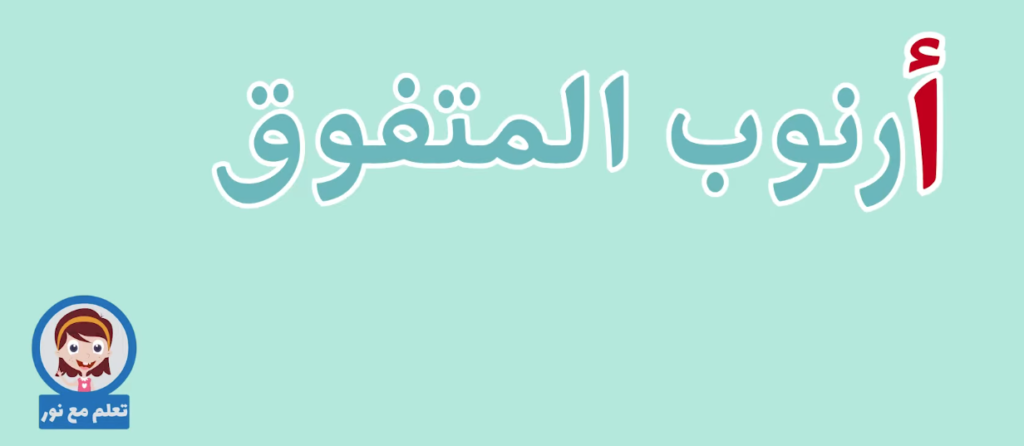
Stories such as “The Giraffe’s Photograph – صورة فوتوغرافية للزرافة الشقية” help children learn Arabic words in context, develop reading and comprehension skills, and discover positive values and lessons through the characters’ experiences.
Read also: How To Learn Arabic Grammar For Kids?
Read also: How to Learn Arabic for Kids?
3. Birthday Party Story
Reading simple Arabic stories helps young children build vocabulary, improve reading and comprehension skills, and become familiar with Arabic sentence patterns in an enjoyable way.
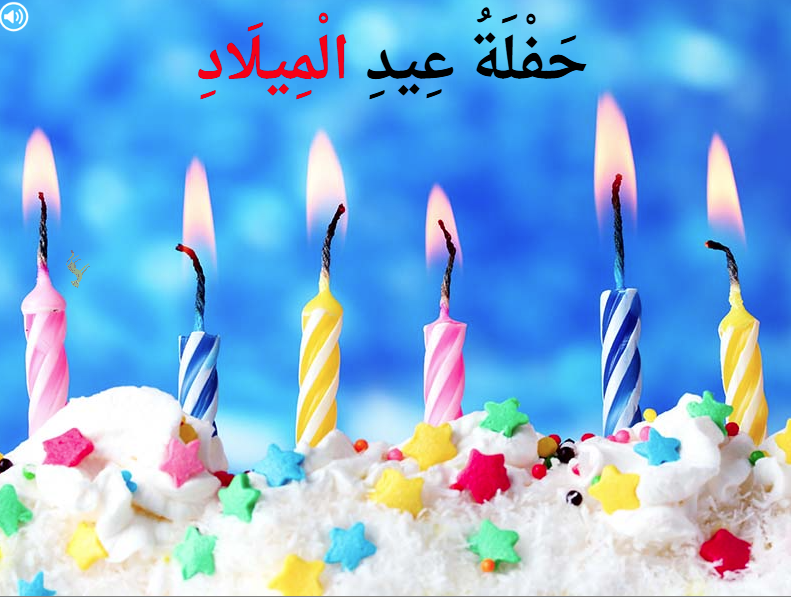
A story such as “Birthday Party – Eid Milad” on the Alef Baa Taa platform uses simple, age-appropriate words, making it a helpful choice for young learners to practice Arabic while enjoying an engaging story.
Read also: Islamic Birthday Wishes for Kids
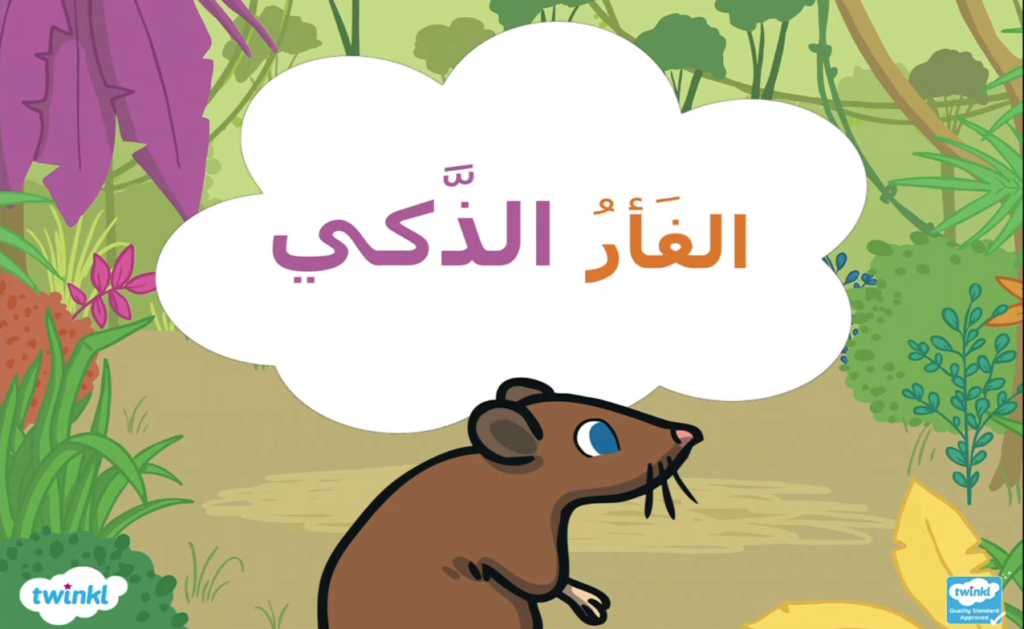
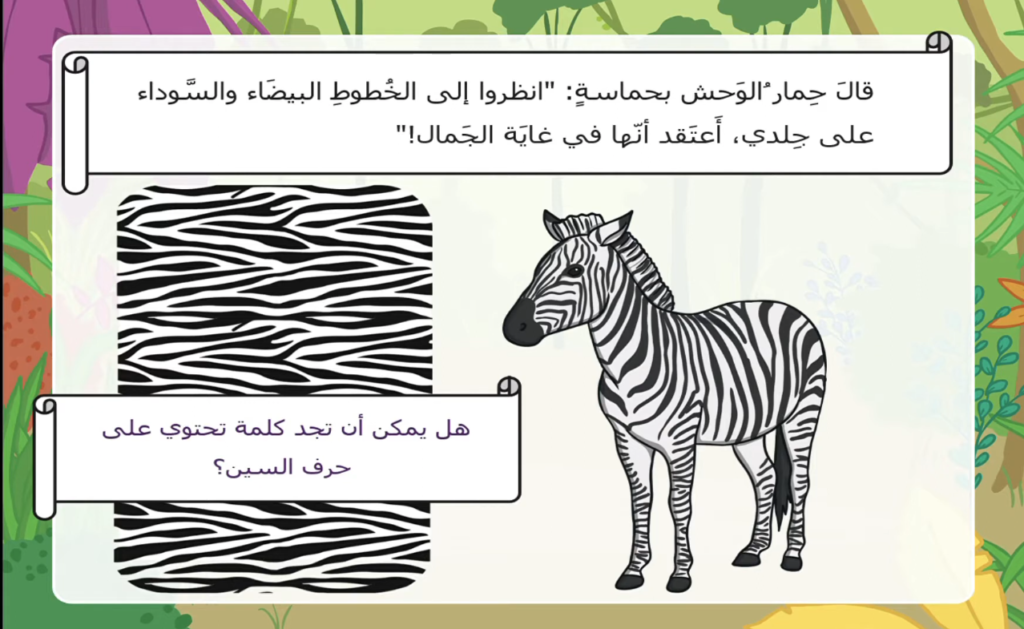
4. The Smart Mouse Story
Short Arabic stories are ideal for beginners because they use simple plots, short sentences, repeated words and phrases, and familiar everyday vocabulary. A good example is “The Smart Mouse”, which can introduce children to simple words and sentence patterns while keeping them engaged with an easy, illustrated story.
5. Letters Adventure In The House Of Harakat
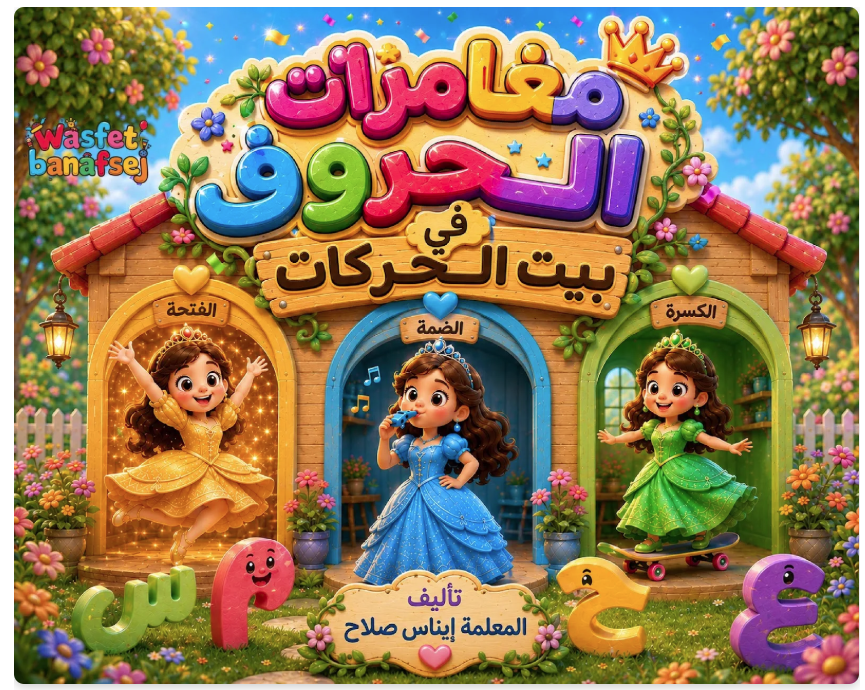
Letters Adventure in the House of Harakat makes learning Arabic vowel marks (Harakat) simple and engaging by introducing Fatha, Damma, and Kasra through a fun story.
The memorable characters and examples help children understand how Harakat change letter sounds, improve pronunciation and reading accuracy, and build confidence in reading Arabic words independently. The story is available on مدونة وصفة بنفسج (Wasfet Banafsej).
6. Sea And Cloud Story
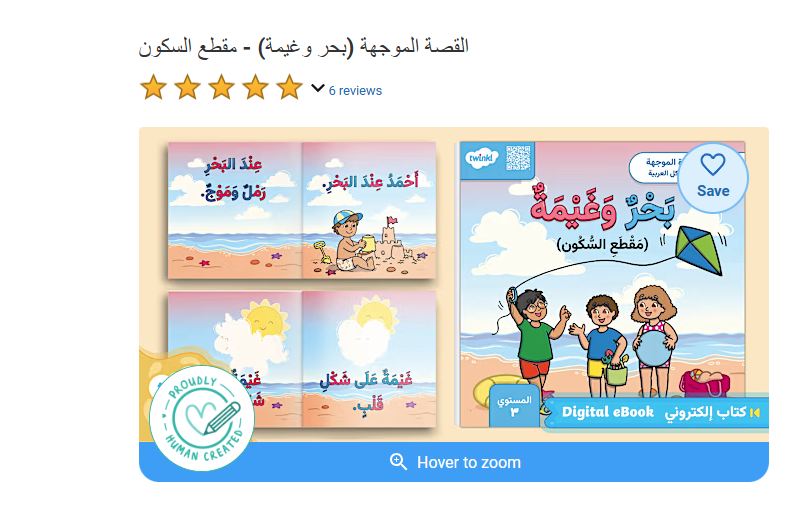
Arabic stories can make early reading skills more engaging by introducing important Arabic concepts such as Sukoon in a simple, practical context.
The story “Sea and Cloud – Sukoon بَحر وغَيْمة” uses short sentences and simple words to help children practice reading Sukoon syllables, improve correct pronunciation, and gradually develop reading fluency.
Teachers can use it alongside guided reading and exercises, while parents can practice the story at home to reinforce early Arabic reading skills.
7. In Summer
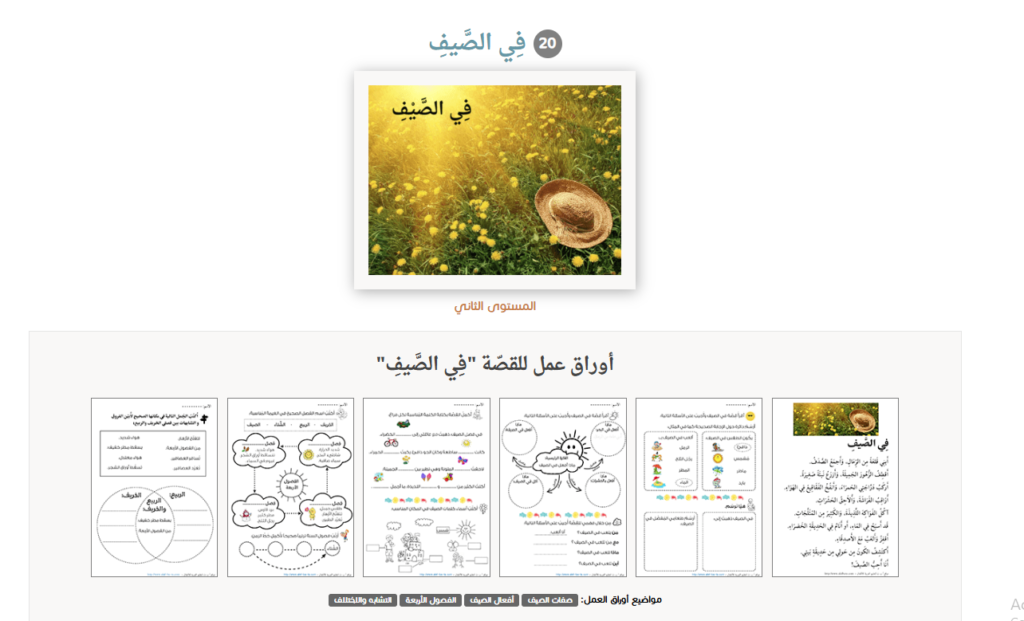
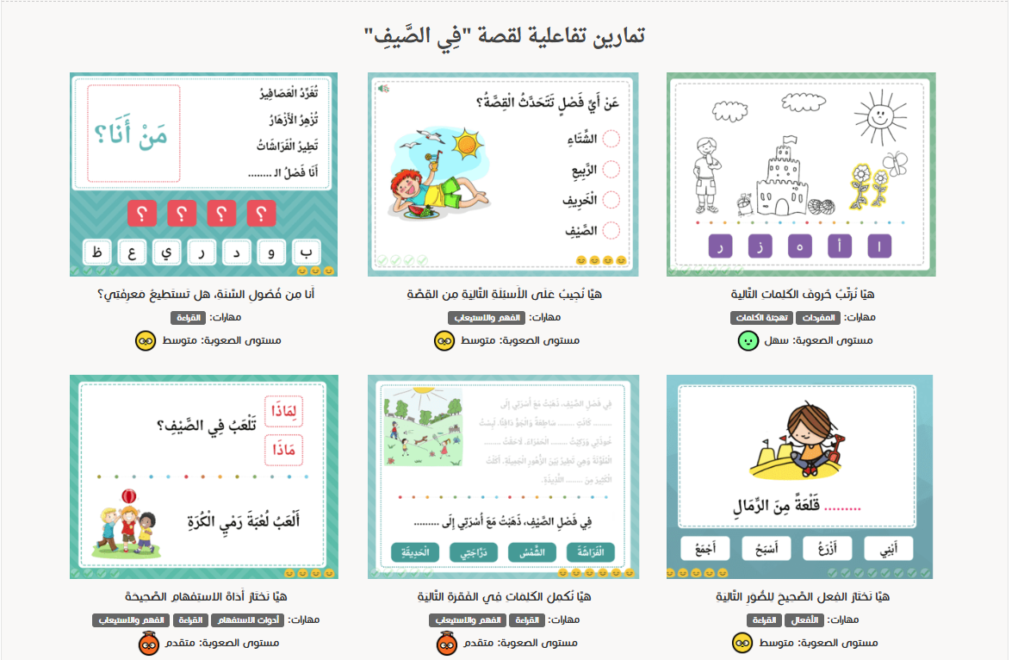
In Summer “في الصيف” is a simple and engaging Arabic story designed for young learners, using short sentences and familiar vocabulary in addition to clear Arabic narration to make reading easier and more enjoyable.
It helps children develop Arabic reading, vocabulary, and comprehension skills while building confidence through age-appropriate language. The story is available on the Alef Baa Taa platform, along with interactive worksheets and activities that reinforce the vocabulary and reading skills introduced in the story.
Read also: Seasons In Arabic For Kids
8. The “Verbal Sentence (الجملة الفعلية)” Story
The “Verbal Sentence (الجملة الفعلية)” Story on Twinkl is a fun and simple way to introduce young Arabic learners to an important foundation of Arabic grammar.
Through an engaging story, clear examples, and interactive exercises, children can understand how verbal sentences are formed, improve their grammar skills, and remember the rules more easily.
Read also: How to Teach Kids Arabic? A Step-by-Step Parent’s Guide
Read also: Arabic Grammar For Kids
See Our Classes in Action!
Wondering what a typical lesson looks like? Take a peek inside our virtual classrooms below to see how our patient teachers keep students smiling, engaged, and learning every step of the way.
Start Your Child’s Quran Learning Journey Today!
Join Kids Learning Quran Academy and help your child read the Quran with confidence through fun and guided lessons.
Book a Free Trial Class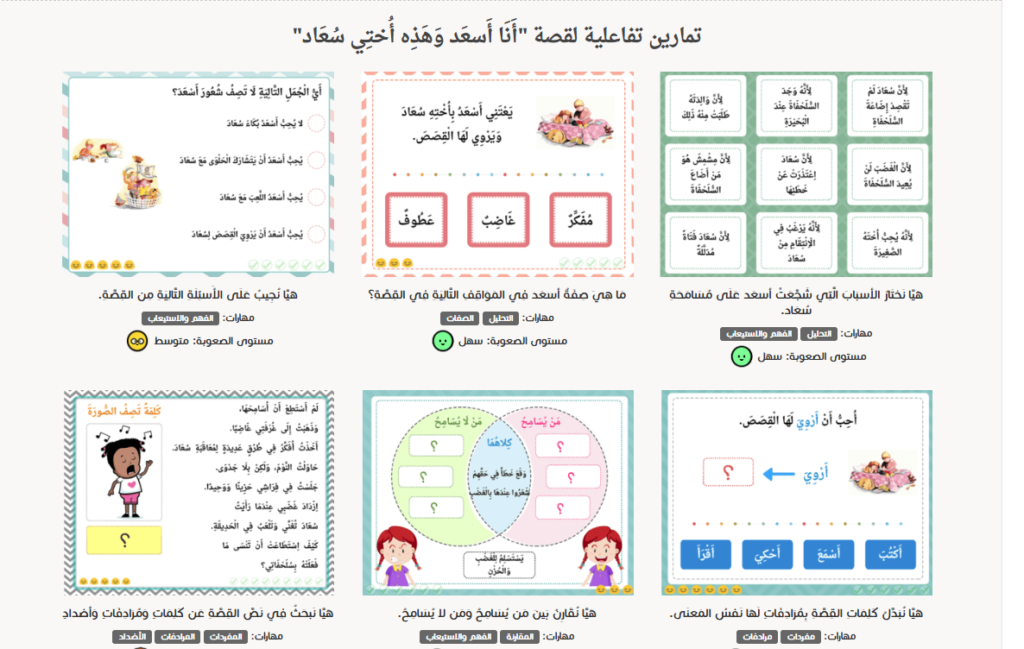
9. The “Nominal Sentence (الجملة الاسمية)” Story
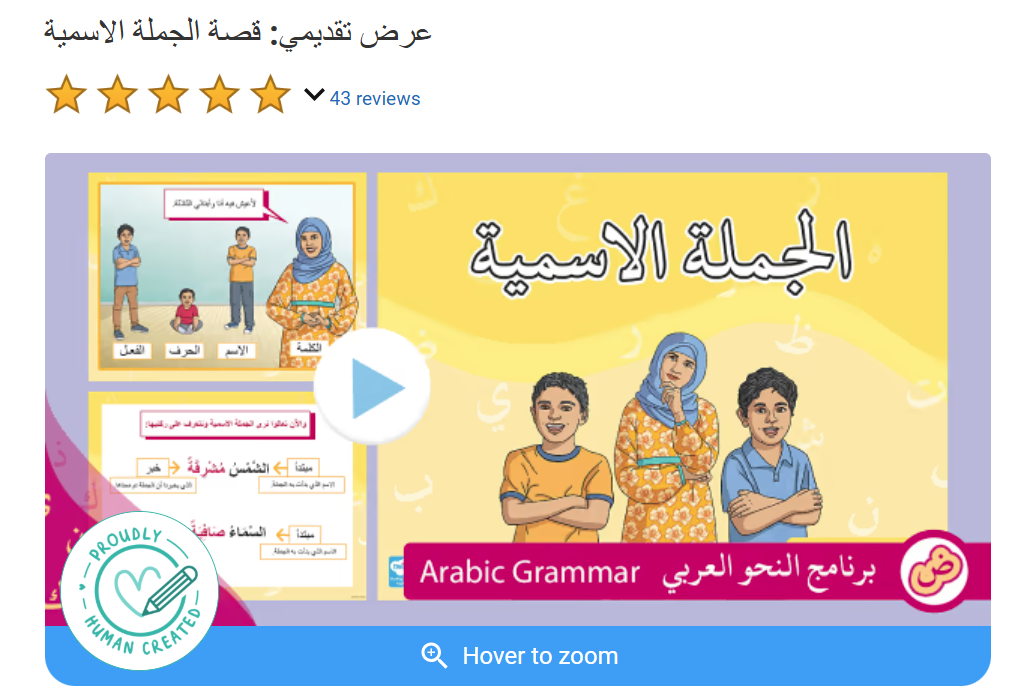
The “Nominal Sentence (الجملة الاسمية)” story on Twinkl helps children learn another essential foundation of Arabic grammar engagingly and memorably.
It introduces the concept of the nominal sentence, its main components, and the roles of المبتدأ والخبر, helping young learners understand sentence structure, strengthen their grammar skills, and use Arabic more accurately and confidently.
10. I Am Asa’ad And This Is My Sister Su’ad
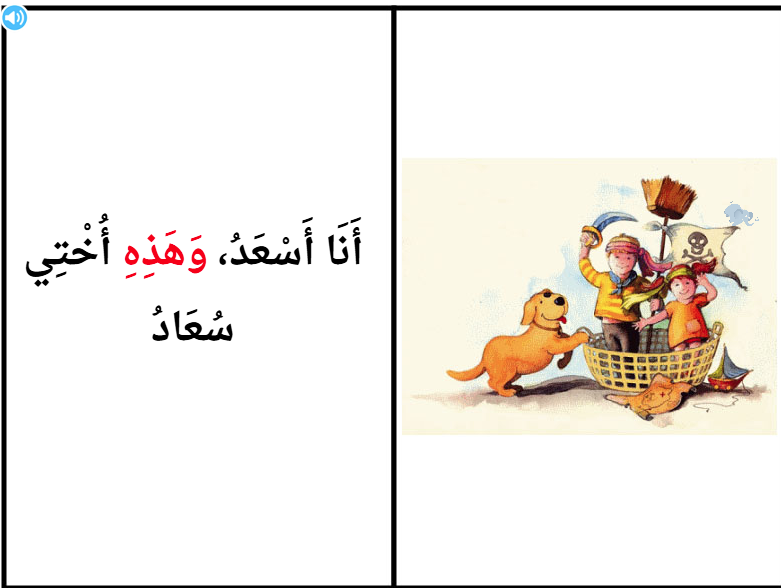
I am Asa’ad And This Is My Sister Su’ad “أنا أسعد وهذه أختي سعاد” is a simple and engaging Arabic story designed for young learners, using short sentences and familiar vocabulary to make reading and comprehension easier.
It helps children build vocabulary, recognize sentence patterns, and develop confidence in using Arabic in meaningful contexts. The story is available on the Alef Baa Taa platform, along with interactive worksheets and activities that reinforce the language skills introduced in the story.
Read also: How to Learn Arabic for Kids?
Read also: Arabic Reading for Kids
Best Arabic Stories For Language Learners By Age And Level
| Story Title | Age | Moral / Learning Takeaway | Online Availability |
| 1. The Story of the Letter Alif | 4–6 | Helps children recognize Alif (أ) in different word positions and builds early Arabic reading confidence. | Learn With Noor YouTube Channel |
| 2. The Giraffe’s Photograph Story | 4–7 | Helps children learn Arabic vocabulary through familiar animals while developing comprehension and discovering positive values. | 3asafeer App |
| 3. Birthday Party Story | 4–7 | Builds everyday Arabic vocabulary, reading skills, and familiarity with simple sentence patterns through an enjoyable story. | Alef Baa Taa Platform |
| 4. The Smart Mouse Story | 5–8 | Uses repetition, simple sentences, and familiar vocabulary to help beginners understand and remember Arabic naturally. | YouTube |
| 5. Letters Adventure in the House of Harakat | 4–7 | Makes Fatha, Damma, and Kasra easier to understand while improving pronunciation and Arabic reading accuracy. | Wasfet Banafsej Blog |
| 6. Sea and Cloud – Sukoon | 5–8 | Helps children practice Sukoon, improve pronunciation, and develop accurate and fluent early Arabic reading. | Twinkl |
| 7. In Summer – في الصَّيْف | 5–8 | Develops vocabulary, reading, and comprehension through familiar summer-related words and simple Arabic sentences. | Alef Baa Taa Platform |
| 8. The Verbal Sentence – الجملة الفعلية | 7–10 | Introduces الجملة الفعلية and helps children understand Arabic sentence structure and use grammar more accurately. | Twinkl |
| 9. The Nominal Sentence – الجملة الاسمية | 7–10 | Teaches الجملة الاسمية, including المبتدأ والخبر, and strengthens children’s understanding of Arabic grammar. | Twinkl |
| 10. I Am Asa’ad and This Is My Sister Su’ad | 5–8 | Strengthens vocabulary, sentence recognition, reading comprehension, and confidence in using Arabic in meaningful contexts. | Alef Baa Taa Platform |
Arabic Stories Online For Kids
Discover engaging Arabic stories online for kids that make language learning fun while helping children build vocabulary, reading, and comprehension skills through age-appropriate stories.
1. Dodo The Caterpillar
The story of Dodo The Caterpillar الدودة التي طارت from Eshraqa Academy is suitable for young Arabic learners, especially children at the beginner to intermediate level, as it uses simple sentences, familiar vocabulary, and an engaging storyline.
It helps children develop Arabic reading and comprehension skills while expanding their vocabulary through meaningful context. The story also teaches valuable lessons about self-confidence, appreciating one’s abilities, friendship, and helping others, making Arabic learning both educational and enjoyable.

2. The Colorful Journey To The Zoo
“The Colorful Journey to the Zoo” (رحلة بالألوان لحديقة الحيوان) is a fun Arabic story suitable for young learners, especially children around 5–9 years old. Through an exciting zoo adventure and familiar animal vocabulary, it helps children expand their Arabic vocabulary, improve reading and comprehension, and learn about animals in an engaging context.
Available online through Kidzzstory, the story can be read and downloaded, and its many illustrated pages also include coloring activities, allowing children to combine Arabic learning with creativity and make the reading experience more interactive and enjoyable.
Read also: Colors in Arabic for Kids – With Examples
3. Let’s Count The Animals
“Let’s Count the Animals” (لِنَعُدّ الحيوانات) is a simple and engaging Arabic story suitable for young learners around 4–7 years old.
Available online through the Global African Storybook platform, it combines early Arabic reading with counting practice, allowing children to learn animal vocabulary, recognize simple Arabic sentences, and practice numbers while following the story.
This makes it a useful resource for building vocabulary, reading comprehension, and confidence in Arabic in an enjoyable, age-appropriate way.
Read also: Learning Arabic Numbers For Kids
4. The Little Bird Story
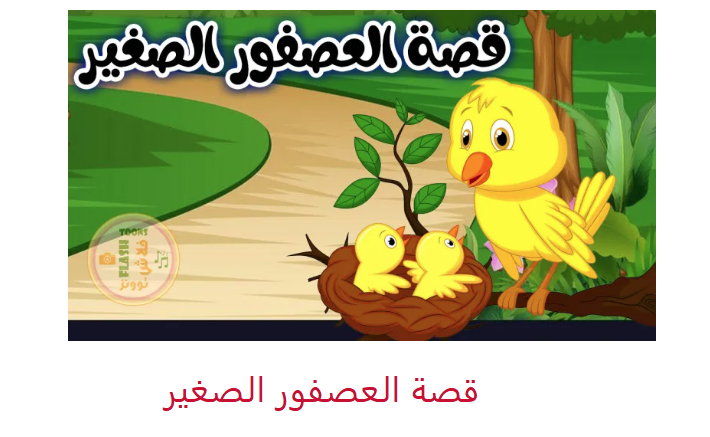
“The Little Bird Story” (قصة العصفور الصغير) is a suitable choice for young Arabic learners, especially children around 4–7 years old, as it uses simple language and an engaging storyline to develop vocabulary, reading, and comprehension skills.
The story also teaches an important Islamic moral about obeying parents, avoiding disobedience, and respecting parental guidance, helping children connect Arabic learning with positive Islamic values. It is available to read online through Flash Toons, as well as through the free Kids Stories app, giving children an accessible way to enjoy Arabic stories anytime.
5. The Fox Who Wanted To Be Loved
“The Fox Who Wanted to Be Loved” (الثعلب الذي أراد أن يكون محبوبًا) is a suitable story for young Arabic learners, especially children around 5–8 years old, as it uses simple sentences, familiar animals, and everyday vocabulary to make Arabic reading and comprehension enjoyable.
The story helps children expand their vocabulary, recognize sentence patterns, and understand Arabic in a meaningful context while teaching a valuable lesson about self-confidence, accepting yourself, and appreciating your own strengths. It is available online through Noory Books, making it a useful resource for children to practice Arabic through engaging storytelling.
There is also a Noory Books app, offering a wide collection of Arabic stories for kids. It gives young learners an easy and engaging way to read Arabic stories and practice their language skills.
Read also: Arabic Kids Books

Arabic Stories With English Translation – Are They Helpful?
Arabic stories with English translation can be helpful for beginners because they provide quick support when children do not understand a new word or sentence, making stories less frustrating and easier to follow. However, children should not rely on translation for every word, as this can limit their ability to understand Arabic directly.
As their vocabulary and comprehension improve, parents and teachers can gradually reduce English support, moving from bilingual stories to Arabic-only stories to encourage greater confidence, listening, reading, and comprehension skills.
Read also: 7 Best Arabic Children’s Books With English Translation For Kids
Arabic Stories For Language Learners
Arabic stories are an effective way for language learners to develop vocabulary, reading, listening, and comprehension skills in context.
Choosing stories with simple sentences, familiar topics, repetition, and age-appropriate language helps learners gradually understand Arabic and use new words with greater confidence.
Stories Vs. Traditional Arabic Vocabulary Practice
Learning Arabic through stories gives children a more meaningful and engaging way to build vocabulary than traditional memorization. Stories introduce words in context, combine reading, listening, pronunciation, and comprehension, and use characters and plots to make learning memorable.
They also encourage natural repetition while helping children understand how words are used in real situations, whereas traditional vocabulary practice often presents individual words and focuses mainly on recognition and memorization.
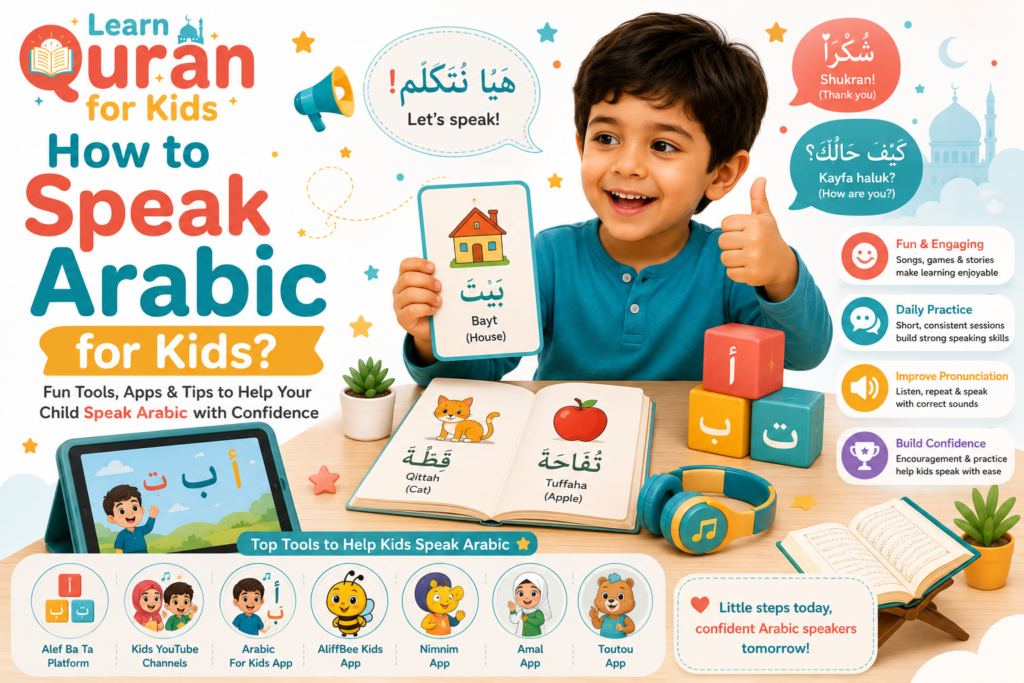
Read also: How to Speak Arabic for Kids?
Tips For Making Arabic Story Time A Daily Habit
Making Arabic story time part of your child’s daily routine can make language learning more enjoyable and consistent. Keep each session short and engaging, and try to read at the same time every day so it becomes a natural habit.
Let your child choose stories that interest them, and do not hesitate to repeat their favorite stories, as repetition helps strengthen vocabulary, pronunciation, and comprehension. Celebrate small improvements to keep your child motivated, and connect new words from the stories to objects, activities, and situations in everyday life so children can use Arabic beyond story time.
Experience the Magic Firsthand
Watch these short clips from our live classes to see our interactive teaching tools, vibrant student-teacher interactions, and the fun, stress-free ways we make learning easy for kids!
Start Your Child’s Quran Learning Journey Today!
Join Kids Learning Quran Academy and help your child read the Quran with confidence through fun and guided lessons.
Book a Free Trial ClassGive Your Child A Stronger Start In Arabic Today
Stories can make Arabic fun, but structured learning is what turns that interest into real progress. Give your child the guidance, practice, and confidence they need with Learn Quran for Kids.
Our engaging Arabic lessons help children build vocabulary, reading, pronunciation, comprehension, and communication skills step by step—with lessons designed around their age and learning level.
Don’t let your child’s Arabic learning happen by chance. Start building strong Arabic skills today.
Enroll your child in Learn Quran for Kids and book a trial lesson now!
Our Courses Include:
- Tajweed for Kids
- Quran Memorization for Kids
- Quran Recitation Course for Kids
- Quran Classes for Toddlers
- Quran Tafseer for Kids
- Qaida for Kids
- Quran Reading Course for Kids
- Online Arabic Classes for Kids
- Quranic Arabic for Kids
- Islamic Studies Courses for Kids
- Islamic Studies for Kindergarten
- 5 Pillars of Islam for Kids
- Islamic Education for Kids
Start Your Child’s Quran Learning Journey Today!
Join Kids Learning Quran Academy and help your child read the Quran with confidence through fun and guided lessons.
Book a Free Trial ClassConclusion
Arabic stories make learning more enjoyable by helping children practice vocabulary, reading, listening, pronunciation, and comprehension in a meaningful context. Choosing stories that match a child’s age and Arabic level keeps learning manageable and engaging, while combining story reading with listening, repetition, and simple activities helps reinforce new language naturally.
For a more structured approach, Learn Quran for Kids can support your child’s Arabic development through engaging, age-appropriate Arabic education that builds strong language skills step by step.
Frequently Asked Questions
Can Children Learn Arabic Through Stories?
Yes. Stories make Arabic engaging by teaching vocabulary, sentence patterns, reading, listening, and comprehension in context.
What Are The Best Arabic Stories For Beginners?
Short stories with simple sentences, familiar vocabulary, repetition, and clear illustrations are ideal for beginners.
What Age Can Children Start Learning Arabic Through Stories?
Children can start from a young age, even during the preschool years, using stories that match their language level and attention span.
Are Arabic Stories Good For Non-Native Arabic Speakers?
Yes. Simple Arabic stories help non-native speakers build vocabulary and understand common expressions naturally without relying only on memorization.
Where Can I Find Arabic Stories Online For Kids?
Parents can find Arabic children’s stories on platforms such as Alef Baa Taa, Twinkl, 3asafeer, Flash Toons, Noory Books, and other educational websites.
Should Arabic Children’s Stories Have English Translations?
Translations can help beginners understand unfamiliar words, but children should gradually move toward Arabic-only stories as their vocabulary and comprehension improve.
Are Arabic Bedtime Stories Useful For Language Learning?
Yes. Bedtime stories provide regular exposure to Arabic and help children develop listening, vocabulary, comprehension, and a positive connection with the language.
How Can I Improve My Child’s Arabic Pronunciation Through Stories?
Read the story aloud and encourage your child to repeat sentences after you. Listening to narrated stories can also help children hear and practice correct pronunciation.
How Often Should My Child Read Arabic Stories?
Daily reading is ideal, even for just 10–15 minutes. Regular short sessions are more effective than occasional long reading sessions.
What Arabic Story Activities Can I Do After Reading?
Ask comprehension questions, review new vocabulary, retell the story, act out characters, draw a favorite scene, or create simple sentences using words from the story.
Related Articles
Learn Arabic