 Learn Arabic
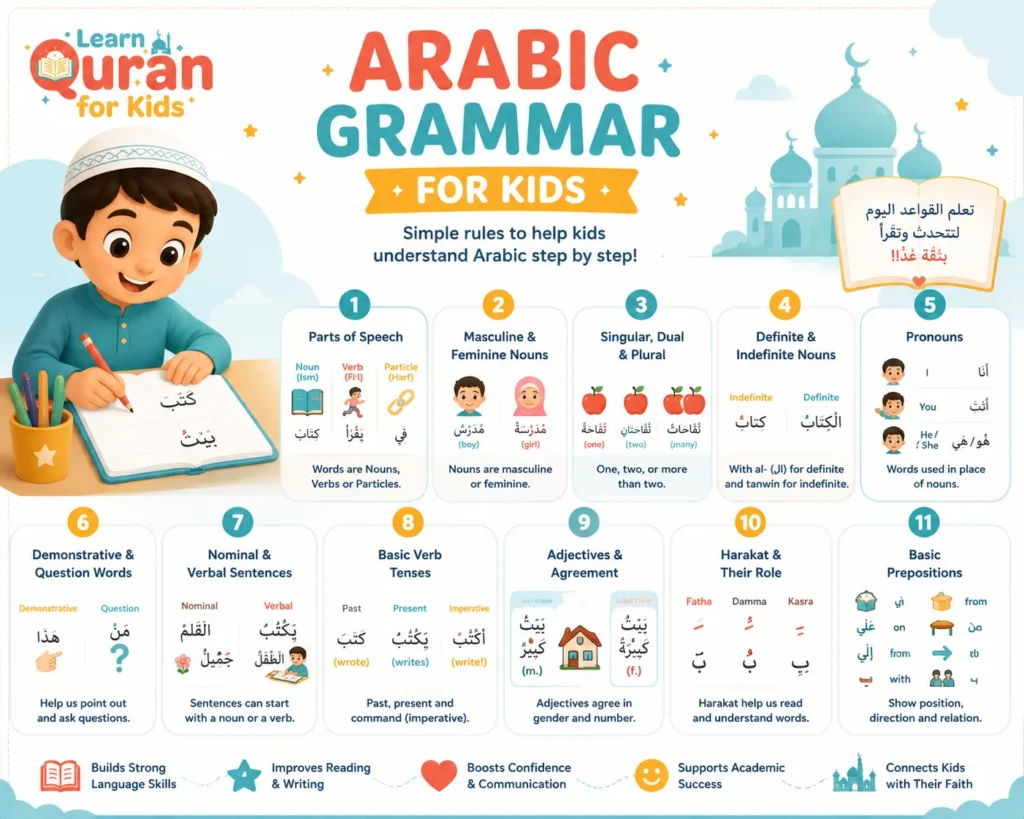
Learning Arabic grammar for kids provides a strong foundation for speaking, reading, writing, and understanding Arabic correctly. Grammar is not about memorizing difficult rules; when taught in an age-appropriate way, it helps children understand how words and sentences work together and express themselves with confidence.
Starting with basic grammar rules, simple concepts, and practical examples makes grammar easier and more enjoyable. This is especially helpful for children growing up in non-Arabic-speaking environments, as it gives them a structured way to build vocabulary, improve language skills, and develop a strong foundation in Arabic.
1. Learn Parts Of Speech – Nouns, Verbs, And Particles
Children first learn that Arabic words are divided into three main types:
Nouns (Ism): Name a person, place, animal, object, or idea, such as a book كتاب or a teacher مُعلم.
Verbs (Fi‘l): Describe an action or event, such as read يقرأ, write اكتُب, or play لَعِب.
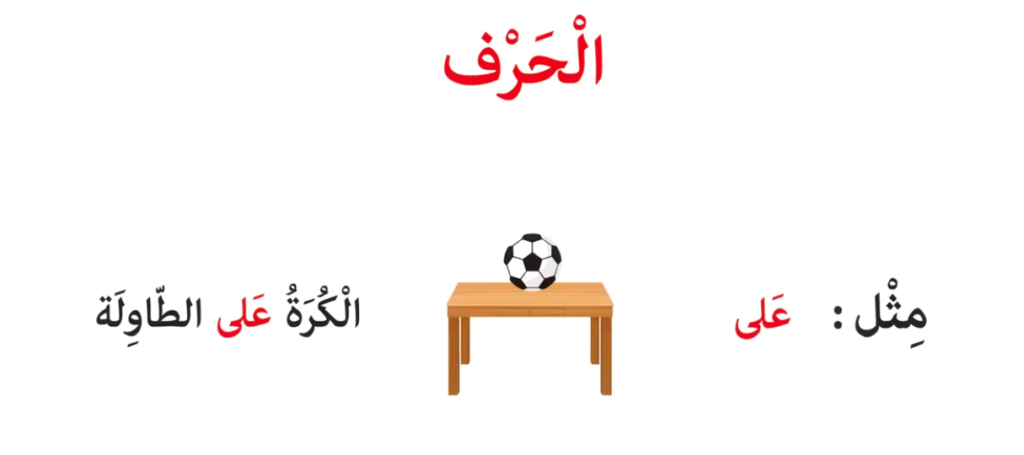
Particles (Harf): Connect words or add meaning, such as in في, from مِن, or to إلى.
Understanding these three types helps children recognize words and build simple Arabic sentences.
2. Learn Masculine And Feminine Nouns
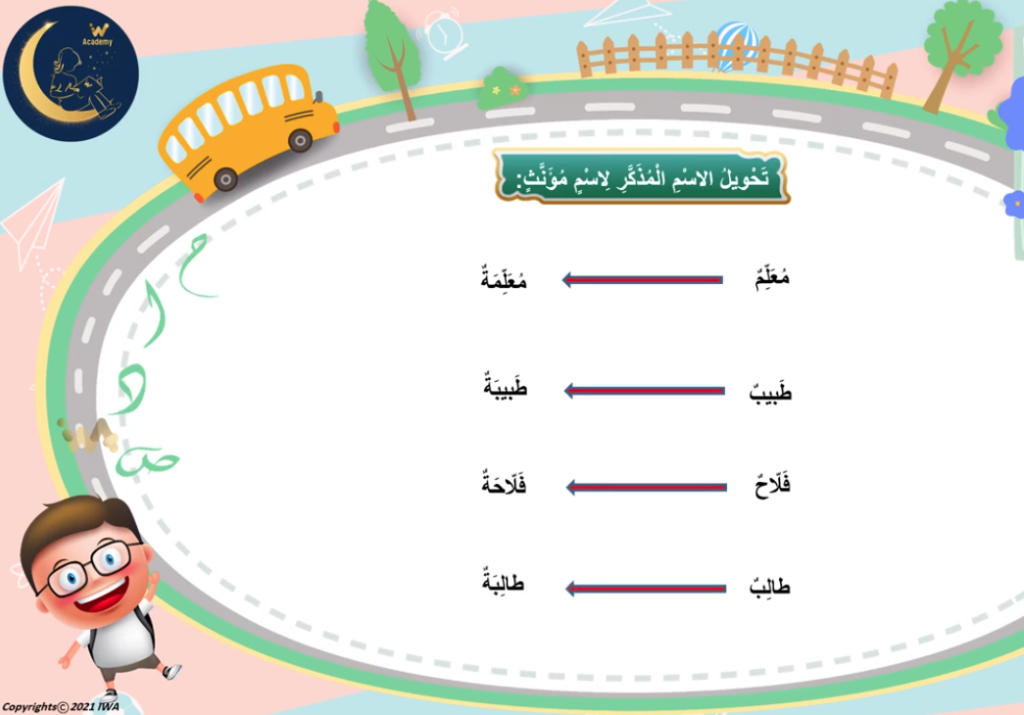
Children learn to identify whether a noun is masculine or feminine. They also learn common feminine markers, such as ة (taa marbuta), and how adjectives change to agree with the noun in gender. This helps them form simple, grammatically correct phrases and sentences.
Read also: How to Teach Kids Arabic? A Step-by-Step Parent’s Guide
3. Describe Singular, Dual, And Plural
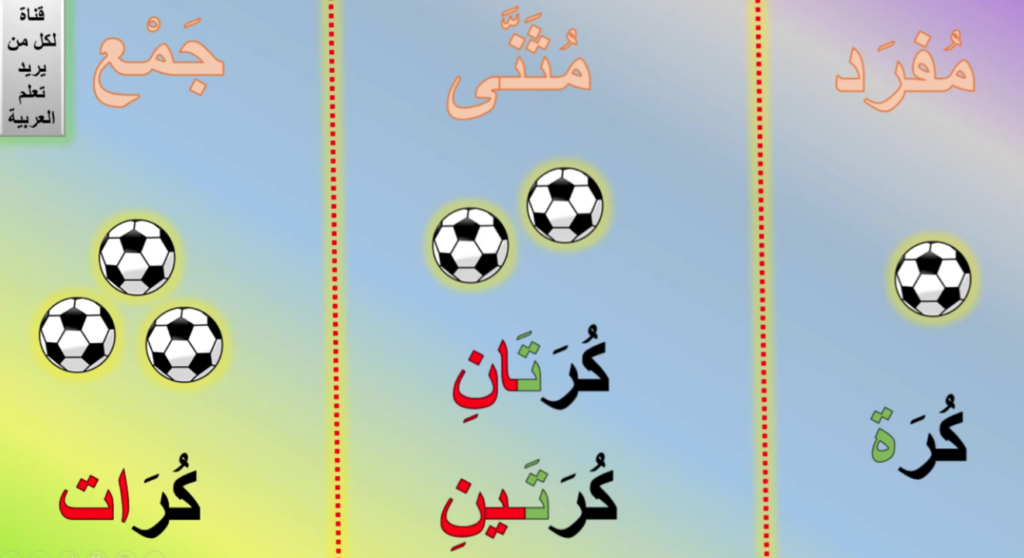
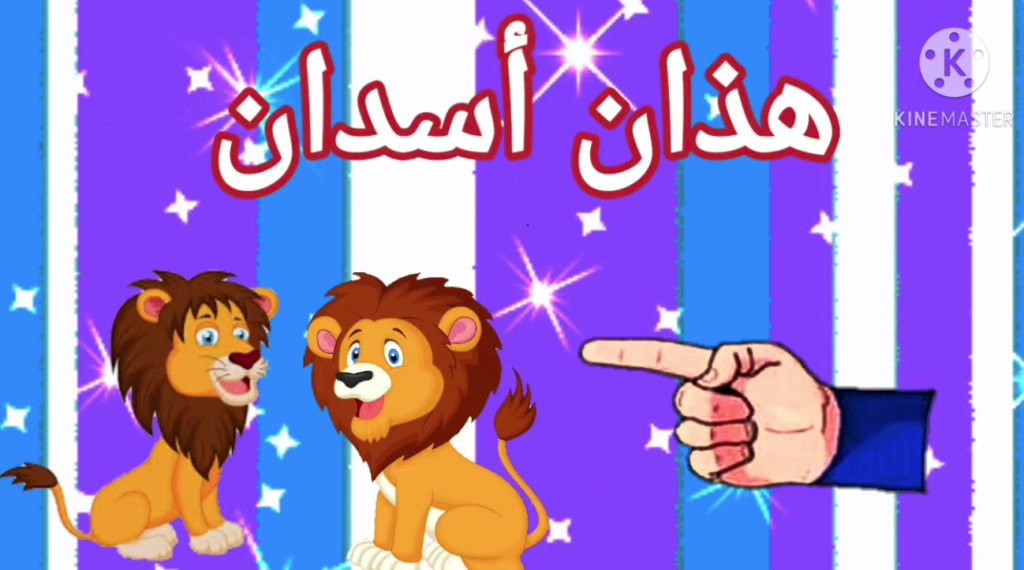
Arabic nouns can describe one, two, or more than two. Children learn mufrad (singular), muthanna (dual), and jam‘ (plural) using familiar words and pictures. This helps them recognize different noun forms and understand basic Arabic plural patterns.
Read also: How to Learn Arabic for Kids?
4. Learn The Difference Between Definite And Indefinite Nouns
Children learn the difference between definite and indefinite nouns. They are introduced to al- (ال) for definite nouns and tanwin for indefinite nouns. Simple examples help them recognize and use both forms in Arabic sentences.
Read also: How To Write In Arabic For Kids?
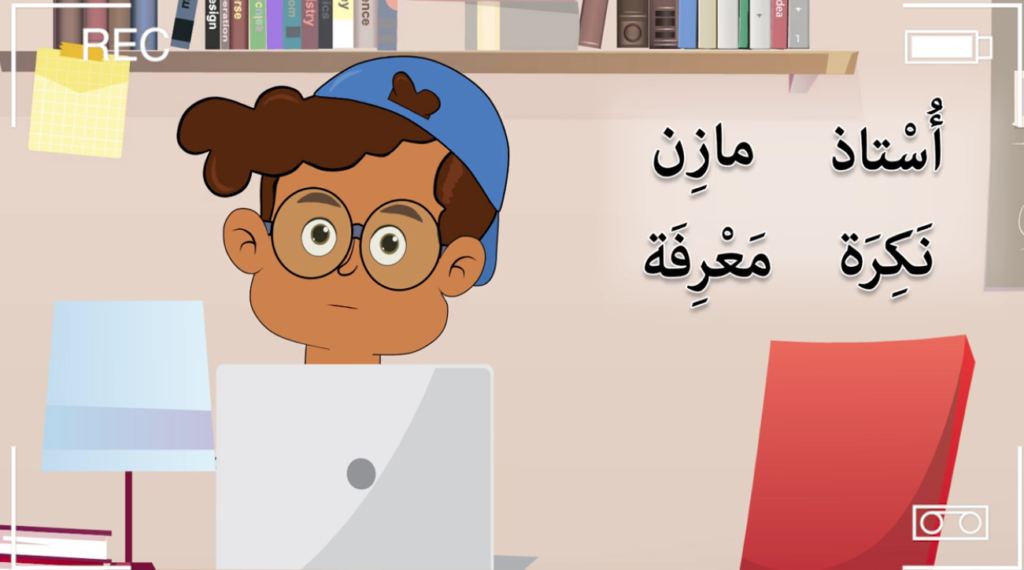
5. Explain Types Of Pronouns
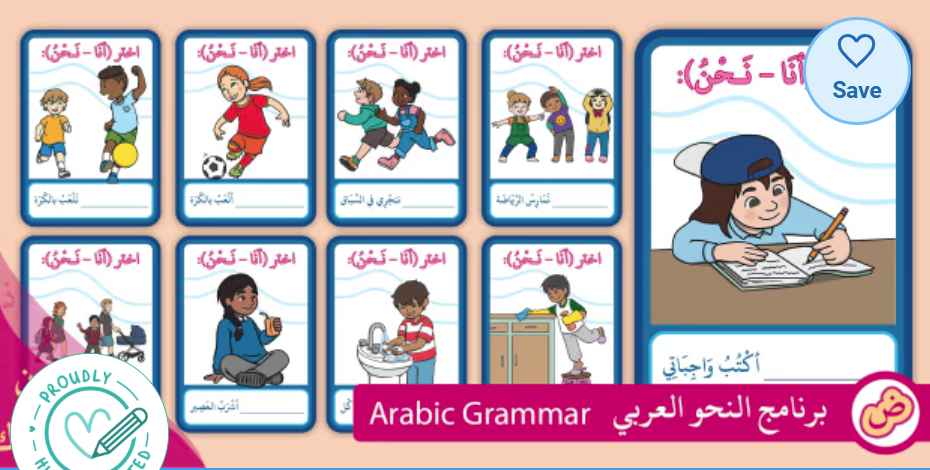
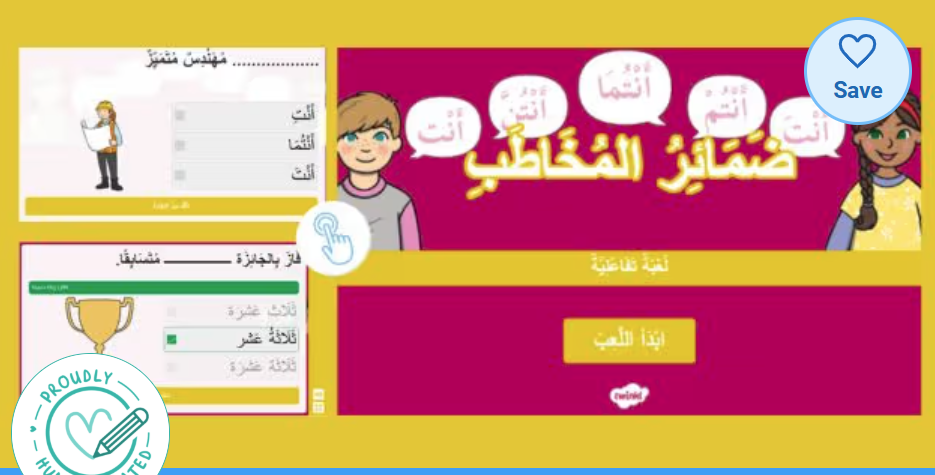
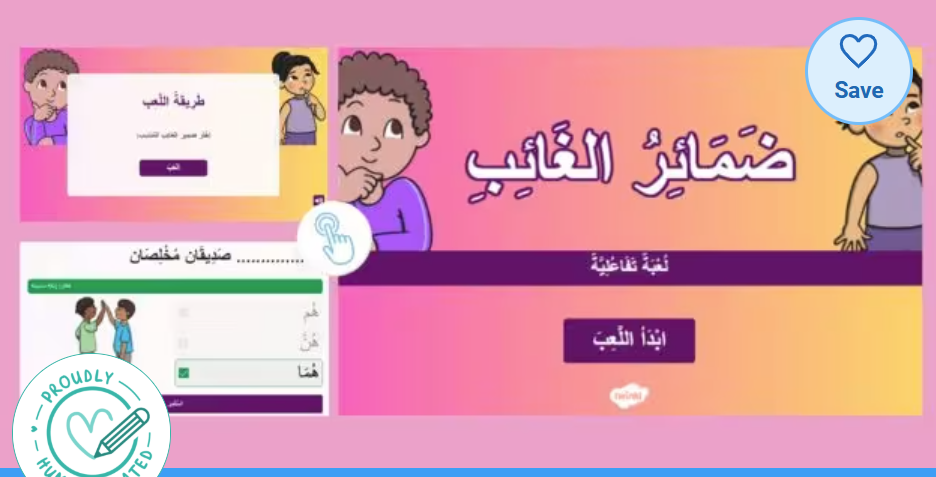
Children learn basic Arabic pronouns for first, second, and third person, such as I, you, and he/she. They practice using them in simple sentences before gradually learning the difference between attached and detached pronouns.
6. Illustrate Demonstrative And Question Words
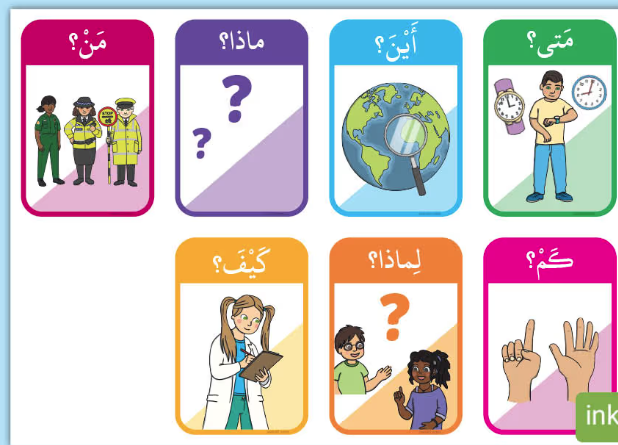
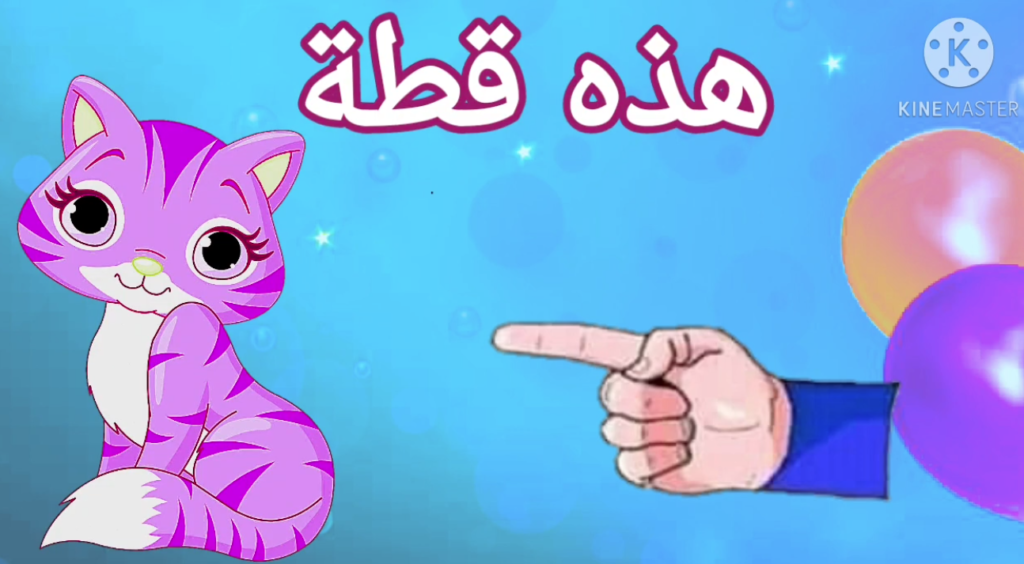
Children learn common demonstrative words such as this, that, and these, along with basic question words such as who, what, where, when, and how. These words help them describe objects and people and ask simple questions in Arabic.
Read also: Learn Arabic for Kids
7. Learn The Difference Between Nominal And Verbal Sentences
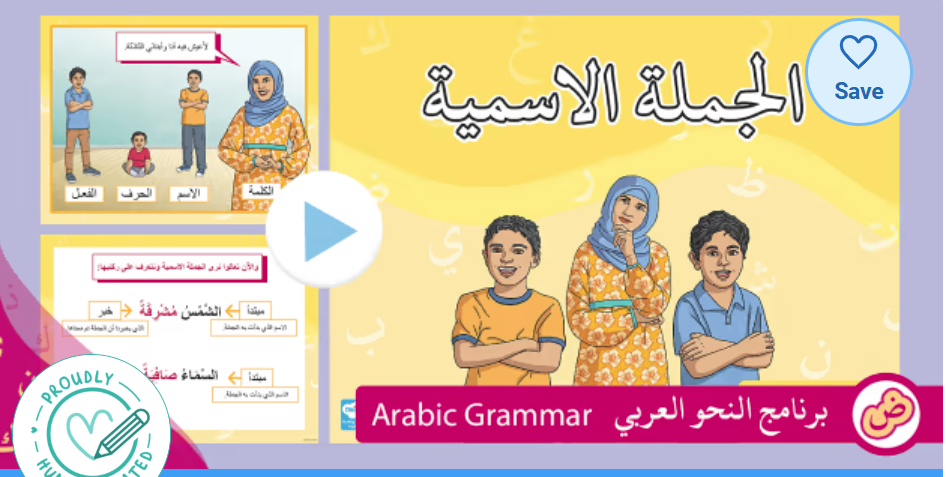
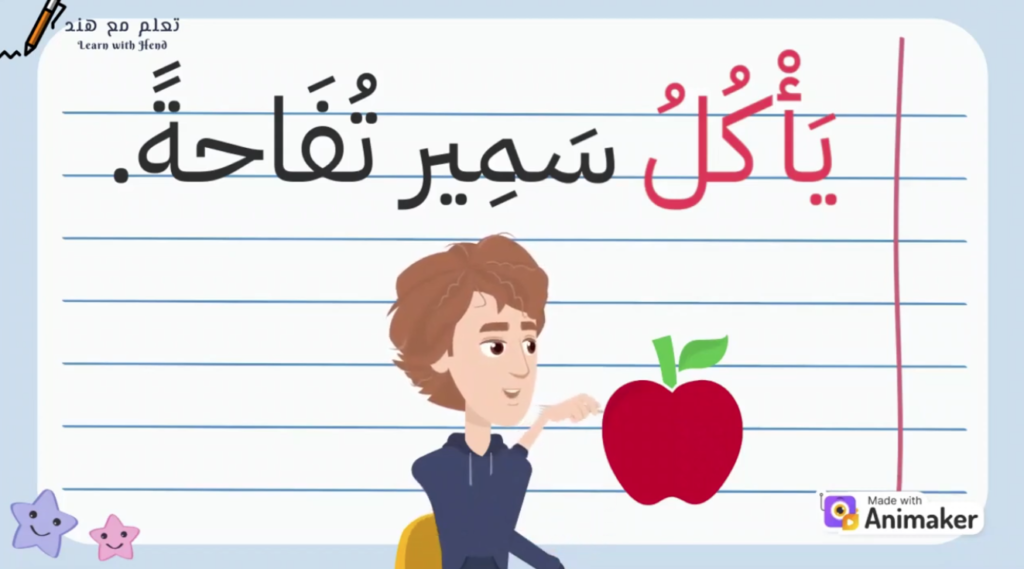
Children learn that Arabic sentences can be nominal (jumlah ismiyyah) or verbal (jumlah fi‘liyyah). They begin with simple structures, such as subject and predicate in nominal sentences and verb, subject, and object in verbal sentences.
This helps them recognize and build basic Arabic sentences before learning advanced grammar.
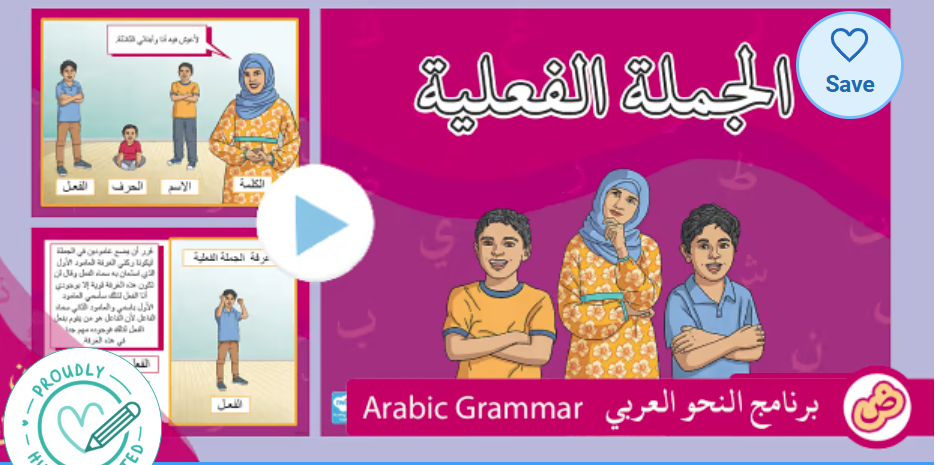
8. Clarify Basic Verb Tenses
Children learn the three basic Arabic verb forms: past, present, and imperative. They practice simple everyday verbs and gradually learn how verbs change according to the person through repetition and engaging activities.
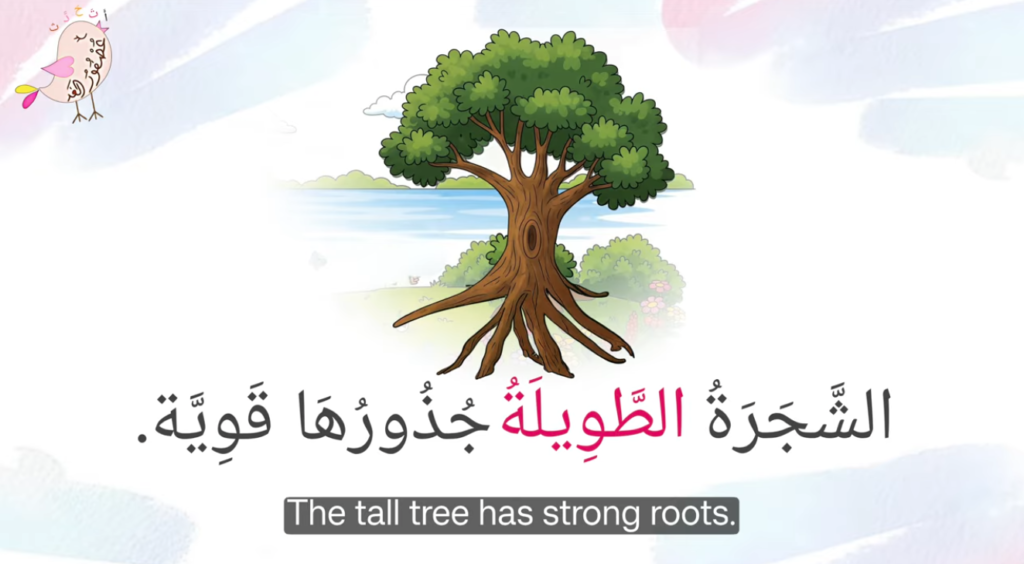
9. Explain Adjectives And Agreement
Children learn that Arabic adjectives usually come after the noun and must agree with it in gender and number. Using familiar people, objects, and pictures helps them practice describing things with simple, correct phrases.
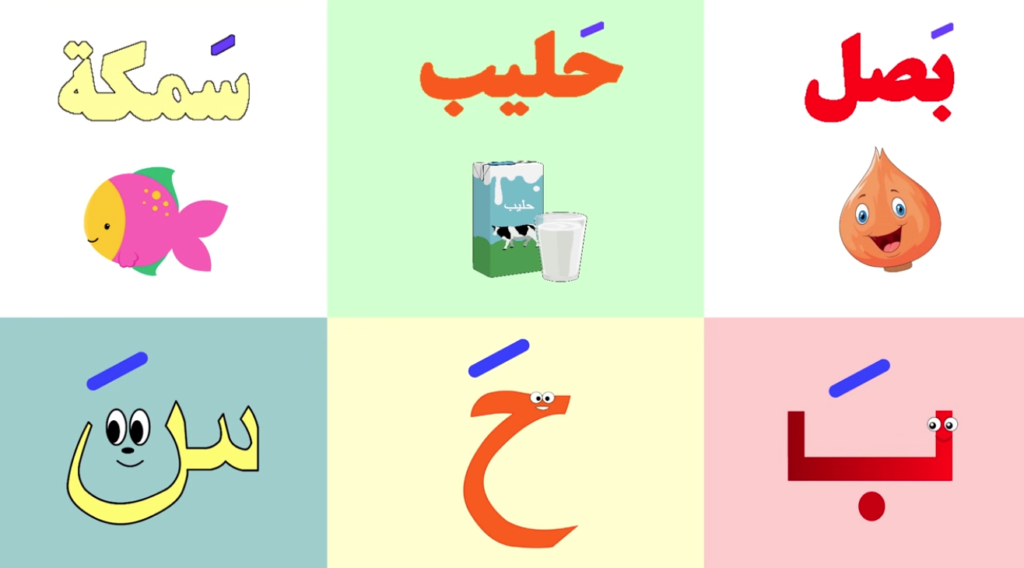
10. Demonstrate Basic Harakat And Their Role In Meaning
Children learn the basic harakat: fatha, damma, and kasra, which help them pronounce Arabic words correctly. They also begin to understand how vowel endings can affect pronunciation and meaning through simple, age-appropriate examples.
Read also: Arabic Reading Practice For Kids
See Our Classes in Action!
Wondering what a typical lesson looks like? Take a peek inside our virtual classrooms below to see how our patient teachers keep students smiling, engaged, and learning every step of the way.
Start Your Child’s Quran Learning Journey Today!
Join Kids Learning Quran Academy and help your child read the Quran with confidence through fun and guided lessons.
Book a Free Trial ClassRead also: Arabic Reading for Kids
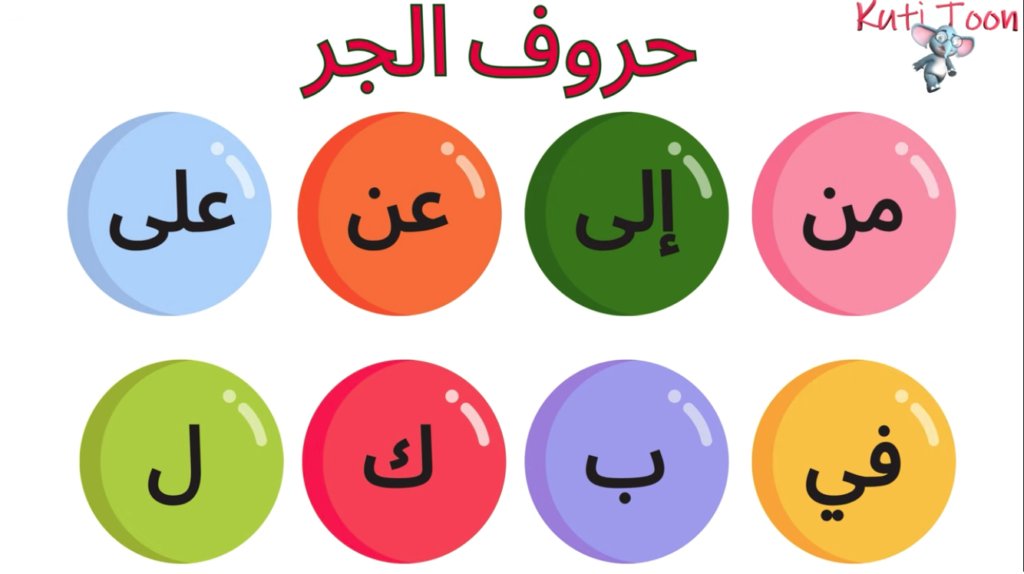
11. Define Basic Prepositions
Children learn common Arabic prepositions such as in في, on علَى, from مِن, to إلى, and with بـ. They practice using them in simple sentences and begin to understand how prepositions affect the noun that follows them.
12. Illustrate Essential Spelling And Writing Rules
Children learn important spelling basics such as the difference between taa marbuta ة and haa ه, sun and moon letters, and the basic use of hamza ء. These rules help them read and write Arabic more accurately while strengthening their overall language skills.
Read also: Arabic words for Kids
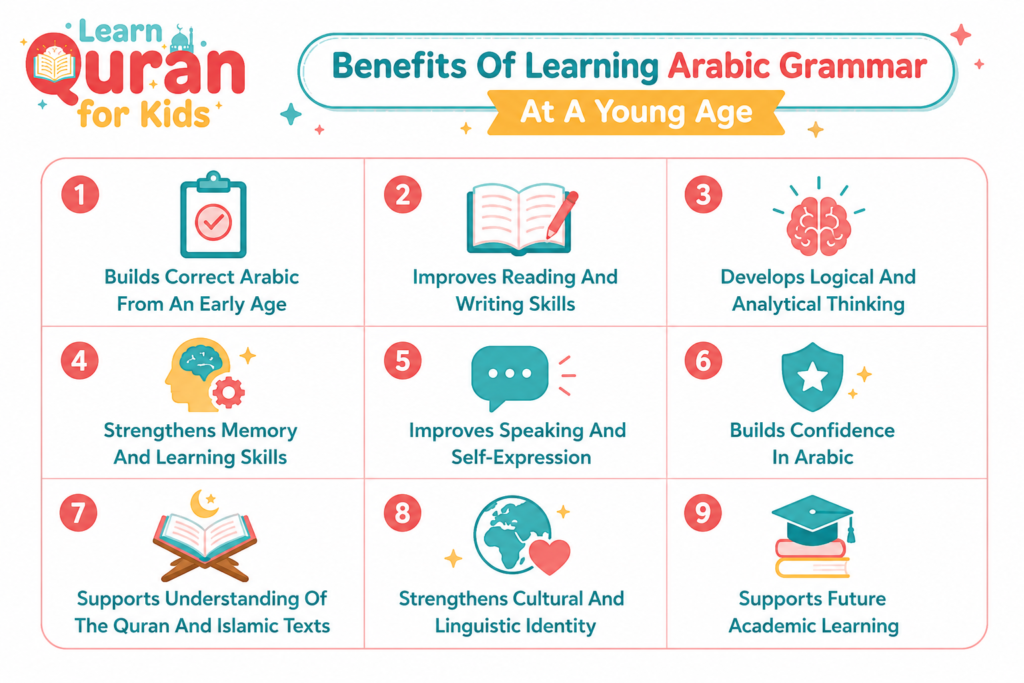
Benefits Of Learning Arabic Grammar At A Young Age
Learning Arabic grammar from a young age gives children a strong foundation for using the language correctly and confidently. It supports their language, thinking, academic, cultural, and religious development, while making it easier to build strong Arabic skills as they grow.
1. Builds Correct Arabic From An Early Age
Starting Arabic grammar early helps children develop accurate language habits from the beginning. It reduces common grammatical and pronunciation errors while helping them use Arabic more correctly and confidently.
2. Improves Reading And Writing Skills
Learning Arabic grammar helps children understand sentence structure, improving both reading and writing skills. It also supports accurate spelling, clearer written expression, and better comprehension of age-appropriate Arabic texts.
Read also: Arabic Kids Books
3. Develops Logical And Analytical Thinking
Learning Arabic grammar encourages children to recognize relationships between words and analyze sentence patterns. This strengthens logical and analytical thinking while helping develop problem-solving skills.
4. Strengthens Memory And Learning Skills
Learning Arabic grammar helps children remember vocabulary, sentence patterns, and language structures. Regular practice also teaches them to apply learned rules in new contexts, strengthening memory and overall learning skills.
Read also: How to Teach Arabic for Kids? A Step-by-Step Parent’s Guide
5. Improves Speaking And Self-Expression
Learning Arabic grammar helps children build clearer sentences and express their ideas with greater confidence and accuracy. It also supports better listening and speaking skills, making everyday communication easier and more effective.
Read also: How to Speak Arabic for Kids?
6. Builds Confidence In Arabic
Learning Arabic grammar gives children greater confidence in speaking and writing Arabic. As they become more comfortable using the language correctly, they are more willing to participate, communicate, and express themselves.
7. Supports Understanding Of The Quran And Islamic Texts
A strong foundation in Arabic grammar helps children better understand Quranic vocabulary, sentence structures, and meanings. It supports their broader Islamic education by making Arabic texts easier to read and understand without requiring advanced grammar skills.
8. Strengthens Cultural And Linguistic Identity
Learning Arabic grammar helps children appreciate the Arabic language, literature, and heritage. It also strengthens their connection to Arabic and Islamic culture while developing pride in their linguistic identity.
9. Supports Future Academic Learning
Learning Arabic grammar early gives children a strong foundation for advanced Arabic studies. It also makes future grammar, reading, and writing lessons easier to understand and apply.
Should A Kid Learn Arabic Grammar?
Yes, children can benefit greatly from learning basic Arabic grammar because it provides a foundation for correct language use, clear expression, reading, and writing.
Early exposure helps prevent common language mistakes, but grammar should be introduced gradually through simple examples, stories, and activities. The goal is not to memorize difficult grammatical terms, but to help children naturally understand and use Arabic correctly.
How To Teach Arabic Grammar To Kids Without Making It Difficult
Arabic grammar becomes easier when children learn it gradually through simple, practical language. Start with one concept at a time, using familiar vocabulary, short sentences, and real-life examples.
Avoid complex terminology at first, and reinforce each rule through short, fun activities and regular review.
1. Use Stories To Teach Grammar
Stories make Arabic grammar more engaging and easier to understand. Children can learn to identify nouns, verbs, adjectives, and sentence patterns naturally while following meaningful and age-appropriate stories.
Read also: Arabic Story for Kids
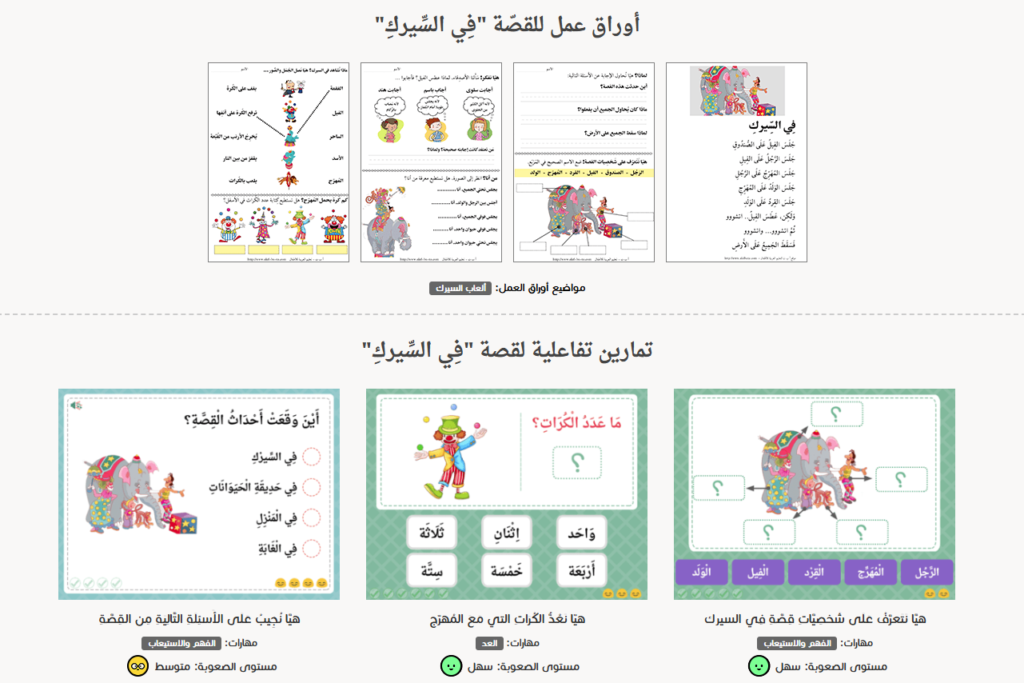
2. Use Games And Interactive Activities
Games make grammar practice fun and engaging for children. Matching games, sentence-building activities, puzzles, flashcards, and picture-based exercises help children practice grammar rules while improving their understanding through active learning.
Read also: Arabic Games for Kids
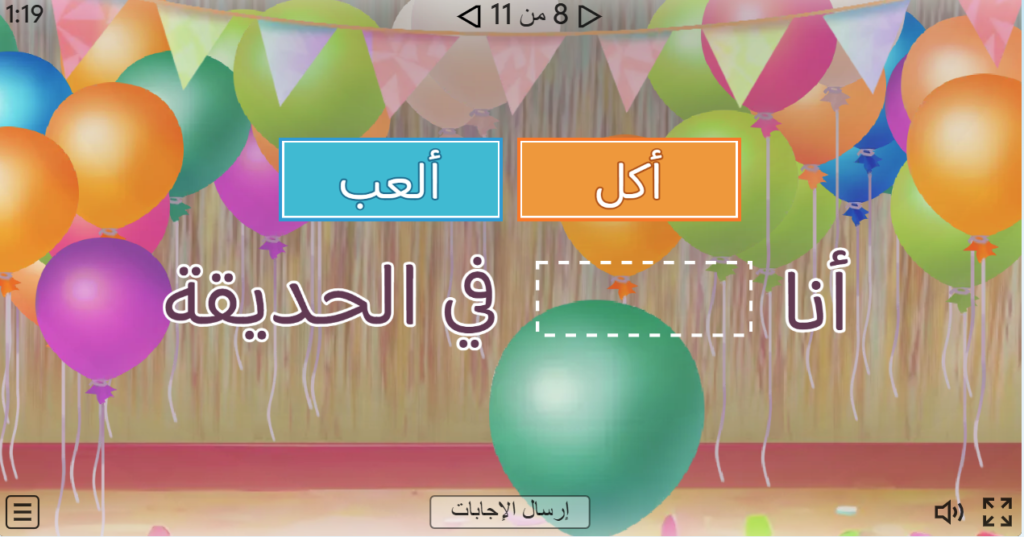
3. Practice Through Reading And Conversation
Reading short Arabic texts and practicing simple conversations help children apply grammar in real situations. Guided speaking activities also allow them to recognize and use grammar naturally while improving their reading and communication skills.
4. Use Online Learning Tools
Online learning tools can make Arabic grammar more engaging through interactive exercises, digital resources, and personalized lessons.
Platforms like Learn Quran for Kids can provide teacher-guided online classes that give children support and feedback while ensuring lessons match their age and Arabic level.
Arabic Grammar For Kids – What Parents Should Know
Parents should choose Arabic grammar lessons that match their child’s age and Arabic level, focusing on understanding and practical use rather than advanced i‘rab or complex terminology.
Grammar should be combined with reading, speaking, writing, and vocabulary through short, interactive, and encouraging lessons. For children learning Arabic as a second language, building vocabulary and comprehension alongside grammar is especially important for steady progress.
Experience the Magic Firsthand
Watch these short clips from our live classes to see our interactive teaching tools, vibrant student-teacher interactions, and the fun, stress-free ways we make learning easy for kids!
Start Your Child’s Quran Learning Journey Today!
Join Kids Learning Quran Academy and help your child read the Quran with confidence through fun and guided lessons.
Book a Free Trial ClassHelp Your Child Build Strong Arabic Skills Today
Don’t let your child struggle with Arabic grammar or develop language mistakes that become harder to correct later. Learn Quran for Kids offers engaging, teacher-guided online Arabic lessons designed around your child’s age and learning level.
From basic grammar and vocabulary to reading and Quranic Arabic, your child can learn step by step with personalized support.
Give your child a stronger Arabic foundation today. Enroll with Learn Quran for Kids and start building confident, accurate Arabic skills from an early age.
Our Courses Include:
- Tajweed for Kids
- Quran Memorization for Kids
- Quran Recitation Course for Kids
- Quran Classes for Toddlers
- Quran Tafseer for Kids
- Qaida for Kids
- Quran Reading Course for Kids
- Online Arabic Classes for Kids
- Quranic Arabic for Kids
- Islamic Studies Courses for Kids
- Islamic Studies for Kindergarten
- 5 Pillars of Islam for Kids
- Islamic Education for Kids
Start Your Child’s Quran Learning Journey Today!
Join Kids Learning Quran Academy and help your child read the Quran with confidence through fun and guided lessons.
Book a Free Trial ClassConclusion
Learning Arabic grammar for kids is not about memorizing difficult rules. It is about helping children speak, read, write, and understand Arabic with greater accuracy and confidence. Starting with simple, age-appropriate concepts and gradually building their skills can create a strong foundation for future Arabic learning.
With practical activities, stories, reading, conversation, and teacher-guided lessons, grammar can become an enjoyable part of a child’s learning journey. For children growing up outside Arabic-speaking environments, consistent support can make an especially meaningful difference in building strong language skills.
Frequently Asked Questions
What Are The Basic Arabic Grammar Rules For Kids?
Children should start with basic concepts such as nouns, verbs, particles, pronouns, gender, singular and plural forms, sentence structure, adjectives, verb tenses, and basic harakat.
Should A Kid Learn Arabic Grammar?
Yes. Basic grammar helps children speak, read, and write Arabic more accurately while developing confidence and clearer expression.
What Age Should Children Start Learning Arabic Grammar?
Children can begin learning simple grammar concepts once they have basic Arabic vocabulary and reading skills. Lessons should always match their age and language level.
Is Arabic Grammar Difficult For Children?
Arabic grammar can be easy when taught gradually with simple examples, stories, and activities. Children do not need to memorize advanced grammatical terminology at the beginning.
How Can I Teach Arabic Grammar To My Child At Home?
Use short lessons, familiar vocabulary, stories, games, and simple sentences. Practice one rule at a time and encourage your child to use it in everyday Arabic.
Can Children Learn Arabic Grammar Through Games And Stories?
Yes. Games and stories make grammar more engaging and help children recognize and apply rules naturally while practicing vocabulary and sentence structures.
Does Arabic Grammar Help Children Understand The Quran?
Yes. A strong Arabic foundation can help children understand Quranic vocabulary, sentence structures, and meanings as part of their broader Quran and Islamic education.
How Long Does It Take For A Child To Learn Basic Arabic Grammar?
The time varies depending on the child’s age, Arabic level, and practice. With regular lessons and consistent practice, children can gradually build a strong foundation.
Can Children Learn Arabic Grammar Online?
Yes. Online lessons can provide interactive activities, personalized instruction, and teacher feedback. Learn Quran for Kids offers online learning designed to support children at different levels.
What Is The Best Way To Teach Arabic Grammar To Children Who Do Not Speak Arabic At Home?
Combine grammar with vocabulary, reading, speaking, and listening practice. Regular teacher-guided lessons, interactive activities, and consistent exposure to Arabic can help children make steady progress.
Related Articles
Learn Arabic