 Learn Quran
Finding interactive ways to teach Quran reading for kids can make lessons more enjoyable, engaging, and effective. Children often learn better when they listen, speak, move, and participate actively rather than spend long periods repeating letters or reading silently. Using a variety of activities also helps maintain their attention and makes it easier to remember what they learn.
This guide shares practical methods parents and teachers can use, including letter games, flashcards, recitation recordings, storytelling, and friendly revision challenges. These activities can be adapted to different ages and reading levels, helping children develop their skills gradually while building confidence and a stronger connection with the Quran.
It also includes authentic Quran verses and Hadith, along with helpful tips from Kids Learning Quran Academy, where teachers work with children of different ages and abilities to support their Quran learning journey.
1. Start With Arabic Letters Using the Noorani Qaida
The Noorani Qaida teaches Arabic letters, sounds, Harakat, and joining rules step by step, giving children a strong foundation before reading Quranic verses.
Make letter learning interactive with hidden letter cards, sand tracing, or simple clapping games for vowels. These activities help children connect each letter with its sound and Makharaj.
Parents can also remind children of the reward for every letter they recite:
مَنْ قَرَأَ حَرْفًا مِنْ كِتَابِ اللَّهِ فَلَهُ بِهِ حَسَنَةٌ وَالْحَسَنَةُ بِعَشْرِ أَمْثَالِهَا لاَ أَقُولُ الم حَرْفٌ وَلَكِنْ أَلِفٌ حَرْفٌ وَلاَمٌ حَرْفٌ وَمِيمٌ حَرْفٌ
“[Whoever recites a letter] from Allah’s Book, then he receives the reward from it, and the reward of ten the like of it. I do not say that Alif Lam Mim is a letter, but Alif is a letter, Lam is a letter and Mim is a letter.”

2. Use Large-Print Word Flashcards
Visual word flashcards use large, clear cards showing a single Quranic word or short phrase. Inspired by visual learning methods, they help young children recognize word shapes and build reading confidence.
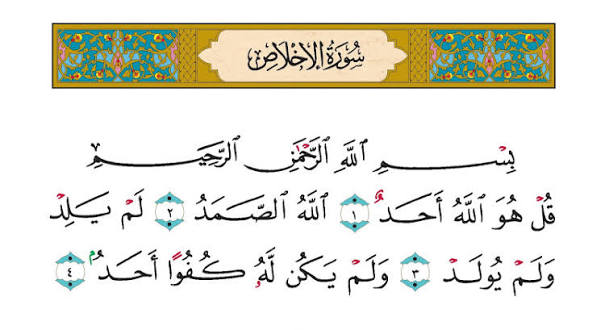
Divide a short Surah, such as Al-Ikhlas or Al-Kawthar, into word cards. Read each card clearly and let the child repeat it. Later, mix the cards and ask the child to arrange them in the correct verse order, turning reading practice into a simple puzzle.
Cards can also include the Surah name, verse number, or a simple meaning. Keep them in a special Quran box to give the child a sense of ownership, and ensure the Quranic text is copied accurately and handled respectfully.
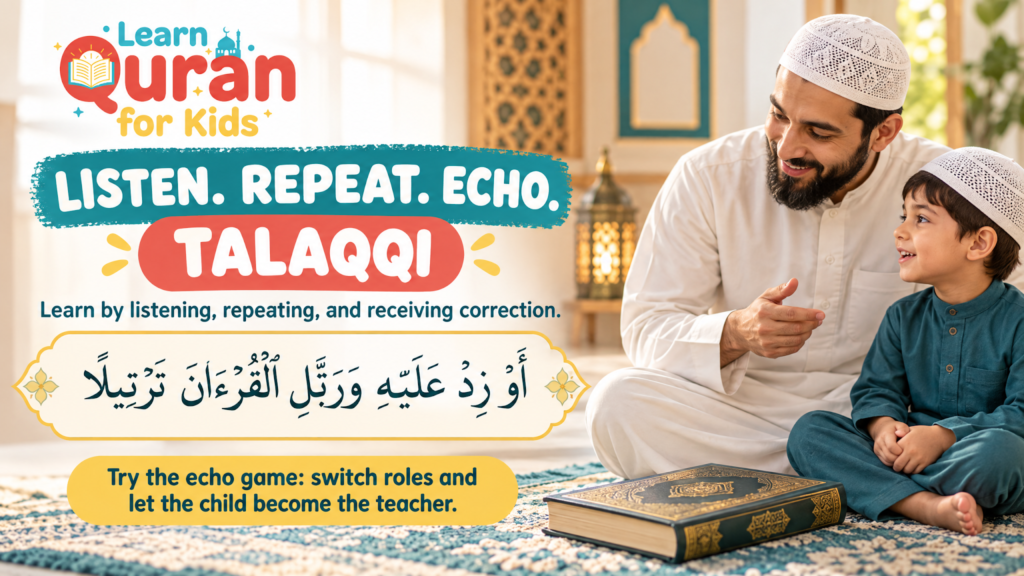
3. Listen, Repeat, and Echo the Teacher (Talaqqi)
Talaqqi is the traditional method of learning Quran recitation by listening to a qualified teacher, repeating what was heard, and receiving correction. It helps children develop accurate pronunciation, rhythm, and Tajweed through direct practice.
Make Talaqqi interactive with an echo game: the teacher or parent reads a short phrase, and the child repeats it. Then switch roles and let the child become the teacher. This makes practice fun while showing how well the child remembers the words.
أَوْ زِدْ عَلَيْهِ وَرَتِّلِ ٱلْقُرْءَانَ تَرْتِيلًا
“Or add to it, and recite the Qur’an with measured recitation.”
Children can also hear the same verses from their teacher, a trusted reciter, and a parent at home. Repeated listening helps strengthen memory and keep correct Tajweed sounds familiar.
4. Turn Reading Practice Into Quran Learning Games
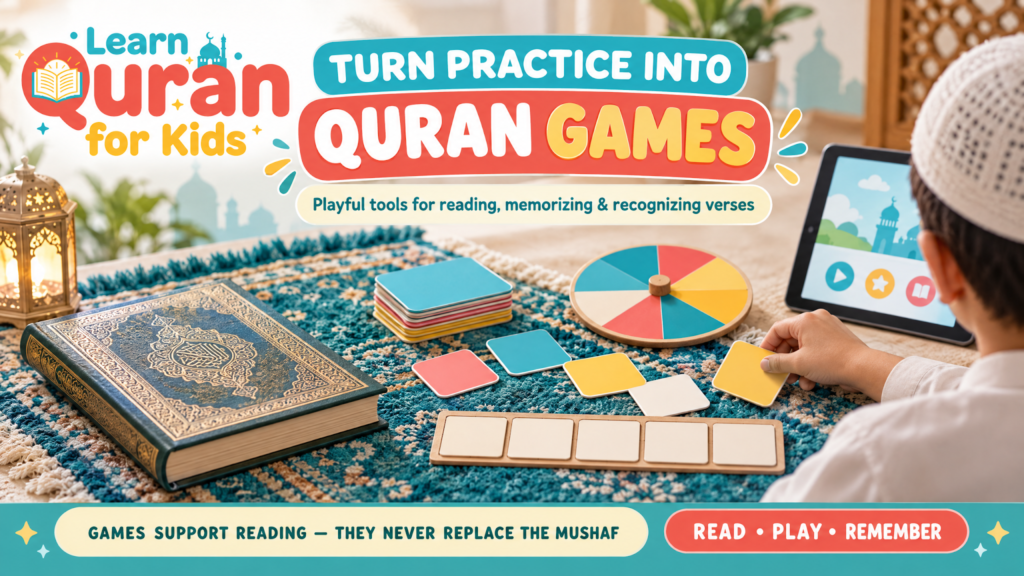
Quran learning games use play to help children practise reading, recognizing, and ordering Quranic words and verses. When designed respectfully, they can keep children motivated without turning Quran learning into mere entertainment.
Simple ideas include a spinning wheel to choose the next verse, word-erasing games to practise memorization, line-ordering puzzles, matching cards, and short verse quizzes.
Parents can also use educational apps, but should choose tools with accurate Quranic text, trusted reciters, and minimal distractions. Games should support Quran reading, not replace reading directly from the Mushaf.
5. Record the Child’s Recitation and Play It Back
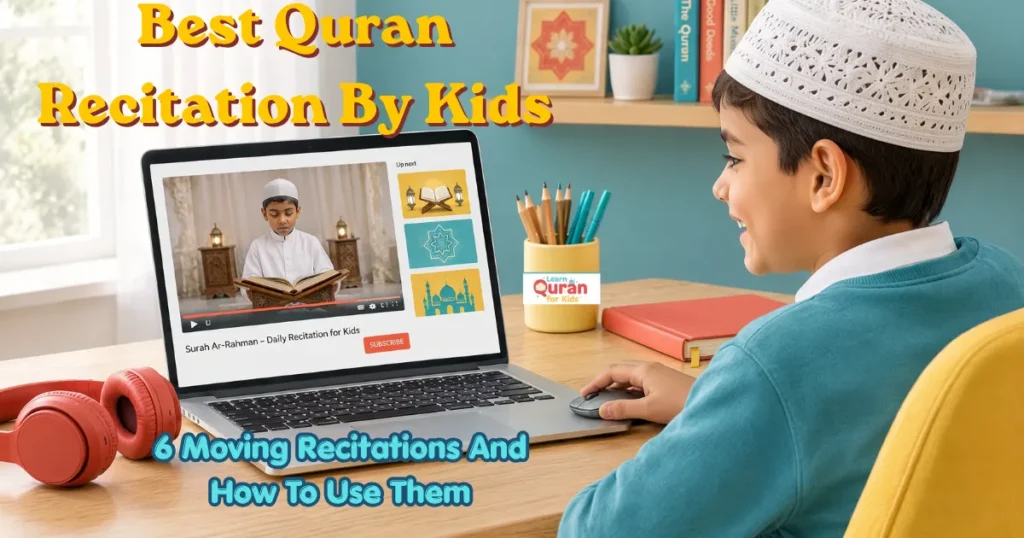
Recording a child’s Quran recitation can make practice more interactive and motivating. Let the child read a short Surah, listen to the recording, and notice any differences or mistakes. Gentle questions can encourage self-correction without making the child feel pressured.
Saving recordings over time also creates a simple record of progress. Children can listen to older recordings and see how much their pronunciation and confidence have improved.
Even when reading is difficult, remind them that sincere effort is valuable, as the Prophet ﷺ gave special encouragement to those who struggle with Quran recitation.
الْمَاهِرُ بِالْقُرْآنِ مَعَ السَّفَرَةِ الْكِرَامِ الْبَرَرَةِ وَالَّذِي يَقْرَأُ الْقُرْآنَ وَيَتَتَعْتَعُ فِيهِ وَهُوَ عَلَيْهِ شَاقٌّ لَهُ أَجْرَانِ
“One who is proficient in the Qur’an is associated with the noble, upright, recording angels; and he who falters in it, and finds it difficult for him, will have two rewards.”
Start Your Child’s Quran Learning Journey Today!
Join Kids Learning Quran Academy and help your child read the Quran with confidence through fun and guided lessons.
Book a Free Trial Class6. Connect Verses to Simple Meanings and Quran Stories
Connecting Quranic verses to their meanings helps children understand what they read and makes learning more engaging. Quran stories are especially effective because children naturally enjoy storytelling.
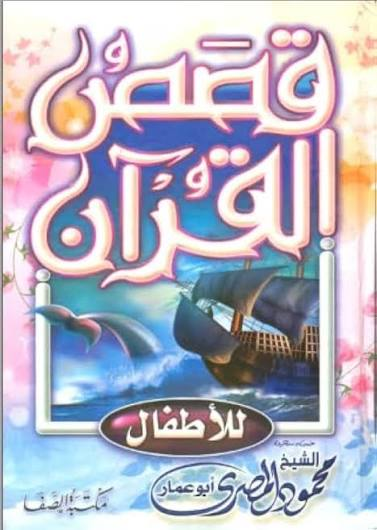
After reading verses about animals, parents can explore animal stories from the Quran for kids or listen to Quran stories for kids by Sheikh Mahmoud Al-Masri. These stories make Quranic lessons easier to understand and remember.
For older children, the story of Luqman in the Quran for kids can connect Surah Luqman with lessons about gratitude, respect for parents, and humility. This helps children see how Quranic teachings can guide their everyday behavior.earning Quran Academy and help your child read the Quran with confidence through fun and guided lessons. Book a Free Trial Class
7. Use One Mushaf for Visual Consistency
Using one Mushaf means having the child read from the same printed copy of the Quran each day. Since the page layout stays consistent, the child gradually connects verses with their position on the page. This visual memory can make reading smoother and may also support memorization.
Let the child choose a cover, bookmark, or special stand for their Mushaf to give it a personal connection. At the same time, teach them to handle the Mushaf gently and keep it in a clean, respectful place. When children feel connected to their own copy of the Quran, they may become more excited to open it and read each day.
See Our Classes in Action!
Learning to read the Quran is a beautiful journey that begins with simple letters and grows into a lifelong connection with Allah’s words.
Start Your Child’s Quran Learning Journey Today!
Join Kids Learning Quran Academy and help your child read the Quran with confidence through fun and guided lessons.
Book a Free Trial Class8. Give the Child Small Choices During the Lesson
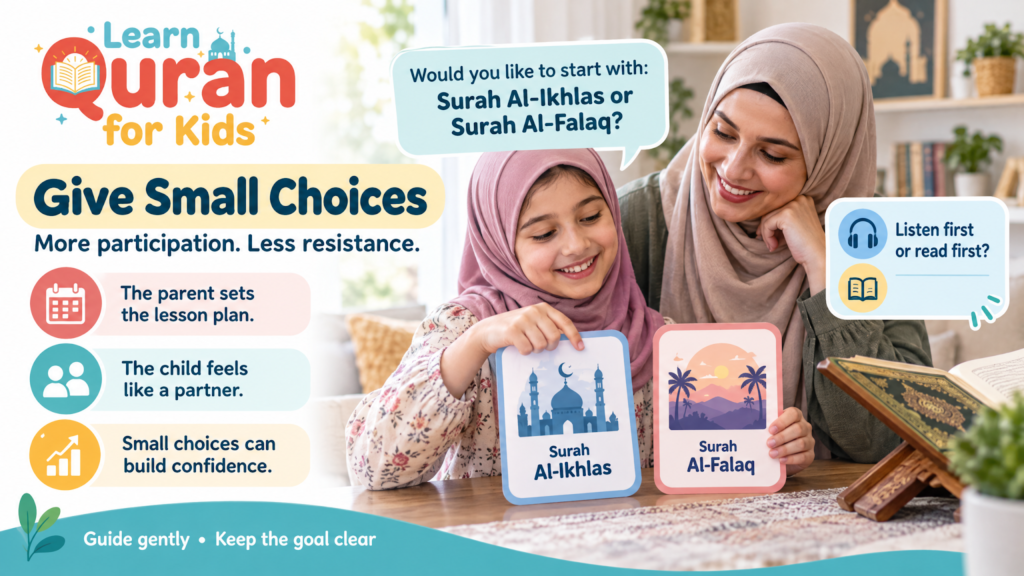
Giving children small choices is an interactive technique that increases participation and reduces resistance. Instead of saying “Read now,” a parent can ask, “Would you like to review Surah Al-Ikhlas or Surah Al-Falaq first?” or “Should we listen to the surah first, or start reading right away?”
These choices do not mean the child controls the whole curriculum. The teacher or parent still decides the lesson plan.
However, the child feels like a partner in learning rather than someone simply following orders. This approach is especially helpful with children who get bored quickly or feel shy about reading aloud.
9. Make Revision a Friendly Challenge
Muraja’ah, or Quran revision, means regularly reviewing previously learned verses to prevent forgetting. Since children may find revision less exciting than new lessons, simple challenges can make it more enjoyable.
Try questions like, “How many verses can you read without help?” or “Can you spot yesterday’s mistake?” Small rewards, such as stickers, can also encourage children to review without creating unhealthy competition.
Stories can make revision more meaningful. After reviewing part of Surah Al-Kahf, read the story of Ashab e Kahf in the Quran together to connect the verses with their meaning.
For children ready for memorization, the Quran memorization course for kids balances new verses with regular revision to help them retain what they learn.

10. Reward Effort With Praise, Stickers, and Badges
Positive reinforcement is the practice of rewarding effort and good behavior so the child wants to repeat it. In Quran learning, simple rewards such as a sticker chart, a star badge, choosing the bedtime story, or extra time at the park can encourage steady progress week after week.
Rewards do not always need to be material. Sincere words such as, “I am proud of how hard you tried today,” said in front of the family, can mean more to a child than any toy. Praise should focus on effort, consistency, and good manners with the Quran, not only on speed or quantity.
A simple badge system works well too. A child can earn one badge for finishing the Arabic alphabet, another for reading a full short surah, and another for a month of daily practice. Seeing progress visually helps children understand that small daily steps lead to real achievements.
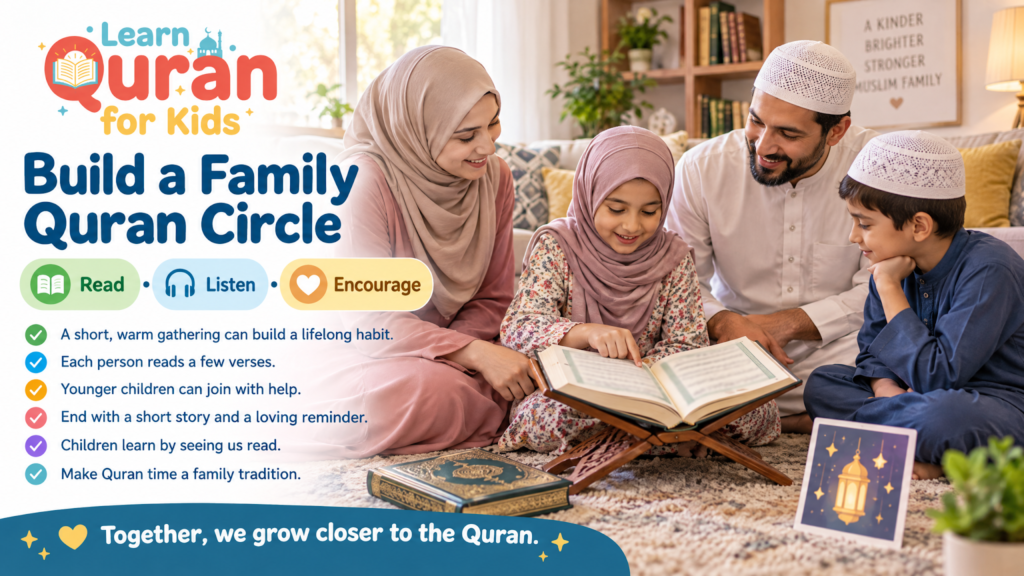
11. Build a Family Quran Reading Circle
A family Quran reading circle is a short, regular gathering where family members read, listen, and encourage one another. Children learn by imitation, so seeing parents and siblings read the Quran can motivate them to participate.
Keep the circle simple and warm. Each person can read a few verses, while younger children read a word or two with help.
Parents can end with a short story, such as the story of Prophet Muhammad ﷺ for kids, to strengthen their love for the Prophet ﷺ.
The Prophet ﷺ also praised those who learn and teach the Quran, making family Quran time a meaningful opportunity for parents and children to learn together.
خَيْرُكُمْ مَنْ تَعَلَّمَ الْقُرْآنَ وَعَلَّمَهُ
“The best among you (Muslims) are those who learn the Qur’an and teach it.”
12. Pause and Ask Questions While Reading
Asking questions during Quran reading turns the child from a passive reader into an active thinker. After a verse whose meaning has been explained, ask simple questions such as, “Who is this verse talking about?” or “What happened next?” Questions keep attention focused and gently check understanding.
Questions work best when the child already knows the background story. For instance, after learning the story of Uzair in the Quran for kids, a child can be asked how Allah showed His power to bring the dead back to life. Such questions spark curiosity and encourage the child to read the related verses again.
Keep questions short and suited to the child’s age, and accept answers kindly even when they are incomplete. The purpose is to keep the child thinking about the Quran and enjoying the lesson, not to examine them harshly or make them afraid of being wrong.
How to Keep Quran Lessons Short, Consistent, and Pressure-Free
The most effective Quran lessons for children are short, regular, and calm. A daily session of around 15–20 minutes can be more effective than a long weekly lesson, helping children retain what they learn and build a steady habit.
Correct mistakes gently and give the child another chance to try. If they become tired, take a short break and return later. Avoid shouting, threats, or comparisons, as children learn at different speeds.
Focus on gradual progress rather than quantity. Start with short Surahs from Juz Amma, make sure the child reads them correctly, and then move to longer Surahs. Consistent review is more valuable than rushing through large amounts of material.
Start Your Child’s Quran Learning Journey Today!
Join Kids Learning Quran Academy and help your child read the Quran with confidence through fun and guided lessons.
Book a Free Trial ClassBook a Free Trial Quran Class for Your Child
If you want your child to enjoy Quran reading while learning it correctly, Kids Learning Quran Academy is ready to help. Qualified teachers deliver one-on-one online lessons that combine the Noorani Qaida, talaqqi, games, stories, and gentle encouragement, all tailored to your child’s age, level, and pace.
Book a free trial class today to meet a teacher, assess your child’s current level, and see for yourself how fun and effective structured, interactive Quran learning can be.
Our Courses Include:
- Tajweed Course for Kids
- Quran Memorization Course for Kids
- Quran Recitation Course for Kids
- Quran Classes for Toddlers
- Quran Tafseer Course for Kids
- Qaida Course for Kids
- Quran Reading Course for Kids
- Online Arabic Classes for Kids
- Quranic Arabic Course for Kids
- Islamic Studies Courses for Kids
- Islamic Studies Course for Kindergarten
- 5 Pillars of Islam Course for Kids
- Islamic Education Course for Kids
Join Kids Learning Quran Academy now and start your child’s learning journey today!
Conclusion
Using interactive ways to teach Quran reading for kids can help children build a joyful and lasting relationship with the Book of Allah. Activities such as Noorani Qaida games, word flashcards, Talaqqi, recordings, Quran stories, revision challenges, and family reading circles make lessons more engaging while supporting correct recitation and steady progress.
Above all, consistency, patience, and encouragement matter more than speed. Children learn at different paces, and every small effort counts, even when reading is slow or difficult.
With a calm routine and supportive guidance, Quran learning can become a positive part of a child’s daily life. May Allah make the Quran the light of our children’s hearts and reward every parent and teacher who helps them learn it.
Frequently Asked Questions
What is the best age to start teaching a child Quran reading?
Many children can begin learning Arabic letter sounds around ages 3 to 4 through play and listening, then start structured reading with the Noorani Qaida between ages 4 and 6. Each child is different, so readiness matters more than an exact age.
How long should a Quran lesson for kids be?
A Quran lesson for young children is usually most effective at about 15 to 30 minutes, depending on age and focus. Short daily sessions tend to build stronger retention than long, infrequent lessons.
Is it acceptable to use games and apps to teach Quran reading?
Educational games and apps are widely used to teach Quran reading when the Quranic text is accurate, the content is respectful, and nothing inappropriate is included. For a specific ruling, families can consult a trusted local scholar.
What is the Noorani Qaida?
The Noorani Qaida is a beginner’s book that teaches Arabic letters, vowel marks, and basic pronunciation rules step by step. It prepares children to read the Quran correctly before they move on to full surahs.
How can I teach my child the Quran if I cannot read Arabic well?
Parents who cannot read Arabic fluently can still support their child by arranging lessons with a qualified teacher, listening together to recognized reciters, and supervising short daily practice. Many parents choose to learn alongside their children.





[…] Read also: Interactive Ways To Teach Quran Reading For Kids – 12 Fun And Effective Methods […]