 Learn Quran
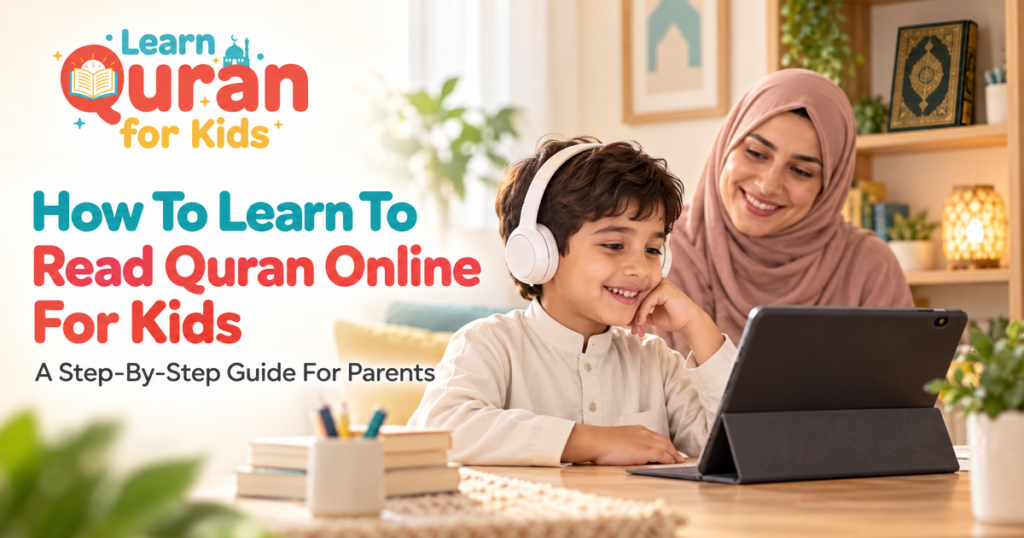
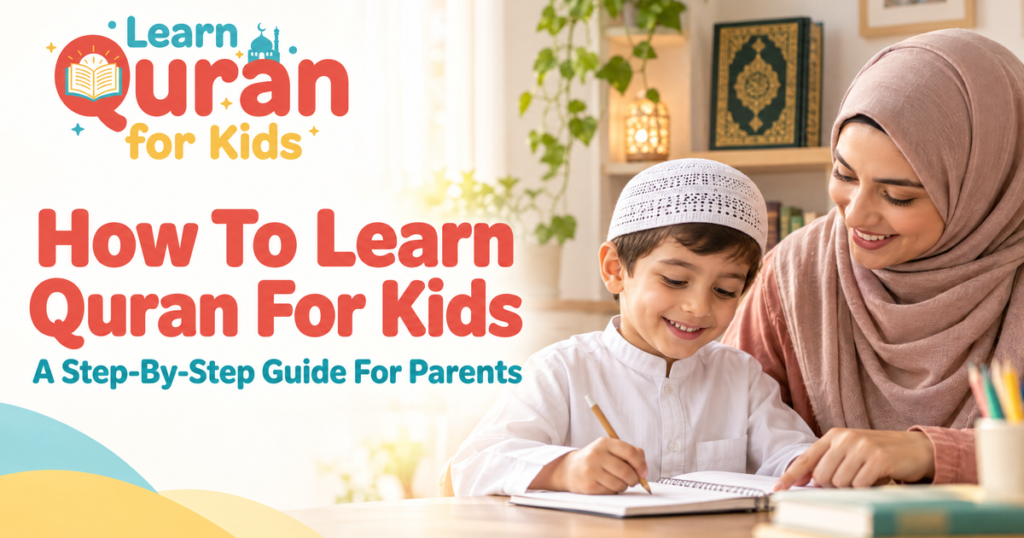
How to learn to read Quran online for kids is a common question among Muslim parents, especially those with limited access to qualified local teachers. Online Quran classes bring live instruction into the home at a convenient time.
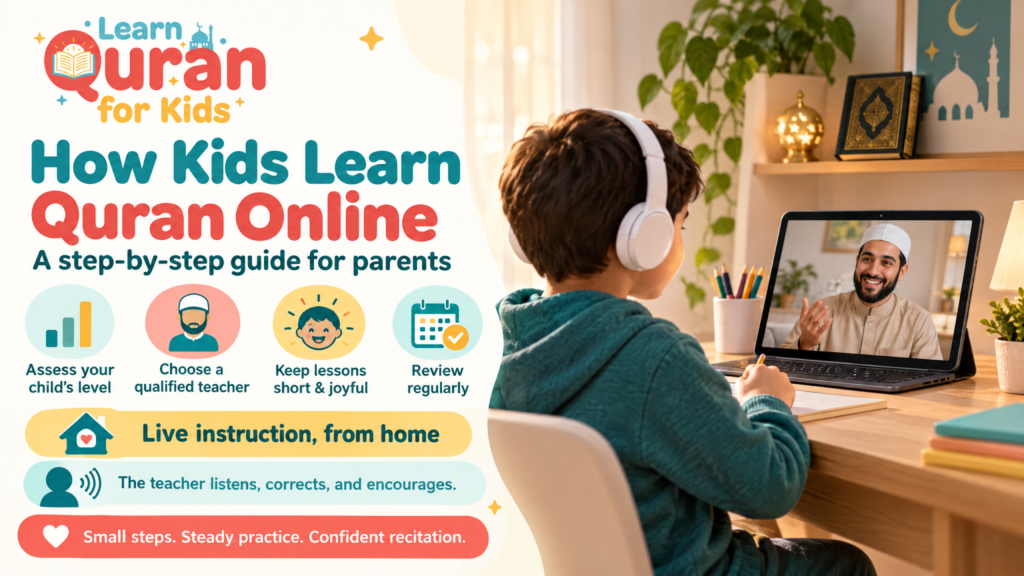
Children progress gradually, starting with Arabic letters and sounds, then joining letters into words and moving to Quranic verses with correct pronunciation and basic Tajweed. The teacher listens, corrects mistakes, and adjusts lessons to the child’s level.
This guide explains how to assess your child’s level, choose a suitable teacher, structure lessons, make practice enjoyable, and maintain regular review, with practical tips, Quranic verses, Hadith, and answers to common parental questions.
1. Assess Your Child’s Current Arabic Reading Level
The first step to learn to read Quran online for kids is a clear assessment of where the child is starting from. Some children have never seen the Arabic alphabet, others recognize the letters but cannot join them, and some can already read slowly but make pronunciation mistakes.
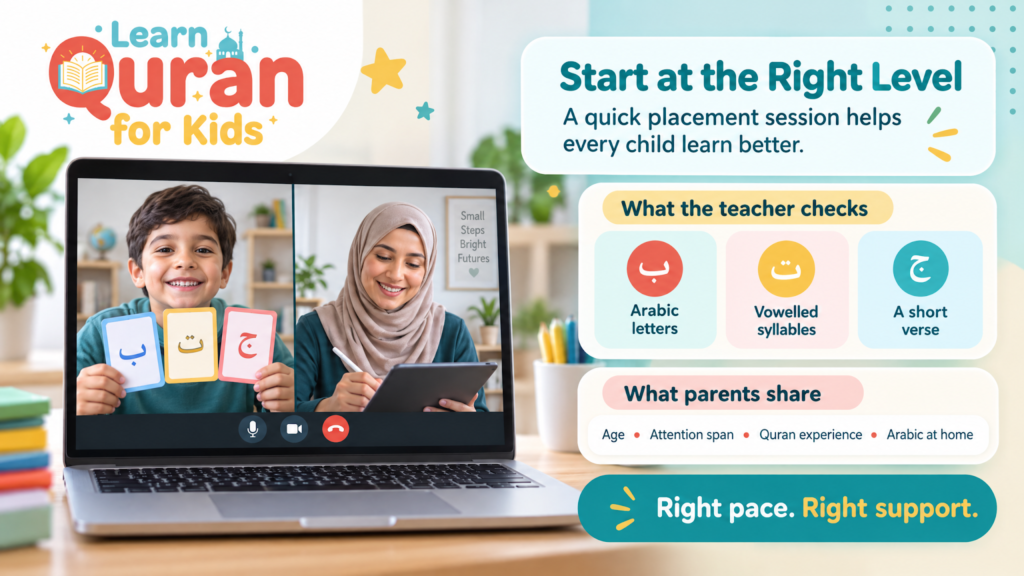
A good online Quran teacher begins with a short placement session to identify this level before planning any lessons.
During the assessment, the teacher usually asks the child to name a few Arabic letters, read simple vowelled syllables, and, if possible, read a short verse.
Parents should share useful details as well, such as the child’s age, attention span, previous Quran experience, and whether Arabic is spoken at home. This information helps the teacher choose the right starting point and pace, so the child is neither bored nor overwhelmed.
2. Start with Noorani Qaida to Master the Arabic Letters
Noorani Qaida (Al-Qaida An-Nooraniyah) is a beginner’s book that teaches children the Arabic alphabet, letter shapes, Harakat, Sukoon, Shaddah, and Tanween step by step. It moves from letters to joined letters and complete words, preparing children to read the Mushaf.
Skipping Qaida can lead to guessing and pronunciation mistakes. By completing it, children learn how vowel marks affect letter sounds and become more confident in reading unfamiliar Quranic words independently.
The Prophet ﷺ also taught that every letter recited from the Book of Allah brings a reward multiplied tenfold, encouraging children as they learn the Quran letter by letter.
مَنْ قَرَأَ حَرْفًا مِنْ كِتَابِ اللَّهِ فَلَهُ بِهِ حَسَنَةٌ وَالْحَسَنَةُ بِعَشْرِ أَمْثَالِهَا لاَ أَقُولُ الم حَرْفٌ وَلَكِنْ أَلِفٌ حَرْفٌ وَلاَمٌ حَرْفٌ وَمِيمٌ حَرْفٌ*
“Whoever recites a letter from Allah’s Book, then he receives the reward from it, and the reward of ten the like of it. I do not say that Alif-Lam-Mim is a letter, but Alif is a letter, Lam is a letter and Mim is a letter.”
Jami’ at-Tirmidhi 2910 (graded Hasan Sahih by At-Tirmidhi)
Give Your Child the Right StartIf your child is just beginning, the Noorani Qaida course for kids at Kids Learning Quran Academy teaches letters, vowels, and joining rules through short, interactive lessons designed for young learners.
3. Choose a Qualified Online Quran Teacher for Kids
The teacher is one of the most important factors when kids learn to read Quran online. A qualified Quran teacher should recite correctly with Tajweed, ideally have an Ijazah, and have experience teaching children. Patience, warmth, and the ability to explain simply are just as important as Quranic knowledge.
Before choosing a teacher, parents can ask how mistakes are corrected, how progress is tracked, whether the curriculum moves from Qaida to Quran reading, and whether class times suit their time zone.
A trial lesson can help parents see how the teacher interacts with the child and whether the child feels comfortable and engaged.
4. Schedule Short One-on-One Live Online Classes
One-on-one live classes are an effective format for kids learning to read the Quran online because the teacher can listen to every word and correct mistakes immediately.
Sessions of around 30 minutes through platforms such as Zoom are often suitable for young children, as they allow enough time for practice without making it difficult to maintain focus.
Consistency matters more than long sessions. Three to five short classes per week can help children retain sounds and rules better than one long weekly lesson. The schedule should still be adjusted according to the child’s attention span, learning pace, and progress.
Ready to Move from Letters to Verses?Once your child knows the letters, the Quran reading course for kids guides them through live one-on-one sessions until they can read the Mushaf fluently and confidently.
5. Use the Talqeen Method – Listen, Repeat, and Correct
Talqeen is a traditional method of teaching Quran reading in which the teacher recites a word or verse, the child listens, repeats it, and receives immediate correction. This oral approach works well online because the teacher can closely monitor the child’s pronunciation.
A typical lesson follows a simple cycle: the teacher recites a verse with Tajweed, the child repeats it several times, then reads it independently. The teacher gradually adds new verses and combines them with what the child has already learned. This verse-by-verse approach keeps learning manageable and builds confidence.
Parents should also remember that slow reading and mistakes are a normal part of learning. The Prophet ﷺ taught that those who struggle with Quran recitation receive a double reward, encouraging children to keep trying without feeling discouraged.
الْمَاهِرُ بِالْقُرْآنِ مَعَ السَّفَرَةِ الْكِرَامِ الْبَرَرَةِ وَالَّذِي يَقْرَأُ الْقُرْآنَ وَيَتَتَعْتَعُ فِيهِ وَهُوَ عَلَيْهِ شَاقٌّ لَهُ أَجْرَانِ“
One who is proficient in the Qur’an is associated with the noble, upright recording angels; and he who falters in it, and finds it difficult for him, will have a double reward.
Learning to read the Quran is a beautiful journey that begins with simple letters and grows into a lifelong connection with Allah’s words.
Start Your Child’s Quran Learning Journey Today!
Join Kids Learning Quran Academy and help your child read the Quran with confidence through fun and guided lessons.
Book a Free Trial Class6. Learn Basic Tajweed Rules Step by Step
Tajweed is the set of rules that governs how the Quran is recited correctly, including the proper articulation of each letter, when to stretch a sound (Madd), when to merge letters (Idgham), and when to add a nasal sound (Ghunnah).
For kids learning to read the Quran online, Tajweed should be introduced gradually, starting with correct letter pronunciation and moving to simple rules once reading becomes smooth.
Allah commands that the Quran be recited in a slow and measured way, which is the essence of Tarteel. This is why good teachers encourage children to read calmly and clearly rather than quickly, giving each letter its full right.
أَوْ زِدْ عَلَيْهِ وَرَتِّلِ الْقُرْآنَ تَرْتِيلًا
“Or add to it, and recite the Qur’an with measured recitation.”
Help Your Child Recite BeautifullyThe Tajweed course for kids explains Tajweed rules in simple language with plenty of practice, so children apply what they learn every time they open the Quran.

7. Create a Daily Home Practice Routine
A daily home practice routine helps turn online Quran lessons into lasting reading skills. Even 10–15 minutes of practice between classes can help children remember letter sounds, rules, and verses. Choosing a fixed time, such as after Fajr or school, also makes Quran reading part of the child’s routine.
A quiet practice space, stable internet, good lighting, and one consistent copy of the Mushaf can make learning easier. Using the same Mushaf regularly can also help children become familiar with the location of words and verses on the page.
Technology can support practice when used wisely. Listening to the lesson’s recitation or recording the child’s reading can help identify mistakes. Parents can also explore Quran memorization apps for kids as a supplement to, not a replacement for, teacher guidance.
8. Make Online Quran Lessons Fun and Engaging
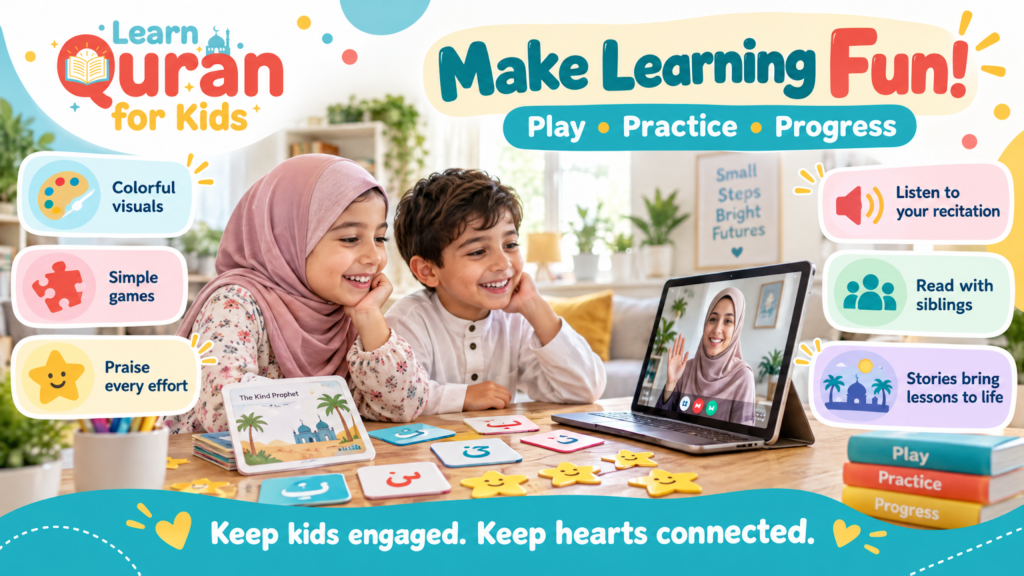
Children learn better when they enjoy the process, so online Quran lessons should include colorful visuals, simple games, and interactive activities that keep them focused while building reading skills.
Encouragement also keeps children motivated. Praising effort, using small rewards, and letting children hear their own recitation can help them recognize their progress. Reading with siblings can make practice more enjoyable too.
Quranic stories can make lessons more meaningful. Parents can share this Prophet Muhammad story for kids to help children connect what they read with the life and message of the Prophet ﷺ.
9. Connect Quran Reading with Simple Understanding
Connecting Quran reading with simple understanding helps children remember what they read and develop a deeper connection with the Quran. Brief explanations of a Surah, its meaning, or the story behind a passage can make reading more engaging rather than mechanical.
Introducing common Quranic Arabic words such as Rabb (Lord), Rahmah (mercy), and Jannah (Paradise) can also help children recognize meanings as they read. This guide on how to learn Quranic Arabic for kids offers practical ways to build this understanding.
Quranic stories can make verses more meaningful. For example, the story of Prophet Zakariya in the Quran for kids introduces children to sincere supplication and trust in Allah, giving context to the verses they read.
10. Review Regularly So Your Child Does Not Forget
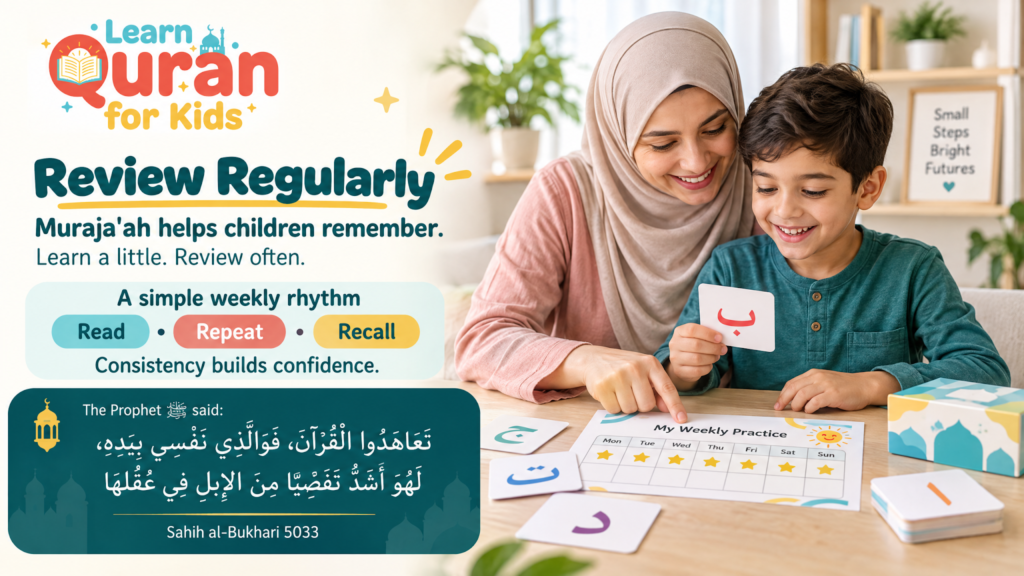
Regular review (Muraja’ah) is essential because Quran reading and memorization fade quickly without practice. The Prophet ﷺ warned that the Quran escapes from memory faster than a tied camel escapes from its rope, which is why scholars and teachers have always emphasized consistent revision alongside learning new lessons.
تَعَاهَدُوا الْقُرْآنَ فَوَالَّذِي نَفْسِي بِيَدِهِ لَهُوَ أَشَدُّ تَفَصِّيًا مِنَ الإِبِلِ فِي عُقُلِهَا
“Keep on reciting the Qur’an, for, by Him in Whose Hand my life is, Qur’anic verses run away (are forgotten) faster than camels that are released from their tying ropes.”
A practical review plan divides each online Quran lesson into two parts: the first few minutes for reviewing previous material and the rest for new lessons. A weekly review class can also help strengthen what the child has already learned before moving forward.
For similar-looking or sounding verses (Mutashabihat), the teacher can highlight their small differences and meanings. This helps prevent confusion as the child progresses to longer Surahs.
11. Move from Reading to Memorization
Moving from reading to memorization (Hifz) is a natural next step once a child can read the Quran fluently and correctly.
A child who reads well memorizes more accurately, because they can check their memorization against the Mushaf without relying only on what they hear. Most teachers begin with the short Surahs of Juz Amma before moving to longer chapters.
Allah has made the Quran easy to remember for those who sincerely try, a promise repeated several times in Surah Al-Qamar. This verse is a wonderful encouragement for children starting their memorization journey.
وَلَقَدْ يَسَّرْنَا الْقُرْآنَ لِلذِّكْرِ فَهَلْ مِن مُّدَّكِرٍ
“And We have certainly made the Qur’an easy for remembrance, so is there any who will remember?”
Take the Next Step: Quran MemorizationWhen your child is ready, the Quran memorization course for kids offers a structured Hifz plan with daily follow-up, revision schedules, and teachers experienced with young memorizers.

12. Support Your Child as a Parent
Parents play an important role in the success of online Quran learning for kids. When children see their parents reading the Quran, respecting the Mushaf, and speaking about it with love, they learn to see Quran reading as a valued part of family life.
Daily follow-up also helps. Parents can spend a few minutes listening after class, praising effort, and encouraging regular practice. They do not need to be experts; consistent interest in the child’s progress can keep motivation strong.
Parents should also stay in touch with the teacher and share concerns such as boredom, rushing, or anxiety early.
Signs Your Child Is Ready to Start Learning to Read the Quran Online
Knowing the right time to start is one of the first questions parents ask when they want their child to learn to read Quran online.
There is no single perfect age for every child, because readiness depends on the child’s focus, curiosity, and ability to follow a teacher through a screen. Instead of waiting for a specific birthday, parents can watch for a few clear signs that show their child is ready to begin.
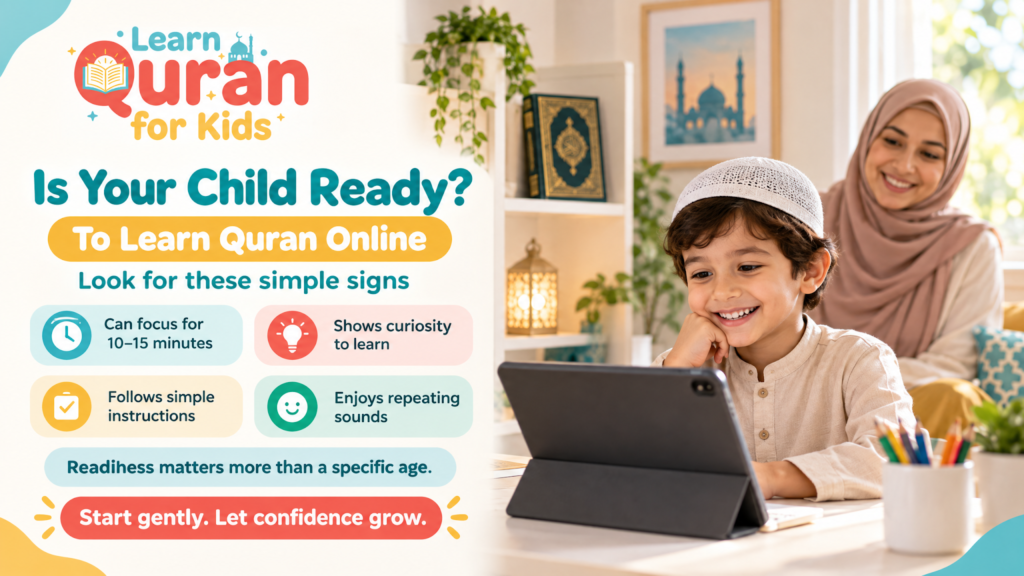
- Can focus for 15 to 20 minutes: The child can sit through a short activity, such as a story or a game, without losing interest quickly. This is enough attention for a short online Quran class.
- Follows simple instructions: The child understands and responds to directions like “listen,” “repeat after me,” or “point to this letter.” Online lessons depend on this kind of interaction with the teacher.
- Repeats sounds after an adult: The child enjoys imitating words and sounds. This is the core skill behind the Talqeen method used in Quran reading classes.
- Shows curiosity about the Quran: The child asks about the Quran, watches family members read it, or wants to hold the Mushaf. This natural interest makes learning easier and more enjoyable.
- Enjoys listening to recitation: The child listens happily to Quran recitation or tries to imitate a reciter’s voice. This shows an early connection to the sounds of the Quran.
- No Arabic knowledge needed: Your child doesn’t need to know any Arabic letters before starting. Noorani Qaida begins from the very first letter and builds reading skills step by step.
Start Your Child’s Quran Learning Journey Today!
Join Kids Learning Quran Academy and help your child read the Quran with confidence through fun and guided lessons.
Book a Free Trial ClassEnroll Your Child in Kids Learning Quran Academy
Kids Learning Quran Academy helps children learn to read the Quran online through live one-on-one classes with patient, qualified teachers. From Noorani Qaida to fluent reading, Tajweed, and memorization, every course follows a clear, child-friendly plan with flexible schedules for families around the world.
Visit Kids Learning Quran Academy today to choose the right program for your child and begin their Quran journey with confidence.
Our Courses Include:
- Tajweed Course for Kids
- Quran Memorization Course for Kids
- Quran Recitation Course for Kids
- Quran Classes for Toddlers
- Quran Tafseer Course for Kids
- Qaida Course for Kids
- Quran Reading Course for Kids
- Online Arabic Classes for Kids
- Quranic Arabic Course for Kids
- Islamic Studies Courses for Kids
- Islamic Studies Course for Kindergarten
- 5 Pillars of Islam Course for Kids
- Islamic Education Course for Kids
Don’t wait to invest in your child’s Akhirah and future. Enroll today and watch your child grow with confidence, knowledge, and love for the Quran.
Conclusion
Learning how to learn to read Quran online for kids comes down to following a clear, step-by-step path: assess the child’s level, build a strong foundation with Noorani Qaida, choose a qualified and patient teacher, and keep sessions short, live, and consistent.
The Talqeen method, gradual Tajweed instruction, and enjoyable activities can make each class more engaging while helping children build real reading skills.
Daily practice at home, simple explanations of meanings, regular review, and warm parental support help make that progress stronger and more lasting. Even a few minutes of practice each day can reinforce what the child learned during the lesson and improve confidence over time.
With patience and consistency, your child can gradually move from recognizing Arabic letters to reading the Book of Allah more accurately and fluently. In sha Allah, this early connection with the Quran can become a lasting habit and a blessing they carry with them throughout their life.
Frequently Asked Questions
What age should kids start learning to read Quran online?
Many children can start learning to read Quran online around age 4 to 5, beginning with letter sounds through listening and repetition. The right age depends on the child’s attention span and readiness, so short sessions and a trial class help parents decide.
How long does it take a child to learn to read the Quran?
Most children need several months to a year to read the Quran fluently, depending on age, class frequency, and practice at home. Completing Noorani Qaida first and attending three to five classes weekly usually leads to steady progress.
Is online Quran learning effective for kids?
Yes, online Quran learning is effective for kids when classes are live, one-on-one, and taught by a qualified teacher. The teacher hears and corrects every mistake in real time, while parents can easily follow progress from home.
Does my child need to learn Noorani Qaida before reading the Quran?
Noorani Qaida is strongly recommended for beginners who cannot yet read Arabic. It teaches letters, vowel marks, and joining rules in order, so the child can read Quranic words correctly and independently instead of guessing.
How can I help my child practice Quran reading at home?
Set a fixed daily time of 10 to 15 minutes, use the same Mushaf copy, and listen to your child read after each class. Praise effort, keep sessions calm, and stay in touch with the teacher about progress.