 Learn Quran
Every Muslim parent wants their child to feel a genuine connection to the Quran — not just recite it, but love it. That connection often begins with wonder, and wonder begins with knowledge. Sharing simple, fascinating facts about the Quran with your child plants the first seeds of that lifelong bond.
The Quran is Allah’s direct word, preserved perfectly for over 1,400 years without a single letter changed. It contains 114 Surahs, was revealed in Arabic, and has been memorized in full by millions of children and adults around the world. These ten facts make that miracle feel real and exciting for young learners.
1. The Quran Was Revealed Over 23 Years, Not All at Once
The Quran was revealed to Prophet Muhammad ﷺ gradually over approximately 23 years, beginning when he was 40 years old. This gradual revelation helped the early Muslims understand, memorize, and apply each teaching in real life. For children, this fact shows that learning takes time — and that is perfectly fine.
The first verses revealed were from Surah Al-‘Alaq, when the Angel Jibreel (AS) appeared to the Prophet ﷺ in the Cave of Hira with one powerful command:
اقْرَأْ بِاسْمِ رَبِّكَ الَّذِي خَلَقَ
Iqra bismi Rabbika alladhi khalaq
“Recite in the name of your Lord who created.” (Al-‘Alaq 96:1)
That single word — Iqra, meaning “Recite” or “Read” — is a beautiful reminder that seeking knowledge is at the heart of Islam. When children hear this, many light up with pride knowing that their own Quran lessons connect them to that very first divine command.
At Kids Learning Quran Academy, our Quran Recitation Course for Kids builds on this spirit, helping children take their first steps with patient, certified instructors who understand exactly how young learners engage with the Quran.
Book a Free Trial Class for Your Child in the Best Quran Recitation Course for Kids
2. The Quran Has 114 Surahs and More Than 6,200 Verses
The Quran contains exactly 114 Surahs (chapters) and over 6,200 verses (Ayat), organized across 30 equal sections called Juz.
The shortest Surah, Al-Kawthar, has only 3 verses. The longest, Al-Baqarah, has 286 verses. This structure makes the Quran easy to divide for daily reading and memorization goals.
Sharing this with children gives them a satisfying mental map of the Quran’s structure. Many children at Kids Learning Quran Academy find it motivating to color or track which Juz they have studied — small visible milestones keep young learners engaged and proud of their progress.
| Quran Structure | Detail |
| Total Surahs | 114 |
| Total Juz (sections) | 30 |
| Shortest Surah | Al-Kawthar (3 verses) |
| Longest Surah | Al-Baqarah (286 verses) |
| Approximate total verses | 6,236 |
Shots Videos from Our Courses
Start Your Child’s Quran Learning Journey Today!
Join Kids Learning Quran Academy and help your child read the Quran with confidence through fun and guided lessons.
Book a Free Trial Class3. Every Surah Except One Begins With Bismillah
Every Surah in the Quran — except Surah At-Tawbah (Chapter 9) — begins with the phrase Bismillah ir-Rahman ir-Raheem, meaning “In the name of Allah, the Most Gracious, the Most Merciful.” This makes Bismillah the most repeated phrase in the entire Quran.
Children often already know Bismillah from daily life — saying it before eating, drinking, or starting any task.
Connecting that familiar phrase to the Quran helps young learners feel that the Quran is already part of their everyday world, not something distant or difficult. That emotional bridge is genuinely powerful for early learners.
4. The Quran Was Revealed in Arabic and Has Never Changed
The Quran is the only religious book in the world that has remained completely unchanged in its original language since it was first revealed over 1,400 years ago. Every copy of the Quran in every country reads identically, letter for letter. This preservation is itself one of the Quran’s greatest miracles.
Allah ﷻ promises this preservation directly:
إِنَّا نَحْنُ نَزَّلْنَا الذِّكْرَ وَإِنَّا لَهُ لَحَافِظُونَ
Inna nahnu nazzalna al-dhikra wa inna lahu lahafidhun
“Indeed, it is We who sent down the Reminder, and indeed, it is We who are its guardian.” (Al-Hijr 15:9)
For children learning Arabic recitation, this fact carries real weight. When they learn to read the Arabic alphabet, they are accessing the exact same letters and sounds that Allah revealed to the Prophet ﷺ. No translation required — the original is perfectly intact and accessible to them.
5. Millions of Children Have Memorized the Entire Quran by Heart
A person who memorizes the entire Quran is honored with the title Hafiz (for boys) or Hafiza (for girls), meaning “guardian” or “protector.” Millions of Muslims around the world — including many young children — have achieved this remarkable feat. Some children complete full memorization before the age of 10.
The Prophet ﷺ said:
“The best among you are those who learn the Quran and teach it.” (Sahih Bukhari)
This hadith motivates children deeply when they understand its meaning. In our experience at Kids Learning Quran Academy, children who learn the why behind memorization — not just the how — show noticeably stronger commitment to their daily review. Purpose-driven learners retain far better than those memorizing without context.
Kids Learning Quran Academy’s Quran Memorization for Kids program uses proven, child-friendly techniques combining audio repetition, short daily sessions, and spaced review to build strong, lasting memorization — even for children as young as 5.
Book a Free Trial for Your Child in the Best Hifz Course for Kids
Read also: 10 Islam Facts for Kids
6. The Quran Was First Written Down During the Prophet’s Lifetime
While many companions of the Prophet ﷺ memorized the Quran, it was also written down during his lifetime on materials like parchment, leather, and flat bones.
After the Prophet ﷺ passed away, the Caliph Abu Bakr (RA) gathered these written records into one complete manuscript.
Later, Caliph Uthman (RA) standardized a single written copy, known as the Mushaf Uthmani, which forms the basis of every Quran printed today.
Children are often amazed to learn that the Quran was written on bones and leaves before paper existed. This small historical detail makes the Quran’s preservation feel even more miraculous — and sparks wonderful questions from curious young minds.
7. Reciting the Quran Correctly Requires Learning Special Rules Called Tajweed
Tajweed is the set of rules that governs how each letter and word of the Quran is pronounced correctly. The word Tajweed itself comes from the Arabic root meaning “to do something well.” Every Muslim who recites the Quran is expected to apply these rules, which protect the meaning and beauty of Allah’s words.
For children, Tajweed does not need to feel complicated. The most important starting point is Makharij — learning exactly where in the mouth and throat each Arabic letter originates. Children who master Makharij early almost always develop cleaner, more confident recitation than those who learn later without this foundation.
Exploring Tajweed rules for kids early — in a structured, age-appropriate way — prevents mispronunciation habits that become genuinely difficult to correct later. Our Tajweed for Kids course at Kids Learning Quran Academy introduces these rules through games, repetition, and hands-on activities designed for young learners.
Enroll your child in Tajweed for kids with a free trial class

| Tajweed Concept | What It Means | When Kids Learn It |
| Makharij | Letter articulation points | Beginner stage (Qaida) |
| Ghunnah | Nasal sound on Noon & Meem | Intermediate Tajweed stage |
| Qalqalah | Echo sound on 5 specific letters | Early Tajweed stage |
| Madd | Prolonged vowel sounds | Early stage |
| Idghaam | Letter merging rules | Intermediate stage |
8. The Quran Contains Stories of Over 25 Prophets
The Quran mentions the names of 25 Prophets by name, from Adam (AS) to Muhammad ﷺ. Their stories appear throughout the Quran, repeated in different contexts to emphasize different lessons. Surah Yusuf (Chapter 12) is the only Surah dedicated entirely to one Prophet’s story, and Allah ﷻ describes it as “the best of stories.”
Children naturally love stories, and the Quran is full of them. At Kids Learning Quran Academy, we find that weaving Prophets’ stories into Quran lessons dramatically increases a child’s emotional engagement with the text.
Understanding who is being spoken about transforms recitation from mechanical repetition into meaningful connection.
Kids Learning Quran Academy’s Islamic Studies Courses for Kids explore the stories of the Prophets in depth, helping children understand the Quran’s narrative richness alongside their recitation and memorization work.
Book a Free Session for Your Child in the Best Islamic Studies Courses for Kids

9. Learning Arabic Opens a Deeper Understanding of the Quran
Arabic is the language of the Quran, and understanding even basic Arabic words transforms a child’s relationship with what they recite. When children recognize words like Rahma (mercy), Jannah (paradise), or Salah (prayer) during recitation, the Quran stops being sounds and becomes meaning.
Learning Arabic for kids does not require fluency before Quran study can begin. Even learning foundational Arabic words that appear frequently in the Quran — words a child will encounter in almost every Surah — creates a tangible sense of understanding and belonging.
Our Students Reviews
Start Your Child’s Quran Learning Journey Today!
Join Kids Learning Quran Academy and help your child read the Quran with confidence through fun and guided lessons.
Book a Free Trial ClassRead alos: 10 Ramadan Facts for Kids: Simple Truths Every Muslim Child Should Know
10. The Quran Has Been Recited in a Special Melody Since the Time of the Prophet ﷺ
The Quran is not simply read — it is recited with a distinctive melodic style called Tarteel, meaning slow, measured, and beautiful recitation. The Prophet ﷺ himself recited the Quran with a beautiful voice and encouraged his companions to beautify their recitation.
This tradition of melodic, rule-governed recitation has been passed down continuously for over 1,400 years.
Children are naturally drawn to melody and rhythm. Many young learners absorb Quranic recitation far more quickly through audio repetition — listening to a beautiful recitation first — before visual memorization begins.
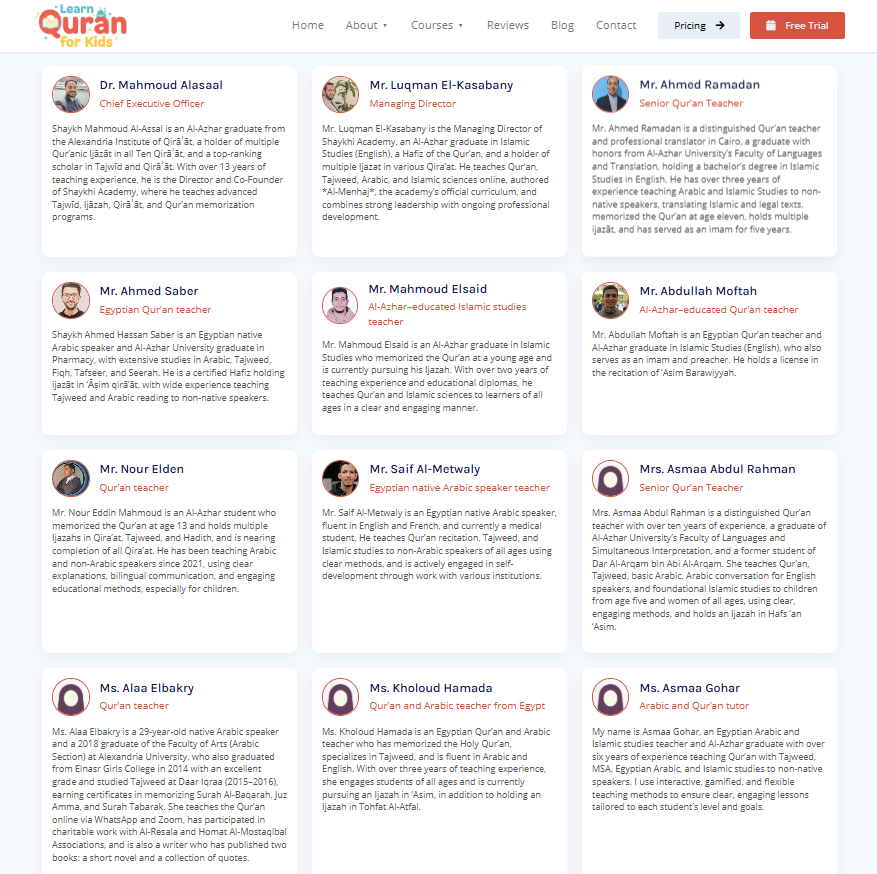
This is one of the most effective teaching approaches used by our certified instructors at Kids Learning Quran Academy, particularly for children under 7 years old.
Book a FREE Trial session for your kid with one of our Ijazah-certified Quran teachers
Start Your Child’s Quran Learning Journey Today!
Join Kids Learning Quran Academy and help your child read the Quran with confidence through fun and guided lessons.
Book a Free Trial ClassEnroll Your Child at Kids Learning Quran Academy and Begin Their Quran Education Today
These ten facts are just the beginning of a lifelong relationship with Allah’s Book. At Kids Learning Quran Academy, we help children build that relationship properly, joyfully, and at their own pace.
- ✅ Certified instructors specialized in teaching young children
- ✅ 1-on-1 personalized attention for every student
- ✅ Age-appropriate, gamified teaching methods
- ✅ Flexible scheduling for busy families
- ✅ Safe, monitored online learning environment
- ✅ Parent progress updates after every session
- ✅ Free trial session available — no commitment required
Book your child’s free trial session today and let our certified instructors turn these Quran facts into a living, breathing love for Allah’s Book. Insha’Allah, your child’s Quran story begins here.
Check out our top courses for children in Hifz Quran, Arabic language skills, and Islamic studies:
- Online Arabic Classes for Kids
- Noorani Qaida for Kids
- Tajweed for kids
- Quran Reading Course for Kids
- Quran Memorization Course for Kids
- Quran Tafseer for Kids
- Islamic Studies Courses for Kids
Book your child’s free trial session today.
Frequently Asked Questions About Quran Facts for Kids
At What Age Can a Child Start Learning the Quran?
Children can begin Quran education as early as age 4, starting with the Arabic alphabet through a Qaida for Kids program. At this stage, the focus is on letter recognition and correct pronunciation rather than full recitation. Most children are ready for structured Quran reading between ages 5 and 6, depending on individual readiness.
How Many Surahs Are in the Quran and Which Are Best for Kids to Learn First?
The Quran contains 114 Surahs. For children, the short Surahs of Juz Amma (the 30th Juz) are the ideal starting point — Surahs like Al-Fatiha, Al-Ikhlas, Al-Falaq, and An-Nas. These Surahs are short, frequently used in daily Salah, and form the natural foundation of a child’s Quran memorization.
Is It Necessary for Kids to Learn Arabic to Understand the Quran?
Full Arabic fluency is not required before Quran study begins, but learning key Arabic vocabulary significantly deepens a child’s connection to what they recite. Even recognizing high-frequency Quranic words — like Rahman, Rahim, and Alhamdulillah — transforms recitation into meaningful worship rather than pure phonetic exercise.
What Is Tajweed and Do Young Children Need to Learn It?
Tajweed is the system of rules governing correct Quran pronunciation. Children do not need to memorize rule names at a young age, but they should learn correct letter sounds (Makharij) from the very beginning. Early correct pronunciation prevents deeply ingrained errors that become significantly harder to correct after age 10.
How Can Parents Help Their Child Connect With the Quran at Home?
Parents can build a child’s Quran connection by listening to beautiful recitations together, sharing stories of the Prophets mentioned in the Quran, and reviewing short Surahs during family time. Even five minutes of shared Quran engagement after lessons — asking a child what they learned — measurably accelerates a child’s progress and confidence.
Related Articles
Learn Quran