 Learn Islam
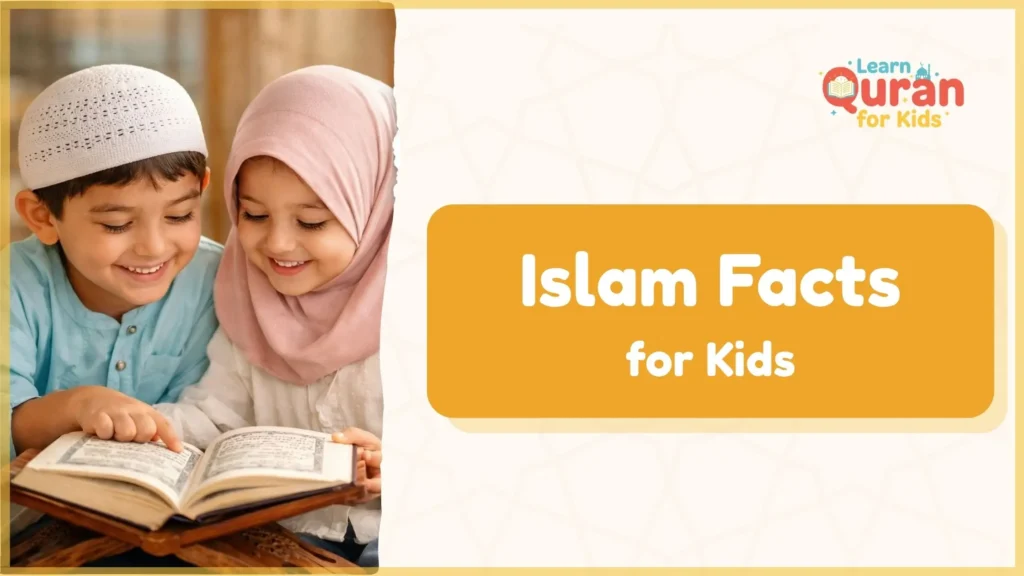
Raising a Muslim child in a non-Muslim majority environment means they will eventually face questions — from classmates, teachers, and curious neighbors — about their faith. When children understand clear, simple Islam facts from an early age, they answer those questions with confidence rather than confusion or embarrassment.
Islam is the most complete and beautifully structured way of life ever given to humanity. From the oneness of Allah to the daily rhythm of prayer, these ten facts give children a meaningful foundation — not just information to memorize, but truths to carry with them always.
1. Islam Is the Second-Largest Religion in the World
Islam has nearly 1.9 billion followers worldwide, making it the second-largest religion on Earth. Muslims live on every continent, speak hundreds of languages, and come from every racial background. For children, understanding this is powerful — they are part of something vast, global, and deeply connected.
Many Muslim children in Western countries grow up feeling like they are the “only ones.” Knowing that nearly a quarter of the world’s population shares their faith transforms that feeling entirely.
At Kids Learning Quran Academy, our certified instructors frequently begin foundational Islamic Studies lessons by placing children’s faith in this global context — and watching their confidence visibly shift.
Book a FREE Trial session for your kid with one of our Ijazah-certified Quran teachers
This sense of belonging matters especially during the ages of 7–12, when children begin forming their social identity. Grounding them in the size and diversity of the Muslim world helps them feel proud rather than self-conscious about their religion.
| Continent | Estimated Muslim Population |
| Asia | ~1.1 billion |
| Africa | ~530 million |
| Europe | ~44 million |
| Americas | ~6 million |
2. What Does the Word “Islam” Actually Mean?
Islam is an Arabic word that means “submission” and “peace.” A Muslim is someone who submits willingly to Allah. The root word — Silm — also carries the meaning of safety and wholeness. For children, this is one of the most important Islam facts to internalize early.
When children understand the meaning of their religion’s name, they grasp its entire spirit in one word. Islam is not about restriction — it is about the peace that comes from living in alignment with what Allah has decreed. This simple fact becomes a powerful answer whenever a child is asked, “What does Islam mean?”
Our Islamic Studies Courses for Kids at Kids Learning Quran Academy explore Arabic root words like this in age-appropriate ways, helping children connect the language of the Quran to the beliefs they practice daily.
Book a Free Session for Your Child in the Best Islamic Studies Courses for Kids
3. The Five Pillars of Islam Give Every Muslim a Framework for Life
The five pillars of Islam are Shahada, Salah, Zakat, Sawm, and Hajj — and they form the complete structure of a Muslim’s religious life. Every Muslim, regardless of country or culture, practices these five pillars. They are the shared foundation that unites the entire global Muslim community.
For children, teaching the five pillars early gives faith a shape they can understand and hold onto. The pillars are not abstract — they are daily actions, observable rituals, and tangible commitments.
Children who understand why they pray five times daily, why they fast in Ramadan, and why their family gives Zakat feel connected to something meaningful rather than following rules without understanding.
What Is the Shahada and Why Does It Come First?
The Shahada — “Ash-hadu an la ilaha illallah, wa ash-hadu anna Muhammadan rasulullah” — is the declaration of faith. It comes first because it is the foundation of everything.
Before any deed, prayer, or act of worship, a Muslim declares that there is no god except Allah and that Muhammad ﷺ is His messenger.
How Do the Five Pillars Work Together for a Child?
| Pillar | Arabic Name | What It Means for Kids |
| Declaration of Faith | Shahada | “I believe in Allah and His Prophet ﷺ” |
| Daily Prayer | Salah | Praying five times connects us to Allah every day |
| Charity | Zakat | Giving 2.5% of savings to those in need |
| Fasting | Sawm | Fasting in Ramadan to grow patience and gratitude |
| Pilgrimage | Hajj | Traveling to Mecca once in a lifetime if able |
Shots Videos from Our Courses
Start Your Child’s Quran Learning Journey Today!
Join Kids Learning Quran Academy and help your child read the Quran with confidence through fun and guided lessons.
Book a Free Trial Class4. Allah Is One — The Concept of Tawheed Is Islam’s Core Belief
Tawheed — the absolute oneness of Allah — is the most fundamental belief in Islam. Allah has no partners, no children, and no equals. He is the Creator of everything and is unlike anything in creation. For children, this clarity is one of Islam’s greatest gifts — there is no complicated theology, only pure, simple monotheism.
Children as young as four can grasp Tawheed when it is explained simply: “Allah made you, Allah loves you, and there is only one Allah.” This becomes the lens through which every Islamic fact, practice, and story makes sense. The Quran reminds us beautifully of this truth:
قُلْ هُوَ اللَّهُ أَحَدٌ
Qul huwa Allahu ahad
“Say, He is Allah, the One.” (Al-Ikhlas 112:1)
This short Surah — one of the most memorized by young children — encapsulates the entire concept of Tawheed in four words.
Read also: 10 Ramadan Facts for Kids
5. The Quran Is the Holy Book of Islam and Has Never Changed
The Quran is the direct word of Allah, revealed to Prophet Muhammad ﷺ through the Angel Jibreel over a period of 23 years. Unlike any other religious scripture, the Quran has been preserved in its original Arabic text without a single letter’s change since its revelation over 1,400 years ago. This is one of the most remarkable Islam facts for kids to understand.
Millions of Muslims — including thousands of children — have memorized the entire Quran by heart. This living preservation through human memory is one of the miracles of the Quran itself. Children who are learning to read or memorize the Quran are participating in an unbroken chain stretching back to the Prophet ﷺ.
If your child is beginning their Quran reading path, our Quran Learning Tools for Kids resource offers practical guidance on the best materials and methods for young learners at every level.
At Kids Learning Quran Academy, our Quran Memorization for Kids program often begins with Al-Fatiha, thenSurah Al-Ikhlas because its meaning is as important as its memorization.
Book a Free Trial for Your Child in the Best Hifz Course for Kids
Read also: 10 Quran Facts for Kids
6. Prophet Muhammad ﷺ Was the Final Messenger of Allah
Prophet Muhammad ﷺ was born in Mecca, in the year 570 CE, and was chosen by Allah as the final prophet and messenger to all of humanity. He received the first revelation at age 40 in the Cave of Hira. Muslims believe he is the last in a long line of prophets that includes Ibrahim, Musa, and Isa — peace be upon them all.
For children, learning about the Prophet ﷺ goes beyond biography — it is about having a role model whose character, patience, and kindness they can emulate every single day. The Prophet ﷺ said, as recorded in Sahih Bukhari: “The best among you are those with the best character.”
Teaching children about the Prophet’s ﷺ love for children specifically — how he used to greet them, play with them, and show them tenderness — builds a genuine emotional connection to his Sunnah that no amount of rote learning can replace.
Book a Free Session for Your Child in the Best Islamic Studies Courses for Kids
7. Muslims Pray Five Times Every Day Facing the Kaaba in Mecca
Every Muslim on Earth performs Salah five times daily — Fajr, Dhuhr, Asr, Maghrib, and Isha. Each prayer is performed facing the Qibla, the direction of the Kaaba in Mecca.
This means that at any given moment, Muslims around the globe are facing the same point in unison — one of the most visually powerful images of Islamic unity for children to understand.
Salah is not simply a ritual — it is a conversation with Allah. Children who understand this approach prayer with an entirely different mindset than those who see it as an obligation to fulfil. Helping children understand each prayer’s name and time makes the daily rhythm of worship feel natural rather than imposed.
| Prayer | Arabic Name | Time of Day |
| Dawn Prayer | Fajr | Before sunrise |
| Midday Prayer | Dhuhr | After midday |
| Afternoon Prayer | Asr | Mid-afternoon |
| Sunset Prayer | Maghrib | Just after sunset |
| Night Prayer | Isha | After full darkness |
8. Arabic Is the Language of the Quran and Every Muslim’s Prayer
Arabic is the language in which the Quran was revealed, and every Muslim’s formal prayer is performed in Arabic — regardless of their mother tongue. This makes Arabic one of the most widely studied languages among Muslim children globally.
Understanding even basic Arabic gives children a direct connection to their prayer, their Quran, and their Islamic identity.
Children do not need to become fluent Arabic speakers to benefit from learning the language. Even recognizing the letters, understanding short Quranic phrases, or knowing the meaning of words they recite in Salah transforms their relationship with worship entirely.
Our Learn Arabic for Kids guide is an excellent starting point for parents exploring structured Arabic learning for their children.
For those beginning with the alphabet, our Arabic Alphabet Learning for Kids resource breaks down each letter in a child-friendly, step-by-step sequence.
Book your kid a FREE Arabic session with a NATIVE teacher
9. Ramadan Is the Holy Month of Fasting and Spiritual Growth
Ramadan is the ninth month of the Islamic lunar calendar, during which Muslims fast from dawn to sunset every day. It is the month in which the Quran was first revealed.
Beyond fasting, Ramadan is a season of increased prayer, Quran recitation, generosity, and gratitude. For children, it is often their first encounter with the discipline and beauty of Islamic worship.
Children who grow up experiencing Ramadan — even partially fasting in the early years — develop a deeply positive association with Islamic practice.
The communal iftars, the Taraweeh prayers, the generous giving of Sadaqah: these experiences shape Islamic identity more powerfully than any classroom lesson alone.
Many families find Ramadan to be their most effective “Islamic education month” of the year.
10. Mecca Is the Holiest City in Islam and the Direction of Every Muslim’s Prayer
Mecca, located in present-day Saudi Arabia, is the holiest city in Islam. It is home to the Masjid Al-Haram — the Grand Mosque — and the Kaaba at its center. Every Muslim who is physically and financially able must perform Hajj at least once in their lifetime. Mecca is also the birthplace of Prophet Muhammad ﷺ.
For children, Mecca represents the geographic heart of Islam. Understanding that five times a day they are turning toward the same sacred city as 1.9 billion other Muslims gives prayer a profound sense of connection.
Exploring the story of the Kaaba — built by Prophet Ibrahim and his son Ismail, peace be upon them — brings Islamic history alive in a way children find genuinely captivating.
Our Students Reviews
Start Your Child’s Quran Learning Journey Today!
Join Kids Learning Quran Academy and help your child read the Quran with confidence through fun and guided lessons.
Book a Free Trial ClassStart Your Child’s Islamic Education Today at Kids Learning Quran Academy
These ten Islam facts for kids form the bedrock of a confident Muslim identity. When children know their faith clearly and simply, they carry it with pride.
Kids Learning Quran Academy offers:
- Certified instructors specialized in teaching children ages 4–15
- 1-on-1 personalized sessions tailored to your child’s pace
- Age-appropriate, engaging methods with gamified learning
- Flexible scheduling designed for busy families
- Safe, monitored online environment
- Progress tracking shared with parents
- Free trial session — no commitment required
Book your child’s free trial lesson today and give them the Islamic foundation they deserve, Insha’Allah.
Check out our top courses for children in Hifz Quran, Arabic language skills, and Islamic studies:
- Online Arabic Classes for Kids
- Noorani Qaida for Kids
- Tajweed for kids
- Quran Reading Course for Kids
- Quran Memorization Course for Kids
- Quran Tafseer for Kids
- Islamic Studies Courses for Kids
Book your child’s free trial session today.
Frequently Asked Questions About Islam Facts for Kids
At What Age Should Children Start Learning About Islam?
Children can begin learning basic Islam facts from as early as age 3–4 through stories, simple duas, and watching family prayers. By age 6–7, they are ready for structured learning about the five pillars, the Quran, and the Prophet ﷺ. Early exposure builds identity and belonging before formal schooling introduces outside influences.
How Many Pillars of Islam Are There and What Are They?
There are five pillars of Islam: Shahada (declaration of faith), Salah (daily prayer), Zakat (obligatory charity), Sawm (fasting in Ramadan), and Hajj (pilgrimage to Mecca). These five practices form the complete framework of every Muslim’s religious life, regardless of their background, language, or nationality.
Is the Quran the Same as It Was When It Was First Revealed?
Yes — the Quran has remained unchanged in its original Arabic text since its revelation over 1,400 years ago. No other religious scripture can make this claim with the same evidence. The Quran’s preservation through both written manuscripts and millions of memorizers worldwide makes it uniquely intact among all world scriptures.
Why Do Muslims Pray in Arabic if They Don’t Speak Arabic?
Muslims pray in Arabic because the Quran was revealed in Arabic and Salah is a direct recitation of Quranic verses. Learning the meaning of Arabic prayer phrases — even without full fluency — transforms a child’s experience of worship from repetition into genuine communication with Allah. OurArabic Words for Kids resource helps children begin understanding the language of their prayer.
How Can I Help My Child Learn About Islam at Home?
Start with the five pillars, short Surahs, and stories of the prophets. Make learning visual, consistent, and joyful. Daily 10–15 minute sessions outperform long irregular study. Enrolling your child with a qualified online Quran teacher provides the structured accountability that home learning alone often lacks — explore what structured support looks like at ourQuran Teachers for Kids resource.
Related Articles
Learn Islam