 Learn Quran
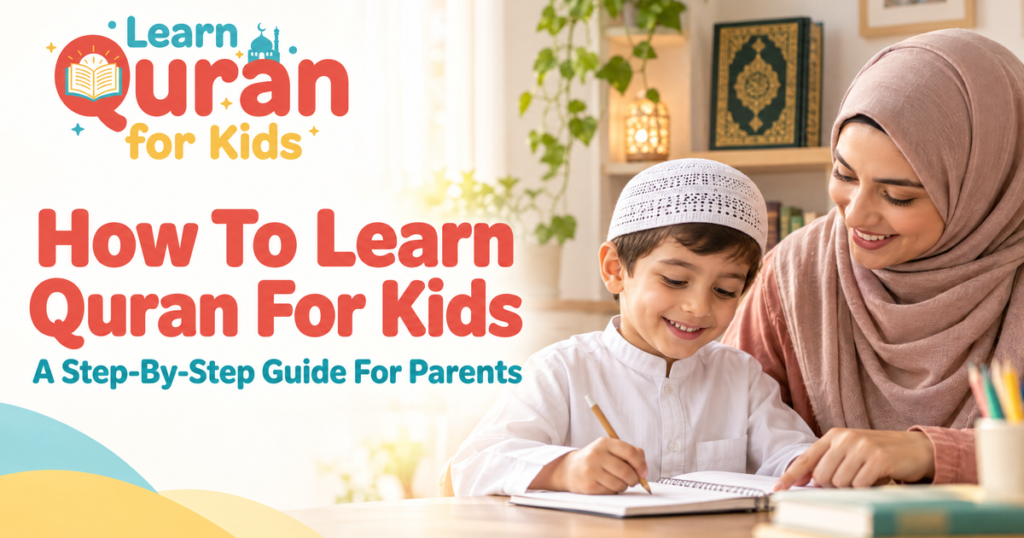
Knowing how to learn Quran for kids is one of the most meaningful goals a Muslim family can pursue. Helping children read, recite, and memorize the Quran from an early age can build a lifelong connection with faith, Arabic, and good character.
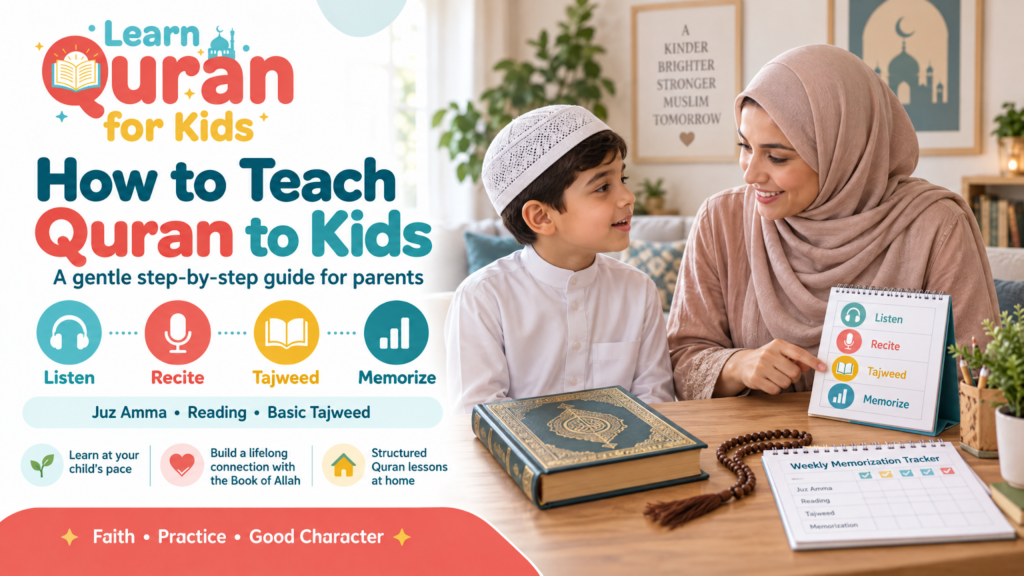
The best approach is gradual, consistent, and joyful. Start with listening and repetition, then introduce Juz Amma, reading skills, basic Tajweed, and memorization step by step according to the child’s pace.
This guide covers practical methods used by parents and Quran teachers, what the Quran and authentic Sunnah teach about learning the Book of Allah, and how Kids Learning Quran Academy supports families with structured Quran lessons at home.
1. Build a Daily Listening Habit
One important part of how to learn quran for kids is daily listening, which provides a strong foundation for Quran learning in young children.
Playing short Surahs at home, in the car, or before bedtime helps train the child’s ear to recognize the correct sounds and pronunciation of Arabic letters (Makharij al-Huruf) before they can read independently.
Choose one clear, slow reciter and play the same Surah repeatedly for several days rather than changing reciters frequently. Hearing a consistent voice helps children become familiar with the rhythm, pronunciation, and flow of Quranic recitation.
It can also create a calm and loving atmosphere at home, helping children associate the Quran with comfort, family time, and positive daily routines.
2. Teach the Arabic Letters Before Reading the Mushaf
Understanding how to learn quran for kids starts with recognizing the Arabic alphabet and learning the correct sound of each letter. Many teachers use a beginner primer such as Al-Qaida An-Nooraniyyah (Noorani Qaida), which introduces letters, vowel marks (Harakat), joined letters, and basic reading rules through short, gradual lessons.
This foundation helps children move from memorizing verses by ear to actually recognizing and reading Quranic words independently. Spend a few minutes each day practising two or three letters, focusing on both their shapes and sounds.
A structured Quran reading course for kids can support this stage with teacher guidance and immediate pronunciation correction.
3. Use Talqeen: Recite Slowly and Let Your Child Repeat
Talqeen is the method in which a teacher recites a verse slowly and clearly, and the student repeats it until it is correct. It is one of the oldest ways of teaching the Quran, and it is especially effective for children who cannot read yet, because it depends on careful listening and imitation rather than reading.
The Quran itself was received through recitation. The first verses revealed to Prophet Muhammad ﷺ were the opening verses of Surah Al-Alaq, which begin with the command to read and recite:
اقْرَأْ بِاسْمِ رَبِّكَ الَّذِي خَلَقَ
“Recite in the name of your Lord who created –”
Correct gently and move on only when the verse is accurate. Professional Quran recitation classes for kids apply the same method one-to-one, so every word your child says is heard and corrected.
4. Start With the Short Surahs of Juz Amma
The short surahs of Juz Amma, the 30th part of the Quran, are the natural starting point for children. Surahs such as Al-Fatihah, Al-Ikhlas, Al-Falaq, An-Nas, Al-Kawthar, and Al-Asr are brief, rhythmic, and recited in daily prayer, so children see the value of what they learn right away.
Finishing a complete surah gives a child a quick sense of achievement that motivates them to continue. Many teachers move upward from An-Nas toward An-Naba, then to Juz Tabarak, before starting longer surahs such as Al-Mulk or Al-Kahf. Progressing gradually prevents frustration and builds a strong base for later memorization.
Start Your Child’s Quran Learning Journey Today!
Join Kids Learning Quran Academy and help your child read the Quran with confidence through fun and guided lessons.
Book a Free Trial Class5. Keep the Mushaf Open While Your Child Recites
Looking at the Mushaf while reciting connects what the child hears with what they see. Following the words with a finger helps link each word’s shape to its sound, strengthening visual memory and making Quranic words easier to recognize.
This connection supports memorization and gradually prepares children for confident, independent reading. Give your child their own Mushaf, ideally a children’s edition with clear print and color-coded Tajweed. Having a personal copy can encourage them to take an interest in learning and treat the Quran with care.
Teach simple etiquette alongside reading, such as handling the Mushaf gently and keeping it in a clean, respectful place. These habits help children develop respect for the Quran while making it a familiar part of their daily routine.
6. Introduce Tajweed Gradually and Naturally
Tajweed is the set of rules for pronouncing the Quran correctly, including the points of articulation of letters, elongation (madd), and nasal sounds (ghunnah). Allah instructed the Prophet ﷺ to recite the Quran in a measured, careful way:
أَوْ زِدْ عَلَيْهِ وَرَتِّلِ الْقُرْآنَ تَرْتِيلًا
“Or add to it, and recite the Qur’an with measured recitation.”
For young children, Tajweed is best learned through imitation first and rules second. When a child copies a skilled reciter, they naturally pick up correct elongation and pauses without memorizing technical terms.
A dedicated Tajweed course for kids breaks these rules into simple, practical lessons, using examples from the short surahs your child already knows. This way, each new Tajweed rule feels familiar and achievable instead of overwhelming.

7. Memorize Small Portions and Review Every Day
Hifz, or Quran memorization, succeeds through small daily portions rather than large, irregular sessions. For young children, one to three short verses a day is often enough.
Long verses can be split into meaningful phrases, memorized separately, and then joined. Consistency matters more than speed, as the Prophet ﷺ taught in part of a longer narration:
… وَأَنَّ أَحَبَّ الأَعْمَالِ إِلَى اللَّهِ أَدْوَمُهَا وَإِنْ قَلَّ
“…and that the most beloved deed to Allah is the most regular and constant even if it were little.”
Daily review (muraja’ah) is just as important as memorizing new verses. A simple routine is to recite yesterday’s portion before learning today’s, then review the whole week’s portion at the weekend.
Encouraging your child to recite memorized surahs in prayer also keeps them fresh. A guided Quran memorization program for kids can set a realistic Hifz and revision plan.

8. Explain the Simple Meanings of What Your Child Learns
Understanding the meaning of a surah makes it easier and more meaningful to memorize. When a child knows that Surah Al-Ikhlas describes the oneness of Allah, or that Surah Quraysh mentions the winter and summer journeys, the verses become a message they understand rather than sounds they simply repeat.
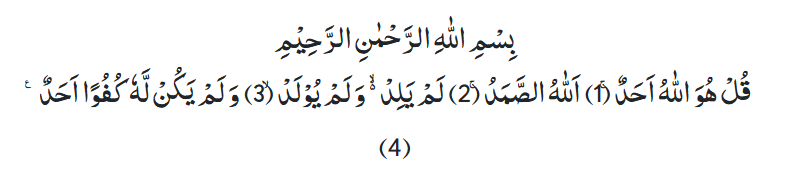
Keep explanations short and suited to your child’s age, with one or two ideas per surah. Learning common Quranic words such as Rabb (Lord), Ar-Rahman (the Most Merciful), and Salah (prayer) helps children recognize vocabulary across many verses. Lessons in Quranic Arabic for kids teach this vocabulary step by step.
9. Bring the Quran to Life With Stories and Activities
Stories from the Quran are one of the best ways to build a child’s love for it. Telling a simplified version of a prophet’s story and then reading the verses that mention it links the lesson directly to the Quran.
The story of Prophet Yusuf for kids is a wonderful example, full of patience, forgiveness, and trust in Allah. Hands-on activities keep Quran lessons fresh and fun.
Coloring pages of surah names, matching games for Arabic letters, quiz cards about the short surahs, and family recitation competitions turn learning into play. You can find many ready-to-use ideas in this collection of Quran activities for kids that work well at home and in class.

10. Use Apps and Learning Tools Wisely
Quran apps, digital Mushafs with audio, and interactive learning tools can support children’s Quran learning when used with parental supervision. Features such as verse-by-verse repetition, word highlighting, and voice recording allow children to listen, repeat, and hear their own recitation.
Technology works best as a learning aid, not as a replacement for a human teacher. An app may not always detect subtle pronunciation or Tajweed mistakes, while a qualified teacher can listen carefully and provide immediate correction.
Combining screen-based practice with live recitation gives children the benefits of both approaches. Parents can also choose suitable resources using guides such as this overview of Quran learning tools for kids.
Experience the Magic Firsthand
Watch these short clips from our live classes to see our interactive teaching tools, vibrant student-teacher interactions, and the fun, stress-free ways we make learning easy for kids!
Start Your Child’s Quran Learning Journey Today!
Join Kids Learning Quran Academy and help your child read the Quran with confidence through fun and guided lessons.
Book a Free Trial Class
11. Choose the Right Time and Keep Sessions Short
The timing of Quran lessons can strongly affect how much a child remembers and how engaged they remain. Many parents find the morning, after a good night’s sleep, to be one of the most productive times because children are often more alert and focused.
Short, focused sessions of 15 to 30 minutes usually work better for young children than long lessons. Allowing short breaks for movement and play can help them return to the lesson with better attention. It is also helpful to set a fixed daily time for Quran practice, making it a natural part of the child’s routine, just like meals, bedtime, or other daily activities.
12. Encourage, Reward, and Be a Role Model
Encouragement keeps children motivated throughout their Quran journey. Praise effort, not only results, and celebrate milestones such as completing a surah or finishing Juz Amma with a small gift or a family gathering. Avoid harsh criticism and comparing your child with others, as this can make Quran time feel stressful.
Children who find recitation difficult deserve special reassurance, because Islam rewards their effort. The Prophet ﷺ said:
الْمَاهِرُ بِالْقُرْآنِ مَعَ السَّفَرَةِ الْكِرَامِ الْبَرَرَةِ وَالَّذِي يَقْرَأُ الْقُرْآنَ وَيَتَتَعْتَعُ فِيهِ وَهُوَ عَلَيْهِ شَاقٌّ لَهُ أَجْرَانِ
“One who is skilled in the Qur’an is associated with the noble, upright recording angels, and he who falters when he recites the Qur’an and finds it difficult for him will have a double reward.”
Children also copy what they see. When they watch their parents read the Quran every day, they understand that it is a living part of family life. Reading together, even for a few minutes after a prayer, is often the strongest motivation a child can have.
13. Learn With a Qualified Quran Teacher
A qualified Quran teacher provides correction, structure, and accountability that are hard to achieve alone. Because Quran recitation has always been passed from teacher to student, having a trained tutor listen to your child ensures that pronunciation, Tajweed, and memorization are accurate from the very beginning.
Online one-to-one classes make this easy for busy families, since children learn at home with a teacher who adapts to their level and pace.
If you are comparing options, this guide to free online Quran classes for kids explains what to look for in a good program before you commit.
Common Mistakes Parents Should Avoid When Teaching Kids the Quran
Even with the right methods, a few common mistakes can slow down a child’s Quran learning or make lessons feel like a burden. Parents may focus too much on finishing lessons quickly, expect progress beyond the child’s current ability, or use pressure when the child struggles.
Understanding what may be holding a child back also makes it easier to adjust the learning approach and support steady progress. Here are the most important mistakes to avoid:
- Rushing memorization: Pushing a child to finish surahs quickly often leads to weak memorization and pronunciation errors. It also means verses are forgotten soon after they are learned. Steady, small portions always work better than speed.
- Skipping daily review (muraja’ah): Focusing only on new verses without regular revision makes children lose what they memorized. Give review the same importance as new memorization.
- Harsh correction and criticism: Getting angry at mistakes can make a child link the Quran with fear and stress. Correct gently, and give your child a chance to find the mistake first.
- Comparing your child with others: Comparing a child with siblings or classmates hurts their confidence and motivation. Every child learns at their own pace, so measure progress against their own past effort.
- Using Quran lessons as punishment: Assigning extra verses as a penalty turns the Quran into something unpleasant. Keep Quran time linked to love, comfort, and reward.
Start Your Child’s Quran Learning Journey Today!
Join Kids Learning Quran Academy and help your child read the Quran with confidence through fun and guided lessons.
Book a Free Trial ClassStart Your Child’s Quran Journey With Kids Learning Quran Academy
Kids Learning Quran Academy offers friendly, one-to-one online Quran classes designed especially for children. Qualified teachers guide your child through reading, recitation, Tajweed, memorization, and Quranic Arabic, using fun, interactive lessons and a pace that suits your child’s age and personality.
Whether your child is just learning the Arabic letters or ready to memorize Juz Amma, the academy builds a clear learning plan and keeps you updated on progress.
Book a free trial class today and see how enjoyable learning the Quran can be for your child.
Our Courses Include:
- Quran Memorization Course for Kids
- Quran Recitation Course for Kids
- Quran Classes for Toddlers
- Quran Tafseer Course for Kids
- Quran Reading Course for Kids
- Online Arabic Classes for Kids
- Quranic Arabic Course for Kids
Don’t wait to invest in your child’s Akhirah and future. Enroll today and watch your child grow with confidence, knowledge, and love for the Quran.
Join Kids Learning Quran Academy now and start your child’s learning journey today!

Conclusion
Learning how to teach the Quran to kids is a journey built on patience, consistency, and love. Start with daily listening and Talqeen, teach the Arabic letters and basic reading skills, then introduce the short Surahs of Juz Amma.
As your child becomes more confident, add Tajweed and memorization gradually, with regular daily review to strengthen what they have learned.
Stories, simple activities, encouragement, and your own example can turn Quran time into a joyful daily habit rather than a difficult task.
With the help of Allah, a qualified teacher, and a steady routine, your child can gradually grow into a confident reader who understands and loves the Book of Allah.
Frequently Asked Questions About Teaching Kids the Quran
What is the easiest way to teach the Quran to kids?
The easiest way to teach the Quran to kids is talqeen combined with daily listening. The teacher or parent recites a short verse slowly, the child repeats it several times, and the same surah is played at home until the child recites it confidently.
At what age should a child start memorizing the Quran?
Many children start memorizing very short surahs between ages three and five. There is no fixed age in Islamic law, so parents should follow their child’s readiness, starting with listening and short surahs before adding reading and Tajweed.
Which surah should kids learn first?
Most children learn Surah Al-Fatihah first because it is recited in every unit (rak’ah) of prayer. After that, teachers usually move to An-Nas, Al-Falaq, and Al-Ikhlas, then continue through the rest of Juz Amma.
How long does it take a child to memorize Juz Amma?
The time needed to memorize Juz Amma varies widely from child to child. It depends on age, daily practice time, and review habits; steady short sessions with regular revision usually bring better results than rushing.
Can kids learn the Quran online effectively?
Yes, kids can learn the Quran online effectively through live one-to-one classes with a qualified teacher. The teacher hears and corrects every word, while parents can follow progress and keep lessons at a convenient time at home.
Should children learn Tajweed from the beginning?
Children should learn correct pronunciation from the beginning by imitating a skilled reciter. Formal Tajweed rules and terminology are usually introduced later, once the child can read fluently.