 Arabic Alphabet & Writing
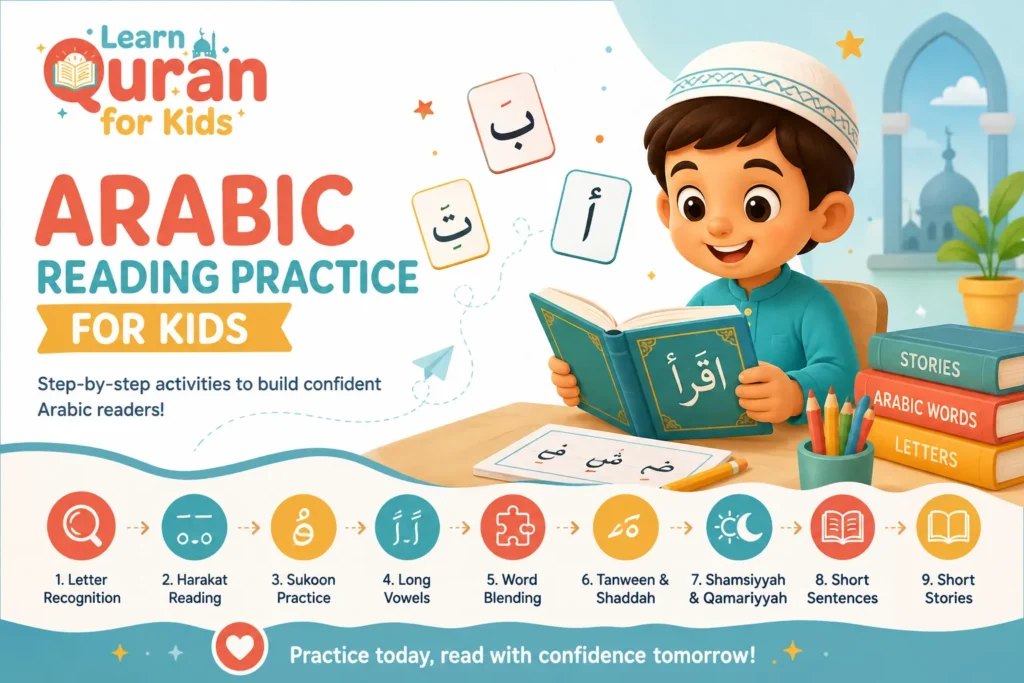
Teaching a child to read Arabic can feel challenging when they are learning unfamiliar letters, sounds, and vowel marks. The most effective approach is gradual: begin with letter recognition and pronunciation, then move to short vowels and blending, simple words, sentences, and finally short texts and stories.
This guide provides a practical roadmap for Arabic reading practice for kids, with age-appropriate exercises and strategies to build accuracy and confidence. By practicing vowel marks and gradually combining sounds into words, children can develop a strong foundation for reading Arabic clearly and independently.
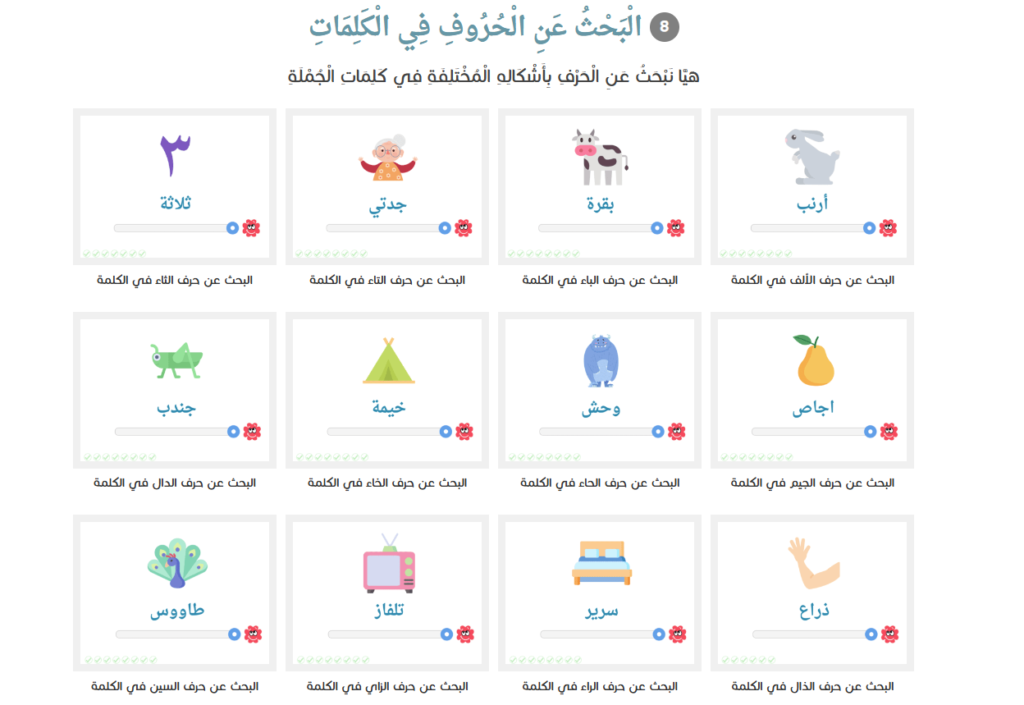
1. Practice Letter Recognition Exercises
Make letter recognition active and repetitive with simple activities such as finding a target letter, matching identical letters, identifying letters in different positions, and choosing the correct letter from a group.
Mix the letters rather than presenting them in alphabetical order, so children practice true recognition rather than relying on sequence memory.
Read also: How to Teach Kids Arabic? A Step-by-step Parent’s Guide
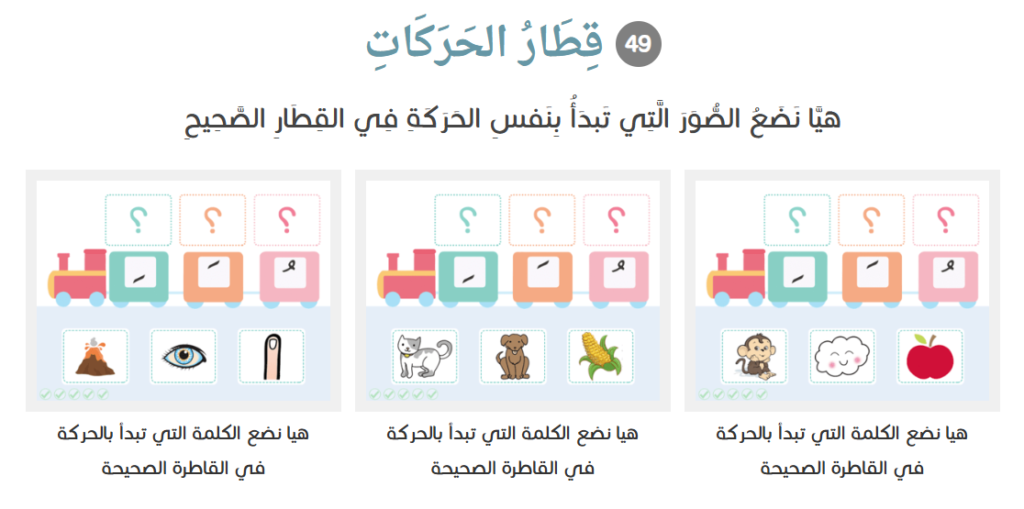
2. Practice Harakat Reading Exercises
Give children repeated practice reading letters with Fathah, Kasrah, and Dammah through short, simple exercises. Ask them to identify the vowel mark, say the correct sound aloud, and read letter-Harakat combinations in different orders to build accuracy and fluency.
3. Practice Sukoon Exercises
Practice reading letters with Sukoon by combining them with letters carrying short vowels. Use simple, fully vowelled syllables and words, asking children to sound out each part, blend the sounds, and repeat the words aloud to improve accuracy and fluency.
Read also: Arabic Alphabet Learning for Kids
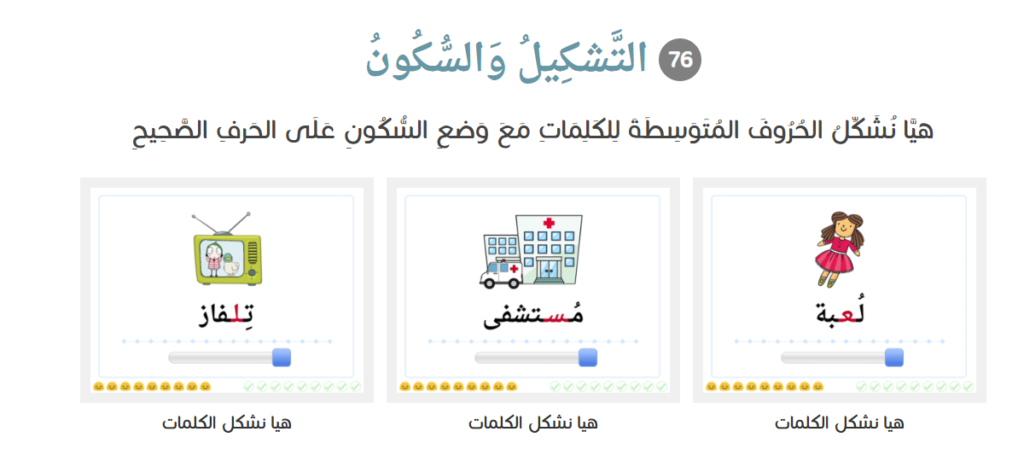
4. Practice Long-Vowel Exercises
Practice reading words with Long Alif, Long Waw, and Long Yaa by having children identify the long vowel, pronounce the extended sound, and read simple words containing it. Use
repetition and familiar examples to help children distinguish long sounds from short vowels and read them more smoothly.
Read also: Story Of Prophet Dawud In Islam
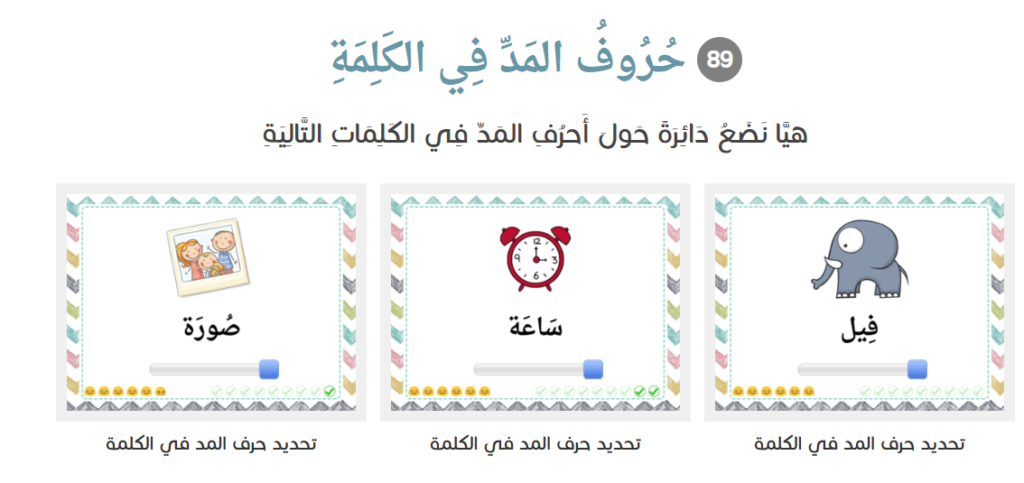
5. Practice Word Blending Exercises
Help children practice blending individual letters and sounds into complete Arabic words. Start with short, fully vowelled words, have children sound out each part, combine the sounds, and then read the whole word smoothly.
Read also: Arabic Words for Kids
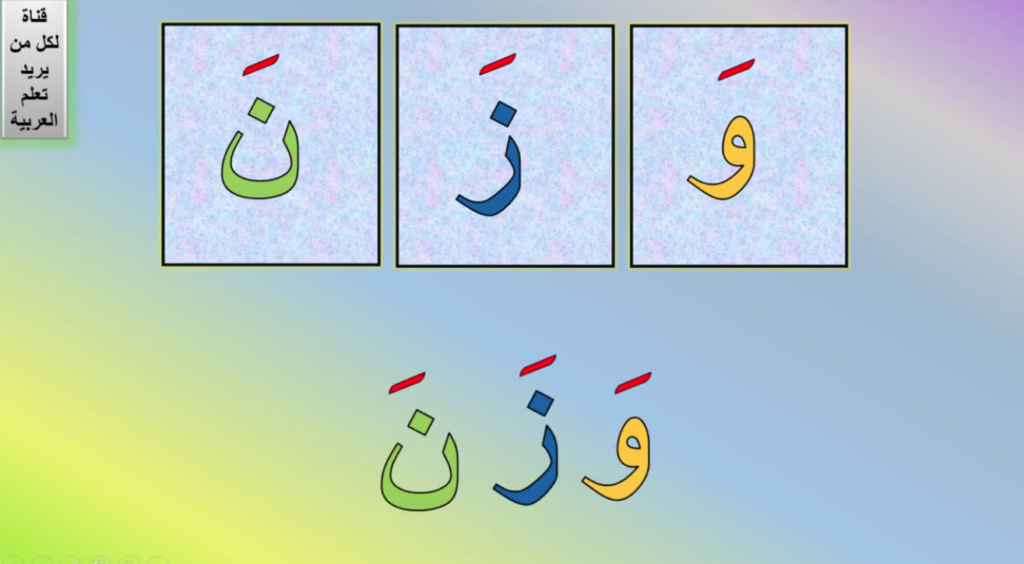
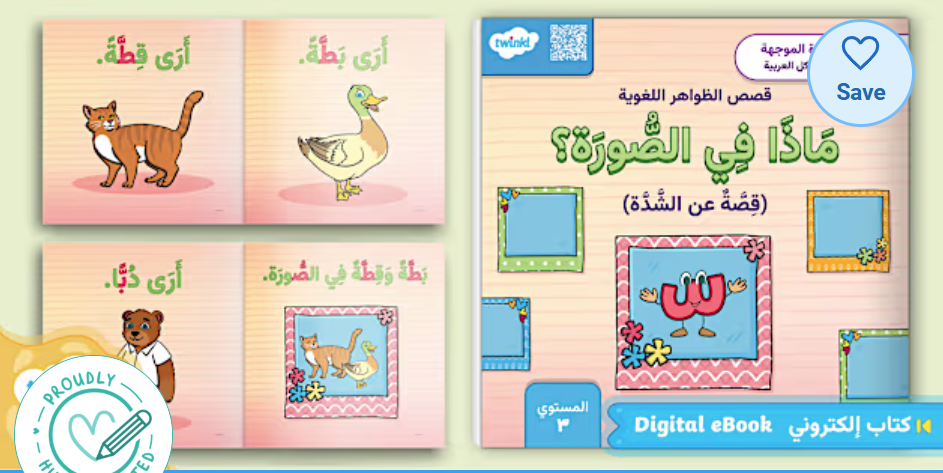
6. Practice Tanween And Shaddah Exercises
Practice reading words with Tanween and Shaddah using simple, fully vowelled examples. Have children identify each mark, pronounce the correct ending or doubled consonant sound, and repeat the words aloud to build reading accuracy and fluency.
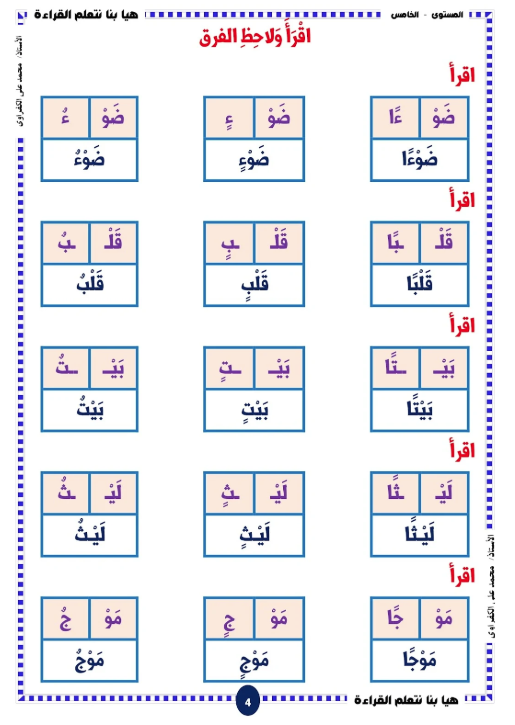
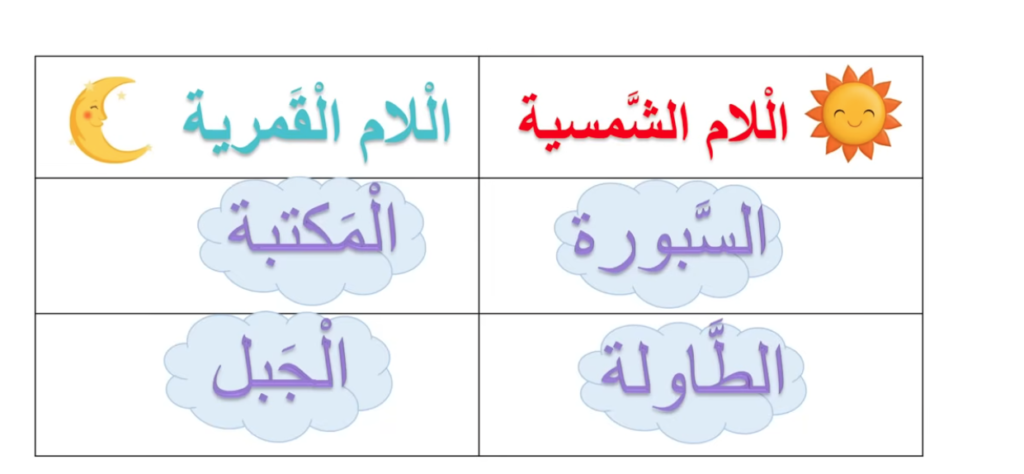
7. Practice Al-Shamsiyyah And Al-Qamariyyah Exercises
Practice reading words with Al-Shamsiyyah and Al-Qamariyyah using simple, familiar examples. Have children read each word aloud, notice the difference in pronunciation, and repeat the words several times to improve accuracy and fluency.
Read also: Story Of Prophet Dawud In Islam
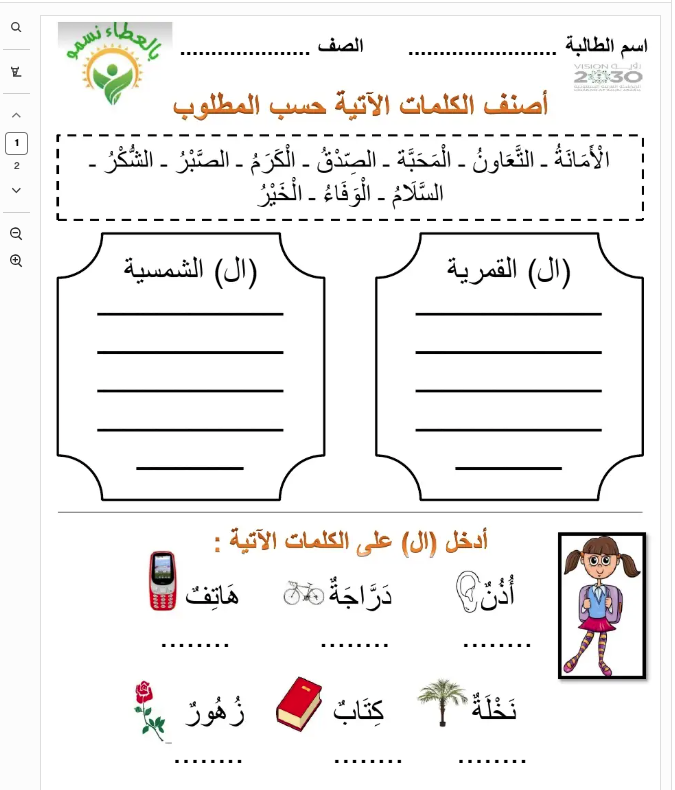
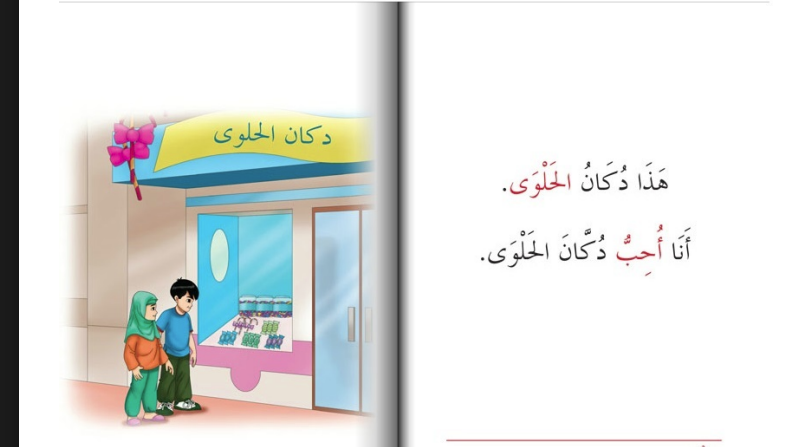
8. Practice Short Sentence Reading
Practice reading short, simple Arabic sentences made from familiar words and previously learned reading patterns. Encourage children to read each sentence aloud, focus on accurate pronunciation, and repeat it until they can read it smoothly and confidently.
Read also: Story Of Prophet Sulaiman (Solomon) In The Quran
See Our Classes in Action!
Wondering what a typical lesson looks like? Take a peek inside our virtual classrooms below to see how our patient teachers keep students smiling, engaged, and learning every step of the way.
Start Your Child’s Quran Learning Journey Today!
Join Kids Learning Quran Academy and help your child read the Quran with confidence through fun and guided lessons.
Book a Free Trial ClassRead also: Arabic Sentences for Kids
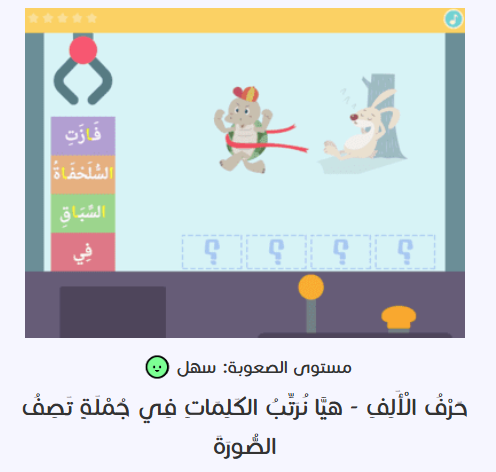
9. Practice Short Story Reading
Practice reading short, fully vowelled Arabic stories made with familiar words and simple sentences. Encourage children to read aloud, repeat difficult sentences, and gradually read the story with greater accuracy, fluency, and confidence.
Read also: Arabic Story for Kids
Fun Ways To Make Arabic Reading Practice More Engaging
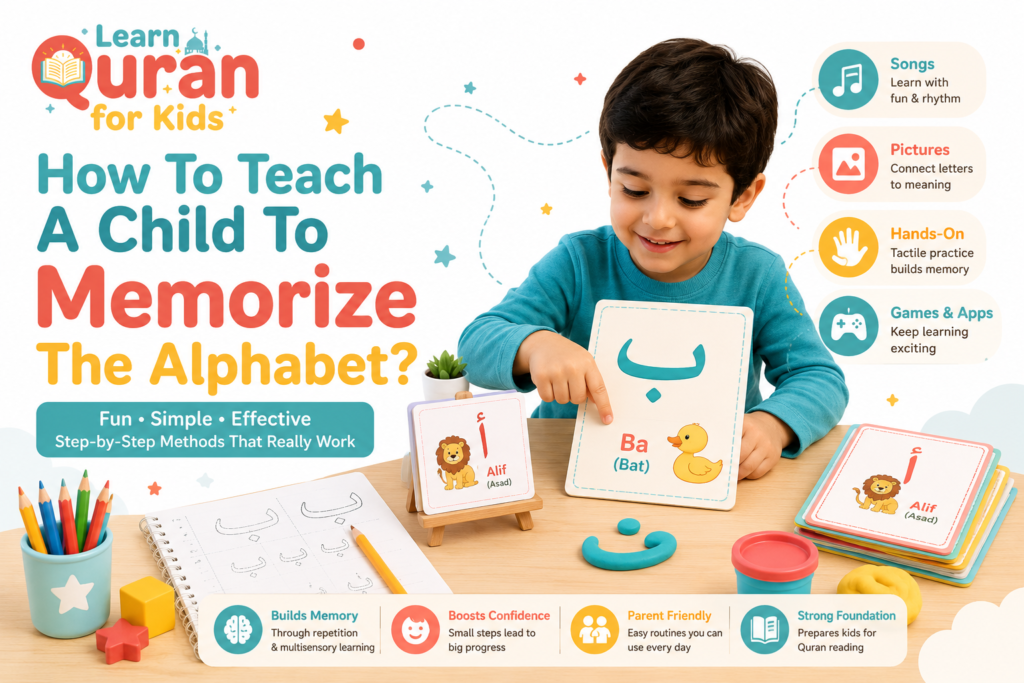
Make Arabic reading practice for kids more enjoyable by using Arabic flashcards, fun letter and word games, and pictures to build vocabulary and reinforce recognition.
Reading short Arabic stories together, using songs, rhymes, and repetition, and introducing interactive digital Arabic resources can also keep children engaged while giving them frequent opportunities to practice and improve their reading skills.
Read also: Best 10 Apps to Learn Arabic for Kids
How Much Arabic Reading Practice Should A Child Do Each Day?
The ideal practice time depends on the child’s age, reading level, and confidence, so keep sessions short, consistent, and enjoyable.
1. For Beginners
Start with 10–15 minutes a day, focusing on letters, sounds, and simple Harakat.
2. For Children Who Already Know the Alphabet
Practice for 15–20 minutes daily, moving into words, blending, and short sentences.
3. For Children Struggling With Reading
Use 5–10 minute focused sessions with extra repetition of the skills they find difficult.
4. A Simple Daily Practice Routine
Combine letter or sound review, word reading, sentence practice, and a short story in one consistent session.
Read also: Arabic Games for Kids
Common Mistakes Parents Make When Teaching Arabic Reading
Parents may unintentionally make Arabic reading harder by moving to words before children understand letter sounds, relying only on alphabet memorization, or skipping Harakat.
Introducing too many rules at once, asking children to memorize rather than decode, using material that is too difficult, or failing to review previously learned skills can also slow progress. Most importantly, correcting every mistake in a discouraging way may reduce a child’s confidence, so practice should remain gradual, supportive, and encouraging.
Read also: 15 Stories To Learn Arabic For Kids
How To Help A Child Who Struggles With Arabic Reading
If a child struggles with Arabic reading, first identify the specific skill causing difficulty and return to an easier reading level when needed. Increase repetition, use shorter practice sessions, and combine visual, auditory, and hands-on activities to reinforce learning in different ways.
Give immediate positive feedback to build confidence, and track the child’s progress over time so you can adjust the practice level and approach as their skills improve.
Arabic Reading Practice For Kids – A 4-Week Starter Plan
A simple, structured 4-week plan can help your child build Arabic reading skills step by step, from recognizing letters and sounds to reading short sentences and stories.
1. Week 1 — Letters & Sounds
Practice Arabic letter recognition, pronunciation, and basic letter-sound connections.
2. Week 2 — Harakat & Sukoon
Practice Fathah, Kasrah, Dammah, and Sukoon through simple reading exercises.
3. Week 3 — Long Vowels & Word Blending
Practice long vowels and blending letters and sounds into simple Arabic words.
4. Week 4 — Sentences & Short Stories
Progress to short sentences and simple, fully vowelled Arabic stories to build fluency and confidence.
Experience the Magic Firsthand
Watch these short clips from our live classes to see our interactive teaching tools, vibrant student-teacher interactions, and the fun, stress-free ways we make learning easy for kids!
Start Your Child’s Quran Learning Journey Today!
Join Kids Learning Quran Academy and help your child read the Quran with confidence through fun and guided lessons.
Book a Free Trial ClassHelp Your Child Read Arabic With Confidence
Don’t let your child struggle with Arabic reading or fall behind because they lack the right foundation. Give them structured, step-by-step support from the very beginning.
At Learn Quran for Kids, children learn Arabic reading through engaging lessons that build skills progressively—from letters and sounds to words, sentences, and Quranic reading. With personalized guidance and consistent practice, your child can become a more confident and accurate reader.
Ready to give your child a stronger start? Enroll today and help them build Arabic reading skills that will last a lifetime.
Our Courses Include:
- Tajweed for Kids
- Quran Memorization for Kids
- Quran Recitation Course for Kids
- Quran Classes for Toddlers
- Quran Tafseer for Kids
- Qaida for Kids
- Quran Reading Course for Kids
- Online Arabic Classes for Kids
- Quranic Arabic for Kids
- Islamic Studies Courses for Kids
- Islamic Studies for Kindergarten
- 5 Pillars of Islam for Kids
- Islamic Education for Kids
Start Your Child’s Quran Learning Journey Today!
Join Kids Learning Quran Academy and help your child read the Quran with confidence through fun and guided lessons.
Book a Free Trial ClassConclusion
Helping children learn to read Arabic is most effective when skills are introduced gradually—from letters and sounds to words, sentences, and short stories.
Consistent practice, repetition, encouragement, and age-appropriate materials can build both accuracy and confidence. With the right progression and support, children can develop strong decoding skills that eventually lead to fluent and independent Arabic reading.
Frequently Asked Questions
What Is The Best Age To Start Teaching A Child To Read Arabic?
There is no single perfect age, but children can begin learning Arabic letters and sounds as soon as they are ready for structured learning. Start with short, fun sessions and gradually increase difficulty as their confidence and skills grow.
How Can I Teach My Child To Read Arabic At Home?
Start with letter recognition and sounds, then gradually introduce Harakat, blending, words, sentences, and short stories. Keep practice sessions short and consistent, using repetition, games, flashcards, and age-appropriate reading materials.
What Should A Child Learn First When Learning To Read Arabic?
Children should first learn to recognize Arabic letters and connect each letter with its correct sound. Once this foundation is strong, they can move on to Harakat, blending sounds, and reading simple words.
Should Children Learn Arabic Letters Or Sounds First?
Children should begin by learning to recognize Arabic letters and connect each letter with its correct sound. Once they can confidently identify letters and sounds, they can progress to Harakat and blending them into syllables and words.
How Do I Teach Arabic Vowels To Children?
Start by teaching the three short vowels—Fathah, Kasrah, and Dammah—using simple letters and repeated oral practice. Once children can read them confidently, introduce blending and gradually move to longer vowel sounds.
How Can I Help My Child Blend Arabic Letters Into Words?
Teach your child to sound out each letter separately, then gradually combine the sounds into a complete word. Start with short, fully vowelled words and use repetition until they can blend and read them smoothly.
How Long Does It Take A Child To Learn To Read Arabic?
The time varies depending on the child’s age, starting level, practice consistency, and learning pace. With short, regular practice and gradual progression, children can steadily build accuracy, fluency, and confidence.
What Are The Best Arabic Reading Exercises For Kids?
Effective exercises include letter recognition, Harakat and Sukoon practice, long-vowel exercises, word blending, and reading words with Tanween and Shaddah. As children progress, add short sentences and fully vowelled stories to build fluency and confidence.
Can Children Learn Arabic Reading Through Stories And Games?
Yes. Games, flashcards, songs, and short Arabic stories can make reading practice more engaging while reinforcing letter recognition, vocabulary, and reading skills.
Is The Noorani Qaida Useful For Teaching Children To Read Arabic?
Yes. Noorani-style resources can provide a structured progression for learning letters, sounds, and basic decoding skills. They can be especially useful for beginners who are preparing to read the Quran.
How Can I Help A Child Who Struggles With Arabic Reading?
Identify the specific skill causing difficulty, then return to an easier level and practice it with shorter, focused sessions. Use repetition, positive feedback, and a mix of visual, auditory, and hands-on activities to build confidence and improve reading skills.
Related Articles
Arabic Alphabet & Writing