 Learn Islam
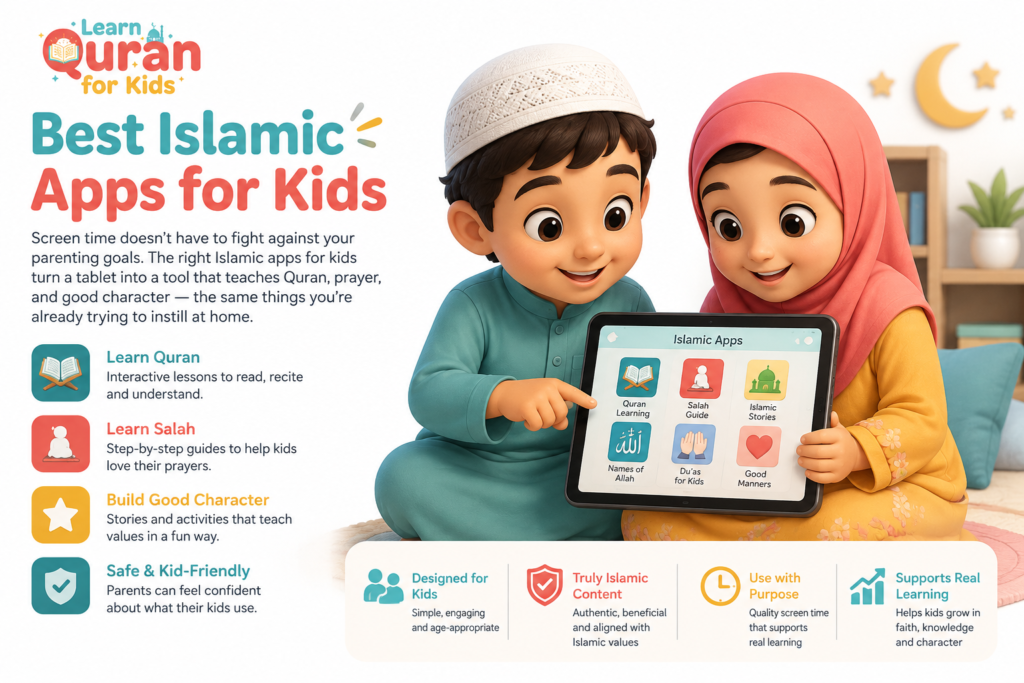
Screen time doesn’t have to fight against your parenting goals. The right Islamic apps for kids turn a tablet into a tool that teaches Quran, prayer, and good character — the same things you’re already trying to instill at home. But not every app labeled “Islamic” delivers real educational value, and picking the wrong one wastes both time and trust.
This guide covers the Islamic apps for kids that parents and educators actually rely on, what each one does well, and how to tell a genuinely good Islamic app for kids from one that’s just colorful and loud.
Best Religious Islamic Apps For Kids
Numerous Islamic applications offer valuable and beneficial religious content for Muslim children, such as:
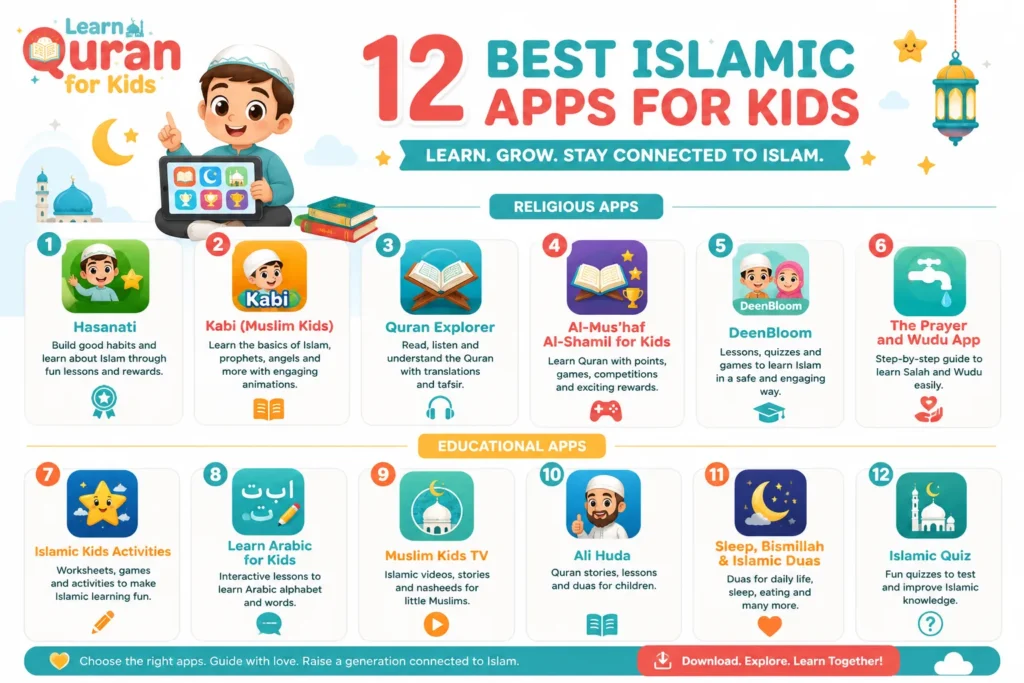
1. Hasanati — Islamic Character Education Through Daily Habits
Hasanati (حسناتي) is built around a school-based religious education curriculum called Deen Al-Haq, adapted for a mobile format by education specialists. The app follows a character named Yaqoot, a “righteous companion” who guides children through lessons on the names of Allah, acts of worship, the Prophet’s biography (seerah), manners, the Quran, hadith, and daily supplications.
What sets Hasanati apart is its “hasanat” (good deeds) system — children earn points for good behavior and religious learning, which taps into healthy competition between siblings or classmates rather than just passive video-watching. Content is delivered through short videos and interactive activities, including matching exercises, true/false questions, and verse-completion tasks.
Hasanati currently holds a 4.4-star rating from 481 reviews on Google Play with over 100,000 downloads — respectable numbers for a niche educational app, though smaller than mass-market entertainment apps in this category.
Read also: The Benefits of Reading Quran for Kids
2. Kabi (Muslim Kids) — Foundational Concepts for Ages 4–8
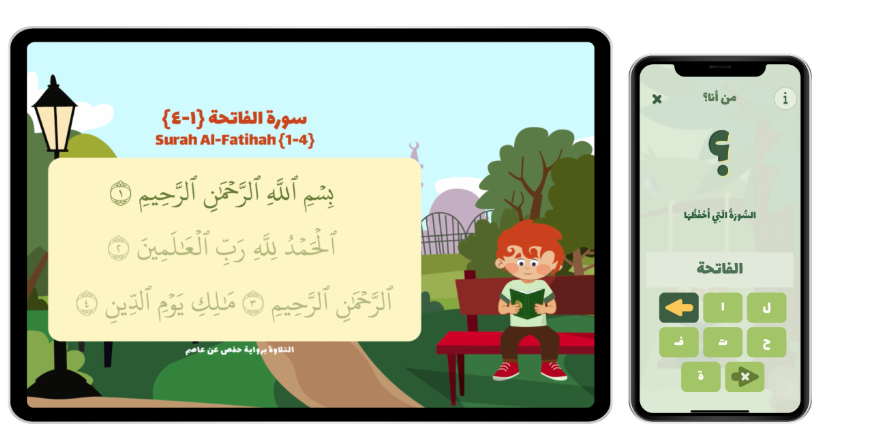
Kabi Muslim Kids App is aimed squarely at the 4-to-8 age range and focuses on foundational concepts: the five pillars of Islam, the names of the 25 prophets and messengers mentioned in Islamic tradition, and the angels and their roles. The app breaks these down into simple, animated explanations suited to a preschool or early-elementary attention span.
Kabi also has a companion app focused specifically on learning to pray, which walks children through wudu (ablution) and the five daily prayers — Fajr, Dhuhr, Asr, Maghrib, and Isha — with accompanying duas for each. Before starting a lesson, children customize their character’s Islamic clothing, a small design choice that increases engagement for this age group without adding any real educational overhead.
3. Quran Explorer — Recitation, Translation, and Tafsir in One Place
Quran Explorer is built for Quran reading and study rather than character education. It includes full Quran recitation, multiple translations, and tafsir (Quranic commentary) with search functionality. The free version is ad-supported; the paid version adds multiple reciters, additional translations including Urdu, English audio, unlimited bookmarks, background audio, and bulk download options.
This app suits families whose children already have basic reading fluency and are working toward regular Quran engagement rather than a first-time introduction to Islamic concepts.
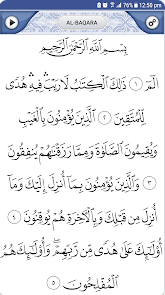
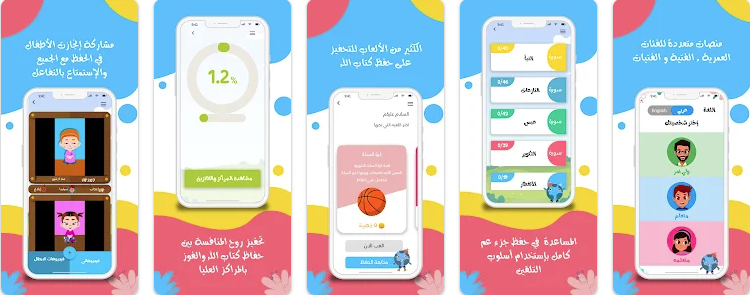
4. Al-Mus’haf Al-Shamil for Kids — Gamified Quran Learning
Al-Mus’haf Al-Shamil for Kids app teaches children to read the Quran through a points-and-rewards system: children collect points they can spend on in-app games, track their achievements, and see how they compare with other users globally.
Competitions and prize incentives are built in. It works well as a motivation layer for kids who respond to gamification, though — like most gamified apps — the depth of actual Quran instruction depends on how the underlying lesson content is structured.
Read also: Quran Verses About Children
5. DeenBloom – Learn Islam
DeenBloom App makes Islamic learning engaging for children ages 4–14 through structured lessons, quizzes, games, and audio activities. It covers Islamic basics, the Quran, Arabic letters, Salah, fasting, Zakat, and Islamic history, while offering level-based progression and rewards in a safe, ad-free environment.
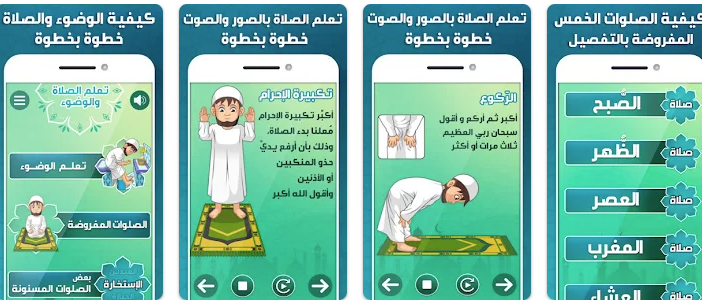
6. The Prayer and Wudu App
The Prayer and Wudu app teaches children how to perform Salah and Wudu through simple, step-by-step instructions and helpful illustrations. It is easy to use, works offline, and presents the essential rules of prayer and ablution in a clear, child-friendly way.
See Our Classes in Action!
Wondering what a typical lesson looks like? Take a peek inside our virtual classrooms below to see how our patient teachers keep students smiling, engaged, and learning every step of the way.
Start Your Child’s Quran Learning Journey Today!
Join Kids Learning Quran Academy and help your child read the Quran with confidence through fun and guided lessons.
Book a Free Trial ClassBest Educational Islamic Apps for Kids
Numerous applications offer rich and beneficial educational content for Muslim children, particularly for learning the Arabic language and other foundational skills.
1. AlifBee Kids Learning Arabic
AlifBee Kids Learning Arabic app makes learning Arabic and the Quran engaging through interactive games, stories, and animations. It offers personalized learning paths, Arabic alphabet and pronunciation practice, Quran memorization support, and a broad Islamic curriculum. Parents also benefit from progress tracking, parental controls, multiple child profiles, and a safe, ad-free learning environment.
Read also: Arabic Books for Kids
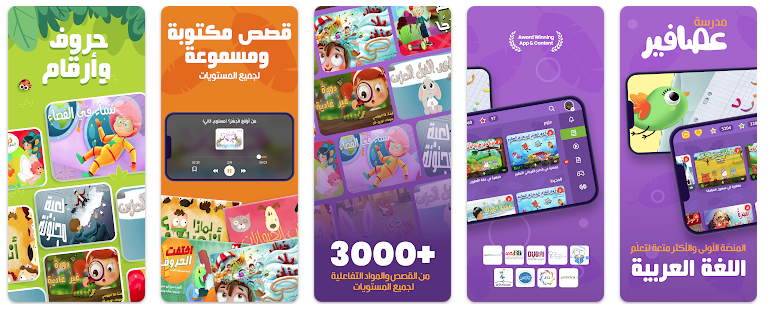
2. 3asafeer School App
3asafeer School App helps children and teens learn Arabic through leveled Arabic stories, interactive educational games, language exercises, and printable worksheets. It supports the gradual development of reading, writing, vocabulary, and overall Arabic language skills in an engaging way.
Read also: Best 6 Islamic Ebooks for Kids
3. Habar – Learn Arabic for Kids
Habar App makes learning Arabic letters fun for preschool and kindergarten children through interactive games and engaging characters. It teaches letter pronunciation, writing, and early reading skills while using AI-powered feedback to correct mistakes. The app is free, ad-free, and allows children to learn independently at their own pace.
Read also: Arabic Reading for Kids
Read also: Arabic Alphabet Learning for Kids
Best Fun and Entertainment Islamic Apps for Kids –
There are numerous children’s apps that blend fun and entertainment with value and learning:
1. Muslim Kids TV — Large-Volume Content Library
Muslim Kids TV positions itself differently: instead of a structured curriculum, it offers a library of over 15,000 resources, including Islamic videos, games, and e-books. For families who want variety and don’t need a fixed lesson sequence, this works as a broad entertainment-and-learning hybrid. It removes the need to hunt across multiple websites for Islamic content, but parents should treat it as a resource library rather than a teaching program — there’s no built-in progression from lesson to lesson.
Read also: The Ultimate Islamic Quiz Games for Kids with Questions
2. Ali Huda App
Ali Huda App provides a safe, halal entertainment environment where Muslim children can learn while having fun. It offers thousands of videos covering Quran, Arabic, Salah, Duas, Islamic stories, Nasheeds, science, and crafts, along with interactive quizzes and activities that encourage active learning.
Read also: Best Islamic 11 Games for Kids

3. Dawood Kids
Dawood Kids App makes Quran learning enjoyable through colorful, interactive games that help children memorize and repeat verses naturally. It strengthens memory and focus while also offering activities for Arabic letters, puzzles, quizzes, and other educational skills.
Read also: Islamic Animations for Kids
Don’t Treat Apps as a Substitute for Teacher Feedback
The most common mistake we see is parents assuming an app alone will get a child to Quran fluency or correct tajweed (recitation rules). Apps are excellent for building familiarity, vocabulary, and consistent daily habits — the “hasanat” and points systems genuinely work for motivation.
But no app can currently listen to a child recite and correct their makhraj (articulation points) or tajweed errors in real time, the way a qualified teacher can.
This is the gap that live, one-on-one Quran instruction fills. At Learn Quran for Kids, our teachers work directly with children online, correcting pronunciation and tracking memorization progress in a way that complements — rather than replaces — the app-based learning covered above. Many of our students use an Islamic app for daily reinforcement between live lessons.
How To Choose The Right App For Your Child’s Age?
Match the app to your child’s stage rather than picking the most popular option by default.
Ages 4–6: Foundational Concepts and Character
At this age, prioritize apps like Kabi that introduce pillars of faith, prophets, and basic manners through short, animated segments. Attention spans are short, so apps with bite-sized lessons outperform longer-form content.
Ages 7–10: Structured Curriculum and Early Quran Reading
This is where Hasanati’s structured curriculum and points system tend to land well, alongside gamified Quran-reading apps like Al-Mus’haf Al-Shamil. Children at this stage can handle sequential lessons and benefit from the competitive element of earning hasanat or points.
Ages 10 and Up: Independent Study Tools
Older children benefit more from Quran Explorer’s translation and tafsir features, since they’re reading independently and starting to engage with meaning rather than just recitation mechanics.
If your child is ready to move from app-based familiarity to structured, one-on-one memorization with a qualified teacher, that’s exactly where a live Quran program adds value — pairing daily app use with weekly teacher-corrected sessions builds both habit and accuracy.
Experience the Magic Firsthand
Watch these short clips from our live classes to see our interactive teaching tools, vibrant student-teacher interactions, and the fun, stress-free ways we make learning easy for kids!
Start Your Child’s Quran Learning Journey Today!
Join Kids Learning Quran Academy and help your child read the Quran with confidence through fun and guided lessons.
Book a Free Trial ClassStart Your Child’s Quran Journey with a Real Teacher Today
Apps build habits. A teacher builds correct recitation. Give your child both — book a free trial class with Learn Quran for Kids and see how personalized, one-on-one instruction complements everything they’re already learning at home.
Check out our top courses for children in Hifz Quran, Arabic language skills, and Islamic studies:
- Online Arabic Classes for Kids
- Noorani Qaida for Kids
- Tajweed for kids
- Quran Reading Course for Kids
- Quran Memorization Course for Kids
- Quran Tafseer for Kids
- Islamic Studies Courses for Kids
Start Your Child’s Quran Learning Journey Today!
Join Kids Learning Quran Academy and help your child read the Quran with confidence through fun and guided lessons.
Book a Free Trial ClassRead also: How To Learn Quranic Arabic For Kids?
Conclusion
Islamic apps for kids range from simple entertainment with religious branding to genuinely structured educational tools like Hasanati, Kabi, and Al-Mus’haf Al-Shamil for Kids.
The best choice depends on your child’s age and what you’re trying to build — foundational concepts, daily habits, or independent Quran reading. Whichever app you choose, pair it with real teacher feedback for the parts an app can’t do: correcting recitation and tracking genuine memorization progress.
The goal isn’t screen time for its own sake — it’s screen time that moves your child closer to loving and understanding their faith.
FAQs
At What Age Should A Child Start Using Islamic Apps?
Most Islamic apps for kids are designed for ages 4 and up, with apps like Kabi specifically targeting the 4-to-8 range. Younger children benefit most from short, animated lessons on basic concepts like the pillars of Islam, while apps requiring reading skills suit children 7 and older.
Are Islamic Apps For Kids Free?
Many Islamic apps offer a free version with core features and a paid tier for additional content — Quran Explorer, for example, has a free ad-supported version and a paid version with more reciters and translations. Check each app’s specific pricing before assuming full access is free.
Can An App Teach My Child To Read The Quran Correctly?
Apps can teach letter recognition, basic reading, and familiarity with verses, but they generally can’t correct a child’s pronunciation or tajweed in real time. For accurate recitation, pairing app use with live teacher feedback produces better results than an app alone.
What’s The Difference Between Hasanati And Kabi?
Hasanati is built around a full character-education curriculum covering worship, manners, seerah, and Quran through a hasanat (good deeds) points system, aimed at building daily religious habits. Kabi focuses more narrowly on foundational concepts — the five pillars, prophets, and angels — for a younger age range of 4 to 8.
How Do I Know If An Islamic App Is Actually Educational And Not Just Entertainment?
Check whether the app describes a specific curriculum or educational specialists behind its design, rather than just fun characters and games. Apps built on a named curriculum, like Hasanati’s Deen Al-Haq foundation, are structured for teaching; apps without this framing work better as supplementary entertainment.
How To Tell The Difference Between Apps In Thirty Seconds?
Check the app’s “About” section or description. If it mentions a named curriculum, a design team of educators or specialists, or a structured sequence of lessons, it’s built for teaching. If it only describes fun characters and mini-games, treat it as a supplement, not a primary learning tool.
Why This Distinction Matters for Quran Learning Specifically?
Quran memorization and correct recitation depend on repetition, correction, and sequencing — a child needs to master short surahs before longer ones, and needs feedback when pronunciation is off. An app with no instructional sequencing can’t provide that. This is one reason many families pair app use with a real teacher, even when the app itself is high quality.
Related Articles
Learn Islam