 Learn Islam
What if the single sheet of paper your child colors tonight becomes the reason they remember to say Bismillah before every meal for the rest of their life?
Islamic worksheets for kids are more than print-and-color activities. When chosen well and used consistently, they are the quiet, daily tools that build faith into a child’s routine — one dua, one pillar, one act of kindness at a time.
This guide covers every major category of Islamic worksheets, how to use them effectively at different ages, and what separates a worksheet that teaches from one that simply keeps a child busy.
1. Dua for Waking Up
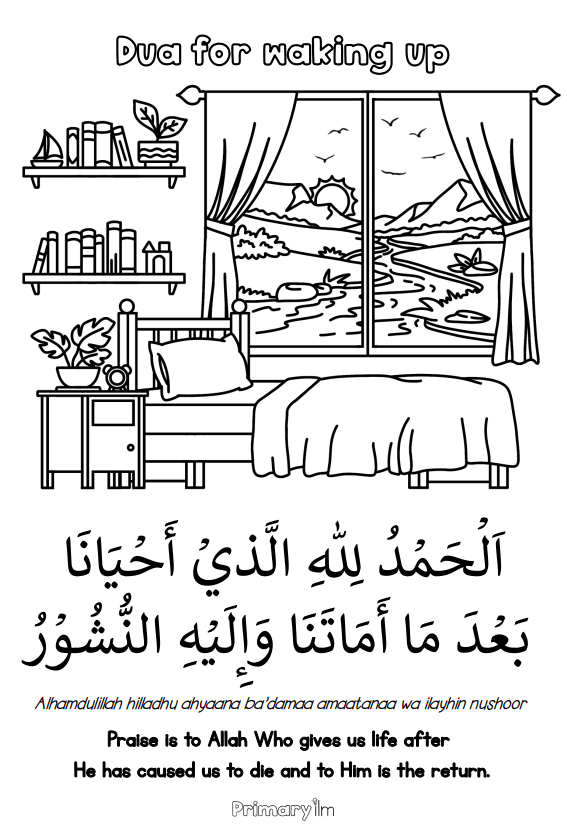
The Waking Up Du’a reminds Muslim kids to begin every day by thanking Allah for the gift of a new morning. It teaches that every new day is a blessing and a chance to do good deeds. Reciting this du’a helps children remember Allah as soon as they wake up and begin their day with gratitude. Making it a daily habit strengthens faith and builds a loving connection with Allah
Coloring a worksheet about the Waking Up Du’a helps children remember the du’a more easily while making learning fun. It also improves focus, creativity, and fine motor skills as they connect the words of the du’a with meaningful illustrations.
2. The Power of Saying Bismillah
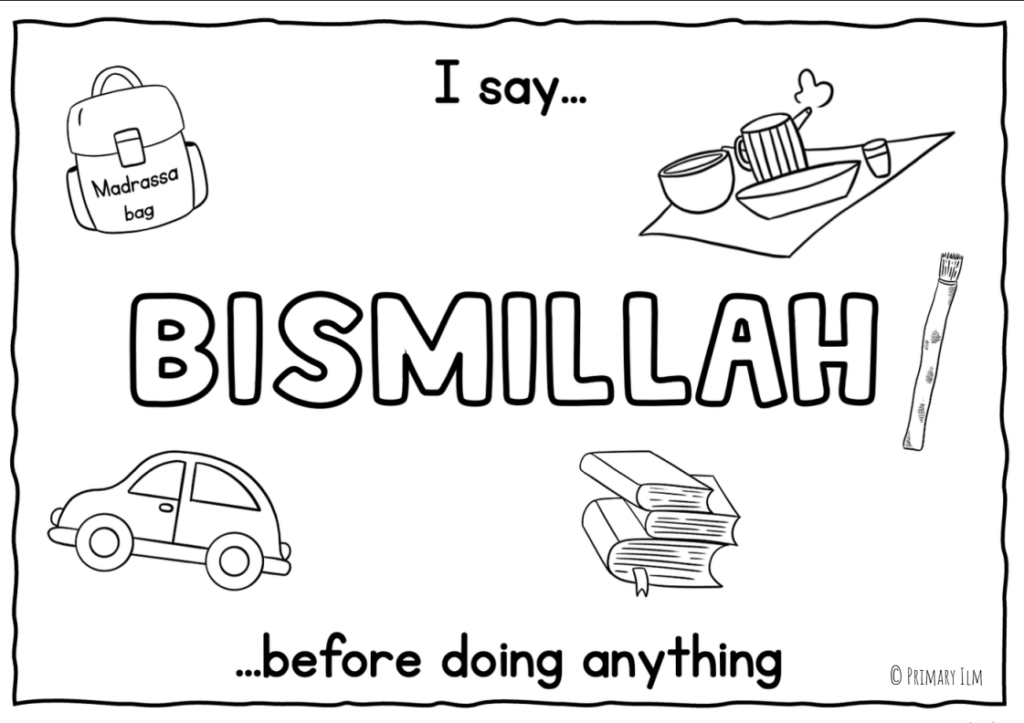
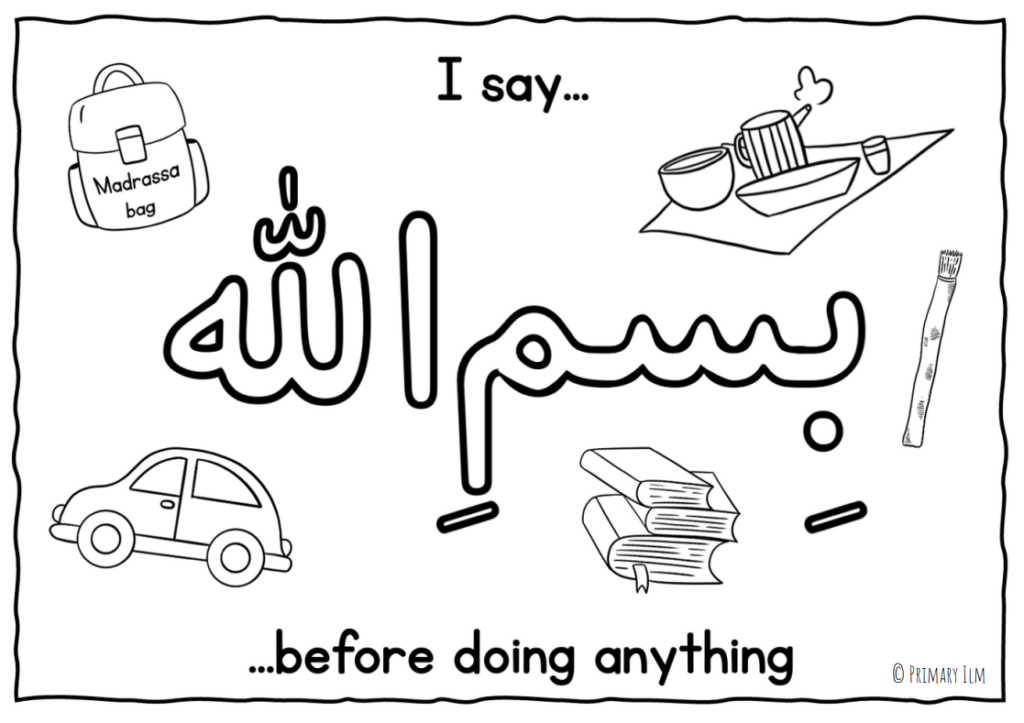
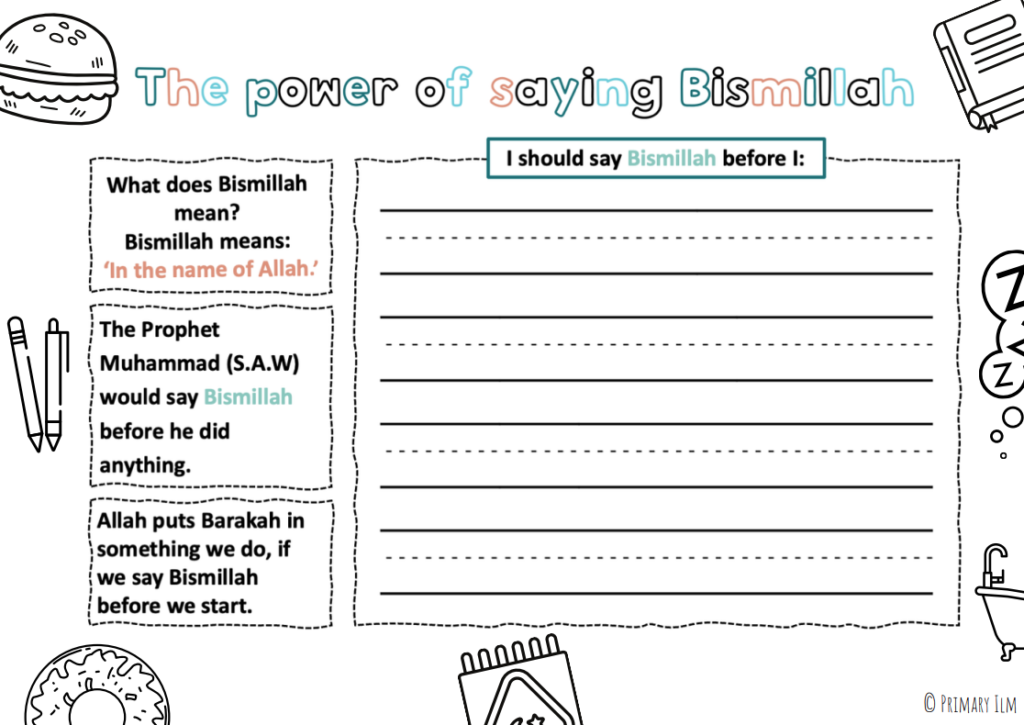
Saying Bismillah reminds Muslim kids to begin every good action by remembering Allah. It brings blessings, encourages good manners, and helps children stay mindful that Allah is with them throughout the day.
Whether eating, studying, playing, or sleeping, beginning with Bismillah shows gratitude and helps children develop good Islamic manners in their daily lives.
Read also: Dua for Child Protection in Arabic
See Our Classes in Action!
Wondering what a typical lesson looks like? Take a peek inside our virtual classrooms below to see how our patient teachers keep students smiling, engaged, and learning every step of the way.
Start Your Child’s Quran Learning Journey Today!
Join Kids Learning Quran Academy and help your child read the Quran with confidence through fun and guided lessons.
Book a Free Trial ClassRead Also: 10 Best Kids Islamic Poems
Read also: The Best Islamic Gifts for Kids – 6 Types
3. Dua for Parents
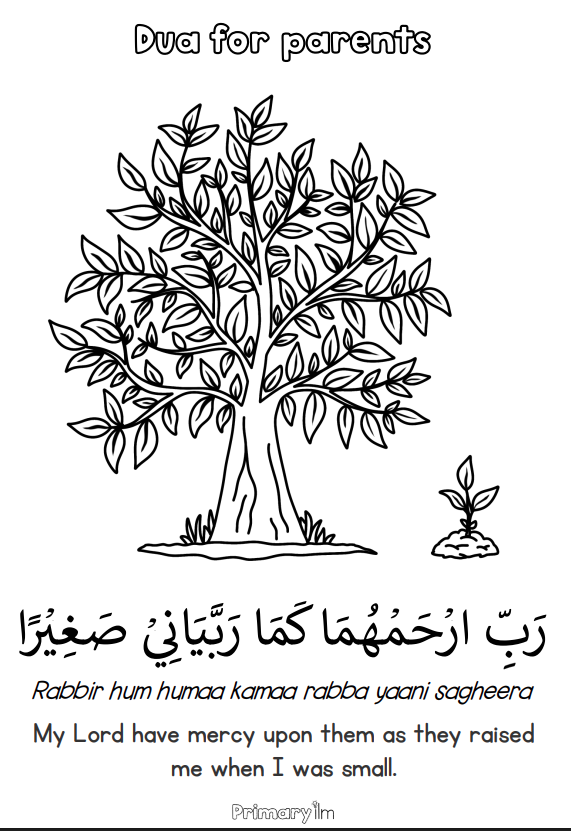
The Dua for Parents: “O Lord, have mercy upon them as they brought me up when I was a child”.
Reciting the dua for parents teaches Muslim children to love, respect, and be grateful to those who care for them. By asking Allah to have mercy on their parents, children strengthen family bonds, show kindness, and follow the beautiful teachings of Islam every day.
Read Also: The Islamic Way of Raising a Child
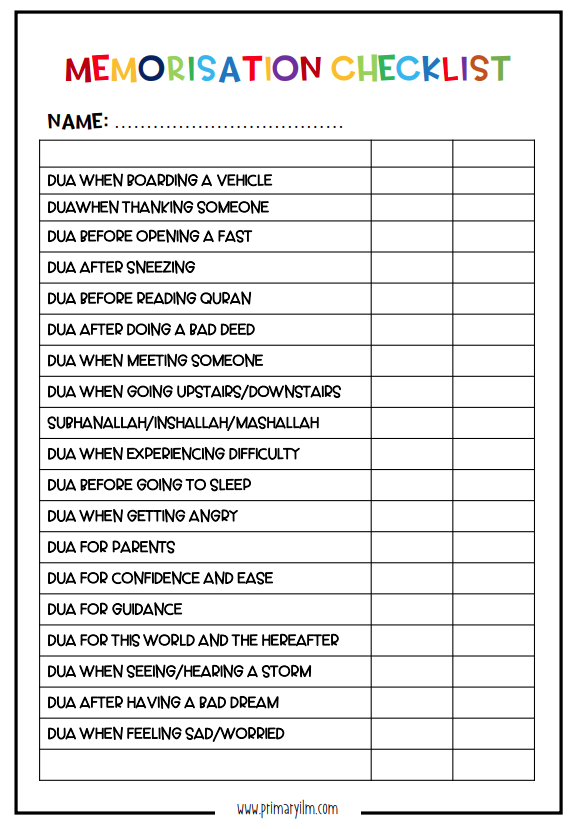
4. Memorization Checklist
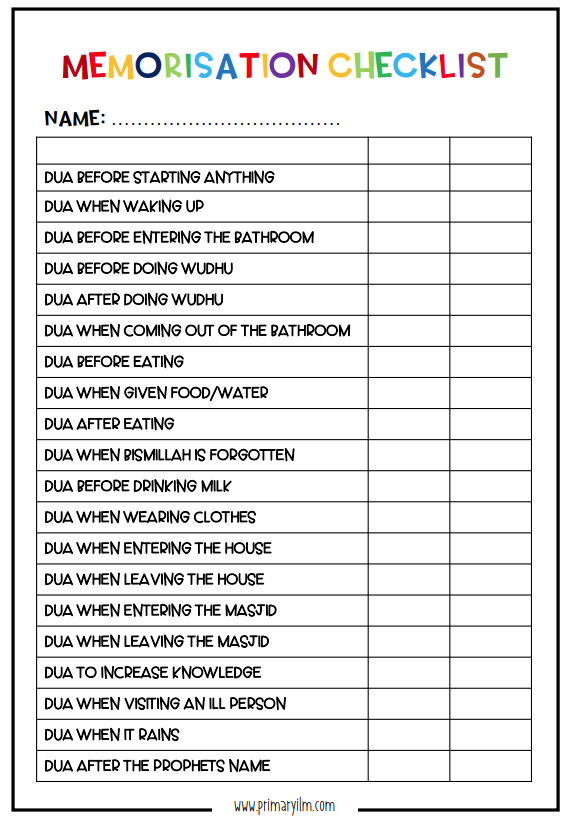
Filling this memorisation checklist encourages Muslim children to learn and remember the daily duas step by step. It helps them develop the habit of remembering Allah at various times throughout their day. Checking off each dua gives children confidence and motivates them to keep learning. It also helps parents and teachers track their progress and celebrate achievements. As children memorize these beautiful supplications, they strengthen their faith and develop good Islamic manners. Over time, these daily duas become a natural and meaningful part of their everyday lives.
Read also: Dua for Children Memorizing Quran
Read Also: How to Teach a Child to Pray in Islam?
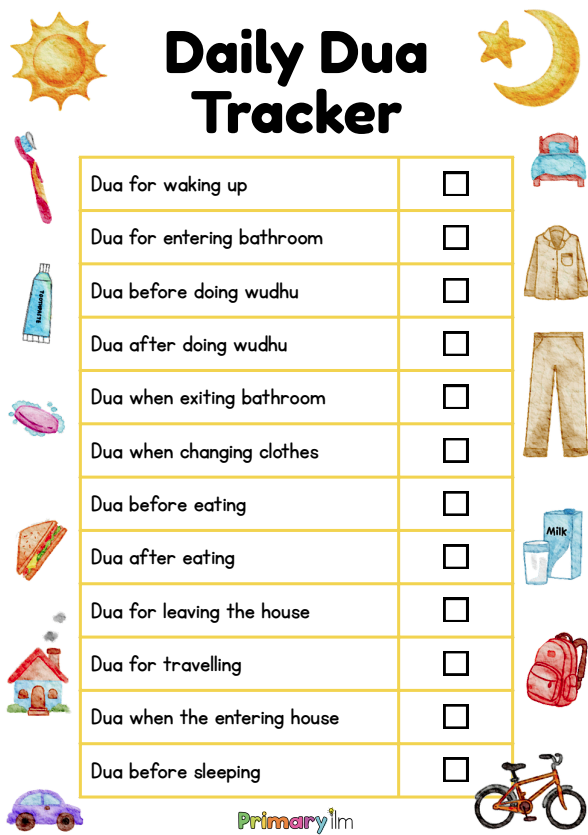
5. Daily Dua Tracker
Filling this Daily Dua Tracker helps Muslim children practice and remember the duas they use every day. It encourages consistency, builds good Islamic habits, and motivates them to keep learning. As they complete each check box, they grow closer to Allah and make daily remembrance a natural part of their lives.
Read also: Islamic Manners for Kids
Read Also: Best 10 Islamic Topics for Kids and Youth
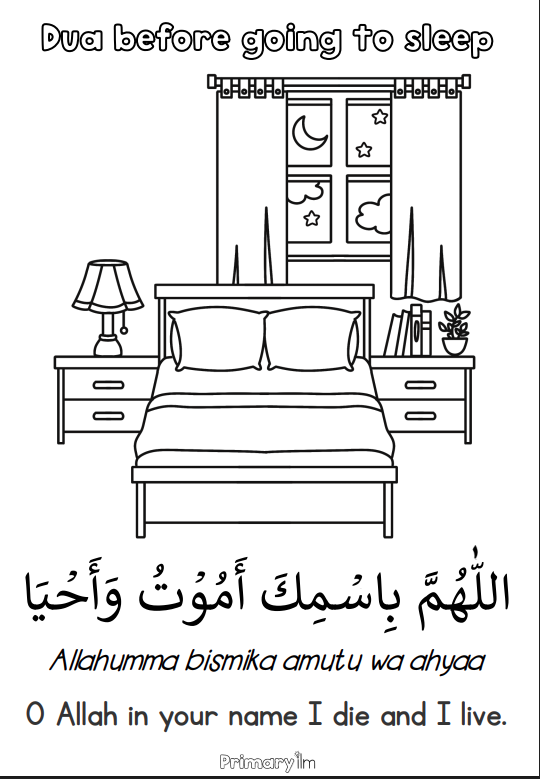
6. Dua Before Going to Sleep
Reciting Dua Before Going to Sleep, “O Allah, in Your name I die and live,” teaches Muslim children to trust Allah before they sleep. It reminds them that Allah is their Protector, brings peace to their hearts, and encourages them to end each day with faith and remembrance of Him.
Read Also: The Best Islamic Gifts for Kids – 6 Types
Experience the Magic Firsthand
Watch these short clips from our live classes to see our interactive teaching tools, vibrant student-teacher interactions, and the fun, stress-free ways we make learning easy for kids!
Start Your Child’s Quran Learning Journey Today!
Join Kids Learning Quran Academy and help your child read the Quran with confidence through fun and guided lessons.
Book a Free Trial ClassGive Your Child Structured Islamic Learning with Kids Learning Quran Academy
Start Your Child’s Islamic Education Today — with a Free Trial Lesson. Worksheets build the foundation. Expert, child-focused instruction builds the structure on top of it.
The courses at Learn Quran for Kids pair experienced instructors with a curriculum designed specifically for children aged 4–15. Sessions are 20–30 minutes, interactive, and built around the same principle as the best Islamic worksheets: every concept is shown in context, not just recited from a list.
Your child gets a personalized pace, flexible scheduling, and a teacher trained in both Islamic education and child pedagogy.
Our Courses Include:
- Tajweed for Kids
- Quran Memorization for Kids
- Quran Recitation Course for Kids
- Quran Classes for Toddlers
- Quran Tafseer for Kids
- Qaida for Kids
- Quran Reading Course for Kids
- Online Arabic Classes for Kids
- Quranic Arabic for Kids
- Islamic Studies Courses for Kids
- Islamic Studies for Kindergarten
- 5 Pillars of Islam for Kids
- Islamic Education for Kids
Start Your Child’s Quran Learning Journey Today!
Join Kids Learning Quran Academy and help your child read the Quran with confidence through fun and guided lessons.
Book a Free Trial ClassConclusion
Islamic worksheets for kids work best when used with purpose — matched to a child’s age, connected to the right stage of learning, and paired with the real-life moments they point to. A dua worksheet has done its job not when a child can read the Arabic, but when they say the dua without being reminded.
Parents’ recognition of their child’s needs gives a simple lens for choosing the right worksheet at the right time. Cover all these needs across your child’s early years, and you give them a faith that lives in their daily life, not only in their memory.
Frequently Asked Questions About Islamic Worksheets for Kids
What Are Islamic Worksheets For Kids?
Islamic worksheets for kids are printable or digital activity pages that teach children core aspects of their faith — including belief, worship, daily duas, and Islamic character — through age-appropriate exercises like coloring, matching, tracing, and writing.
At What Age Can Children Start Using Islamic Worksheets?
Children as young as 3 can benefit from Islamic worksheets through simple coloring and illustration-based pages. Structured writing and sequencing worksheets suit ages 6 and above, while reflection and habit-tracking worksheets work well from age 9 onward.
Where Can I Find Free Printable Islamic Worksheets For Kids?
Free printable Islamic worksheets for kids are available on sites like learnquranforkids.com, shamsaat.com, and primaryilm.com. Look for worksheets that include clear Arabic text, transliteration, and English meaning together on the same page for best results.
What Topics Should Islamic Worksheets Cover?
A well-rounded set of Islamic worksheets for kids should cover the four core areas: aqeedah (belief and the pillars of Islam), ibadah (worship practices like wudu and prayer), akhlaq (Islamic manners and character), and daily duas and dhikr.
How Do I Make Islamic Worksheets Stick — Not Just Entertain?
Use worksheets at the moment they are relevant: a dua-before-eating worksheet during mealtime, a wudu-steps sheet before the child’s first attempt at wudu, a kindness chart at the start of a new week. Timing the worksheet to the real-life moment it teaches dramatically increases retention and habit formation.
Are Islamic Worksheets Enough On Their Own For A Child’s Islamic Education?
Worksheets are excellent for reinforcement and habit-building at home, but they work best when used in conjunction with structured teaching. A qualified Islamic Studies teacher can address misunderstandings, answer questions, and build the deeper understanding that worksheets cannot deliver on their own.
Related Articles
Learn Islam