 Arabic Learning Resources
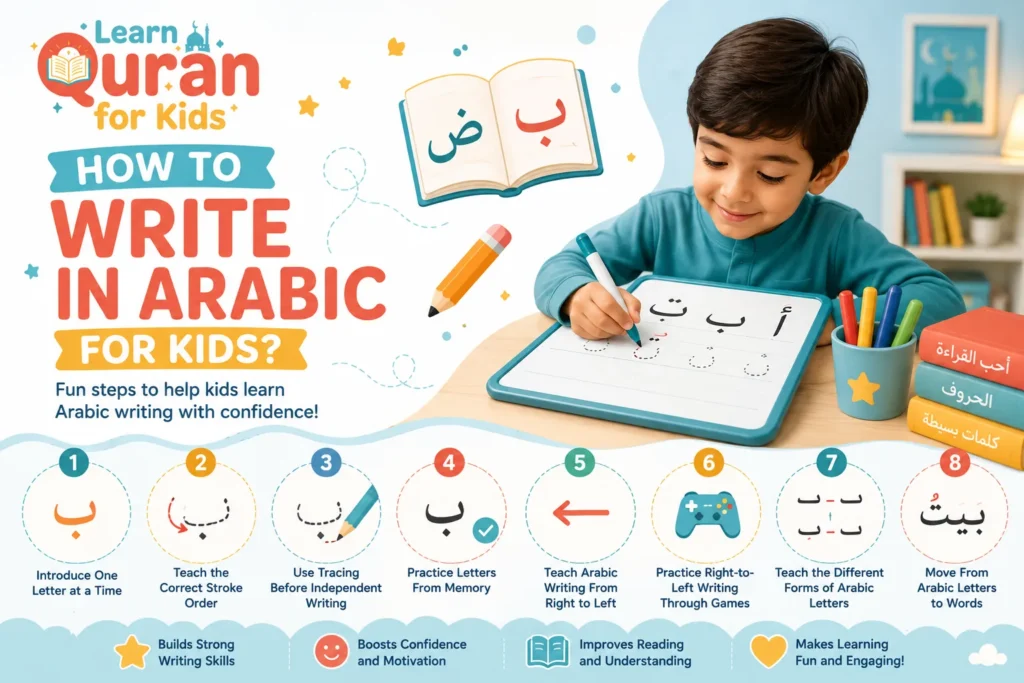
Learning to write in Arabic is an important skill that helps children develop language, communication, and fine motor skills. The easiest way to teach Arabic writing is through a gradual process that begins with simple lines, shapes, and hand-strengthening activities, then moves to Arabic letters, connected forms, words, and short sentences.
With engaging activities, regular practice, and positive encouragement, children can learn without feeling pressured. In this guide, parents will discover practical ways to teach Arabic writing at home, online, and through free activities that make learning simple and enjoyable.
1. Introduce One Arabic Letter At A Time
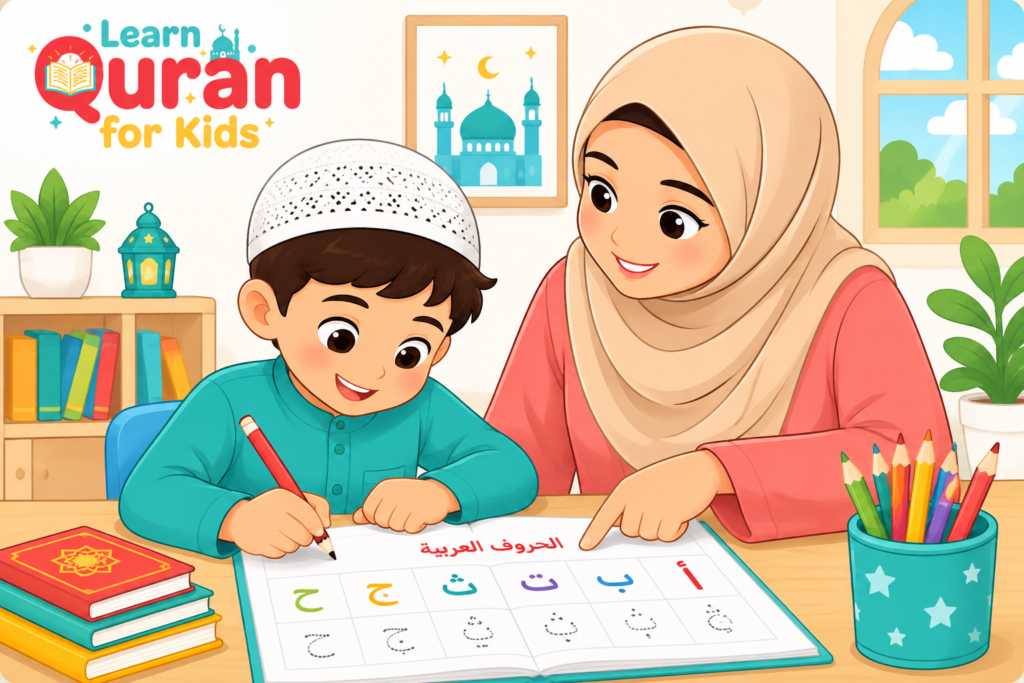
Start by teaching your child one Arabic letter at a time, focusing first on its shape and correct sound. Help the child remember the letter by connecting it to a familiar picture or word, such as linking ب with بطة (duck).
This combination of visual, auditory, and real-world associations makes each letter easier to recognize, remember, and eventually write independently.
Read also: How to Learn Arabic for Kids
2. Teach The Correct Stroke Order
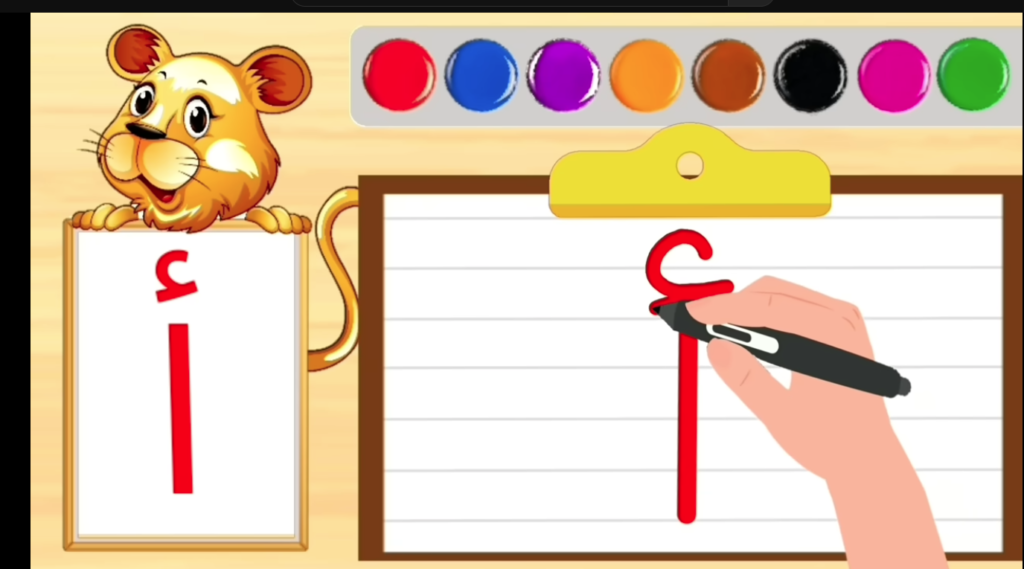
Teach children the correct stroke order for each Arabic letter by demonstrating exactly where to start and which direction to move the pencil. Break every letter into simple, manageable strokes, show the process slowly, and let the child copy each movement.
Repeating the same stroke pattern regularly helps build muscle memory and makes accurate letter formation easier and more natural.
Read also: Arabic Reading Practice For Kids
3. Use Tracing Before Independent Writing
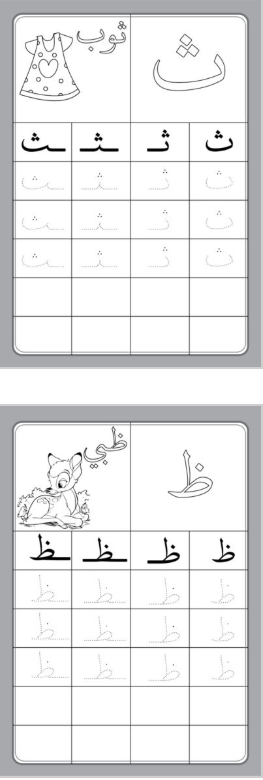
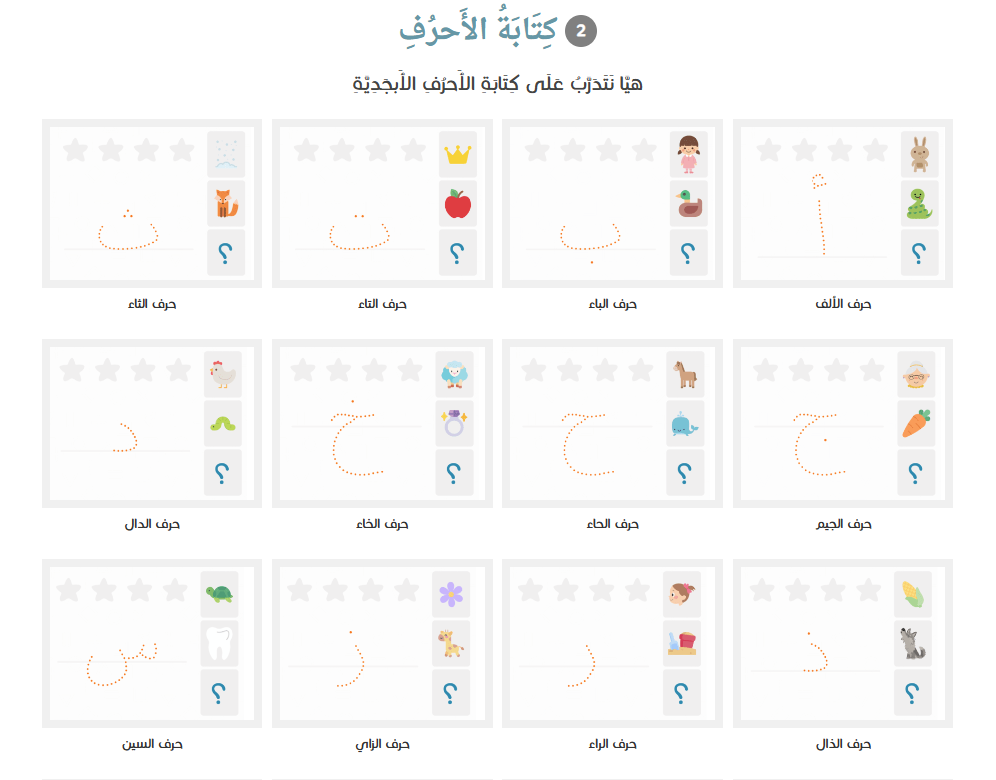
Begin with tracing activities to help children become familiar with Arabic letter shapes and writing direction. Use large dotted letters with directional arrows to show where each stroke begins and how it moves.
Once the child becomes comfortable tracing the letters, gradually move to copying them from a model before encouraging independent writing.
4. Practice Arabic Letters From Memory
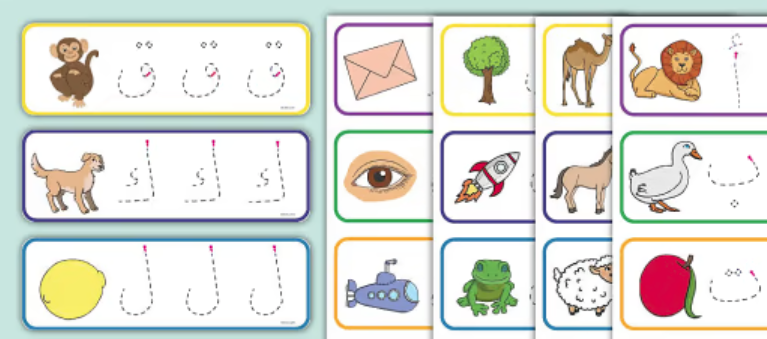
Once children are comfortable tracing Arabic letters, encourage them to write the letters from memory. Start by having them copy a clear model, then use cover-and-write activities and simple letter dictation to test recall.
Gently correct the letter’s proportions, shape, and dot placement, helping the child improve accuracy through regular practice.
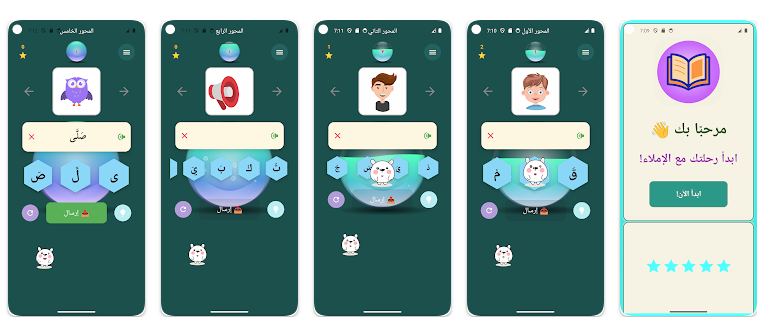
5. Teach Arabic Writing From Right To Left
Teach children that Arabic writing moves from right to left by making the direction clear from the beginning.
Use simple activities that involve moving the hand and pencil from the right side toward the left, while adding arrows, highlighted starting points, or other visual cues to show where each line or letter should begin. Regular directional practice helps children develop the correct writing habit naturally.
Read also: Learn Arabic for Kids
6. Practice Right-To-Left Writing Through Games
Make right-to-left writing practice fun through simple games and hands-on activities. Children can follow directional tracing paths, practice moving from right to left on a whiteboard, or draw letters and lines in sand or salt trays using their fingers.
These playful exercises reinforce writing direction while helping children build confidence and pencil-control skills.
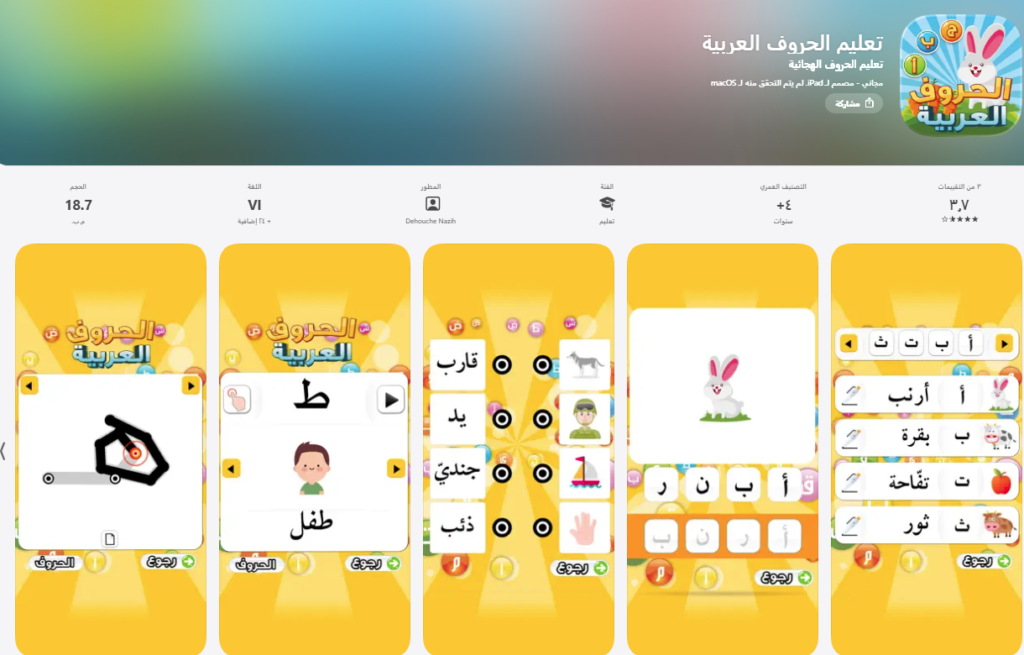
7. Teach The Different Forms Of Arabic Letters
Arabic letters can take different forms depending on where they appear in a word. Teach these forms gradually so children can recognize, connect, and write each letter correctly.
Isolated Letter Forms
Start by teaching children how to recognize and write each Arabic letter on its own. Focus on the correct shape, size, dots, and stroke order before introducing connected forms.
Initial, Medial, and Final Letter Forms
Show children how many Arabic letters change shape depending on their position in a word. Practice the initial, medial, and final forms separately using simple, familiar words.
Arabic Letters That Do Not Connect on Both Sides
Explain that some Arabic letters connect only to the letter before them and do not connect to the letter after them. Use simple examples and visual exercises to help children understand when these letters connect and when they remain separate.
8. Move From Arabic Letters To Words
Once children can recognize and write individual letters, gradually combine them to form simple Arabic words. Keep the first words short, familiar, and easy to practice.
Combine Letters Into Simple Words
Start with simple two- and three-letter words made from letters the child already knows. Use familiar vocabulary such as common objects, animals, or family-related words to make practice meaningful.
Connect Writing With Letter Sounds
Help children listen to each letter sound, identify the matching letter, and then write it. This strengthens the connection between what they hear, recognize, and write.
Introduce Harakat Gradually
Once children are comfortable with basic letters, introduce simple Harakat to show how short vowels affect pronunciation. Let them practice writing and reading short vowelized words step by step.
Practice Reading and Writing Together
Combine reading and writing practice so children can see the letter or word, hear its sound, and understand its meaning. This reinforces learning and helps develop both skills at the same time.
Read also: Story Of Prophet Dawud In Islam
See Our Classes in Action!
Wondering what a typical lesson looks like? Take a peek inside our virtual classrooms below to see how our patient teachers keep students smiling, engaged, and learning every step of the way.
Start Your Child’s Quran Learning Journey Today!
Join Kids Learning Quran Academy and help your child read the Quran with confidence through fun and guided lessons.
Book a Free Trial ClassRead also: Arabic Words for Kids
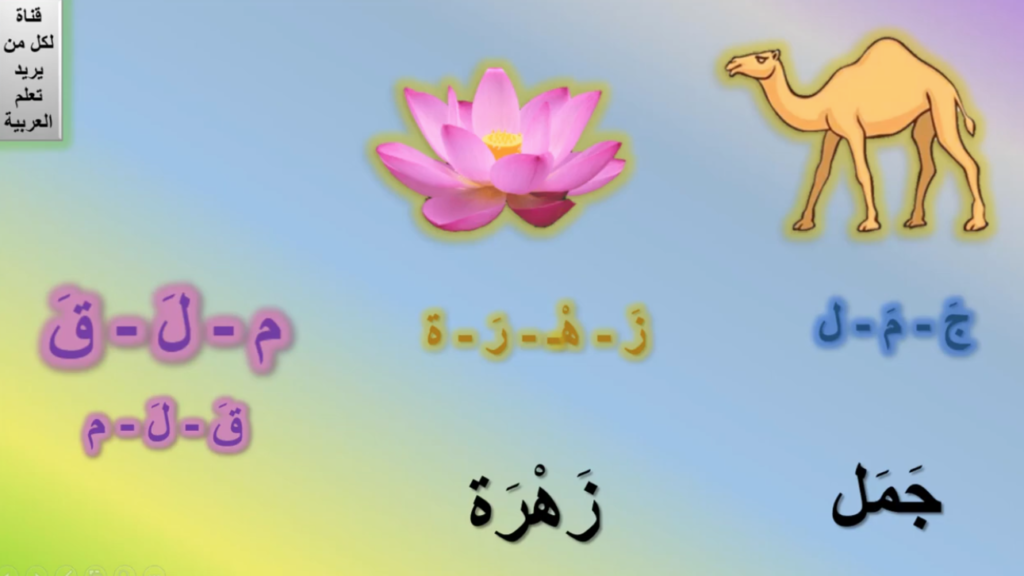
9. How To Write In Arabic For Kids Easy?
Learning Arabic writing becomes easier when children feel comfortable, engaged, and supported. Simple routines, playful activities, and positive encouragement can make each writing lesson more enjoyable.
Keep Lessons Short and Consistent
Use short, daily writing sessions instead of long lessons that may make children tired or frustrated. Follow a gradual progression and introduce new skills only when the child is ready.
Make Arabic Writing Feel Like Play
Turn writing practice into an enjoyable activity using stories, songs, colors, drawing, and whiteboards. Sensory activities such as writing in sand or shaping letters with clay can also make learning more engaging.
Use Words That Matter to the Child
Begin with familiar words that have meaning for the child, such as their name, family members’ names, favorite foods, animals, and everyday objects. Familiar vocabulary makes writing more relevant and motivating.
Encourage Without Pressure
Praise the child’s efforts and celebrate progress rather than focusing on mistakes. Offer gentle corrections, respect their individual learning pace, and avoid comparing their writing skills with those of other children.
Read also: Arabic Games for Kids
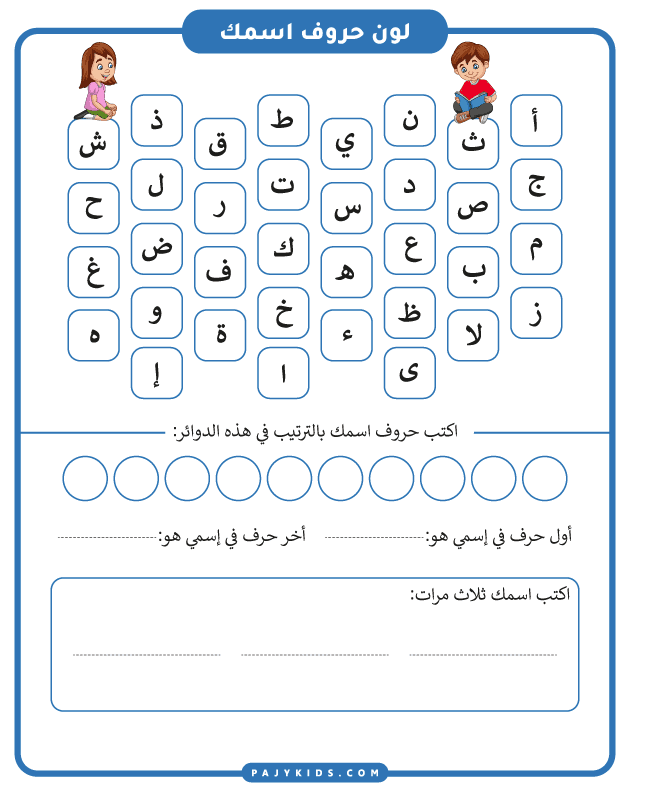
Fun Arabic Writing Activities For Kids
Fun, hands-on activities can make Arabic writing practice more engaging while helping children develop letter recognition, fine-motor skills, and writing confidence.
1. Sand or Salt Tray Writing
Let children draw Arabic letters with their fingers in sand or salt. This sensory activity helps them practice letter shapes and writing movements without the pressure of a pencil.
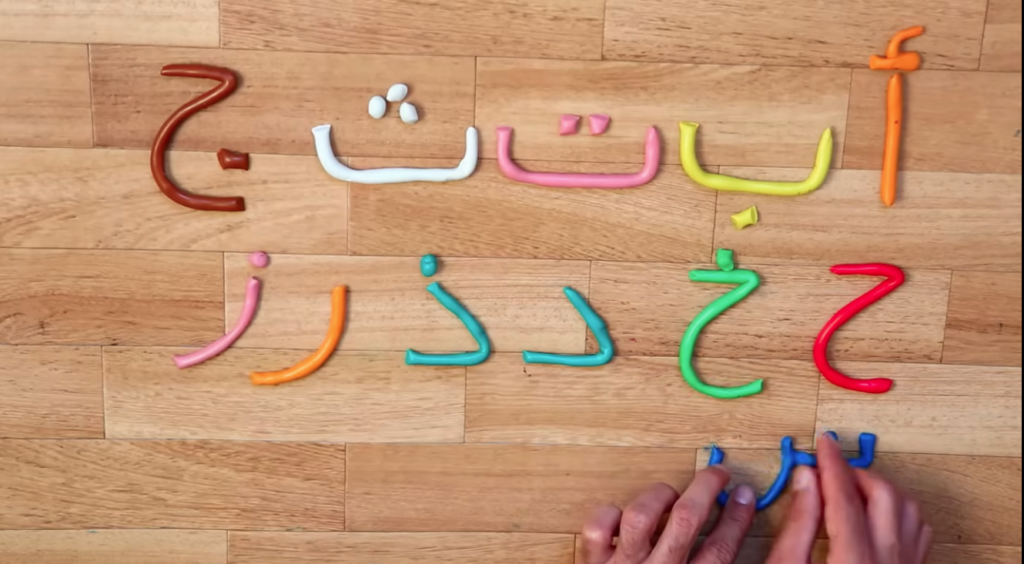
2. Playdough Arabic Letters
Ask children to form Arabic letters using playdough. Shaping the letters strengthens hand muscles while helping them remember each letter’s form.
Read also: Story Of Prophet Sulaiman (Solomon) In The Quran
3. Whiteboard Letter Practice
Use a small whiteboard for repeated letter practice. Children can easily erase and try again, making it a low-pressure way to improve their writing.
4. Arabic Letter Matching Games
Create simple games that match Arabic letters with identical letters, sounds, or words. These activities reinforce recognition while keeping practice interactive.
5. Letter and Picture Association
Connect each letter with a familiar picture or word that begins with its sound. This visual association helps children remember letters more easily.
6. Pretend-Play Writing Activities
Include writing activities in everyday pretend-play situations, such as creating restaurant menus, shopping lists, notes, letters, or simple signs. This shows children that writing has a practical purpose.
7. Creative Arabic Writing Projects
Encourage children to create short stories, simple diaries, or drawings with written descriptions. They can also write about their feelings, favorite activities, or ideas to develop creativity and self-expression.
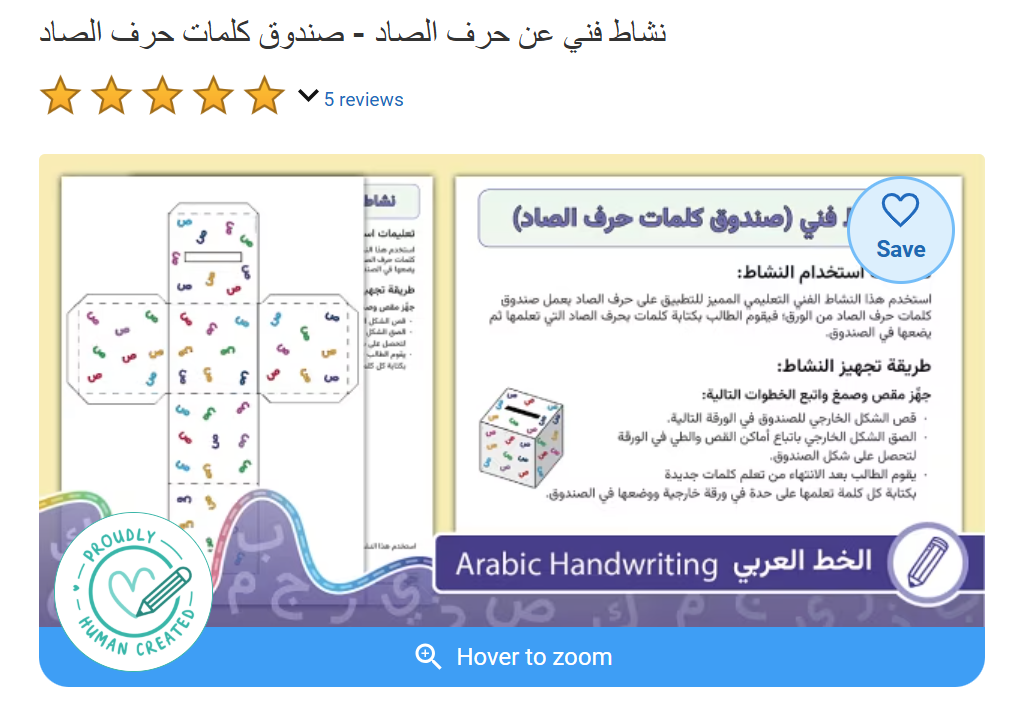
How To Write In Arabic For Kids Online?
Online learning can make Arabic writing more accessible and engaging for children. With the right classes and interactive tools, kids can practice letters, sounds, and writing skills from home.
Online Arabic Writing Classes
Live online classes give children direct guidance from a teacher who can demonstrate letter formation and correct mistakes. Learn Quran for Kids offers a structured learning environment that can help children build their Arabic skills gradually through engaging, child-friendly lessons.
Arabic Writing Apps and Interactive Tools
Interactive apps can make practice more enjoyable through digital tracing, letter animations, writing games, and engaging exercises. These tools can provide extra practice between lessons.
Should Kids Practice Arabic Writing on Paper or Screens?
Digital practice can support letter recognition and make learning interactive, but physical handwriting remains essential for developing pencil control and fine-motor skills. The best approach is to combine online activities with regular paper-and-pencil practice.
Read also: Best 10 Apps to Learn Arabic for Kids
How To Write In Arabic For Kids Free?
Parents can find many free resources to help children practice Arabic writing at home. The key is choosing simple, age-appropriate activities that make learning enjoyable and effective.
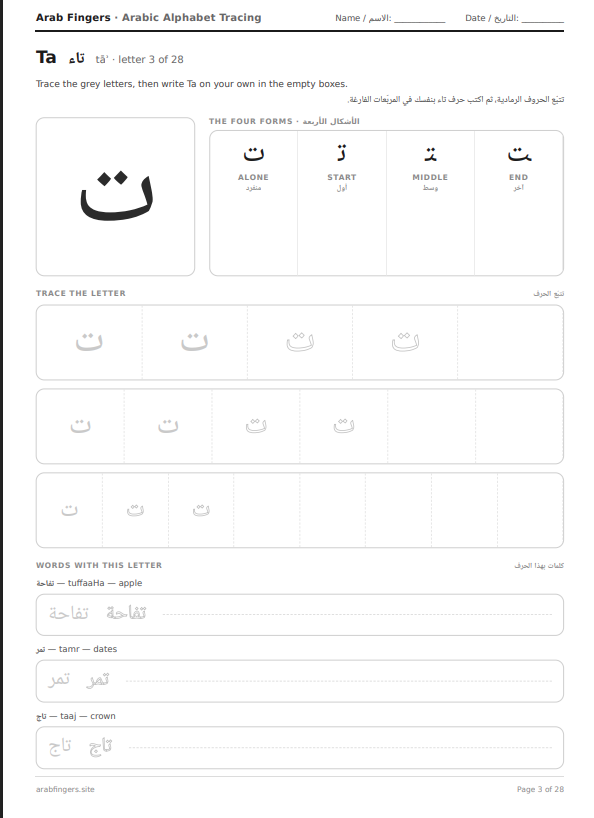
Free Arabic Letter Tracing Worksheets
Printable worksheets can help children practice Arabic letters through tracing and copying. Look for clear letter shapes, directional arrows, appropriate sizing, and enough space for children to practice comfortably.
Free Arabic Writing Games and Activities
Simple home activities such as sand writing, playdough letters, drawing, and letter-matching games can provide enjoyable practice. Multisensory activities help children learn through touch, movement, sight, and sound.
Free Online Arabic Writing Resources
Free videos, interactive websites, and printable materials can give children additional opportunities to practice. Choose resources that demonstrate Arabic letters clearly and encourage active participation rather than passive watching.
How to Choose Safe and High-Quality Free Resources?
Choose resources that teach correct letter formation and right-to-left writing direction. They should also match the child’s age and skill level and provide clear, accurate instructions for parents and children.
Common Mistakes Parents Make When Teaching Arabic Writing
Parents can make Arabic writing harder by starting with letters before developing fine-motor skills, teaching too many letters at once, or ignoring the correct stroke order.
Other common mistakes include moving to words too quickly, relying only on worksheets, correcting every small mistake, comparing a child with others, or forcing long writing sessions. Instead, children need gradual practice, varied activities, gentle guidance, and enough time to learn at their own pace.
How Can Parents Support Emerging Arabic Writing At Home?
Parents can support emerging Arabic writing at home by keeping age-appropriate writing materials easily available and showing children how writing is used in everyday life.
Encourage them to write during simple activities such as making lists, labeling objects, or writing their names, while allowing early scribbles and symbols as part of their development.
Give children frequent, low-pressure opportunities to practice, and combine Arabic reading, speaking, and writing to strengthen the connection between sounds, words, and written letters.
Help a Child Who Struggles With Arabic Writing
If a child struggles with Arabic writing, first identify the specific difficulty, such as pencil grip, letter formation, writing direction, memory, or connecting letters, and return to an easier stage if needed.
Use multisensory activities such as sand, clay, tracing, and drawing, while keeping practice sessions short but frequent. Offer plenty of encouragement rather than criticism, and allow the child to progress at their own pace. If difficulties continue despite regular support, consider seeking guidance from a qualified teacher or educational specialist.
Read also: How to Teach Arabic for Kids? A Step-by-Step Parent’s Guide
Experience the Magic Firsthand
Watch these short clips from our live classes to see our interactive teaching tools, vibrant student-teacher interactions, and the fun, stress-free ways we make learning easy for kids!
Start Your Child’s Quran Learning Journey Today!
Join Kids Learning Quran Academy and help your child read the Quran with confidence through fun and guided lessons.
Book a Free Trial ClassHelp Your Child Learn Arabic With Confidence
Ready to make Arabic learning easier and more enjoyable for your child? Learn Quran for Kids provides structured, engaging online lessons designed to help children build strong Arabic reading and writing skills step by step with supportive teachers and child-friendly instruction.
Don’t let your child struggle alone—give them the guidance and practice they need to make real progress.
Enroll today and give your child a stronger foundation in Arabic!
Our Courses Include:
- Tajweed for Kids
- Quran Memorization for Kids
- Quran Recitation Course for Kids
- Quran Classes for Toddlers
- Quran Tafseer for Kids
- Qaida for Kids
- Quran Reading Course for Kids
- Online Arabic Classes for Kids
- Quranic Arabic for Kids
- Islamic Studies Courses for Kids
- Islamic Studies for Kindergarten
- 5 Pillars of Islam for Kids
- Islamic Education for Kids
Start Your Child’s Quran Learning Journey Today!
Join Kids Learning Quran Academy and help your child read the Quran with confidence through fun and guided lessons.
Book a Free Trial ClassConclusion
Learning how to write in Arabic for kids is a gradual process that starts with building fine-motor skills and progresses from lines and individual letters to connected forms, words, and simple sentences.
With regular practice, playful activities, patience, and positive encouragement, children can develop their writing skills with confidence. Remember that every child learns at a different pace, so focus on steady progress rather than perfection. Give your child the right support and make Arabic writing an enjoyable part of their learning journey with Learn Quran for Kids.
Frequently Asked Questions
At What Age Should A Child Start Learning To Write Arabic?
Children can begin pre-writing activities around ages 3–4, depending on their readiness. More structured Arabic writing practice often becomes easier around ages 5–6.
What Is The Easiest Way To Teach Arabic Writing To Kids?
Start with fine-motor activities, then teach letters gradually through tracing, copying, and sensory games. Keep lessons short, enjoyable, and consistent.
Should Kids Learn Arabic Reading Before Writing?
Reading and writing can develop together, as each skill reinforces the other. Learning letter sounds and shapes first can make writing easier.
How Do I Teach My Child To Write Arabic Letters?
Teach one letter at a time, including its shape, sound, stroke order, and writing direction. Begin with tracing before moving to copying and independent writing.
How Can I Teach Arabic Writing At Home?
Create a simple routine using worksheets, drawing, whiteboards, sand trays, and everyday writing activities. Practice regularly without putting pressure on your child.
How Can Kids Learn To Write Arabic Online?
Children can use online Arabic classes, interactive apps, digital tracing tools, and writing games. Combining online learning with paper-and-pencil practice provides a stronger foundation.
Where Can I Find Free Arabic Writing Worksheets For Kids?
Free Arabic letter-tracing worksheets are available on educational websites and learning platforms. Choose worksheets with clear letter formation, correct right-to-left direction, and age-appropriate exercises.
How Long Should Kids Practice Arabic Writing Each Day?
Short sessions of around 10–15 minutes are often more effective than long lessons. Adjust the practice time according to the child’s age, attention span, and interest.
Why Do Arabic Letters Change Shape In Words?
Many Arabic letters change their form depending on whether they appear at the beginning, middle, or end of a word. Learning these forms helps children read and write connected Arabic words correctly.
How Can I Make Arabic Writing Fun For My Child?
Use stories, songs, colorful activities, playdough, sand writing, games, and pretend-play tasks. Let children write about things they enjoy and celebrate their progress along the way.
Related Articles
Arabic Learning Resources