 Learn Islam
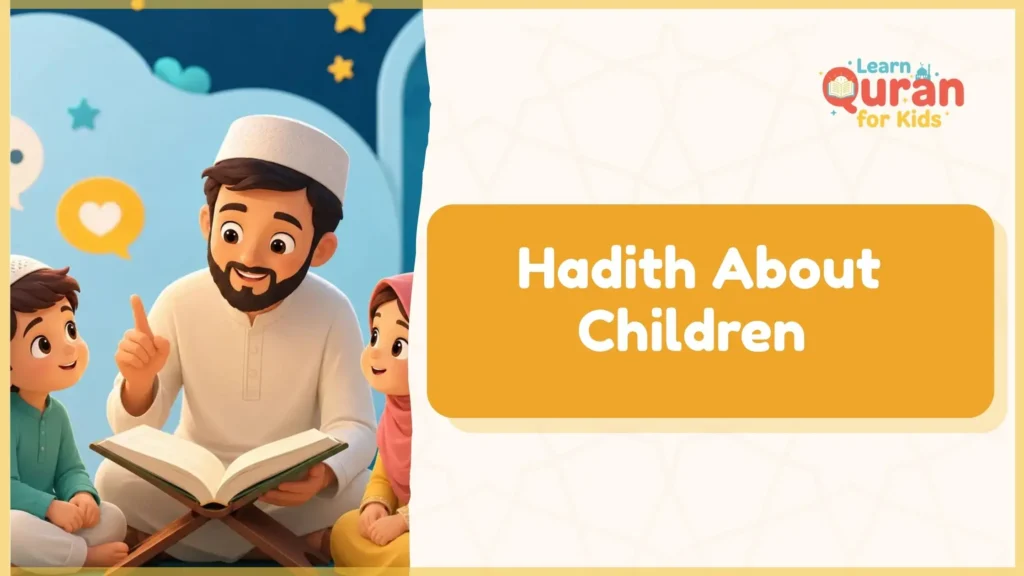
Children are a precious trust in Islam, and their upbringing is a responsibility that shapes their faith, character, and future. The Sunnah offers comprehensive guidance on raising children through faith, worship, good manners, mercy, discipline, fairness, play, and responsible parenting. Prophet Muhammad ﷺ provides the finest example of this approach, treating children with compassion and affection while guiding them purposefully toward strong faith and good character.
What Does Islam Say About Children?
In Islam, children are a precious trust from Allah and a source of joy and blessing. Parents are responsible not only for their physical needs but also for nurturing their faith, worship, manners, and moral values. Following the Prophetic approach, upbringing should combine mercy and affection with clear guidance, protection from harmful influences, and gradual discipline, helping children grow into righteous and responsible Muslims.
1. Every Child Is Born in a State of Fitrah
The Prophet Muhammad ﷺ taught that every child enters the world upon Fitrah, the natural disposition upon which Allah created human beings. He ﷺ said:
«مَا مِنْ مَوْلُودٍ إِلَّا يُولَدُ عَلَى الْفِطْرَةِ، فَأَبَوَاهُ يُهَوِّدَانِهِ أَوْ يُنَصِّرَانِهِ أَوْ يُمَجِّسَانِهِ»
“There is no child who is not born upon the Fitrah, then his parents make him a Jew, a Christian, or a Magian.”
(Sahih al-Bukhari and Sahih Muslim).
This hadith about children highlights the natural Fitrah of every newborn and the significant influence parents have on a child’s religious upbringing. It reminds Muslim parents that raising children is a trust that includes protecting their natural disposition, teaching them faith, and providing an environment that nurtures their relationship with Allah.
What Does Fitrah Mean for Raising Children?
Fitrah is the natural, pure disposition upon which every child is born, with an innate readiness to recognize and worship Allah. The Fitrah hadith also highlights how strongly parents and the home environment influence a child’s religious development. For this reason, parents are responsible for protecting this natural disposition by teaching faith, providing a righteous example, and creating a home environment that nurtures the child’s relationship with Allah.
2. Command Your Children to Pray When They Are Seven
The Prophet Muhammad ﷺ said:
«مُرُوا أَوْلَادَكُمْ بِالصَّلَاةِ وَهُمْ أَبْنَاءُ سَبْعِ سِنِينَ، وَاضْرِبُوهُمْ عَلَيْهَا وَهُمْ أَبْنَاءُ عَشْرٍ، وَفَرِّقُوا بَيْنَهُمْ فِي الْمَضَاجِعِ».
“Command your children to pray when they are seven years old, and discipline them for it when they are ten years old, and separate them in their beds.”
(Sunan Abi Dawud).
The hadith identifies age seven as an important stage for beginning structured religious training. Parents should start teaching children Salah and gradually help them develop consistent habits of worship with guidance and care.
What Should Parents Teach Children From Age Seven?
From age seven, parents should begin establishing Salah and helping children build regular habits of worship. They should also teach Islamic manners, good behavior, and age-appropriate responsibilities. This training should be gradual and patient, using consistent instruction and repetition rather than expecting children to develop perfect habits immediately.
What Changes at Age Ten?
At age ten, the prayer hadith introduces a greater level of responsibility and consistency in maintaining Salah, along with separating children in their sleeping arrangements. This stage reflects a gradual approach to religious discipline as children mature. Such guidance should be understood alongside the broader Prophetic principles of mercy, gentleness, wisdom, and responsible correction when raising children.
Read also: Teaching Children Islam – A Practical Guide for Muslim Parents
3. Each of you is a shepherd
The Prophet Muhammad ﷺ said:
«كُلُّكُمْ رَاعٍ، وَكُلُّكُمْ مَسْؤُولٌ عَنْ رَعِيَّتِهِ».
“Each of you is a shepherd, and each of you is responsible for his flock.”
(Sahih al-Bukhari and Sahih Muslim).
This hadith establishes parenting as an Amanah (trust). Parents are responsible for caring for, guiding, and providing a sound religious and moral upbringing for their children.
See Our Classes in Action!
Wondering what a typical lesson looks like? Take a peek inside our virtual classrooms below to see how our patient teachers keep students smiling, engaged, and learning every step of the way.
Start Your Child’s Quran Learning Journey Today!
Join Kids Learning Quran Academy and help your child read the Quran with confidence through fun and guided lessons.
Book a Free Trial Class4. O boy, mention Allah’s name, eat with your right hand
The Prophet Muhammad ﷺ said to the young Umar ibn Abi Salamah:
«يَا غُلَامُ، سَمِّ اللَّهَ، وَكُلْ بِيَمِينِكَ، وَكُلْ مِمَّا يَلِيكَ».
“O boy, mention Allah’s name, eat with your right hand, and eat from what is nearest to you.”
(Sahih al-Bukhari and Sahih Muslim).
This hadith shows the Prophetic method of correcting a child’s mistake immediately but gently, using simple and clear instructions to teach good Islamic manners.
5. No father gives his child a gift better than good manners
The Prophet Muhammad ﷺ said:
«مَا نَحَلَ وَالِدٌ وَلَدًا مِنْ نَحْلٍ أَفْضَلَ مِنْ أَدَبٍ حَسَنٍ».
“No father gives his child a gift better than good manners.”
(Jami‘ at-Tirmidhi).
This hadith highlights the importance of character education, showing that teaching children good manners and conduct is among the most valuable gifts parents can give them.
Read also: Islamic Manners for Kids
6. Fear Allah and treat your children equally
The Prophet Muhammad ﷺ said:
«اتَّقُوا اللَّهَ، وَاعْدِلُوا بَيْنَ أَوْلَادِكُمْ».
“Fear Allah and treat your children equally.”
(Sahih al-Bukhari and Sahih Muslim).
This hadith teaches parents to avoid favoritism and treat their children fairly. This principle should guide parents in matters such as gifts, attention, affection, and general treatment.
7. He who isn’t merciful to others will not be treated mercifully
The Prophet Muhammad ﷺ said:
«مَنْ لَا يَرْحَمْ لَا يُرْحَمْ».
“He who isn’t merciful to others will not be treated mercifully.”
(Sahih al-Bukhari and Sahih Muslim).
This hadith emphasizes mercy as a foundation of raising children. The Prophet ﷺ demonstrated this through affection, kissing children, playing with them, and caring for their emotional needs.
Read also: How to Keep Islamic Identity for Kids
8. Gentleness is not found in anything except that it beautifies it
The Prophet Muhammad ﷺ said:
«إِنَّ الرِّفْقَ لَا يَكُونُ فِي شَيْءٍ إِلَّا زَانَهُ، وَلَا يُنْزَعُ مِنْ شَيْءٍ إِلَّا شَانَهُ».
“Gentleness is not found in anything except that it beautifies it, and it is not removed from anything except that it makes it flawed.”
(Sahih Muslim).
This hadith establishes Rifq (gentleness) as an important principle in parenting. When correcting or disciplining children, parents should guide them with patience, wisdom, and gentleness rather than unnecessary harshness.
Read also: Best 10 Islamic Topics for Kids and Youth – A Complete Guide
9. Be mindful of Allah, and He will protect you
The Prophet Muhammad ﷺ advised the young Ibn Abbas:
«يَا غُلَامُ، إِنِّي أُعَلِّمُكَ كَلِمَاتٍ: احْفَظِ اللَّهَ يَحْفَظْكَ، احْفَظِ اللَّهَ تَجِدْهُ تُجَاهَكَ، إِذَا سَأَلْتَ فَاسْأَلِ اللَّهَ، وَإِذَا اسْتَعَنْتَ فَاسْتَعِنْ بِاللَّهِ».
“O young boy, I shall teach you some words: Be mindful of Allah, and He will protect you. Be mindful of Allah, and you will find Him before you. When you ask, ask Allah; and when you seek help, seek help from Allah.”
(Jami‘ at-Tirmidhi, Hadith 2516).
This hadith shows the importance of teaching children Tawhid, reliance upon Allah, and spiritual confidence from an early age.
10. Do not invoke curses on your children
The Prophet Muhammad ﷺ said:
«لَا تَدْعُوا عَلَى أَنْفُسِكُمْ، وَلَا تَدْعُوا عَلَى أَوْلَادِكُمْ، وَلَا تَدْعُوا عَلَى أَمْوَالِكُمْ، لَا تُوَافِقُوا مِنَ اللَّهِ سَاعَةً يُسْأَلُ فِيهَا عَطَاءٌ فَيَسْتَجِيبُ لَكُمْ».
“Do not invoke curses on yourselves, or on your children, or on your possessions, lest you should happen to do it at a moment when supplications are accepted, and your prayer might be granted.”
(Sahih Muslim).
This hadith teaches parents to control their anger and avoid making harmful Du’a against their children. Instead, they should pray for their children’s guidance, righteousness, and well-being.
Read also: Dua for Child Protection in Arabic
How Prophet Muhammad ﷺ Treated Children?
Prophet Muhammad ﷺ was a paragon of mercy and fine character, whose gentle interactions with children set a timeless example of warmth, respect, and deep affection.
1. The Prophet Muhammad’s ﷺ affection
Prophet Muhammad ﷺ showed affection to children through kisses, hugs, and gentle care. He was especially loving toward his grandsons, Al-Hasan and Al-Husayn, demonstrating that physical affection is a natural part of Prophetic mercy and compassionate parenting.
2. The Prophet ﷺ Greeted Children
Anas ibn Malik reported that Prophet Muhammad ﷺ would pass by children and greet them with Salam. This simple act showed children respect and dignity, helping them develop confidence and good social manners.
3. The Prophet ﷺ Played and Joked With Children
Prophet Muhammad ﷺ interacted warmly with children and joked with them at their level. He famously comforted young Abu Umayr about his pet bird, the Nughayr, showing the importance of playful, caring communication with children.
4. The Prophet ﷺ Made Du’a for Children
Newborn children were brought to Prophet Muhammad ﷺ, who would perform Tahnik (softening a date, rubbing a small amount gently on a newborn’s palate), and make Du’a for the baby’s blessing. This practice highlights the importance of Du’a in Islamic parenting and seeking Allah’s protection and goodness for children from an early age.
5. The Prophet ﷺ Gently Corrected Children
When teaching young Umar ibn Abi Salamah the manners of eating, Prophet Muhammad ﷺ gave him simple, clear instructions: mention Allah’s name, eat with the right hand, and eat from what is nearest. His approach shows that children should be corrected gently and clearly, without embarrassment or humiliation.
6. The Prophet ﷺ Respected Children’s Rights
When a young boy sat to the Prophet’s ﷺ right while a drink was being shared, the Prophet ﷺ asked his permission before offering it to the elders first. This showed respect for the child’s rights and taught children dignity, confidence, and mutual respect.
7. The Prophet ﷺ Considered Children During Salah
Prophet Muhammad ﷺ showed compassion toward children even during Salah. He carried his granddaughter Umamah while praying, prolonged Sujud when a child climbed on his back, and shortened the prayer upon hearing a baby cry, considering the mother’s concern. These examples show how worship and compassion can go hand in hand.
Start Your Child’s Quran Learning Journey Today!
Join Kids Learning Quran Academy and help your child read the Quran with confidence through fun and guided lessons.
Book a Free Trial ClassRead also: Islamic Hadiths for Kids
Key Principles From the Prophet’s ﷺ Treatment of Children
- Show mercy before demanding obedience
- Correct without humiliating
- Teach according to the child’s age
- Make time to play with children
- Give children attention and affection
- Respect their rights and feelings
- Be fair between siblings
- Lead through a good example
- Teach tawhid and worship gradually
- Make du’a for them, not against them
Blessings of Children in Islam
A righteous child can remain a source of reward for parents even after their death by making Du’a for them. The Prophet ﷺ mentioned a righteous child who prays for their parents among the three deeds whose benefit continues after a person dies.
Raising Daughters Well Can Be a Protection From the Fire
The Prophet ﷺ taught that caring for daughters with kindness, patience, and generosity carries a great reward. He described compassionate treatment of daughters as a means of protection from the Fire, highlighting the virtue of raising them with love and care.
Read Also: Seerah for Kids
Children Are a Source of Joy and Comfort
The Quran describes righteous spouses and children as a “comfort to our eyes” (Surah Al-Furqan 25:74). Righteous children can bring deep joy, peace, and happiness to family life.
Read Also: Explaining Religion to a Child
Allah Provides for Children and Their Parents
Allah says, “Do not kill your children for fear of poverty. We provide for them and for you.” (Surah Al-Isra, 17:31) This verse reminds parents to trust Allah’s provision and not view children as a financial burden or threat to their livelihood.
Read also: Quran Verses about Children
Righteous Children Can Support Their Parents in Old Age
Islam teaches Birr al-Walidayn—kindness and dutifulness toward parents. As parents grow older, righteous children can support them emotionally, physically, and financially, reflecting the lasting family bonds that a good Islamic upbringing helps build.
Read Also: Who Is Allah for Kids?
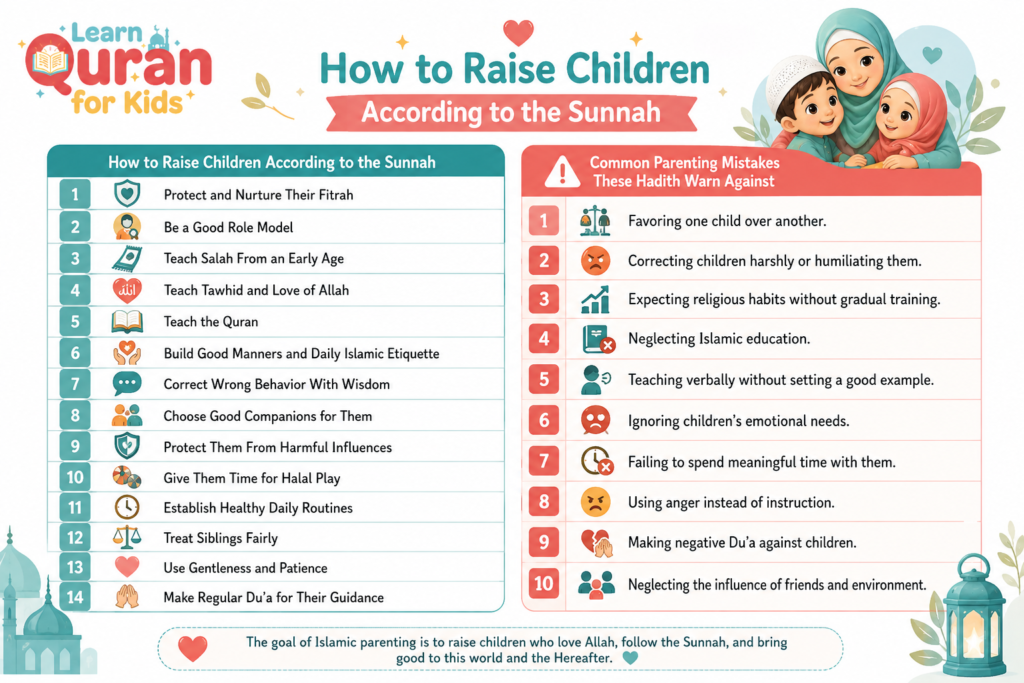
How to Raise Children According to the Sunnah
- Protect and Nurture Their Fitrah
- Be a Good Role Model
- Teach Salah From an Early Age
- Teach Tawhid and Love of Allah
- Teach the Quran
- Build Good Manners and Daily Islamic Etiquette
- Correct Wrong Behavior With Wisdom
- Choose Good Companions for Them
- Protect Them From Harmful Influences
- Give Them Time for Halal Play
- Establish Healthy Daily Routines
- Treat Siblings Fairly
- Use Gentleness and Patience
- Make Regular Du’a for Their Guidance
Experience the Magic Firsthand
Watch these short clips from our live classes to see our interactive teaching tools, vibrant student-teacher interactions, and the fun, stress-free ways we make learning easy for kids!
Start Your Child’s Quran Learning Journey Today!
Join Kids Learning Quran Academy and help your child read the Quran with confidence through fun and guided lessons.
Book a Free Trial ClassCommon Parenting Mistakes These Hadith Warn Against
- Favoring one child over another.
- Correcting children harshly or humiliating them.
- Expecting religious habits without gradual training.
- Neglecting Islamic education.
- Teaching verbally without setting a good example.
- Ignoring children’s emotional needs.
- Failing to spend meaningful time with them.
- Using anger instead of instruction.
- Making negative Du’a against children.
- Neglecting the influence of friends and environment.
Raising Children With Prophetic Guidance
The hadiths about children show that Prophet Muhammad ﷺ raised and taught the young with mercy, affection, patience, respect, and gentle guidance. Parents can follow these Prophetic principles by creating a loving Islamic environment and helping their children build a strong connection with Allah and the Quran. Kids Learning Quran Academy supports this journey through online Quran, Tajweed, Arabic, and Islamic Studies courses designed to help children learn their faith in an engaging and age-appropriate way.
Our Courses Include:
- Tajweed for Kids
- Quran Memorization for Kids
- Quran Recitation Course for Kids
- Quran Classes for Toddlers
- Quran Tafseer for Kids
- Qaida for Kids
- Quran Reading Course for Kids
- Online Arabic Classes for Kids
- Quranic Arabic for Kids
- Islamic Studies Courses for Kids
- Islamic Studies for Kindergarten
- 5 Pillars of Islam for Kids
- Islamic Education for Kids
Conclusion
The Quran and hadith about children present a balanced Prophetic model of upbringing built on protecting the child’s Fitrah and fulfilling the responsibility Allah has placed upon parents. The Sunnah emphasizes mercy, fairness, good example, gradual training in worship, Islamic manners, and sincere Du’a as essential foundations for raising righteous children. By following these principles, parents can nurture strong faith and character while recognizing that raising children is both a serious responsibility and an opportunity for lasting reward in this life and the Hereafter.
Frequently Asked Questions About Hadith and Children
What is the famous hadith about children in Islam?
One of the most famous is: “Every child is born upon the Fitrah.” It emphasizes the natural, pure disposition with which every child is born. (Sahih al-Bukhari 1358; Sahih Muslim 2658)
What is the hadith about raising children for 7 years?
The popular saying dividing upbringing into stages of seven years is not established as an authentic hadith of the Prophet ﷺ. It should not be quoted as Prophetic teaching without clarification.
What is the hadith about teaching children Salah at age 7?
The Prophet ﷺ instructed Muslims to command their children to pray when they reach seven years old and to continue training them as they grow. (Sunan Abi Dawud 495)
What is the “every child is born in a state of Fitrah” hadith reference?
The hadith states: “Every child is born upon the Fitrah.” It is authentically reported in Sahih al-Bukhari 1358 and Sahih Muslim 2658.
What does Fitrah mean for a child in Islam?
Fitrah refers to the natural, pure disposition upon which Allah creates every child, including an innate readiness to recognize and accept the truth.
How did Prophet Muhammad ﷺ treat children?
The Prophet ﷺ treated children with mercy, affection, patience, and respect. He greeted them, played with them, taught them gently, and considered their feelings and needs.
What did Prophet Muhammad ﷺ say about showing mercy to children?
The Prophet ﷺ said, “Whoever does not show mercy will not be shown mercy.” His own affectionate treatment of children demonstrated this principle. (Sahih al-Bukhari 5997)
What does Islam say about disciplining children?
Islamic discipline should focus on teaching, patience, mercy, and gradual correction, taking the child’s age and understanding into account while avoiding humiliation and harm.
What is the hadith about being fair between children?
When a father wanted to give one child a special gift, the Prophet ﷺ said, “Fear Allah and be just between your children.” (Sahih al-Bukhari 2587; Sahih Muslim 1623)
What is the hadith about good manners for children?
The Prophet ﷺ placed great importance on good character and proper manners. Parents should therefore teach children kindness, honesty, respect, and Islamic Adab through instruction and example.
Are children considered a blessing in Islam?
Yes. Children are among the blessings of family life, while also being an Amanah (trust) and a responsibility for which parents must provide proper care and guidance.
What are the responsibilities of parents toward children in Islam?
Parents are responsible for their children’s care, protection, Islamic education, manners, and spiritual development, while treating them with mercy and fairness.
How should Muslim parents correct a child’s mistakes?
Parents should correct mistakes calmly, clearly, and according to the child’s age. The Prophetic approach emphasizes teaching the correct behavior without unnecessarily humiliating the child.
What Du’as should parents make for their children?
Parents can ask Allah to grant their children righteousness, guidance, protection, good character, and steadfastness in faith. Quranic Du’as such as Surah Al-Furqan 25:74 are excellent examples.
Related Articles
Learn Islam