 Learn Islam
Every parent wants their child to love Islam — not just know it. But reciting facts from a textbook rarely builds that love. The best Islamic games for kids do something no worksheet can; they make learning feel like winning.
This guide covers physical board games, puzzles, and digital tools that genuinely work, explaining why each one develops a different Islamic skill, and how to select the right game for your child’s age and learning style.
Islamic games are not all built equal. A puzzle, a trivia board game, and a digital memorization tool each train a different part of a child’s understanding. Knowing which game serves which goal is the first step to making game time genuinely count.
The games below are organized from younger ages upward, covering puzzles, board games, and digital platforms.
1. Footsteps of Prophet Muhammad — Seerah Puzzle
Footsteps of Prophet Muhammad is one of the most effective visual learning tools for Seerah available today. The illustrated map covers key events in the Prophet’s ﷺ life in chronological order, and the included map guide lets children review the sequence after completing the puzzle — turning a single activity into two learning passes.
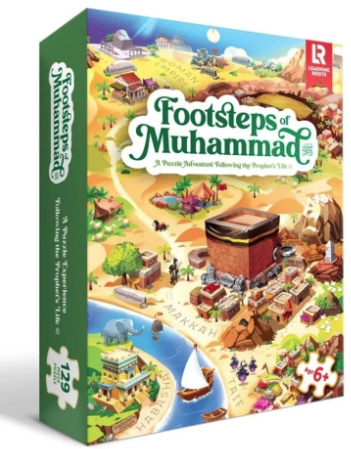
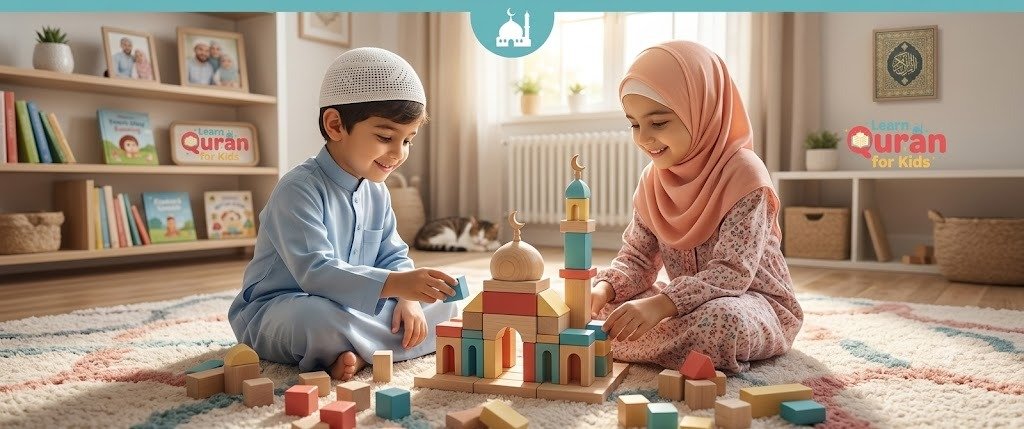
The puzzle is large enough for two children to work on together, making it a natural opportunity for sibling discussion about the Prophet’s life. One common mistake parents make with Seerah learning is introducing events out of sequence. This puzzle solves that problem structurally — the visual layout enforces chronology without the child needing to be told.
At Learn Quran for Kids, our Seerah sessions for children use exactly this kind of timeline-based approach, pairing visual tools with guided discussion so children don’t just know what happened — they understand why it matters.
2. The Quran Explorer Board Game
The Quran Explorer Board Game is built around 114 riddles — one for each surah of the Quran. Players move boats between islands and chips within each island, answering surah-based questions to progress. The game includes Islamic chants, making it a full sensory experience rather than a silent quiz.
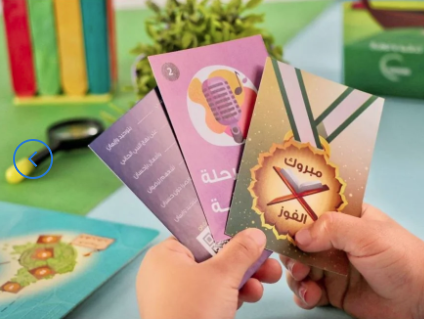
What makes this game work from a learning standpoint: the riddle format forces children to retrieve surah names from memory rather than recognize them from a list. Retrieval practice — recalling information without prompts — is one of the most evidence-backed methods for long-term retention. The Quran Explorer applies this principle without the child realizing it.
Best for: children who have already been introduced to surah names and need reinforcement through play.
Shots Videos from Our Courses
Start Your Child’s Quran Learning Journey Today!
Join Kids Learning Quran Academy and help your child read the Quran with confidence through fun and guided lessons.
Book a Free Trial Class3. The Muslim Way Board Game
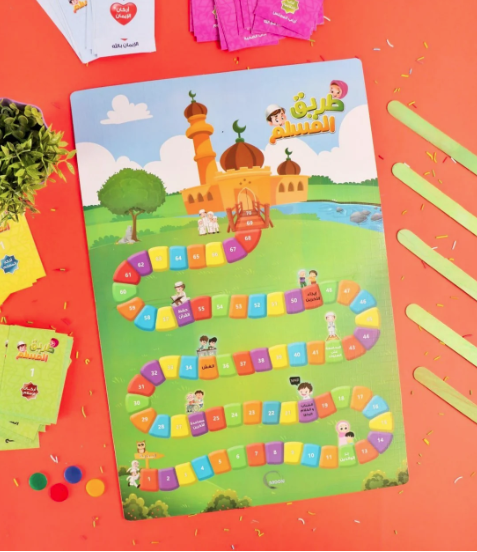
The Muslim Way Board Game uses four question categories — Pillars of Faith, Pillars of Islam, Islamic Etiquette, and Muslim Dhikr — as an integrated curriculum. Players advance toward the mosque with each correct answer.
This game treats Islamic knowledge as interconnected, which mirrors how children need to understand it. A child who knows the Pillars of Islam but cannot connect them to daily Dhikr has an incomplete picture. The Muslim Way prevents that gap.
Best for family game nights and classroom use. The 7–14 age range means a single purchase covers multiple siblings at different stages.
Read also: How to Keep Islamic Identitiy for Kids
4. Biography of the Prophet ﷺ Board Game
Biography Of The Prophet PBUH Board Game With 450 questions covering the Prophet’s full biography from birth to passing, this is the most comprehensive Seerah game available for children. Players build charitable projects across a map as they answer correctly, and “Win” cards test hadith completion — a step up in difficulty from basic trivia.
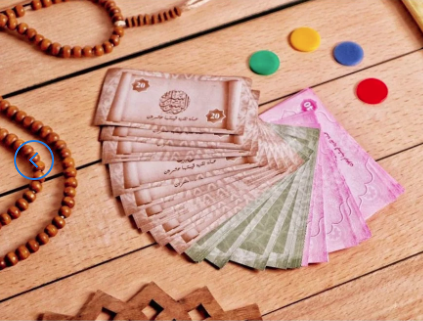
The hadith-completion mechanic is what separates this game from simpler alternatives. Filling in a missing word from a hadith requires the child to hold the sentence structure in working memory — a more demanding cognitive task than selecting from multiple choices. This makes it the strongest option for children aged 10 and up who are ready for deeper Seerah engagement.
Read also: Islamic Hadiths for Kids
5. The Path of Goodness Board Game for Kids
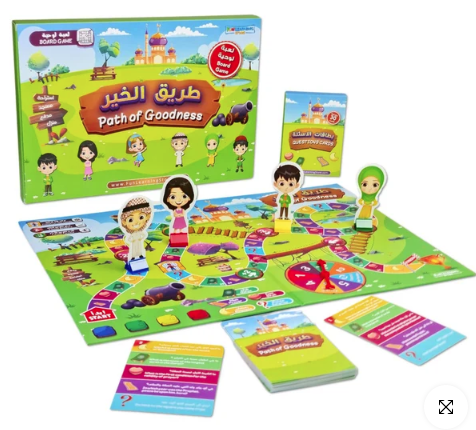
The Path of Goodness covers four subjects in one game — Quran, prayer, Seerah, and Ramadan — using a spinning wheel, a colorful A3 board, and 30 question cards in both Arabic and English. Players spin to move, then answer the question on their landing square; a wrong answer sends them back one square, keeping every turn meaningful rather than purely luck-based.
The bilingual design is a practical advantage for Muslim families in Western countries or multilingual households, children reinforce Islamic vocabulary in both languages simultaneously, without the game feeling like a language lesson.
With six player characters and four plastic bases, it accommodates larger family gatherings and classroom use — one of the few Islamic board games that works comfortably with a full group of six.
Read also: Prophet Stories for Kids
Read Also: Teaching Children Islam
6. Ramadan Magnetic Board
The Ramadan Magnetic Board is a daily-progress tracking tool built around stars, a prayer tracker, and a “good deed of the day” prompt. It ends with a printed diploma — a small but powerful motivational detail.
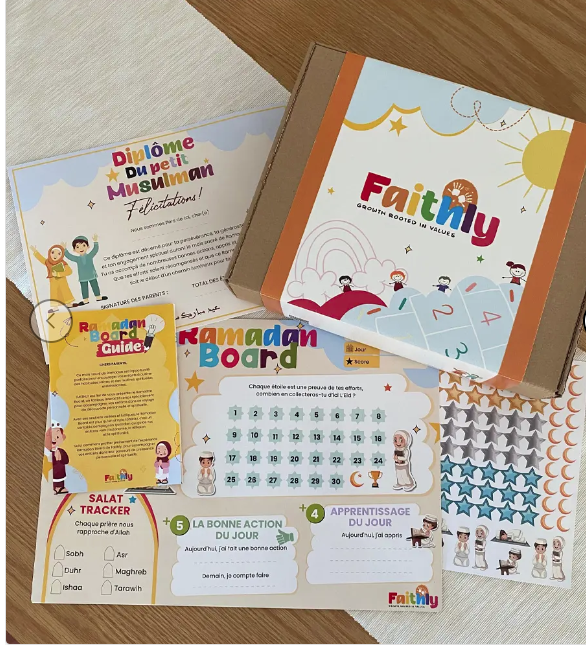
The diploma matters more than it looks: completing an entire Ramadan with a visible record is the kind of concrete achievement that children talk about years later. The Salat Tracker teaches prayer accountability before children are obligated to pray, building the habit in an encouraging rather than pressured context.
Read Also: The Ultimate Islamic Quiz Games for Kids With Questions
7. Who Comply Me (Mn Atta’ani?) — Hadith Learning Game
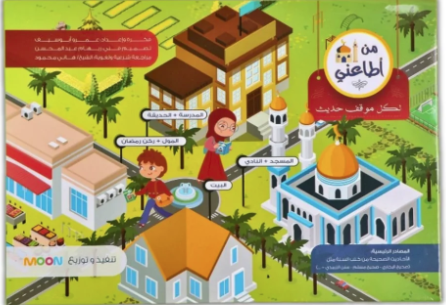
Who Comply Me is a game that uses a board with four paths, each path representing one of these real-world settings. As players move, they encounter situational cards describing ordinary moments — a child forgetting to help with chores, treating an animal unkindly, or rushing through schoolwork. Each situation is paired with one or more than 120 authentic hadith from the Prophet ﷺ, drawn from a dedicated situation booklet. A separate questions booklet then tests whether players have absorbed the connection between the situation and the hadith.
Read also: Islamic Manners for Kids
8. Fast Memory Game — “Read Then Hide”
In Fast Memory game, the child reads a verse, it disappears, and they must complete it before the timer runs out. This simulates the exact pressure of reciting to a teacher — without the anxiety of a real audience. Children who practice this way consistently develop faster, cleaner recall, and break the hesitation habit.
Read also: Quran Activities for Kids
9. Verses Matching Game
Through Verses Matching Game, the verse is split in half; the child drags the beginning to its correct ending. This directly addresses one of the most common memorization errors: confusing verse endings within the same surah. The kinesthetic element (drag and drop) activates a different memory pathway than reading alone.
Quran Activities for

10. Knowledge Bridge Game
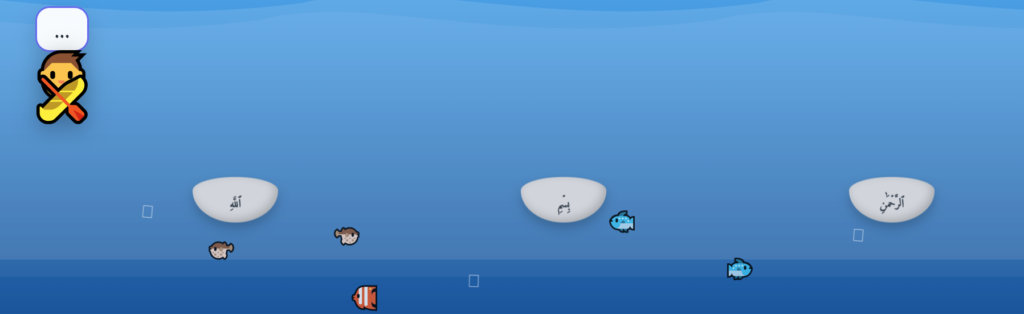
In the Knowledge Bridge game, children arrange words in the correct Quranic sequence to build a bridge for a character crossing a river. Correct answers trigger visual movement and golden stars — applying gamification principles that link Quranic accuracy to an immediate visual reward.
Read Also: Best 10 Islamic Topics for Kids and Youth
11. Spinning Wheel Tool
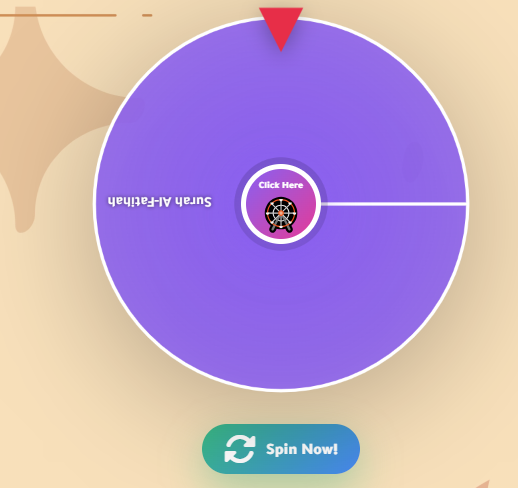
In the Spinning Wheel game, teachers or parents enter custom surah names, verse numbers, or Tajweed questions, then spin the wheel to determine the next student challenge. The unpredictability eliminates the anxiety that builds when children know they’re about to be called on.
Read also: Tajweed Rules for Kids
How to Choose the Right Islamic Game for Your Child’s Age
Not every game fits every child. This framework — the Goal–Age–Format match — helps parents choose without guessing.
| Child’s Age | Learning Goal | Best Game Format |
| 3–5 | First Islamic vocabulary | Puzzle boards (tactile) |
| 6–8 | Seerah and surah names | Story puzzles, explorer board games |
| 9–11 | Pillars, manners, Quran retrieval | Trivia board games, digital matching tools |
| 12–14 | Seerah depth, hadith completion | Advanced board games, digital speed tools |
The critical practitioner insight: start one level easier than you think the child needs. A child who wins on their first attempt returns to the game willingly. A child who struggles in the first round often avoids it. Islamic games work only when the child chooses to play them again.
Read Also: Best 6 Islamic Ebooks for Kids
Our Students Reviews
Start Your Child’s Quran and Islamic Learning Today
Learning doesn’t have to end when the game box closes. At Learn Quran for Kids, our online Quran and Islamic Studies sessions for children build on the same principles that make great Islamic games work — retrieval, repetition, reward, and genuine engagement.
Our instructors work with children from age 5, pacing each lesson to the child’s level so that Quran time stays enjoyable and productive from the very first session.
Start Your Child’s Quran Learning Journey Today!
Join Kids Learning Quran Academy and help your child read the Quran with confidence through fun and guided lessons.
Book a Free Trial ClassOur Courses Include:
- Tajweed for Kids
- Quran Memorization for Kids
- Quran Recitation Course for Kids
- Quran Classes for Toddlers
- Quran Tafseer for Kids
- Qaida for Kids
- Quran Reading Course for Kids
- Online Arabic Classes for Kids
- Quranic Arabic for Kids
- Islamic Studies Courses for Kids
- Islamic Studies for Kindergarten
- 5 Pillars of Islam for Kids
- Islamic Education for Kids
Conclusion
The best Islamic games for kids share one quality: they make children want to come back. Whether it is a 129-piece Seerah puzzle spread across the living room floor, a family trivia game racing toward the mosque, or a digital verse-matching tool running on a tablet between lessons, each one builds Islamic knowledge through experience rather than instruction.
Physical games develop social learning, sequencing skills, and family connection. Digital tools provide individualized feedback and retrieval practice. The most effective approach uses both — games for engagement and structured learning to build on what games begin.
Pair whichever game you choose with consistent, qualified instruction, and your child will not just know Islam — they will love it.
Frequently Asked Questions About Islamic Games for Kids
What are the best Islamic games for kids aged 6 to 10?
The Footsteps of Muhammad Seerah Puzzle (ages 6–11) and the Quran Explorer Board Game (ages 7+) are the strongest options for this range. Both combine visual learning with Quran or Seerah content in formats that hold children’s attention through play rather than instruction.
Are digital Quran games effective for memorization?
Digital Quran tools like the AyaKids Fast Memory Game and Verses Matching Game are effective when used as retrieval-practice tools — not as replacements for recitation. They strengthen recall speed and accuracy by simulating the pressure of reciting without the anxiety of live performance.
What Islamic game is best for teaching the pillars of Islam?
The Muslim Way Board Game covers all five Pillars of Islam alongside Pillars of Faith, Islamic Etiquette, and Dhikr in a single integrated game. It is suitable for ages 7–14, making it the most complete option for teaching the full foundations of Islamic practice.
At what age can children start playing Islamic board games?
Children can begin with simple Islamic puzzle boards from age 3. Board games with questions and trivia are typically suitable for children from age 6–7 onward, depending on their vocabulary and attention span. The Pillars of Islam Puzzle Boards are specifically designed for ages 3 and up.
Can Islamic games replace formal Quran lessons for kids?
Islamic games supplement but do not replace structured Quran instruction. Games build vocabulary, retrieval speed, and enthusiasm for Islamic learning. Formal lessons with a qualified teacher add correct recitation, Tajweed rules, and personalized feedback that games cannot provide.
Related Articles
Learn Islam