 Learn Quran
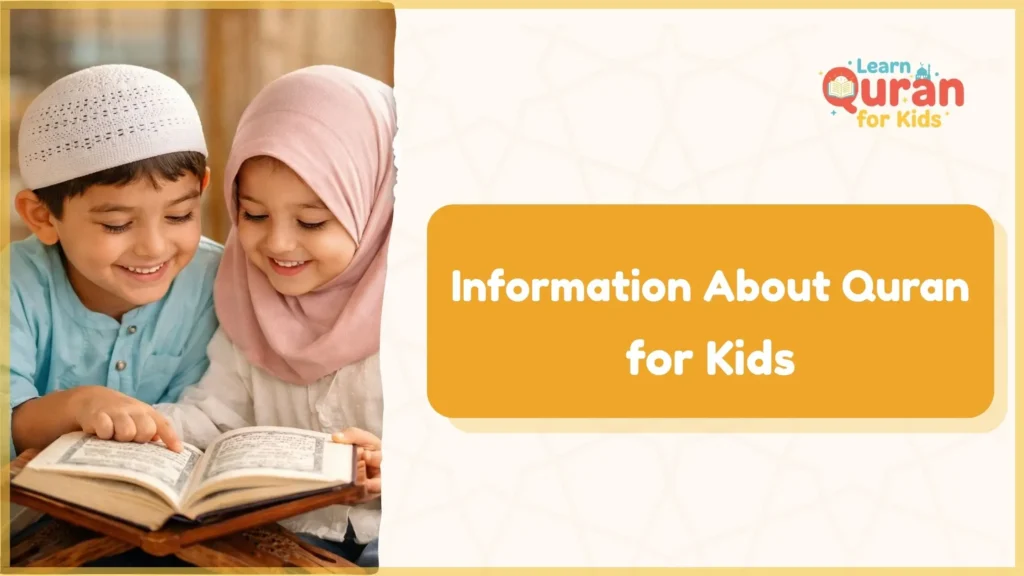
Every Muslim child should know some basic information about the Quran. It is a seed that should be planted inside their hearts and watered every day. Kids raised in an environment which positively encourages the individual to build a firm relationship with the Quran will be successful Muslim inshaAllah, and success here is meant for the earthly life and the Hereafter.
To help each kid start his spiritual journey, we need to teach him what he should know about the Quran. Do not belittle the small things; verily, the mountains are made from rocks. Gradual watering of the seeds when growing is the best way for their healthy growth. We will focus here on the information about the Quran for kids from a theoretical, practical and spiritual side.
Information About Quran for Kids
Kids should know some theoretical information about the Quran such as the definition of the Quran, the structure of the Quran, and the Quranic documentation.
They also should learn practical information about the Quran such as understanding and befriending the Quran. For the spiritual side, kids should know the virtues and rewards of Quranic recitation and memorization.
Theoretical Information About Quran for Kids
Kids should know some theoretical information about the Quran such as the definition of the Quran, the structure of the Quran, the Quranic documentation and the importance of Tajweed. This can be achieved by teaching them the sciences of the Quran (‘Ulum Al-Quran).
1. The Definition of the Quran
The Quran is the inimitable speech of Allah Almighty sent down to the heart of our Prophet Muhammad (ﷺ) in the Arabic language via Gibril, by which worship is performed in reciting it, written down between the two covers, conveyed to us through succession, and challenging with its shortest Surah.
2. The Quran Is Organized Into 114 Surahs Across 30 Juz
The Quran contains 114 Surahs (chapters) and 6,236 verses (Ayahs), divided into 30 equal sections called Juz. This structure makes the Quran remarkably learnable for children, because progress can be measured in clear, meaningful milestones rather than abstract page counts.
Most children begin with the shorter Surahs of Juz Amma — the 30th Juz — which contains well-known chapters like Surah Al-Fatiha, Surah Al-Ikhlas, and Surah Al-Falaq. These short Surahs are ideal for young learners because they are brief enough to memorize within days, yet carry enormous spiritual weight.
At Kids Learning Quran Academy, our Quran Memorization for Kids program follows this same proven sequence, starting children with Juz Amma and building confidence through achievable milestones before progressing further.
Book a Free Trial for Your Child in the Best Hifz Course for Kids
| Quran Structure | Number | Child Learning Relevance |
| Surahs (Chapters) | 114 | Begin with short Surahs in Juz Amma |
| Juz (Sections) | 30 | Progress tracked Juz by Juz |
| Ayahs (Verses) | 6,236 | Daily memorization targets by verse |
| Hizb (Half-Juz) | 60 | Useful for scheduling review portions |
3. The Quran Was Revealed in Arabic
The Quran was revealed in classical Arabic — a language of extraordinary precision, where a single letter change can alter meaning entirely. For non-Arabic speaking children, this makes Arabic literacy not just beneficial but foundational to correct Quranic recitation and future understanding.
Children do not need to be fluent Arabic speakers to recite the Quran — but they must learn the Arabic alphabet, its sounds, and its joining rules before they can read independently.
This is precisely why the Qaida for Kids curriculum exists — it bridges the gap between zero Arabic knowledge and confident Quran reading.
Our Arabic Alphabet Learning for Kids guide walks parents through the foundational letters and sounds their child needs to master before beginning the Quran directly.
For families ready to go deeper, our Learn Arabic for Kids article builds Arabic literacy.
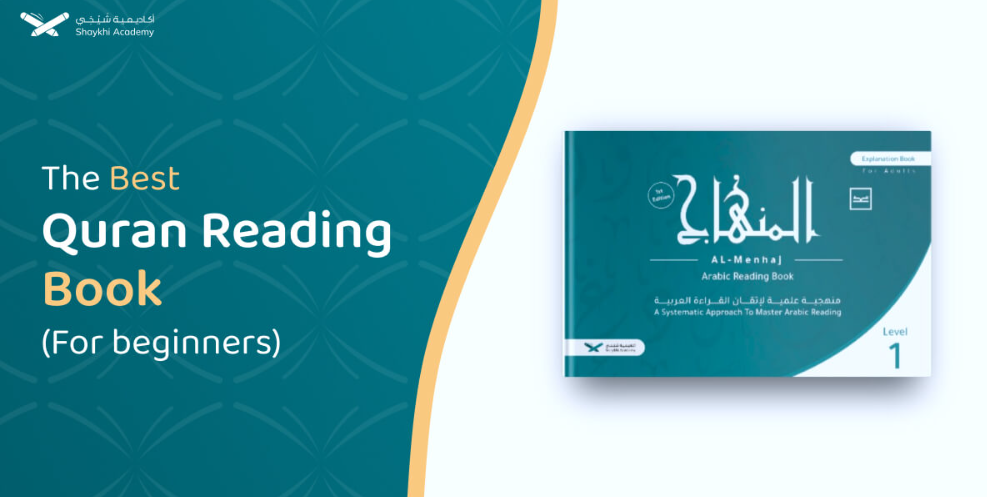
The Al-Menhaj Book by Luqman ElKasabany is an excellent structured starting point for non-Arabic speaking children — it systematically covers every Arabic letter, vowel, and joining rule before introducing Quranic text.
Explore and Study Al-Menhaj Book for FREE
4. The Quranic Documentation
Kids should learn that the Quran is an oral revelation which was divinely preserved through human writing and memorization. Over twenty-three (23) years during the Prophetic era (610-632 A.D.), the Prophet Muhammad (ﷺ) conveyed the Quran to the nation in two ways: written and oral transmission.
Your kid needs to learn about the history of Quranic documentation. They need to know the stages of recording, collecting and publishing.Getting to know one of the Muslim heroes who participated in this docmentation and narrating his story to the kids is very significant. Our hero is Zaid ibn Thabet (may Allah be pleased with him) who used to write the revelation while he was sitting with the Prophet Muhammad (ﷺ).
Shots Videos from Our Courses
Start Your Child’s Quran Learning Journey Today!
Join Kids Learning Quran Academy and help your child read the Quran with confidence through fun and guided lessons.
Book a Free Trial Class5. The Quran Has Two Types of Surahs — Makki and Madani
Every Surah in the Quran is classified as either Makki (revealed before the Prophet’s migration to Madinah) or Madani (revealed after). Makki Surahs generally focus on faith, Tawheed (the oneness of Allah), and the Hereafter, while Madani Surahs tend to address community laws, family rules, and social guidance.
This distinction is not just academic — it is genuinely useful for children. When a child memorizing Surah Al-Baqarah (a long Madani Surah) understands it addressed the growing Muslim community with practical guidance, the Surah feels alive and purposeful rather than an abstract exercise in memorization.
For children ages 9 and above, introducing this Makki/Madani framework adds meaningful context to every Surah they memorize.
| Surah Type | Revealed | Key Themes | Examples |
| Makki | Before Hijrah | Faith, Tawheed, Hereafter | Al-Ikhlas, Al-Fatiha, Al-Falaq |
| Madani | After Hijrah | Law, family, community | Al-Baqarah, An-Nisa, Al-Maidah |
6. Tajweed Is the Set of Rules That Governs Correct Quran Recitation
Tajweed is the system of pronunciation rules that ensures every letter and verse of the Quran is recited exactly as it was revealed. For children, learning Tajweed early is one of the most important investments a parent can make — because mispronunciation habits formed in early childhood become deeply difficult to correct later.
Tajweed covers rules such as Ghunnah (nasal prolongation), Qalqalah (echo sounds on specific letters), Madd (elongation), and Makharij (the precise articulation points that produce each Arabic letter). Each of these rules has a direct impact on how a child recites.
In our experience at Kids Learning Quran Academy, children who begin Tajweed alongside their Qaida training — rather than after — develop significantly cleaner recitation habits.
When Tajweed is introduced as a natural extension of letter-learning rather than a separate “advanced” subject, children absorb it without resistance.
Our dedicated Tajweed Rules for Kids resource explains each rule in age-appropriate language that parents can use to reinforce lessons at home.
Enroll your child in Tajweed for kids with a free trial class

Read also: Quran Steps for Kids
Practical Information About Quran for Kids
Kids should learn practical information about the Quran to gain some practical know-how. They should know ways of understanding the Quran, how to befriend the Quran and the Virtues and rewards of Quranic recitation and memorization.
1. Ways of Understanding the Quran
Your kids need to know the importance of understanding the Quran. Reading the books of Tafseer and joining the reflection circles is recommended. Aysarultafaseer written by Abu Bakr Al-Jaza’iri and At-Tafseer Al-Muyassar are simple and easy book in Quranic interpretation. The Online tafseer course offered by Learn Quran for Kids Academy is also a good choice.
Book a Free Trial for Your Child in Quran Tafseer Course for Kids
2. How to Befriend the Quran?
Muslim children need to befriend the Quran, as it builds their character, strengthens their faith and purifies their souls. Children should understand that the Quran is not a book of worship only but a lifestyle towards success and tranquillity in this life and the Hereafter.
Teachers and parents should teach the kids that the Quran is their best friend. I suggest the following steps to implant this spirit:
(A) Daily revision and memorization tasks,
(B) Reading simplified Tafseer, and
(C) Joining Workshops and Circles.
Read also: Free Online Quran Classes for Kids
Spiritual Information About Quran for Kids
Kids should learn that the Quran is a book of guidance and is full of blessings. They should know about the virtues of reading the Quran, the virtues of some Surahs and the rewards for the one who memorizes the Quran.
1. Virtues of Reading the Quran
Every Muslim child should know the virtues of reading the Quran, the rewards for the one who memorize the Quran. Our Prophet Muhammad (ﷺ) said:
مَنْ قَرَأَ حَرْفًا مِنْ كِتَابِ اللَّهِ فَلَهُ بِهِ حَسَنَةٌ وَالْحَسَنَةُ بِعَشْرِ أَمْثَالِهَا لَا أَقُولُ الم حَرْفٌ وَلَكِنْ أَلِفٌ حَرْفٌ وَلَامٌ حَرْفٌ وَمِيمٌ حَرْفٌ
“Whoever recites a letter from the Book of Allah, he will receive one good deed as ten good deeds like it. I do not say that alif-lam-meem is one letter, but rather alif is a letter, lam is a letter, and meem is a letter.” [Sunan At-Tirmidhi 2910].
2. Virtues of some Surahs
It is recommended to start with the small Surahs with kids when speaking about memorization. Yet, getting to know about the virtues of other Surahs can motivate them. Here are some examples.
a. Al-Fatihah
Surat Al-Fatihah is one of the pillars of performing prayer.
The Prophet Muhammad (ﷺ) said:
لا صَلَاةَ لمن لم يقْرَأ بِفَاتِحَة الْكتاب
He who does not recite Fatihat al-Kitab* is not credited with having observed prayer.
[Bukhari and Muslim]
b. Al-Baqarah and Aal-’Imran
The Prophet Muhammad (ﷺ) said:
تَعَلَّمُوا الْبَقَرَةَ فَإِنَّ أَخْذَهَا بَرَكَةٌ وَتَرْكَهَا حَسْرَةٌ وَلَا يَسْتَطِيعُهَا الْبَطَلَةُ تَعَلَّمُوا الْبَقَرَةَ وَآلَ عِمْرَانَ فَإِنَّهُمَا هُمَا الزَّهْرَاوَانِ يَجِيئَانِ يَوْمَ الْقِيَامَةِ كَأَنَّهُمَا غَمَامَتَانِ أَوْ غَيَايَتَانِ أَوْ كَأَنَّهُمَا فِرْقَانِ مِنْ طَيْرٍ صَوَافَّ تُجَادِلَانِ عَنْ صَاحِبِهِمَا
“Learn Surat al-Baqarah, for adhering to it is blessed, leaving it is sorrow, and the sorcerers cannot defeat it. Learn al-Baqarah and Ali ‘Imran, for they are both the brightly illuminated chapters coming on the Day of Resurrection as if they were two clouds, or two canopies of shade, or as If they are a decisive wall of birds in ranks, arguing on behalf of their reciters.”
[Musnad Aḥmad 22975]
c. Ayat-ul-Kursi
Every child should memorize this Ayah as it is the greatest Ayah in the Quran. It is recommended to recite this Ayah eight times daily; after each Salah, during morning and evening Adhkar and before bedtime.
The Prophet Muhammad (ﷺ) said:
مَنْ قَرَأَ آيَةَ اَلْكُرْسِيِّ دُبُرَ كُلِّ صَلَاةٍ مَكْتُوبَةٍ لَمْ يَمْنَعْهُ مِنْ دُخُولِ اَلْجَنَّةِ إِلَّا اَلْمَوْتُ.
“Whoever reads Āyatul Kursī at the end of (after) each mandatory prayer, nothing prevents him from entering paradise except death.”
[Sunan an-Nasāʾī al-Kubrā]
Kids can also learn the virtues of other Surahs such as Al-Kahf, Al-Ikhlaas, Al-Falaq and An-Naas.
Our Students Reviews
Start Your Child’s Quran Learning Journey Today!
Join Kids Learning Quran Academy and help your child read the Quran with confidence through fun and guided lessons.
Book a Free Trial Class3. Rewards for the one who memorizes the Quran
Our Prophet Muhammad (ﷺ) said:
يُقَالُ لِصَاحِبِ الْقُرْآنِ اقْرَأْ وَارْتَقِ وَرَتِّلْ كَمَا كُنْتَ تُرَتِّلُ فِي الدُّنْيَا فَإِنَّ مَنْزِلَتَكَ عِنْدَ آخِرِ آيَةٍ تَقْرَأُ بِهَا
It will be said to the companion of the Quran: Recite and ascend as you recited in the world, for your rank is determined by the last verse you recite.
[Sunan At-Tirmidhi 2914]
Kids Learning Quran Academy’s Quran Memorization for Kids program structures sessions specifically around children’s attention spans, using audio repetition, visual cues, and progress milestones to make Hifz an enjoyable and sustainable goal.
Book a Free Trial for Your Child in the Best Hifz Course for Kids
Start Your Child’s Quran Education at Kids Learning Quran Academy With a Free Trial Session Today
Every child deserves a strong Quran foundation — and it begins with the right guidance, the right tools, and an instructor who truly understands how children learn.
Kids Learning Quran Academy offers:
- Certified instructors specialized in teaching young non-Arabic speaking children
- 1-on-1 personalized sessions tailored to your child’s age, level, and pace
- Age-appropriate, engaging teaching methods built around children’s attention spans
- Flexible scheduling designed for busy family routines
- Safe, monitored online learning environment
- Interactive, gamified learning experiences that make Quran education enjoyable
- Progress tracking so parents always know how their child is advancing
- Free trial session — experience the difference before committing
Book your child’s free trial session at Kids Learning Quran Academy today and take the first step, Insha’Allah, toward a lifelong connection with the Quran.
Check out our top courses for children in Hifz Quran, Arabic language skills, and Islamic studies:
- Online Arabic Classes for Kids
- Noorani Qaida for Kids
- Tajweed for kids
- Quran Reading Course for Kids
- Quran Memorization Course for Kids
- Quran Tafseer for Kids
- Islamic Studies Courses for Kids
Start Your Child’s Quran Learning Journey Today!
Join Kids Learning Quran Academy and help your child read the Quran with confidence through fun and guided lessons.
Book a Free Trial ClassFrequently Asked Questions About Quran for Kids
At What Age Should a Child Start Learning the Quran?
Children can begin Quran education as early as age 4, starting with the Arabic alphabet through a structured Qaida curriculum. At this stage, the focus is on correct letter sounds and playful engagement rather than memorization. Formal recitation and Tajweed rules are introduced gradually from ages 5–6 as reading skills develop.
How Many Surahs Should a Child Memorize by Age 10?
There is no universal standard, but children who begin memorization around age 5–6 with consistent daily practice can realistically memorize all of Juz Amma (30 Surahs) and additional portions by age 10. Progress depends heavily on session consistency, parental support, and the quality of instruction rather than the child’s raw ability.
Is It Necessary for a Child to Learn Arabic to Read the Quran?
Children must learn the Arabic alphabet and basic reading rules to recite the Quran — but full Arabic language fluency is not required for recitation. However, learning Arabic alongside Quran study significantly deepens a child’s understanding and connection to the verses, and many families pursue both tracks simultaneously for stronger long-term results.
What Is the Difference Between Quran Recitation and Quran Memorization for Kids?
Quran recitation means reading the Quran aloud with correct Tajweed rules from the written text. Quran memorization (Hifz) means committing verses to memory so the child can recite without looking at the text. Most children develop recitation skills first, then build memorization progressively — both are distinct, complementary goals with different techniques.
How Long Should a Child Practice Quran Each Day?
Children ages 4–7 benefit most from 10–15 minute daily sessions, matching their natural attention span. Children ages 8–12 can sustain 20–30 minutes effectively. Daily consistency matters far more than session length — five 15-minute sessions per week produces stronger retention than one 75-minute session, because spaced repetition consolidates memory between practice days.
Conclusion
Kids should know some theoretical information such as the definition of the Quran, the structure of the Quran, and the Quranic documentation. They also should learn practical information about the Quran such as understanding and befriending the Quran. For the spiritual side, kids should know the virtues and rewards of Quranic recitation and memorization.
I invite you to watch this overwhelming video showing a child from Gaza finding his tranquillity and peace with the Quran amidst the war of 2023. This proves how it is important to be keen on finding the best way to teach our kids information about the Quran. May Allah guide us to the best way and strengthen our hearts.