 Learn Islam
Children learn best when they can see, touch, and experience what they are being taught. When faith becomes part of play, creativity, and everyday routines, it settles naturally into a child’s heart, shaping how they think, act, and connect with their identity.
From building mosque models to creating charity habits and personal dua journals, these activities turn Islamic values into lived experiences. Each one helps children develop generosity, consistency in prayer, and a meaningful connection with Allah through simple, engaging actions.
1. The Five Pillars Craft Gives Children a Physical Map of Their Faith
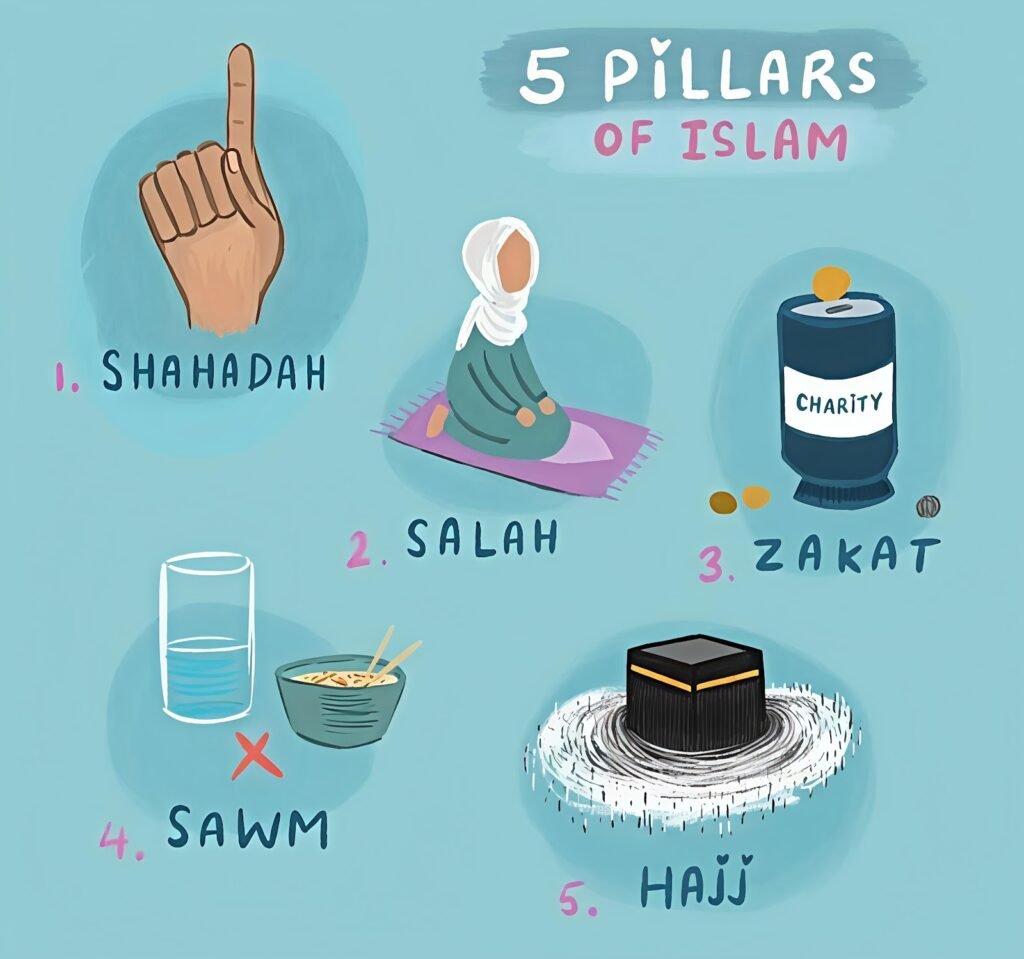
The Five Pillars Craft is one of the most foundational islamic activities for kids because it transforms abstract religious concepts into something a child can hold, build, and display.
When children create a physical representation of the Five Pillars, they internalize the structure of Islam through their hands, not just their ears.
| Age Group | Recommended Format | Materials Needed | Session Time |
| Ages 4 to 6 | Drawing and coloring each pillar | Paper, crayons, stickers | 20 to 30 minutes |
| Ages 7 to 10 | Building a 3D pillar model | Cardboard tubes, paint, markers | 30 to 45 minutes |
| Ages 11 to 15 | Research and illustrated poster | Art paper, research books, markers | 45 to 60 minutes |
Give each child five cardboard tubes or rolled paper columns. Assign one pillar to each column: Shahadah, Salah, Zakat, Sawm, and Hajj. Ask them to decorate each column with words, drawings, or symbols that represent that pillar.
Once complete, stand all five columns together to form a visual structure they can keep in their room.
This islamic activity for kids works on multiple levels simultaneously. Younger children develop fine motor skills and color recognition while absorbing the names and meanings of the Five Pillars.
Older children develop research skills, artistic expression, and a personal ownership over their understanding of Islamic foundations.
Parents report that children who complete this activity ask more questions about each pillar in the days that follow, which creates natural, ongoing Islamic conversations at home.
Kids Learning Quran Academy’s Islamic Studies Courses for Kids teach children the Five Pillars, Seerah, Fiqh, and Islamic character through structured, age-appropriate online sessions guided by certified instructors.
Children do not just memorize facts. They develop a living relationship with their faith that grows with them.
Book a Free Session for Your Child in the Best Islamic Studies Courses for Kids

2. The Charity Jar Activity Builds Generosity as a Daily Habit
The Charity Jar is among the most powerful islamic activities for kids because it teaches the value of Sadaqah through consistent, repeated personal action rather than a single lesson.
When children physically place their own money into a jar for the sake of Allah, generosity becomes a practiced habit rather than an abstract virtue.
Give your child a jar made of plastic or metal, never glass. Let them decorate it freely with markers, stickers, and paint, and encourage them to give it a name they choose themselves, such as “My Sadaqah Jar” or “For Allah.”
Each Friday, or after completing a good deed, your child contributes a small amount from their allowance.
When the jar is full, sit together as a family and decide where to donate it. Let the child physically hand over the donation where possible.

The effect of this activity on a child’s character is well-documented among children’s Islamic educators.
Children who maintain a Sadaqah jar develop measurably stronger impulse control, because they learn to delay personal spending for a higher purpose.
They also develop empathy and awareness of others’ needs in a way that abstract lessons about generosity cannot replicate.
In our instructors’ experience at Kids Learning Quran Academy, children who practice Sadaqah at home consistently demonstrate more cooperative and considerate behavior in their online learning sessions as well.
Shots Videos from Our Courses
Start Your Child’s Quran Learning Journey Today!
Join Kids Learning Quran Academy and help your child read the Quran with confidence through fun and guided lessons.
Book a Free Trial Class3. Mosque Model Building Connects Children to the Heart of Muslim Community Life
Building a mosque model is one of the most engaging hands-on islamic activities for kids because it combines architecture, art, and Islamic education in a single project.
Children who build their own mosque develop a personal, affectionate connection to the masjid as a concept and become naturally more enthusiastic about visiting and praying there.
Gather cardboard boxes, toilet paper tubes for minarets, a small dome shape cut from card, paint, and markers. Before building, show your child pictures of real mosques: the Prophet’s Mosque in Madinah, the Grand Mosque in Makkah, and your local masjid.
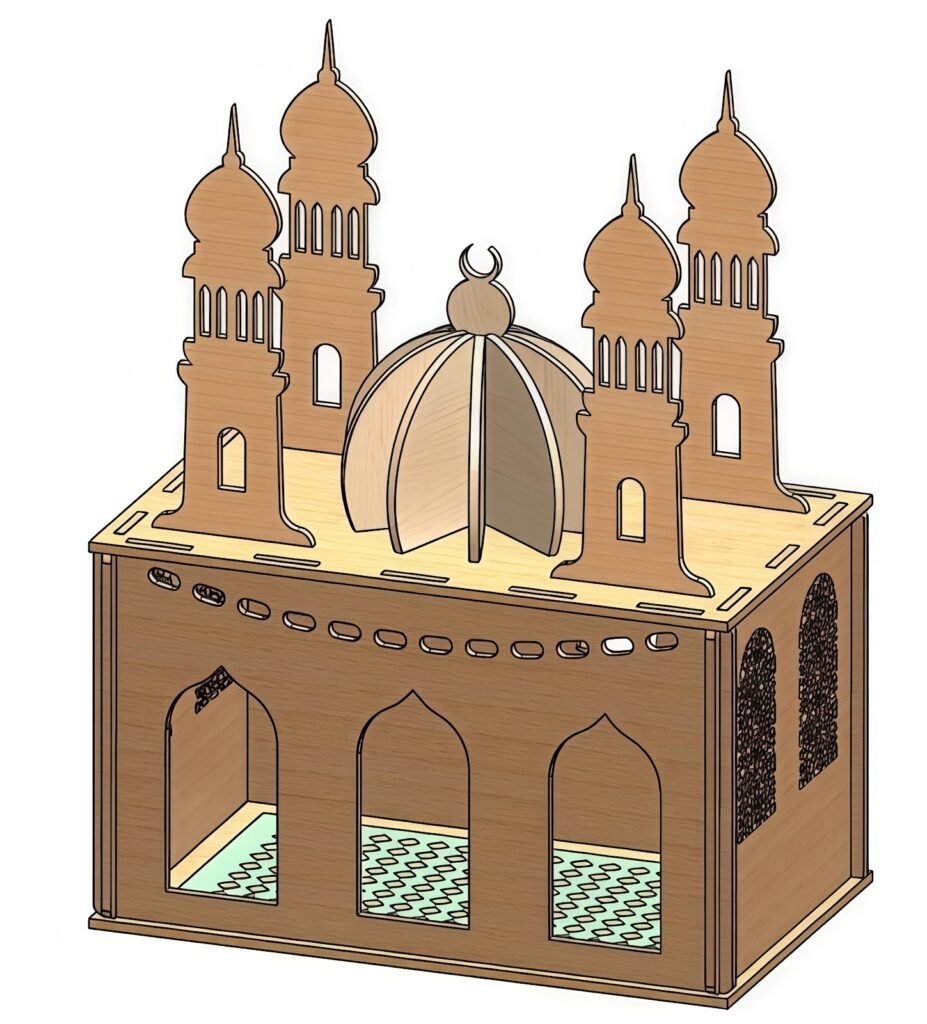
Discuss the different features: the minaret from which the Adhan is called, the dome, the mihrab indicating the Qibla direction, and the wudu area. Let your child build and decorate their mosque freely, explaining each feature as they add it.
This islamic activity for kids is particularly effective for children between 6 and 12 years. The physical building process keeps attention engaged for 30 to 45 minutes, and the finished model becomes a conversation piece in the home that parents can return to repeatedly.
Children who build mosque models show a noticeably warmer and more familiar attitude toward real mosques afterward, because they have already thought carefully about what a mosque is, what happens inside it, and why it matters to their community.
Start Your Child’s Quran Learning Journey Today!
Join Kids Learning Quran Academy and help your child read the Quran with confidence through fun and guided lessons.
Book a Free Trial Class4. Islamic Quiz Night Builds Knowledge and Confidence
An Islamic Quiz Night is one of the most effective islamic activities for kids for building retained knowledge because children process and remember information far more deeply when they retrieve it under gentle challenge than when they simply receive it passively.
A family quiz format makes this retrieval feel exciting rather than pressured. Prepare 15 to 20 questions across three difficulty levels.
Easy questions for younger children cover the Five Pillars, names of prophets, and basic duas. Medium questions cover Islamic history, Quran Surahs, and Islamic manners.
Hard questions cover Hadith, Seerah events, and Quranic stories. Assign a child as the quizmaster for one round and rotate the role. Award points and give small rewards like stickers, a chosen family activity, or a special dua card.
Families can also use digital tools like Kahoot to create a screen-based Islamic quiz that children find highly engaging.
The impact of this islamic activity for kids extends beyond knowledge retention. Children who take turns as the quizmaster develop public speaking confidence, preparation skills, and the experience of teaching others, which is one of the most powerful learning techniques available.
Children who regularly participate in family Islamic Quiz Nights consistently demonstrate broader and more accurate Islamic knowledge than peers who only receive instruction without retrieval practice.
Read also: Noah’s Ark Story for Kids
5. Arabic Calligraphy Introduces Children to the Beauty of Allah’s Language
Arabic calligraphy as an islamic activity for kids builds a personal aesthetic and emotional connection to the Arabic language before formal instruction begins.
When a child has spent an hour carefully writing the name of Allah in a beautiful script, that name carries a different weight in their heart than it did before.
Begin with the simplest Arabic letters and words: “Allah,” “Bismillah,” or the child’s own name in Arabic script.
Provide wide-tipped markers or calligraphy pens, large paper, and a printed guide showing the letter forms. For younger children aged 4 to 7, tracing printed Arabic letters with coloring is an excellent entry point.
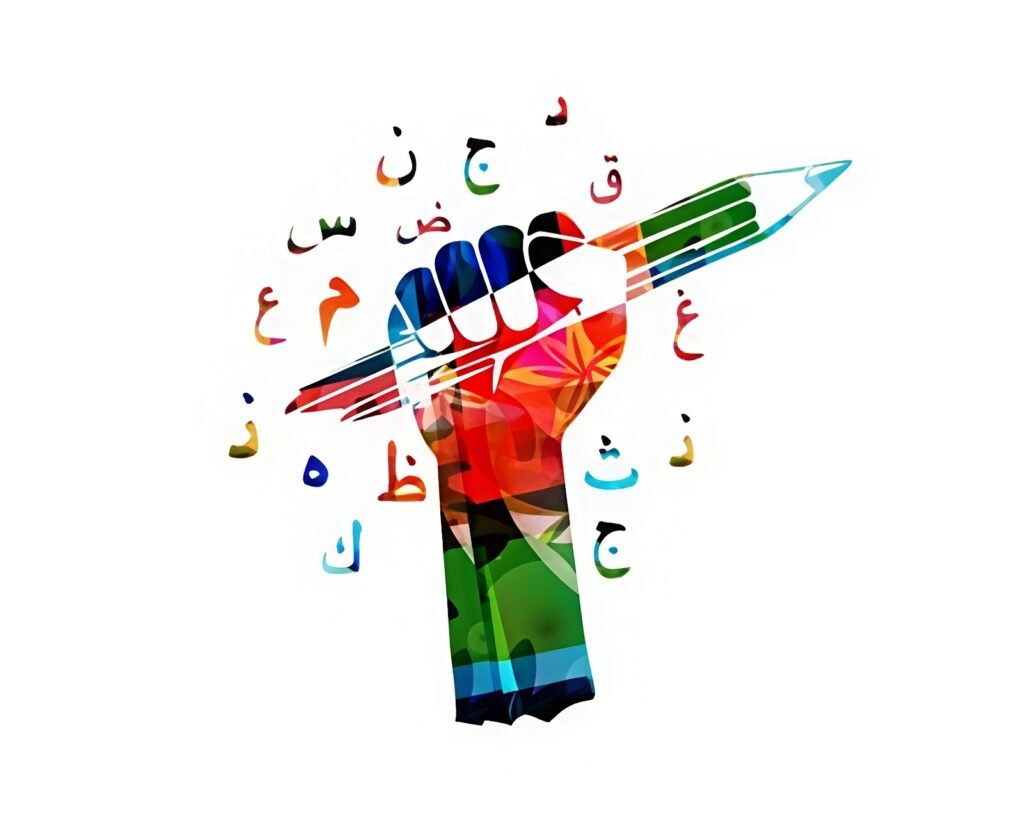
For children aged 8 and above, freehand practice with a guide alongside is appropriate. Frame the completed calligraphy and display it in the child’s room.
This activity connects naturally to formal Arabic learning. Kids Learning Quran Academy’s Online Arabic Classes for Kids build on this natural curiosity about Arabic script through structured, interactive online sessions that teach reading, writing, and comprehension in age-appropriate stages.
Certified instructors use games, stories, and creative methods that keep children genuinely engaged with Arabic rather than resistant to it.
Enroll your child in Quranic Arabic Course for Kids with a free trial class
6. Islamic Storybook Night Brings Prophetic Character to Life in the Home
Islamic storybook nights are among the most relationship-building islamic activities for kids because they combine family closeness with Quranic narrative in a format children naturally love.
A child who hears the story of Prophet Ibrahim from a parent’s voice at bedtime carries that story in a completely different emotional context than one who reads it alone.
Choose one Islamic story per week, either from an illustrated Islamic storybook or from your own narration of a Quranic account.
Read or tell the story with expression, pausing at key moments to ask your child: “What do you think he felt here?” or “What would you have done?” After finishing, identify one character quality from the story together, such as patience, courage, or gratitude, and challenge your child to practice that quality once before the next story night.
Keep a simple list on the wall of qualities you have explored together.
This islamic activity for kids is especially powerful for children between 4 and 10 years, when narrative is the primary mode through which children develop moral reasoning.
In our experience at Kids Learning Quran Academy, children who regularly hear Islamic stories at home arrive at their Islamic Studies Courses for Kids sessions with richer contextual knowledge, more curiosity, and significantly stronger engagement than children encountering these stories for the first time in a structured lesson.
Book a Free Session for Your Child in the Best Islamic Studies Courses for Kids
7. The Prayer Mat Craft Builds a Child’s Personal Connection to Salah
Making a personal prayer mat is one of the most practically impactful islamic activities for kids because it transforms Salah from an obligation assigned by adults into a personal practice the child has invested in and owns.
A child who has designed their own prayer mat reaches for it with a fundamentally different attitude than one who uses a mat handed to them.
Purchase a plain felt sheet, a piece of canvas fabric, or a simple prayer mat blank. Provide fabric paint, fabric markers, and stamps in geometric and Islamic patterns.
Let your child design the mat completely according to their own taste, with no restrictions beyond keeping it respectful.
While they work, talk naturally about Salah: why Muslims pray five times daily, how prayer is a direct conversation with Allah, and what it feels like to stand in Salah. Do not turn it into a formal lesson. Keep the conversation casual and follow the child’s questions.
| Prayer | Time | Simple Meaning for Children |
| Fajr | Before sunrise | Starting the day by talking to Allah first |
| Dhuhr | Midday | Pausing in the middle of the day to remember Allah |
| Asr | Afternoon | Checking in with Allah before the day ends |
| Maghrib | Just after sunset | Thanking Allah as the day closes |
| Isha | Night | Ending the day in conversation with Allah |
The finished prayer mat should be displayed prominently in the child’s room and used exclusively by them for their personal prayers.
Children who create their own prayer mats show consistently higher voluntary prayer rates than those using shared or assigned mats, because the personal ownership of the object creates a personal ownership of the practice.
Read also: Prophet Ibrahim Story for Kids
8. The Sadaqah Project Teaches Children That Small Actions Have Real-World Impact
The Sadaqah Project is a longer-form islamic activity for kids that extends over several weeks and teaches children that their individual actions have real consequences for real people.
Unlike a one-day craft, this project follows through to actual impact, which is what transforms a lesson about generosity into a genuine character trait.
Sit with your child and identify a cause together: a local food bank, an international aid organization, or a neighbor in need. Set a goal amount and a timeline of four to six weeks.
Your child contributes through their Sadaqah Jar, through completing household tasks for small rewards, and through any other age-appropriate earning. Track progress together on a visual chart on the wall.
When the goal is reached, make the donation together and discuss the hadith of the Prophet ﷺ:
“خَيْرُ الصَّدَقَةِ مَا كَانَ عَنْ ظَهْرِ غِنًى، وَابْدَأْ بِمَنْ تَعُولُ”
Khayru aṣ-ṣadaqati mā kāna ‘an ẓahri ghinan, wabda’ biman ta‘ūl.
The best of alms is that which is given when one is affluent (from what is over and above his needs), and give first to your dependents.
The developmental impact of this activity is substantially greater than a single donation because children experience the full arc of intention, effort, discipline, and completion.
Children who complete a Sadaqah Project develop goal-setting abilities, financial awareness, empathy for others’ circumstances, and a deeply personal understanding of why Islam places such emphasis on caring for those around us.
9. The Weekly Family Halaqa Turns the Home Into a Place of Islamic Learning
The weekly family Halaqa is the most holistic of all islamic activities for kids because it establishes the home itself as a center of Islamic knowledge, discussion, and spiritual growth.
When children grow up in a household that holds a regular family Islamic gathering, Islam becomes woven into the fabric of family life rather than something that exists only at the mosque or in a classroom.
Set a fixed weekly time, Friday evening after Maghrib works particularly well for most families. Choose a short topic each week: a Quranic story, a Hadith, a name of Allah, or an Islamic manner.
Begin with a short recitation from the Quran. Present the topic in five to ten minutes. Open the floor for questions and discussion. Let children take turns being the presenter once they are old enough, which significantly deepens their engagement and retention. Close with a group dua.
Kids Learning Quran Academy’s Quran Memorization for Kids program gives children the Quranic foundation they need to participate meaningfully in family Halaqa sessions.
When a child can recite a relevant Surah or verse from memory during the family gathering, their sense of contribution and Islamic confidence grows visibly.
Certified instructors provide structured weekly sessions that build memorization and Tajweed alongside comprehension and love for the Quran.
Our Students Reviews
Start Your Child’s Quran Learning Journey Today!
Join Kids Learning Quran Academy and help your child read the Quran with confidence through fun and guided lessons.
Book a Free Trial ClassBook a Free Trial for Your Child in the Best Hifz Course for Kids
Start Your Child’s Quran Learning Journey Today
Every islamic activity for kids in this article builds one dimension of a child’s faith. Structured online education builds the complete foundation.
Kids Learning Quran Academy offers:
- Personalized lessons for every child based on their level.
- Simple and engaging ways to understand Quranic stories.
- Qualified teachers who make learning clear and easy.
- A safe and secure online learning space.
- Flexible class times that fit your daily schedule.
- Easy progress updates for parents.
- A free trial session to get started.
Check out our top courses for children in Hifz Quran, Arabic language skills, and Islamic studies:
- Online Arabic Classes for Kids
- Noorani Qaida for Kids
- Tajweed for kids
- Quran Reading Course for Kids
- Quran Memorization Course for Kids
- Quran Tafseer for Kids
- Islamic Studies Courses for Kids
Start Your Child’s Quran Learning Journey Today!
Join Kids Learning Quran Academy and help your child read the Quran with confidence through fun and guided lessons.
Book a Free Trial ClassFrequently Asked Questions About Islamic Activities for Kids
At What Age Should Parents Start Islamic Activities for Kids at Home?
Islamic activities for kids can start from age 3 or 4 with simple actions like listening to Quran, coloring, and Sadaqah. More structured activities become effective from age 6.
How Often Should Parents Do Islamic Activities for Kids Each Week?
One weekly activity is enough if consistent. Adding two or three small activities like stories or Duas builds stronger impact. Regularity over time matters more than doing many activities occasionally.
Do Islamic Activities for Kids Require Special Materials or Islamic Knowledge?
Most activities need simple materials. Parents do not need deep Islamic knowledge. What matters is discussion, curiosity, and learning together, even by saying “let’s find out,” which builds a strong mindset.
How Do Islamic Activities for Kids Support Children in Western Environments?
These activities help children feel connected to Islam in a joyful way. They make faith personal through practice and creativity, so children grow seeing Islam as part of their identity.
Related Articles
Learn Islam