 Learn Quran
Is it haram to force your child to read Quran? Many Muslim parents ask this when their child resists Quran lessons. They want their children to love the Book of Allah without making Quran learning feel like a burden.
The short answer is no. Parents can require their children to learn the Quran as part of their responsibility, but guidance should be balanced with patience and kindness. Harsh pressure should be avoided if it creates fear or dislike of Quran learning.
In this guide from Kids Learning Quran Academy, you will learn what the Quran and authentic Sunnah say about teaching children and how to encourage Quran reading in a positive, age-appropriate way.
What You Will Learn
- Why requiring a child to learn the Quran is not haram, and why it is part of a parent’s duty in Islam.
- The difference between ilzam (firm obligation) and harmful ikrah (coercion) when teaching children the Quran.
- What Surah At-Tahrim, Surah Taha, and authentic Hadith teach about raising children on the Quran.
- Signs that pressure has become harmful, and how to correct course gently.
- Practical, age-based methods that help children love reading and memorizing the Quran.
Is It Haram to Force Your Child to Read Quran?
No, it is not haram for a Muslim parent to require their child to read or learn the Quran. Islamic scholars consider teaching children the Quran a parental duty and a right the child has over their parents. What Islam forbids is harmful treatment, such as humiliation, injury, or cruelty, not the act of firmly guiding a child toward the Quran.
A useful comparison is ordinary schooling. Parents are praised, not blamed, for insisting that a child attends school and completes homework even on days the child would rather play.
Islamic scholars apply the same logic to Quran learning: a parent may insist on it, provided the insistence stays within mercy, wisdom, and the child’s actual ability.
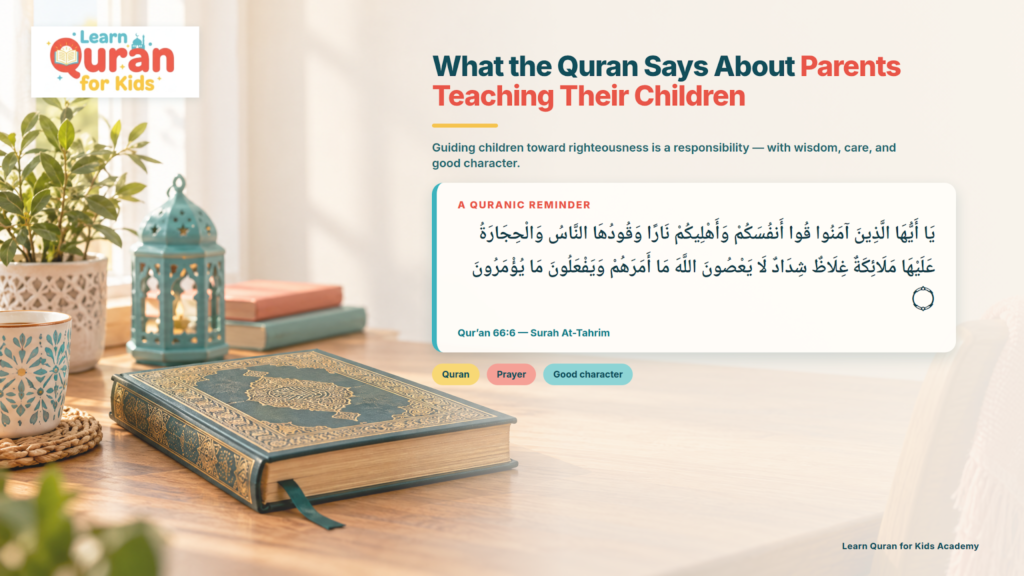
What the Quran Says About Parents Teaching Their Children
The Quran places a responsibility on parents to guide their families toward righteousness and protect them from what may harm them in this life and the Hereafter.
Teaching children the Quran, prayer, and good character is one important way parents fulfil this responsibility.
One verse is especially relevant to the question of guiding children firmly:
يَا أَيُّهَا الَّذِينَ آمَنُوا قُوا أَنفُسَكُمْ وَأَهْلِيكُمْ نَارًا وَقُودُهَا النَّاسُ وَالْحِجَارَةُ عَلَيْهَا مَلَائِكَةٌ غِلَاظٌ شِدَادٌ لَّا يَعْصُونَ اللَّهَ مَا أَمَرَهُمْ وَيَفْعَلُونَ مَا يُؤْمَرُونَ
“O you who have believed, protect yourselves and your families from a Fire whose fuel is people and stones, over which are [appointed] angels, harsh and severe; they do not disobey Allah in what He commands them but do what they are commanded.”
What the Authentic Sunnah Teaches About Raising Children on the Quran
The Sunnah of Prophet Muhammad ﷺ confirms that parents have a responsibility toward their children and will be accountable for how they care for and guide their families. The Prophet ﷺ also praised those who learn and teach the Quran, highlighting the value of passing Quranic knowledge to others.
At the same time, the Prophet ﷺ warned against making religion unnecessarily difficult or driving people away from it. This principle is especially important when teaching children, as Quran education should combine firm guidance with patience, kindness, and encouragement.
كُلُّكُمْ رَاعٍ، وَكُلُّكُمْ مَسْئُولٌ عَنْ رَعِيَّتِهِ … وَالرَّجُلُ رَاعٍ فِي أَهْلِهِ وَهُوَ مَسْئُولٌ عَنْ رَعِيَّتِهِ، وَالْمَرْأَةُ رَاعِيَةٌ فِي بَيْتِ زَوْجِهَا وَمَسْئُولَةٌ عَنْ رَعِيَّتِهَا
“All of you are guardians and responsible for your wards … A man is the guardian of his family and is responsible for them. A woman is the guardian of her husband’s house and is responsible for it.”
Sahih al-Bukhari 893 (excerpt)
See Our Classes in Action!
Helping children learn Quran reading from an early age gives them a strong foundation for accurate and confident recitation.
Start Your Child’s Quran Learning Journey Today!
Join Kids Learning Quran Academy and help your child read the Quran with confidence through fun and guided lessons.
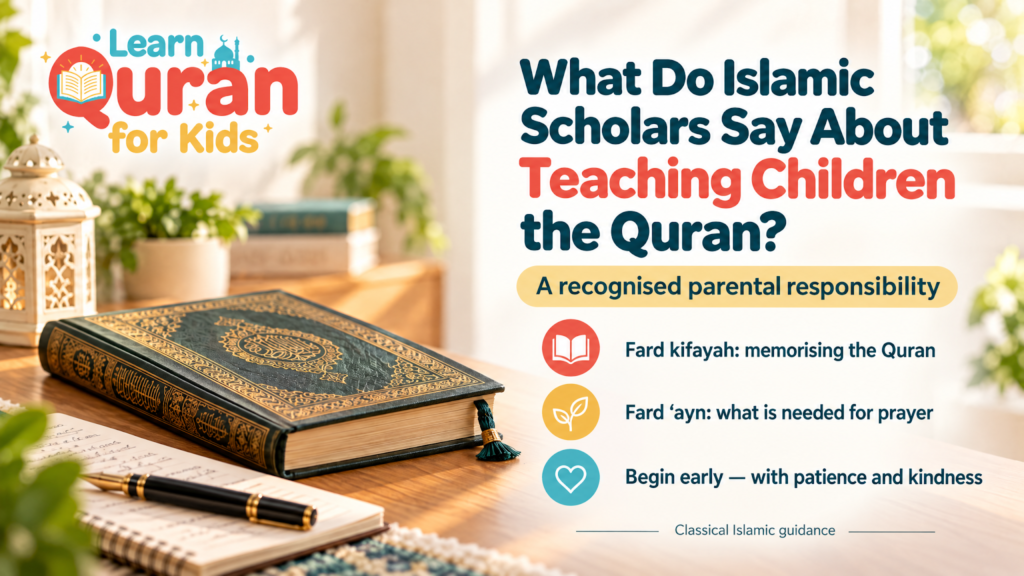
Book a Free Trial ClassWhat Do Islamic Scholars Say About Obliging Children to Learn the Quran?
Classical scholars considered teaching children the Quran a recognised parental duty. In Hanbali fiqh, Mar’i ibn Yusuf al-Karmi wrote in Dalil al-Talib that memorizing the Quran is a communal obligation (fard kifayah), while memorizing what is required for prayer is an individual obligation (fard ‘ayn), as cited in a fatwa published by Islamweb.
The same Islamweb fatwa quotes al-Buhuti in Daqa’iq Uli al-Nuha, who stated that a man should begin his son’s education with the Quran so that the child becomes used to reading it. The fatwa concludes that a parent is not at fault for obliging children to memorize the Quran, describing it as one of the rights children have over their parents.
The Gradual Approach in the Hadith About Prayer
Scholars often point to the Prophet’s guidance on teaching children prayer as a model of gradual, age-appropriate instruction. Although this hadith concerns Salah, not Quran reading, it shows that religious habits are developed through stages, beginning with instruction and guidance.
مُرُوا أَوْلاَدَكُمْ بِالصَّلاَةِ وَهُمْ أَبْنَاءُ سَبْعِ سِنِينَ، وَاضْرِبُوهُمْ عَلَيْهَا وَهُمْ أَبْنَاءُ عَشْرٍ، وَفَرِّقُوا بَيْنَهُمْ فِي الْمَضَاجِعِ
“Command your children to pray when they become seven years old, and beat them for it (prayer) when they become ten years old; and arrange their beds to sleep separately.”
Contemporary Scholars and Educators: Persuasion Before Pressure
Many contemporary scholars and Muslim educators emphasise that persuasion and love achieve far more than pressure in Quran education.
They observe that a child forced through fear may memorize for a while, then abandon the Quran as a teenager because the experience is remembered as stress. Building love first makes firm routines much easier later.
Help Your Child Recite the Quran Beautifully Our Tajweed for Kids course teaches correct pronunciation step by step, with patient teachers who make every lesson encouraging rather than stressful.
Explore the Tajweed for Kids Course

When Does Pressure on a Child Become Harmful?
Pressure becomes harmful when it damages the child’s body, dignity, or relationship with the Quran. Islam values mercy deeply, and Allah praised the Prophet ﷺ for his gentleness, noting that harshness would have caused people to scatter away from him. Parents can reflect on this verse when they feel frustrated during Quran lessons.
فَبِمَا رَحْمَةٍ مِّنَ اللَّهِ لِنتَ لَهُمْ ۖ وَلَوْ كُنتَ فَظًّا غَلِيظَ الْقَلْبِ لَانفَضُّوا مِنْ حَوْلِكَ
“So by mercy from Allah, [O Muhammad], you were lenient with them. And if you had been rude [in speech] and harsh in heart, they would have disbanded from about you.”
Surah Aal-Imran (3:159), part of the verse
If you notice signs such as crying before every lesson, hiding the mushaf, faking illness, or saying “I hate Quran time,” treat them as a signal to change the method, not to give up on the goal. Shorten the sessions, add rewards, and rebuild the child’s positive feelings before raising expectations again.
Practical Ways to Make Quran Reading Enjoyable for Children
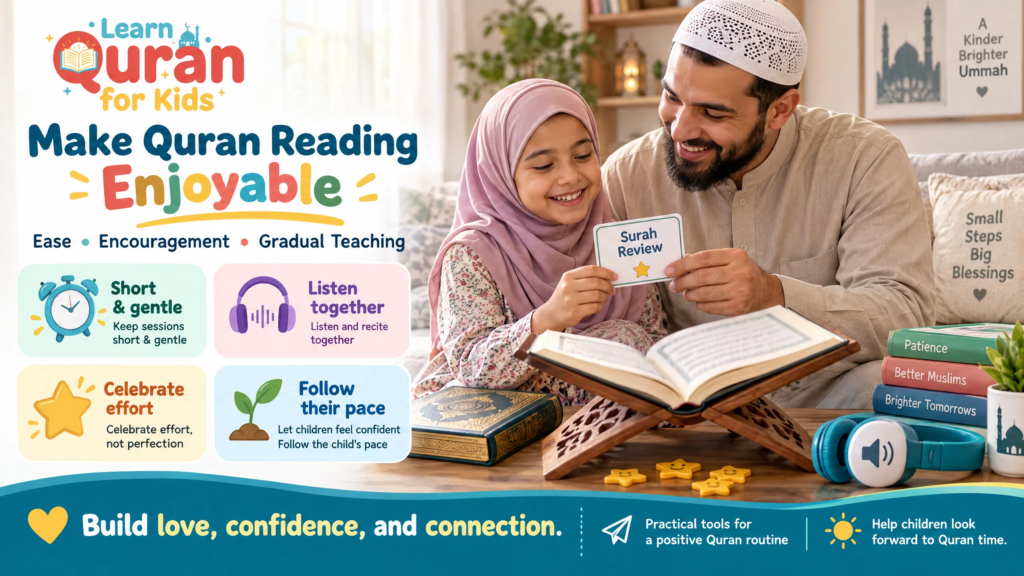
The most effective way to avoid harmful pressure is to make Quran learning something children can look forward to rather than a task they fear. A positive environment can help children stay motivated, build confidence, and develop a lasting connection with the Quran.
The following methods are drawn from Islamic parenting guidance and the practical experience of Quran teachers. They are not religious rulings, but practical tools that can help parents apply the Prophetic principle of ease, encouragement, and gradual teaching while supporting their child’s individual needs.
1. Be the Role Model Your Child Copies
Children imitate what they see far more than what they hear. When a child regularly watches a parent sit down to read the Quran, make dua, listen to recitation with respect, and take time for worship, the Quran becomes a natural and familiar part of the daily routine.
Simple actions, such as reading a few pages after prayer or listening to Quran together, can have a lasting influence on how children view worship.
2. Use Rewards and Sincere Praise
Rewards connect effort with positive feelings. Parents can link completing a page or memorizing a surah to something the child enjoys, such as a family outing, a special treat, or extra playtime.
Sincere praise in front of grandparents and relatives also builds a child’s confidence and creates a healthy sense of pride in their Quran progress.
3. Choose the Right Time for Quran Lessons
Timing has a big effect on a child’s attitude toward Quran lessons. Many children focus best in the early morning after a good night’s sleep, and short revision before bedtime helps reinforce memorization.
Avoid scheduling Quran time when the child is hungry, sleepy, or has just returned exhausted from school, since pressure at these moments often causes resistance.
4. Tell Quran Stories Before Asking for Memorization
Stories help children love the Quran before they are asked to memorize it. Learning about the life of the Prophet ﷺ gives meaning to the verses they recite and helps children connect Quranic teachings with real-life examples.
This collection of the Prophet Muhammad story for kids presents his kindness, honesty, patience, and compassion in language children can easily understand.
5. Use Kid-Friendly Quran Apps Wisely
Interactive apps with colours, points, games, and audio can make Quran revision more enjoyable, especially for children who enjoy technology. Parents can compare options in this guide to Quran memorization apps for kids, while remembering that apps work best as a helpful supplement to regular lessons.
They can support practice and revision at home, but they should not replace the guidance, encouragement, and pronunciation correction provided by a qualified teacher and supportive parent.
Start Your Child’s Quran Learning Journey Today!
Join Kids Learning Quran Academy and help your child read the Quran with confidence through fun and guided lessons.
Book a Free Trial ClassGive Your Child a Joyful Quran Learning Experience with Kids Learning Quran Academy
Kids Learning Quran Academy helps Muslim families teach the Quran with ease, patience, and love. Our qualified teachers provide one-to-one online lessons in Quran reading, Tajweed, and memorization, tailored to each child’s age and pace.
Whether your child is just starting with Arabic letters or working toward memorizing a Juz, our programs make Quran learning positive and engaging. Book a free trial class today and see how gentle, guided teaching can build your child’s lifelong love for the Book of Allah.
Our Courses Include:
- Tajweed Course for Kids
- Quran Memorization Course for Kids
- Quran Recitation Course for Kids
- Quran Classes for Toddlers
- Quran Tafseer Course for Kids
- Qaida Course for Kids
- Quran Reading Course for Kids
- Online Arabic Classes for Kids
- Quranic Arabic Course for Kids
- Islamic Studies Courses for Kids
- Islamic Studies Course for Kindergarten
- 5 Pillars of Islam Course for Kids
- Islamic Education Course for Kids
Don’t wait to invest in your child’s Akhirah and future. Enroll today and watch your child grow with confidence, knowledge, and love for the Quran.
Join Kids Learning Quran Academy now and start your child’s learning journey today!

Conclusion
Is it haram to force your child to read Quran? No. Islam places the responsibility of teaching children the Quran on parents, as shown in Surah At-Tahrim, Surah Taha, and authentic Hadith. Parents are encouraged to guide their children toward Quran reading and other acts of worship from an early age.
Classical scholars described this teaching as a right children have over their parents, so firmly requiring Quran learning is not a sin. However, the Sunnah is equally clear that religion must be made easy and never repulsive. Harshness, humiliation, and harm contradict the Prophetic method and can push a child away from the Quran.
The best path combines a steady routine with rewards, stories, role modeling, encouragement, and patience. This helps your child build a positive relationship with the Quran while gradually developing the habit of reading, memorizing, and loving the Book of Allah.
Frequently Asked Questions
Is it a sin to make my child read Quran when they do not want to?
No, it is not a sin to require your child to read the Quran. Teaching children the Quran is part of a parent’s Islamic responsibility.
The method matters, though: guidance should be firm but gentle, free of humiliation or harm, and adjusted to the child’s age and ability.
Can I punish my child for not reading the Quran?
Islam does not permit harmful punishment to make a child read the Quran. The hadith mentioning discipline is about prayer from age ten, and scholars restricted it to light, non-harmful correction for teaching. Rewards, encouragement, and changing the method are far more effective for Quran learning.
At what age should a child start learning the Quran?
There is no single fixed age for starting Quran learning in Islam. Many families begin with listening and short surahs in the toddler years, then introduce reading and basic Tajweed around ages five to seven, depending on the child’s readiness and attention span.
What should I do if my child hates Quran time?
If your child dislikes Quran time, change the method rather than abandoning the goal. Shorten sessions, add rewards and stories, choose better times of day, and consider a patient teacher. Rebuilding positive feelings first usually restores the child’s willingness to read.
Does “there is no compulsion in religion” mean I cannot require Quran learning?
No. The verse “There shall be no compulsion in religion” (Surah Al-Baqarah 2:256) is understood by scholars to concern accepting faith, not parents educating their Muslim children. Teaching children the Quran remains a recognised parental duty in Islam.