 Learn Quran
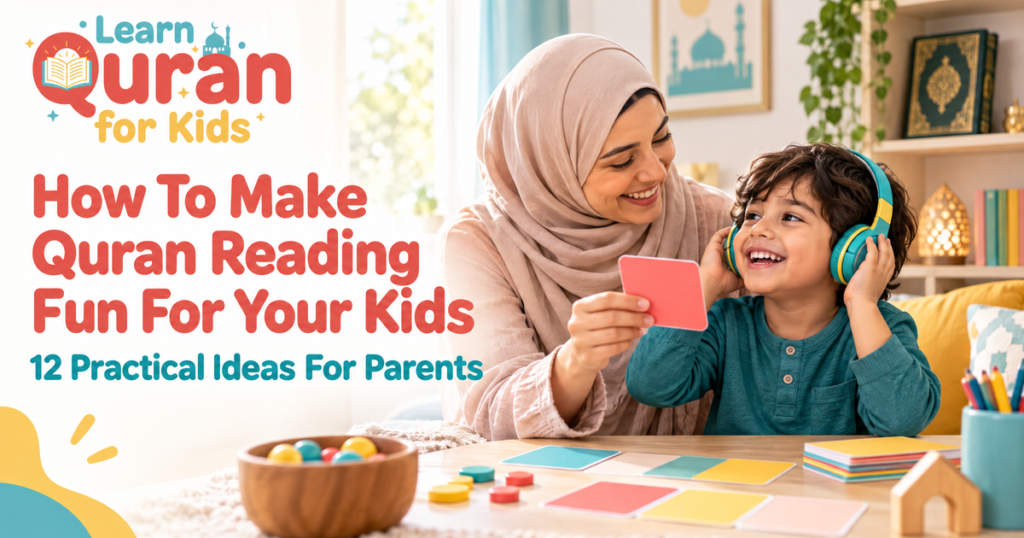
Many Muslim parents ask, How to make quran reading fun for kids? The key is to create a positive and enjoyable learning experience that helps children connect with the Quran without feeling pressured or bored.
Parents can use stories, interactive games, educational technology, and gentle encouragement to make each lesson more engaging. Keeping sessions short, celebrating small achievements, and choosing activities that match the child’s age and interests can also help build confidence and encourage children to develop a lasting love for reading the Quran.
In this guide, you will learn the purpose and benefits of making Quran reading fun, along with practical ideas you can use at home and simple ways to make Quran reading an enjoyable part of family life. The goal is to help your child love the Quran, read it correctly, and return to it with a happy heart.

1. Keep Quran Sessions Short and Choose the Right Time
Short Quran sessions are one of the easiest ways to make reading the Quran fun for kids. A 10- to 15-minute session for children under seven can keep their energy high, prevent boredom, and help them stay focused. It is better for a child to finish a short lesson happily than to struggle through a long one and associate the Quran with fatigue.
This is one of the simple benefits of making Quran reading fun, as children are more likely to stay engaged and look forward to the next session.
Timing matters too, so choose a moment when your child is rested, fed, and calm, such as after Fajr, a school snack, or Maghrib prayer. Avoid Quran time right before playtime or a favorite show, when it may be harder for your child to focus.
2. Create a Calm and Inviting Quran Corner at Home
A dedicated Quran corner can make Quran reading feel special for kids. Choose a quiet spot with a soft rug, cushions, good lighting, a small bookshelf, and a child-friendly Mushaf. Having their own space can help children feel connected to the Quran and encourage them to visit it willingly.
Creating this positive environment supports the purpose of making Quran reading fun by helping children build a happy and lasting connection with the Quran.
Keep the area free from screens and noise, and decorate it with Arabic letter posters, a progress chart, or your child’s Quran drawings. Teaching simple manners, such as sitting properly and handling the Mushaf with care, adds respect to the experience.

3. Teach Arabic Letters With Flashcards and Letter Games
Flashcards and letter games make the first stage of Quran reading playful and effective. Teach one Arabic letter at a time using bright visual cards, and practice its sound, shape, and position in a word before moving to the next letter. Games such as letter matching, memory cards, and letter hunts turn repetition into an exciting challenge for children.
Mastering the letters early prevents frustration later, when children begin reading full verses. A structured program like the Quran Reading Course for Kids guides children from letter recognition to fluent reading step by step.
Parents can also integrate Quran reading with fun group activities, allowing children to practice letters and short verses together while learning from one another.
4. Use a Talking Mushaf and Interactive Quran Apps
As part of how to make quran reading fun for your kids, talking Mushafs and interactive Quran apps can make Quran reading more enjoyable by combining sound, color, and touch. Many apps highlight each word as the reciter reads it, repeat verses on demand, and provide simple translations.
Children enjoy tapping, listening, and following along, which helps them naturally connect the written Arabic text with its correct pronunciation. This interactive approach can keep young learners interested and make their Quran practice feel more engaging.
Technology works best when parents choose trusted apps and set clear limits. Use the app as a learning tool during Quran time rather than as unlimited screen time. Sit beside your child, follow the verses together, and pause to praise their correct reading and effort.
See Our Classes in Action!
Wondering what a typical lesson looks like? Take a peek inside our virtual classrooms below to see how our patient teachers keep students smiling, engaged, and learning every step of the way.
Start Your Child’s Quran Learning Journey Today!
Join Kids Learning Quran Academy and help your child read the Quran with confidence through fun and guided lessons.
Book a Free Trial Class5. Record Your Child’s Recitation and Listen Together
As part of how to make quran reading fun for your kids, recording your child’s Quran recitation can make daily practice more exciting and motivating.
Children often enjoy hearing their own voices, and keeping weekly recordings allows them to notice their progress, recognize improvements in pronunciation, and feel proud of their achievements. You can make this activity more engaging by recording the same short Surah every few weeks and letting your child compare the results.
Recordings can also help children identify pronunciation mistakes by listening to their recitation alongside that of a skilled reciter. With gentle guidance, they can gradually improve their reading without feeling discouraged. Sharing their progress with grandparents or relatives can provide additional encouragement and turn Quran practice into a joyful achievement worth celebrating.
6. Connect the Verses to Quran Stories
Connecting verses to Quran stories makes reading the Quran meaningful and fun for kids. Children naturally love stories, and the Quran contains many inspiring accounts of prophets, righteous people, and lessons from history.
When a child knows the story behind a surah, the verses come alive and become much easier to read, remember, and reflect upon.
You can begin with the life of our beloved Prophet ﷺ, using this Prophet Muhammad story for kids as a starting point. Tell the story in simple language, ask questions about the characters, and let your child retell it in their own words.
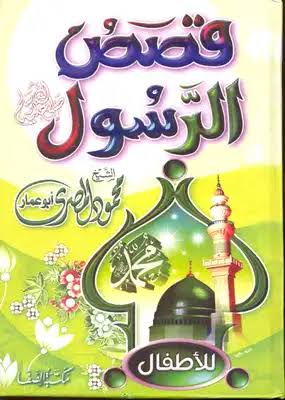
Allah describes the stories in the Quran as the best of all stories.
نَحْنُ نَقُصُّ عَلَيْكَ أَحْسَنَ الْقَصَصِ بِمَا أَوْحَيْنَا إِلَيْكَ هَٰذَا الْقُرْآنَ وَإِن كُنتَ مِن قَبْلِهِ لَمِنَ الْغَافِلِينَ
“We relate to you, [O Muhammad], the best of stories in what We have revealed to you of this Qur’an although you were, before it, among the unaware.”
7. Explain the Meaning of Verses in Simple Words
Explaining verses in simple words can make reading the Quran more meaningful for kids because they understand what they are saying. A child who knows that Surah Al-Fatiha is a conversation with Allah or that Surah Al-Ikhlas describes His oneness can read with more attention and feeling.
Keep explanations short and connect them to daily life, such as gratitude, honesty, and kindness to parents. This supports the purpose of making Quran reading fun by turning recitation into a meaningful experience.
For structured lessons, the Tafseer Course for Kids explains Quranic meanings in an age-appropriate and engaging way.

8. Listen to Skilled Reciters and Imitate Their Recitation
Listening to skilled reciters can make reading the Quran fun for kids because children enjoy imitating beautiful voices. Play a short Surah slowly and clearly, then invite your child to repeat after the reciter verse by verse.
You can choose reciters known for their clear and measured recitation, such as Sheikh Mahmoud Khalil Al-Husary, whose careful pronunciation and steady pace make his recitations especially useful for children learning to read the Quran. This simple method can improve pronunciation, strengthen listening skills, and make daily practice more enjoyable.

Listening and repeating, known as talqeen, is a traditional way to teach correct Quran pronunciation and introduce children to Tajweed. When your child is ready for clear rules and guided practice, the Tajweed Course for Kids offers a fun and structured learning path.
أَوْ زِدْ عَلَيْهِ وَرَتِّلِ الْقُرْآنَ تَرْتِيلًا
“Or add to it, and recite the Qur’an with measured recitation.”

9. Add Movement and Hands-On Activities for Active Learners
Movement-based activities can make reading the Quran fun for kids, especially active children who find it hard to sit still. Let them point to words, trace letters in sand or clay, or arrange letter blocks to form Quranic words.
Simple hand gestures can also represent the meanings of short verses, making the lesson more interactive and memorable.
Take short movement breaks between verses for younger children, then return to reading with fresh energy. Keep activities calm and respectful so they support the lesson without turning Quran recitation into noisy or careless play.
Looking for Free Quran Classes for Your Child? Discover free online Quran classes designed to make learning engaging, interactive, and suitable for every age.
Explore Free Online Quran Classes

10. Use Sticker Charts, Rewards, and Sincere Praise
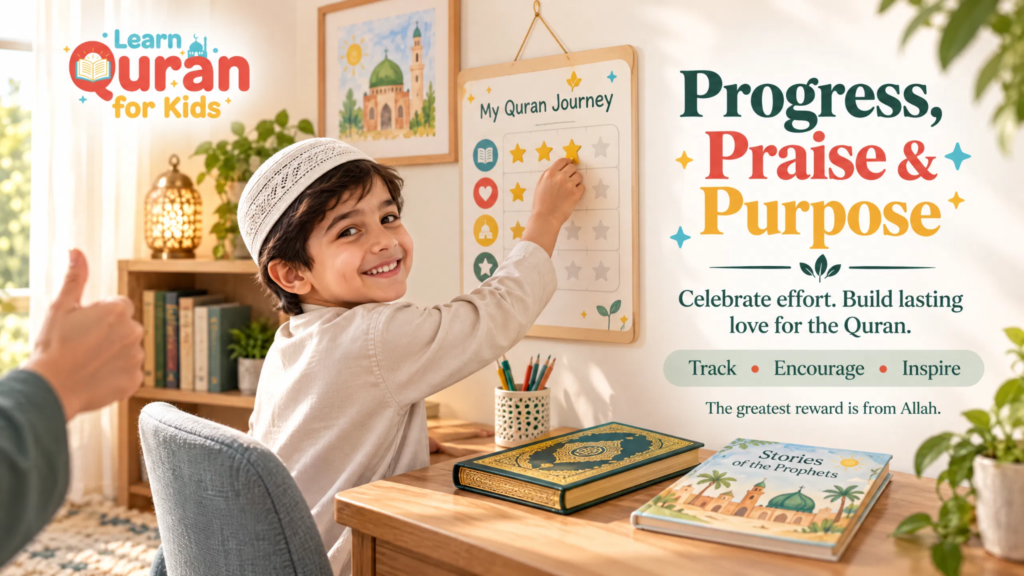
Rewards and praise motivate children to keep reading the Quran with enthusiasm. A sticker chart that tracks completed verses, letters, or surahs gives children a visible record of their progress.
When the chart is full, offer a meaningful reward, such as a new Islamic storybook, a family outing, or letting your child choose a favorite prophet story.
Praise should be specific and sincere, for example, ‘You pronounced that letter beautifully today.’ Specific praise teaches children exactly what they did well.
Over time, gently remind your child that the greatest reward comes from Allah, so external rewards slowly give way to inner motivation and a true love for reciting the Quran.
11. Build a Fixed Daily Quran Routine and Review Regularly
A fixed daily Quran routine makes Quran reading a natural part of a child’s life rather than an occasional task. Linking Quran time to a daily anchor, such as after Fajr prayer or before bedtime, helps children remember it without repeated reminders.
Consistency matters more than length, so a short daily session beats a long weekly one.
Regular review protects what children have already learned, especially for kids who are memorizing surahs. Plan short revision moments each week and make them playful with quick challenges.
The Quran Memorization Course for Kids follows a balanced plan of new lessons and revision. The Prophet ﷺ himself stressed the importance of constant review.
تَعَاهَدُوا هَذَا الْقُرْآنَ فَوَالَّذِي نَفْسُ مُحَمَّدٍ بِيَدِهِ لَهُوَ أَشَدُّ تَفَلُّتًا مِنَ الإِبِلِ فِي عُقُلِهَا
“Keep refreshing your knowledge of the Qur’an, for I swear by Him in Whose Hand is the life of Muhammad that it is more liable to escape than camels which are hobbled.”

12. Celebrate Small Wins and Stay Patient With Mistakes
Celebrating small wins keeps children excited about reading the Quran. Finishing a new letter, reading a full verse without help, or completing a short surah all deserve recognition. A small family celebration, a homemade certificate, or a special mention at dinner can show your child that every step matters.
Patience is also essential because every child learns at a different pace. Correct mistakes gently, avoid negative comparisons, and remind your child that struggling is not failure.
The Prophet ﷺ taught that a person who reads the Quran with difficulty while continuing to try receives a double reward from Allah.
الْمَاهِرُ بِالْقُرْآنِ مَعَ السَّفَرَةِ الْكِرَامِ الْبَرَرَةِ وَالَّذِي يَقْرَأُ الْقُرْآنَ وَيَتَتَعْتَعُ فِيهِ وَهُوَ عَلَيْهِ شَاقٌّ لَهُ أَجْرَانِ
“One who is proficient in the Qur’an is associated with the noble, upright, recording angels; and he who falters in it, and finds it difficult for him, will have two rewards.”
How to Integrate Quran Reading With Fun Group Activities
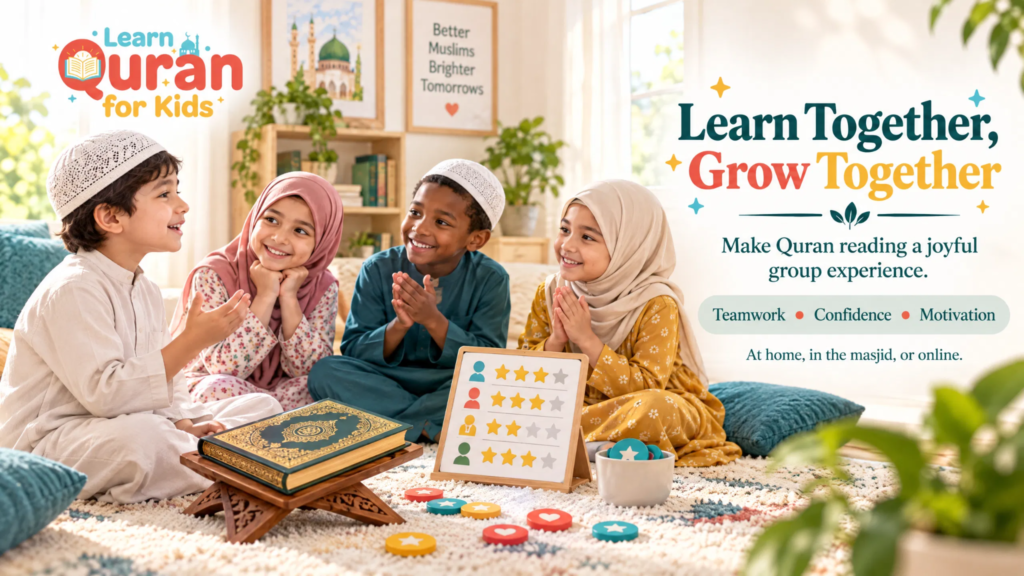
Integrating Quran reading with fun group activities means letting children learn alongside siblings, cousins, or classmates in a shared and encouraging setting.
Group learning adds teamwork, healthy competition, and social motivation, which many children find more exciting than studying alone. It also helps shy children gain confidence by reciting in front of a small, supportive group.
Group activities work well at home, in the masjid, in Quran circles, and in online classes. The ideas below can be adapted for two children or for a full classroom, depending on your situation and resources.
1. Organize a Weekly Recitation Circle
A weekly recitation circle is a simple group activity that makes Quran reading fun and social. Children sit in a circle, and each child recites a verse or short passage while the others listen and follow along in their copies.
A parent or teacher corrects mistakes gently, and the group ends by discussing one simple lesson from the verses they read together.
2. Play Quran Quiz and Word Games
Quran quiz games turn review into exciting group fun for kids. Divide children into teams and ask questions such as which surah mentions a certain prophet, how many verses a short surah has, or what a familiar Arabic word means.
Points, a simple scoreboard, and small prizes add excitement, while every question quietly strengthens their knowledge of the Quran.
3. Host a Family Quran Night With Story Time
A family Quran night brings parents and children together around the Quran in a relaxed atmosphere.
Each family member reads a short portion, then everyone listens to a Quran story with a clear lesson, such as the story of Qaroon for kids, which teaches humility and gratitude. Ending the evening with a healthy treat makes the night something children eagerly await.
4. Arrange Friendly Competitions and Open Days
Friendly competitions motivate children to read more by setting shared goals, such as finishing a surah or reviewing a set number of pages within a month. The focus should be on effort and improvement rather than defeating others, so every participant receives recognition.
Monthly open days, where children recite in front of families, celebrate progress and build public-speaking confidence.
Start Your Child’s Quran Learning Journey Today!
Join Kids Learning Quran Academy and help your child read the Quran with confidence through fun and guided lessons.
Book a Free Trial ClassHelp Your Child Love the Quran With Kids Learning Quran Academy
Kids Learning Quran Academy helps children learn to read, recite, memorize, and understand the Quran through fun, interactive, one-on-one online lessons.
Qualified and patient teachers use games, stories, visual tools, and positive encouragement, so every child progresses at their own pace while enjoying each class from the comfort of home.
Visit Kids Learning Quran Academy today to explore the courses and give your child a joyful and lasting connection with the Book of Allah.
Our Courses Include:
- Tajweed Course for Kids
- Quran Memorization Course for Kids
- Quran Recitation Course for Kids
- Quran Classes for Toddlers
- Quran Tafseer Course for Kids
- Qaida Course for Kids
- Quran Reading Course for Kids
- Online Arabic Classes for Kids
- Quranic Arabic Course for Kids
- Islamic Studies Courses for Kids
- Islamic Studies Course for Kindergarten
- 5 Pillars of Islam Course for Kids
- Islamic Education Course for Kids
Don’t wait to invest in your child’s Akhirah and future. Enroll today and watch your child grow with confidence, knowledge, and love for the Quran.
Join Kids Learning Quran Academy now and start your child’s learning journey today!

Conclusion
Learning how to make Quran reading fun for kids is one of the most valuable gifts a Muslim parent can give. Short sessions, a calm Quran corner, flashcards, recordings, stories, simple explanations, skilled reciters, movement, rewards, routines, and patience all work together to help children enjoy the Quran while reading it correctly and respectfully.
When Quran time feels positive rather than stressful, children are more likely to participate willingly.
Group activities, such as recitation circles, quizzes, and family Quran nights, add more motivation and joy. Parents can also learn how to integrate Quran reading with fun group activities so children can learn while enjoying time with others.
The purpose of making Quran reading fun remains the same: helping children love the Quran, understand it, and live by it. Start with one or two ideas this week, and with patience and du’a, your child’s love for the Quran will grow.
Frequently Asked Questions
At what age can a child start learning to read the Quran?
There is no fixed age for starting Quran reading. Many children begin learning Arabic letters and listening to short surahs around ages 4 to 5. The right time depends on the child’s readiness, attention span, and interest, so short and playful lessons work best at the beginning.
How long should a child’s daily Quran session be?
A child’s daily Quran session is usually most effective at 10 to 20 minutes, depending on age. Younger children benefit from 10 to 15 minutes, while older children can handle longer sessions. Daily consistency matters more than session length for steady progress.
Is it respectful to use games when teaching kids the Quran?
Educational games are widely used by Quran teachers to teach letters, meanings, and review in an engaging way. Respect is maintained by handling the Mushaf with care, reciting properly, and keeping games focused on learning rather than mocking or treating the Quran casually.
How can I make my child love reading the Quran?
You can help your child love reading the Quran by linking it to positive feelings. Tell Quran stories, praise effort sincerely, keep sessions short, read together as a family, and let your child see you reading the Quran regularly yourself.
Can kids learn to read the Quran online?
Yes, kids can learn to read the Quran online effectively with qualified teachers and interactive tools. One-on-one online classes offer flexible scheduling, personal attention, and engaging visual resources that keep children motivated and focused on correct recitation.