 Learn Islam
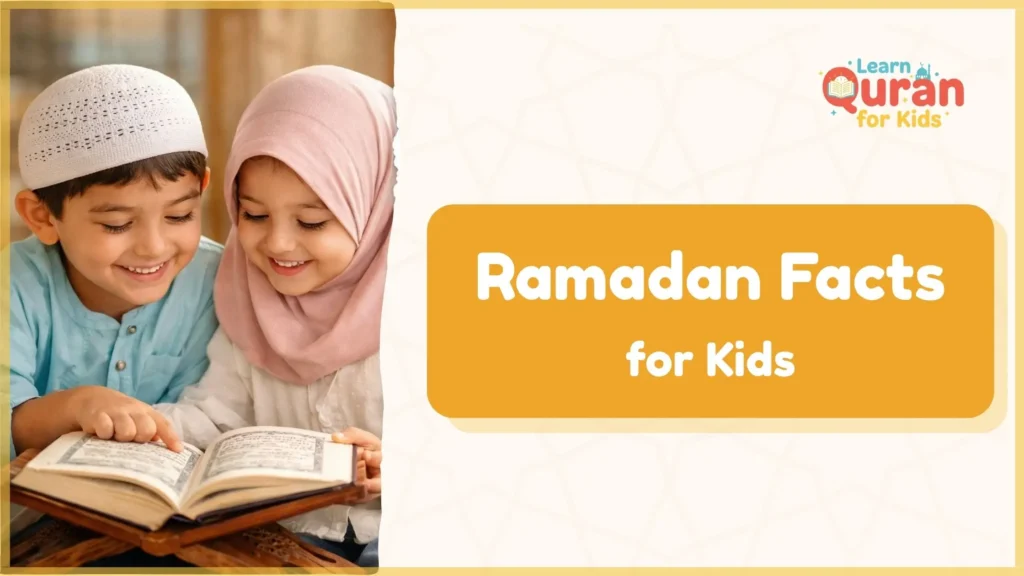
Ramadan is one of the most special times of the year for Muslim families around the world. For children growing up outside Arabic-speaking communities, this holy month can feel full of wonder — but also full of questions that deserve clear, simple answers.
Understanding the real meaning behind Ramadan helps children connect with their faith from the heart, not just from habit. These ten Ramadan facts for kids are written to be simple enough for young children to understand, while rich enough to plant seeds of genuine Islamic knowledge that will grow with them for life.
1. Ramadan Is the Ninth Month of the Islamic Lunar Calendar
Ramadan is the ninth month of the Islamic lunar calendar, known as the Hijri calendar. Because the Islamic calendar follows the moon rather than the sun, Ramadan arrives approximately ten to eleven days earlier each year, meaning it rotates through every season over time.
This is why Muslim children might notice that sometimes Ramadan falls during long summer days, and other years during short winter days. The fasting hours change depending on where in the world a family lives and what season it is.
The word Ramadan itself comes from the Arabic root ramida, which refers to intense heat — historically connected to the scorching heat of summer when this month was often observed in early Islamic history.
Understanding the lunar calendar is a beautiful starting point for children curious about Arabic and Islamic knowledge. Our Arabic Words for Kids guide introduces children to foundational Islamic vocabulary, including months, worship terms, and Quranic language in a simple, child-friendly way.
Book your kid a FREE Arabic session with a NATIVE teacher

2. Fasting During Ramadan Is One of the Five Pillars of Islam
Fasting in Ramadan — known in Arabic as Sawm — is one of the Five Pillars of Islam, the five core acts of worship that form the foundation of a Muslim’s life. The other four pillars are the declaration of faith (Shahada), prayer (Salah), giving charity (Zakat), and pilgrimage (Hajj).
Because Sawm is a pillar, it is not optional for adult Muslims who are healthy and able. It is one of the most important acts of worship a Muslim performs throughout their entire life.
Explaining the Five Pillars to children in a concrete, age-appropriate way gives Ramadan its full weight and meaning.
When a child understands that fasting sits alongside prayer and the declaration of faith, they begin to see Ramadan as something truly central — not just a family tradition.
At Kids Learning Quran Academy, our Islamic Studies Courses for Kids cover the Five Pillars of Islam in age-appropriate lessons that make these foundations memorable and meaningful for young Muslims growing up in non-Arabic-speaking households.
Book a Free Session for Your Child in the Best Islamic Studies Courses for Kids

3. Muslims Fast from Dawn Until Sunset Every Day During Ramadan
During Ramadan, Muslims fast from the Fajr (dawn) prayer until the Maghrib (sunset) prayer every single day for the entire month. Fasting means abstaining from eating, drinking, and certain other behaviors during those hours.
The fast begins before sunrise, after a pre-dawn meal called Suhoor, and is broken at sunset with a meal called Iftar. The Prophet Muhammad ﷺ encouraged breaking the fast with dates and water before a larger meal.
For children learning about fasting for the first time, this daily rhythm of Suhoor and Iftar is one of the most tangible and exciting aspects of Ramadan.
Many children remember their first Suhoor far better than any classroom lesson — because lived experience is the most powerful teacher of all.
| Ramadan Daily Schedule | Time |
| Suhoor (pre-dawn meal) | Before Fajr prayer (dawn) |
| Fast begins | At Fajr (dawn) prayer |
| No food or drink | Entire day until sunset |
| Iftar (fast-breaking meal) | At Maghrib (sunset) prayer |
| Tarawih prayers | After Isha prayer (night) |
Shots Videos from Our Courses
Start Your Child’s Quran Learning Journey Today!
Join Kids Learning Quran Academy and help your child read the Quran with confidence through fun and guided lessons.
Book a Free Trial Class4. The Quran Was First Revealed During the Month of Ramadan
The Quran was first revealed to the Prophet Muhammad ﷺ during the month of Ramadan, making this month inseparably connected to the holy book of Islam. This is one of the most important Ramadan facts for kids to truly understand — Ramadan is not just about fasting, it is about the Quran itself.
Allah ﷻ tells us directly in the Quran:
شَهْرُ رَمَضَانَ الَّذِي أُنزِلَ فِيهِ الْقُرْآنُ هُدًى لِّلنَّاسِ
Shahru Ramadanal-ladhi unzila fihil-Qur’anu hudal-linnas
“The month of Ramadan in which was revealed the Quran, a guidance for the people.” (Al-Baqarah 2:185)
This is why Muslims increase their Quran recitation throughout Ramadan. Many aim to complete the entire Quran at least once during the month.
For children learning to read and recite the Quran, Ramadan is a beautiful motivator — a time when the Quran feels especially alive.
Families who want to help their child build a meaningful relationship with the Quran can explore our Quran Learning Tools for Kids, which reviews child-friendly resources that make Quran recitation accessible and engaging during Ramadan and throughout the year.
Book a Free Trial for Your Child in the Best Hifz Course for Kids
Read also: 10 Islam Facts for Kids
5. Children Are Not Required to Fast Until They Reach Puberty
Children are not required to fast until they reach the age of puberty, which is when Islamic obligations formally begin. Fasting before puberty is entirely voluntary — but gradually practicing shorter fasts is a wonderful way for children to prepare and build a love for this act of worship.
This is an important fact that many parents and children do not fully understand. Some families worry their young child must fast — but Islamic scholars are clear that children are not yet accountable for the full religious obligations.
That said, allowing children to participate at their own pace — skipping a meal, fasting half a day with parental guidance, or joining the Iftar meal — builds genuine emotional connection to Ramadan without pressure or hardship.
At Kids Learning Quran Academy, our certified instructors frequently advise parents on age-appropriate Islamic practices. In our experience, children who are gently introduced to fasting through participation — rather than compulsion — develop a far more sincere relationship with Sawm as they grow older.
Book a FREE Trial session for your kid with one of our Ijazah-certified Quran teachers
6. Tarawih Are Special Prayers Muslims Perform Every Night in Ramadan
Tarawih are special voluntary night prayers performed after the Isha prayer throughout the entire month of Ramadan. Muslims pray Tarawih in congregation at the mosque, or at home, and the prayers often include the recitation of long portions of the Quran each night.
In many mosques, the entire Quran is recited over the course of Ramadan’s Tarawih prayers, completing one full recitation by the end of the month. For children who have been learning Quran recitation, hearing familiar surahs during Tarawih can be a powerful and moving experience.
Tarawih is not obligatory but is among the most beloved acts of worship in Ramadan. The Prophet ﷺ said:
“Whoever prays during the nights of Ramadan out of sincere faith and hoping for a reward from Allah, his previous sins will be forgiven.” (Sahih Bukhari)
For young children attending Tarawih for the first time, hearing the Quran recited with proper Tajweed in a full congregation is often a memory they carry for life.
Parents interested in helping their child follow along can find structured guidance in our Tajweed Rules for Kids resource.
Read also: 10 Quran Facts for Kids
7. Laylat al-Qadr Is the Most Powerful Night of the Entire Year
Laylat al-Qadr, the Night of Power, is the single most spiritually significant night of the entire Islamic year. It falls within the last ten nights of Ramadan — most likely on one of the odd-numbered nights — and Allah ﷻ describes it as better than a thousand months of worship.
لَيْلَةُ الْقَدْرِ خَيْرٌ مِّنْ أَلْفِ شَهْرٍ
Laylatul-qadri khayrum min alfi shahr
“The Night of Power is better than a thousand months.” (Al-Qadr 97:3)
For children, this is one of the most awe-inspiring Ramadan facts to grasp: one single night of sincere worship is worth more than 83 years of worship. Muslim families stay up in prayer, Quran recitation, and supplication during these precious nights.
Teaching children to value Laylat al-Qadr — even if they cannot stay awake the full night — plants seeds of devotion that deepen as they mature.
8. Zakat al-Fitr Is a Charity Every Muslim Gives Before Eid Prayer
Zakat al-Fitr is a mandatory charitable payment that every Muslim must give before the Eid prayer at the end of Ramadan. It is given on behalf of every member of the household, including children, and is intended to purify the fast and ensure that those in need can also celebrate Eid with food and joy.
This is a beautiful Ramadan fact for kids because it teaches that Ramadan is not just about personal worship — it is about caring for the entire Muslim community. No Muslim should celebrate Eid while a neighbor goes hungry.
| Ramadan Charity | What It Is | When It Is Given |
| Zakat al-Fitr | Mandatory food charity for every household member | Before Eid al-Fitr prayer |
| Sadaqah | Voluntary charity given any time | Throughout Ramadan (highly encouraged) |
| Zakat al-Mal | Annual 2.5% charity on savings | When applicable, often in Ramadan |
Children who understand Zakat al-Fitr from a young age grow into adults who see generosity as a natural part of faith — not a burden. Involving children in the act of giving, even symbolically, builds this understanding in a lasting way.
9. Ramadan Ends with the Joyful Celebration of Eid al-Fitr
Ramadan ends with the arrival of the new crescent moon, which marks the beginning of Eid al-Fitr — one of the two major Islamic celebrations. The name means the “Festival of Breaking the Fast,” and it is a day of communal prayer, celebration, gratitude, and giving.
On Eid morning, Muslims attend a special congregational prayer, often in large outdoor spaces or mosques. Families dress in their best clothes, exchange gifts, visit relatives, and share food together. Children typically receive gifts and sweets, and the atmosphere is one of pure joy and thankfulness.
For children, Eid is often the most anticipated day of the year — the beautiful reward at the end of a month of discipline and worship. Understanding that Eid is the fruit of Ramadan helps children see the fasting month not as a burden, but as a path leading somewhere wonderful.
10. Ramadan Teaches Self-Control, Gratitude, and Closeness to Allah
Ramadan’s deepest lesson — for children and adults alike — is that self-control, gratitude, and closeness to Allah ﷻ are built through practice, not just intention. Every hunger pang is a reminder of those who go without food daily. Every moment of patience strengthens a Muslim’s character.
The Quran connects fasting directly to the development of Taqwa — God-consciousness and mindful awareness of Allah ﷻ:
يَا أَيُّهَا الَّذِينَ آمَنُوا كُتِبَ عَلَيْكُمُ الصِّيَامُ كَمَا كُتِبَ عَلَى الَّذِينَ مِن قَبْلِكُمْ لَعَلَّكُمْ تَتَّقُونَ
Ya ayyuhal-ladhina amanu kutiba ‘alaykumus-siyamu kama kutiba ‘alal-ladhina min qablikum la’allakum tattaqun
“O you who have believed, decreed upon you is fasting as it was decreed upon those before you that you may become righteous.” (Al-Baqarah 2:183)
When children understand that fasting is not just about hunger but about growing closer to Allah ﷻ, they carry a much more meaningful relationship with Ramadan for the rest of their lives. This is the greatest Ramadan gift a parent can give their child: understanding why, not just what.
Our Students Reviews
Start Your Child’s Quran Learning Journey Today!
Join Kids Learning Quran Academy and help your child read the Quran with confidence through fun and guided lessons.
Book a Free Trial ClassStart Your Child’s Ramadan Learning with Kids Learning Quran Academy Today
These ten Ramadan facts for kids are a starting point — but true Islamic understanding is built lesson by lesson, year by year. Kids Learning Quran Academy offers structured, child-friendly Islamic education that helps your child grow in faith with confidence and joy.
- ✅ Certified instructors specialized in teaching young non-Arabic speaking Muslims
- ✅ 1-on-1 personalized sessions tailored to your child’s age and level
- ✅ Flexible scheduling to fit your family’s routine
- ✅ Engaging, gamified, age-appropriate learning methods
- ✅ Safe, monitored online environment with progress tracking for parents
- ✅ Free trial session available — no commitment required
Book your child’s free trial session today and give them the Islamic foundation every Muslim child deserves. Insha’Allah, this Ramadan will be their most meaningful yet.
Check out our top courses for children in Hifz Quran, Arabic language skills, and Islamic studies:
- Online Arabic Classes for Kids
- Noorani Qaida for Kids
- Tajweed for kids
- Quran Reading Course for Kids
- Quran Memorization Course for Kids
- Quran Tafseer for Kids
- Islamic Studies Courses for Kids
Book your child’s free trial session today.
Frequently Asked Questions About Ramadan for Kids
At What Age Do Children Start Fasting in Ramadan?
Children are not required to fast until they reach puberty, which is when Islamic obligations formally begin. Before puberty, fasting is voluntary. Many families encourage children to try partial fasts from around age 7–10 as a gradual, pressure-free way to build love for Sawm and prepare for the full obligation later.
What Is the Best Way to Explain Ramadan to a Young Child?
The best way to explain Ramadan to a young child is through simple, concrete ideas: Muslims fast to remember Allah, to feel grateful for food, and to help people who are hungry. Focus on the joy of Iftar, the excitement of Eid, and the special feeling of the month before introducing complex theological concepts.
Can Children Participate in Ramadan Without Fasting?
Yes — children can participate meaningfully in Ramadan without fasting. They can join Iftar and Suhoor meals, attend Tarawih prayers, increase their Quran recitation, give charity with their parents, and learn about the significance of Laylat al-Qadr. Full participation in the spirit of Ramadan is valuable and encouraged for children of all ages.
Why Is the Quran So Important During Ramadan?
The Quran is especially important during Ramadan because it was first revealed to the Prophet Muhammad ﷺ in this month. Muslims increase recitation, attend Tarawih prayers where the Quran is recited nightly, and aim to complete the full Quran during the month. For children learning Quran, Ramadan provides powerful motivation and a deeply meaningful context for their studies.
What Is Laylat al-Qadr and How Can Children Benefit from It?
Laylat al-Qadr is the Night of Power, which falls within the last ten nights of Ramadan and is described in the Quran as better than a thousand months of worship. Children can benefit by staying up for a portion of the night with their family, making simple duas, reciting short surahs they have memorized, and understanding this night’s profound spiritual value even in small acts of worship.
Related Articles
Learn Islam