 Learn Islam
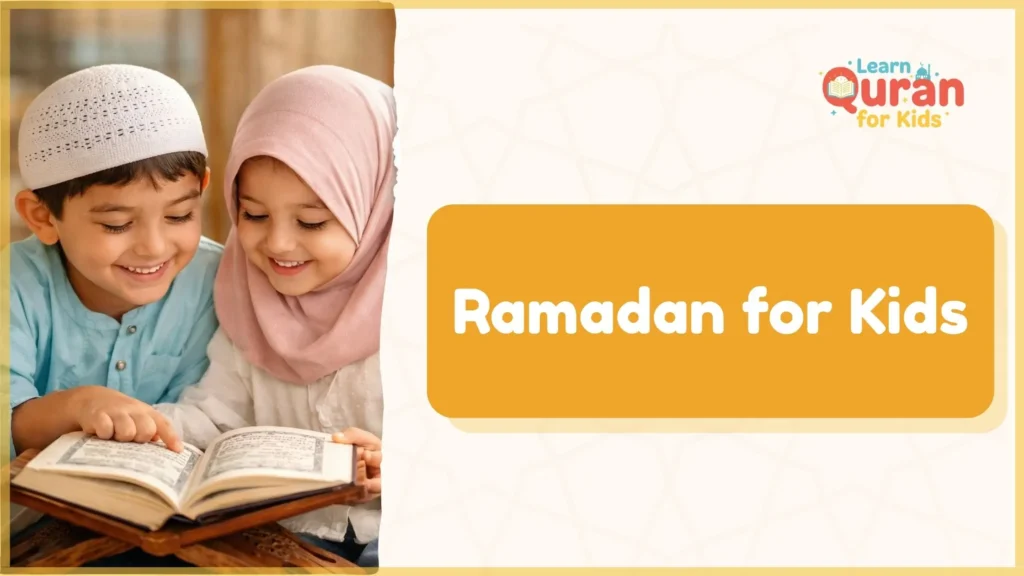
For Muslim children, Ramadan is far more than a change in daily routine. It is a time filled with special prayers, family gatherings, acts of kindness, and meaningful traditions that introduce them to the spiritual beauty of Islam in a way they can understand and cherish.
Understanding ramadan for kids helps children learn why this blessed month is so important, including its connection to the revelation of the Quran, the practice of fasting, increased prayer, acts of charity, and the special nights that make Ramadan the most spiritually significant time of the year.
5 Essential Facts About Ramadan Every Child Must Know
Before any activity or routine begins, children deserve a clear age-appropriate understanding of what Ramadan actually is and why it holds such a profound place in the Islamic calendar. These five facts form the essential foundation for every child’s ramadan for kids education.
- Ramadan is the month when the Quran was first revealed to Prophet Muhammad ﷺ, which is why it is often called the Month of the Quran. A child who understands this approaches Ramadan not as a month of hunger but as a month of direct divine connection.
- Fasting during Ramadan is one of the Five Pillars of Islam, the five core practices that every Muslim must fulfill. Understanding this positions fasting not as a cultural tradition but as an act of worship with the same weight as Salah and Zakat.
- Children do not have to fast during Ramadan. They usually start when they reach puberty, if they are healthy. Sharing this openly removes pressure and replaces it with genuine anticipation for when their turn arrives.
- During Ramadan, Muslims pledge not to tell a lie, gossip, or be greedy. Many people take advantage of the spiritual focus to break bad habits or read the entire Quran. Children who know this understand that Ramadan disciplines the tongue and heart, not just the stomach.
- Laylatul Qadr, the Night of Power, is the most important night of Ramadan, falling within the last ten nights. The Quran describes it as a night better than a thousand months of worship.
Kids Learning Quran Academy’s Islamic Studies Courses for Kids introduces Ramadan, its significance, and its connection to the Five Pillars through age-appropriate interactive lessons taught by certified instructors who specialize in child-centered Islamic education.
Book a Free Session for Your Child in the Best Islamic Studies Courses for Kids

Partial Fasting Builds Genuine Ramadan for Kids Experience Gradually
Fasting becomes obligatory at puberty, but many families introduce it gradually years earlier. Some children start with half-days around age seven or eight, others might skip just one meal. There is no single right approach as it depends entirely on the child’s health, maturity, and enthusiasm.
The goal is to make fasting a positive, anticipated experience rather than a source of stress. A child who fasts their first half-day voluntarily and feels proud of that achievement is building a completely different relationship with Ramadan than one who is pushed before they are ready.
The Prophet ﷺ said:
“إِنَّ الدِّينَ يُسْرٌ”
Inna ad-deena yusrun.
“Indeed, the religion is ease.”
Sahih al-Bukhari: 39
Partial fasting also gives children a direct, personal experience of what their fasting family members feel throughout the day.
That experience builds genuine empathy for those who fast fully, and genuine anticipation for when they themselves will join them completely Insha’Allah.
Shots Videos from Our Courses
Start Your Child’s Quran Learning Journey Today!
Join Kids Learning Quran Academy and help your child read the Quran with confidence through fun and guided lessons.
Book a Free Trial ClassDaily Family Prayer Transforms Ramadan into a Shared Spiritual Experience
Ramadan for kids becomes most meaningful when children are included in the family’s increased prayer routine rather than left on the sidelines.
Children can join their parents at the mosque and pray a few Rakaat. Even if they do not stay for the entire Tarawih prayer, they can still experience the warmth, peace, and togetherness of this special night.
Praying alongside parents during Ramadan builds a felt sense of belonging to something larger than themselves.
A child who stands in prayer next to their parent during Tarawih, even for just a few Rakaat, carries that memory for decades.
Allah ﷻ commands the believers to establish prayer as a family responsibility:
“وَأْمُرْ أَهْلَكَ بِالصَّلَاةِ وَاصْطَبِرْ عَلَيْهَا” {132}
Wa/mur ahlaka bialssalati waistabir AAalayha {132}
And enjoin prayer upon your family [and people] and be steadfast therein. {132}
Surah Taha: 132
This verse makes family prayer a direct Quranic instruction, not simply a cultural practice. Ramadan is the most natural and powerful time of the year to establish this family prayer habit in a way that children remember and carry forward into their own adult lives.
Involving Kids in Iftar and Suhoor Preparation Builds Deep Ramadan Connection
One of the most effective ways to make ramadan for kids genuinely meaningful is giving children real, age-appropriate roles in preparing the family’s Iftar and Suhoor.
In many cultures, Muslims break the fast each day by eating dates first, the sweet and healthy fruit of the date palm tree. Letting a child arrange the dates on a plate, pour the water, or set the Iftar table gives them ownership of a daily Ramadan ritual.
Children who help prepare Iftar experience the breaking of the fast as something they personally contributed to rather than something that simply happens around them.
This sense of contribution builds the emotional investment that makes Ramadan feel special and personally significant year after year.
Adults and teens who fast during Ramadan wake up early for Suhoor, a pre-dawn meal, and enjoy Iftar, an evening meal after sunset.
Including children in both meals, even if they are not fasting, keeps them connected to the full daily rhythm of the blessed month throughout its entire thirty days.
Read also: Dua for Kids
Charity and Good Deeds Make Ramadan for Kids a Character-Building Month
Sadaqah and good deeds are important parts of the holy month. Donating food, clothing, and money, picking up trash, helping the elderly, and planting a tree are some of the ways to show kindness and generosity during Ramadan.
Children are naturally generous when given the opportunity and the framework. Ramadan provides both. Setting aside a portion of a child’s own money to donate, helping pack food boxes for families in need, or writing cards for elderly neighbors gives children a direct personal experience of Islamic charity that no lesson alone can replicate.
The Prophet ﷺ said:
“كَانَ رَسُولُ اللَّهِ صلى الله عليه وسلم أَجْوَدَ النَّاسِ، وَكَانَ أَجْوَدُ مَا يَكُونُ فِي رَمَضَانَ”
“The Prophet (ﷺ) was the most generous of all the people, and he used to become more generous in Ramadan.”
Sahih al-Bukhari: 6
Sharing this Hadith with children and connecting it to their own charitable acts during Ramadan builds a direct link between their giving and the Prophetic example.
A child who understands they are following the Prophet’s ﷺ way in their generosity develops an entirely different motivation for charity than one who simply follows parental instruction.
Start Your Child’s Quran Learning Journey Today!
Join Kids Learning Quran Academy and help your child read the Quran with confidence through fun and guided lessons.
Book a Free Trial ClassTeaching Daily Duas and Adhkar Deepens Every Child’s Ramadan Routine
Ramadan is the most naturally motivating time of year to establish new dua habits in children. Dua during Ramadan carries special weight.
Allah loves answering His servants during this blessed time, and the moment right before Iftar is particularly golden for making dua as the person is hungry, humble, and has sacrificed all day.
Introducing the pre-Iftar dua as a family practice gives children a daily two-minute window of genuine supplication that quickly becomes the most anticipated moment of the evening.
A child who raises their hands alongside their family just before Iftar each day of Ramadan is building one of the most powerful dua habits of their entire life.
Kids Learning Quran Academy’s Quran Memorization for Kids program helps children memorize essential Ramadan duas and short Surahs with full meaning, ensuring their recitation during this blessed month is accurate, meaningful, and genuinely connected to their heart.
Book a Free Trial for Your Child in the Best Hifz Course for Kids
Ramadan Stories and Books Make the Holy Month Come Alive for Young Children
Children’s books about Ramadan such as My First Ramadan, Ramadan Moon, and Rashad’s Ramadan and Eid al-Fitr share the excitement of the holy month from a child’s perspective, making its traditions and spirit immediately relatable and memorable.
A dedicated nightly Ramadan story time, even just ten to fifteen minutes before bed, gives children a positive, anticipated routine that connects them to the spirit of the month in a language they naturally respond to.
Stories about children experiencing Ramadan for the first time, making their first fast, or participating in Eid preparations speak directly to a child’s own experience and aspirations.
Connecting Ramadan stories to the Seerah of the Prophet ﷺ adds a layer of historical depth that grows with a child’s understanding.
The story of how Jibril ﷺ brought the first revelation to the Prophet ﷺ during Ramadan is one of the most powerful and accessible stories in the entire Islamic tradition for children of every age.
Read also: Wudu Steps for Kids
Educational and Entertaining Ramadan Activities Keep Kids Engaged All Month
Ramadan for kids sustains its meaning across thirty days when families create activities that combine learning, creativity, and fun throughout the entire month rather than concentrating everything around Iftar time alone.
Some families create Ramadan calendars on which children keep track of their good deeds each day, with little boxes containing treats to open every morning.
This simple daily ritual combines anticipation, accountability, and celebration in a single child-friendly structure that makes every day of Ramadan feel special and purposeful.
| Activity | Age Group | Islamic Learning Goal |
| Ramadan good deeds calendar | 4 to 10 years | Consistency and accountability |
| Iftar table preparation | 3 years and above | Service and family belonging |
| Quran listening sessions | All ages | Connection to the Month of Quran |
| Charity box decoration and filling | 5 years and above | Generosity and Zakat awareness |
| Ramadan story time | 3 to 12 years | Islamic identity and Seerah knowledge |
| Partial fasting with family | 7 years and above | Sawm introduction and self-discipline |
Kids Learning Quran Academy’s Quran Recitation Course for Kids makes Ramadan the perfect time to begin or accelerate a child’s Quranic recitation, with certified instructors who design sessions around the unique spiritual motivation children feel during this blessed month.
Book a Free Trial Class for Your Child in the Best Quran Recitation Course for Kids

Motivating and Rewarding Daily Ramadan Achievements Builds Lasting Habits
Children thrive on recognition, and Ramadan for kids becomes significantly more sustainable across thirty days when progress is celebrated consistently and meaningfully. The goal with children and fasting, prayer, and all Ramadan activities is to make the experience positive rather than traumatic.
Forcing a child before they are ready can backfire badly, so trusting parental instincts and watching how the child responds is essential.
A simple family reward system, a star for each half-day fast completed, a mark for each Salah prayed in congregation, a token for each good deed done, gives children visible evidence of their own spiritual growth throughout the month.
Seeing a full chart at the end of Ramadan produces a pride and sense of accomplishment that motivates even more commitment the following year.
The Prophet ﷺ said:
“إِنَّ اللهَ كَتَبَ الْإِحْسَانَ عَلَى كُلِّ شَيْءٍ”
Inna Allaha kataba al-ihsana AAala kulli shay-in.
“Verily Allah has prescribed excellence (Ihsan) in all things.”
Sahih Muslim: 1955
Celebrating a child’s Ramadan achievements, no matter how small, teaches them that Allah values effort and consistency far above perfection. A child who ends Ramadan feeling proud of what they contributed carries that feeling forward into every Ramadan of their life.
Our Students Reviews
Start Your Child’s Quran Learning Journey Today!
Join Kids Learning Quran Academy and help your child read the Quran with confidence through fun and guided lessons.
Book a Free Trial ClassStart Your Child’s Islamic Journey at Kids Learning Quran Academy This Ramadan
Ramadan is the most naturally motivated time of year to begin structured Islamic education. Every lesson learned, every Surah memorized, and every dua practiced during this blessed month carries rewards multiplied far beyond ordinary days.
Kids Learning Quran Academy offers:
- Certified instructors experienced in teaching non-Arabic speaking children at every level
- Courses covering every Ramadan need: Quran Memorization for Kids, Quran Recitation Course for Kids, Islamic Studies Courses for Kids, and Quran Tafseer for Kids
- One-on-one live sessions tailored to your child’s age and learning pace
- Safe, monitored online environment with fully verified instructors
- Flexible scheduling designed to fit your family’s Ramadan routine
- Regular progress updates keeping parents fully informed throughout the month
Check out our top courses for children in Hifz Quran, Arabic language skills, and Islamic studies:
- Online Arabic Classes for Kids
- Noorani Qaida for Kids
- Tajweed for kids
- Quran Reading Course for Kids
- Quran Memorization Course for Kids
- Quran Tafseer for Kids
- Islamic Studies Courses for Kids
Book your child’s free trial session today.

Conclusion
Children benefit most from Ramadan when they are actively included in its daily routines, from helping prepare Iftar to joining family prayers and participating in simple acts of charity. These experiences help them connect emotionally and spiritually with the meaning of the month.
Teaching ramadan for kids through stories, activities, and gentle introduction to fasting allows young learners to appreciate the values of patience, generosity, and gratitude that define the holy month.
When families celebrate Ramadan together with encouragement and meaningful traditions, children develop lasting memories and a deep love for this sacred time. These early experiences help shape a lifelong connection to Ramadan and the spiritual lessons it brings each year.