 Learn Islam
How do you raise a child who loves Islam — not just follows its rules? Every Muslim parent asks this question, and the answer has more to do with how you motivate than what you teach.
Islamic motivation for kids works best when it is rooted in love before duty, in stories before commands, and in daily moments before formal lessons. When those conditions are in place, children do not need to be pushed toward Islamic values — they move toward them naturally.
This guide gives you specific, tested methods to build that internal motivation in your child, from toddlers to teenagers.
Why Islamic Motivation for Kids Must Begin with Love, Not Fear
The most important decision a parent makes about Islamic motivation is which emotion to build it on.
Introducing Allah to young children primarily through warnings — His anger, His punishment, Hellfire — creates anxiety around the deen rather than attachment to it. The source material from Islamic educators is direct on this point: at the early childhood stage, mentions of Allah should be connected to love, care, and joy.
“Allah loves you,” “Allah gave you your eyes and your heart,” “When you say Alhamdulillah, Allah is pleased with you” — these are the phrases that build a child who wants to come near to God.
The Prophet ﷺ himself said:
“Make things easy, do not make them difficult. Give good news, do not drive people away.” (Sahih al-Bukhari)
This principle is not only a teaching guideline — it is a parenting framework.
When introduced to Islam through ease, warmth, and hope, children develop an identity built around love of the deen, not compliance with its demands.
This does not mean avoiding accountability as children grow older. It means sequencing correctly: love first, obligation second, and consequences only when a child’s understanding is mature enough to process them with faith rather than fear.
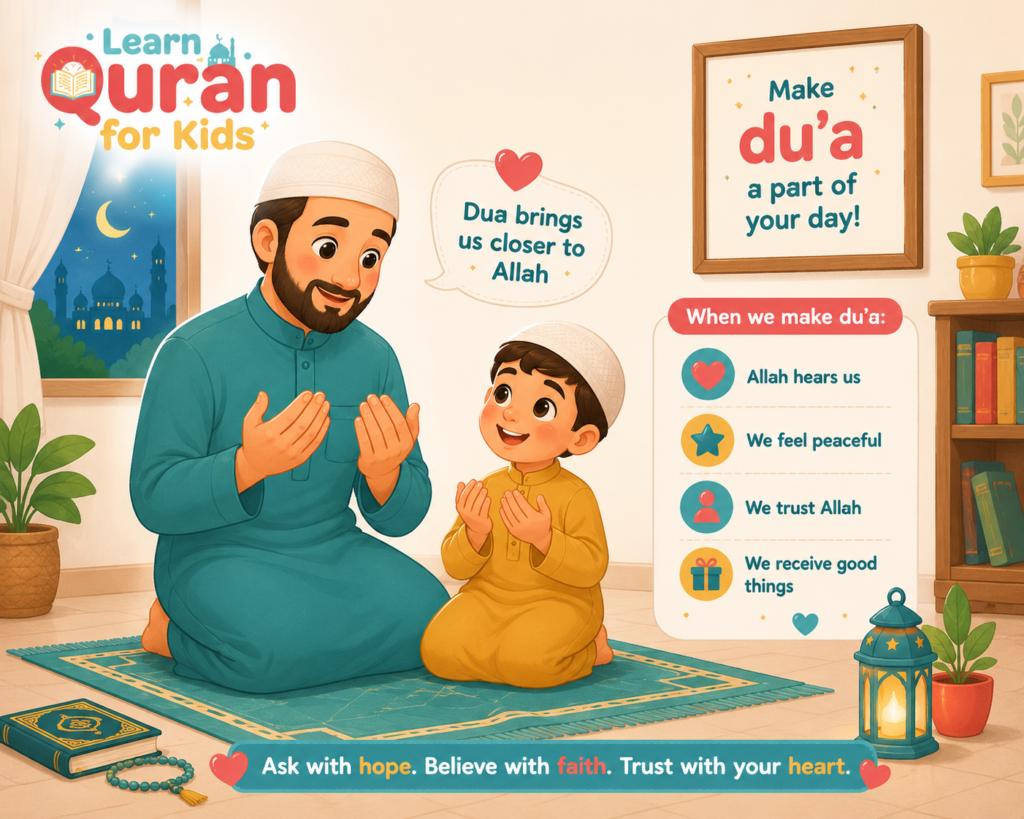
The Love-First Framework: How to Build Internal Islamic Motivation in Kids
Internal motivation — wanting to worship, wanting to be honest, wanting to recite the Quran — is far more durable than external motivation driven by rewards or fear of punishment. The Love-First Framework is a three-stage approach drawn from the source material that helps parents build this internal drive systematically.
Stage 1 — Connect to Allah’s care (ages 3–6):
Tie every mention of Allah to something the child already loves or feels grateful for. “Who made the stars?” “Who made you laugh?” These small, wonder-based questions build a natural emotional bond before any formal obligation is introduced.
Stage 2 — Connect actions to Allah’s pleasure (ages 6–10):
Once the child has an emotional relationship with Allah, tie good deeds to that relationship. “When you help your sister, Allah sees it and writes it down for you as something beautiful.” This stage introduces the concept of taqwa — God-consciousness — through a language of reward, not punishment.
Stage 3 — Connect obligations to identity (ages 10+):
Teenagers and pre-teens respond poorly to “because I said so” and well to identity-based framing: “We are Muslims, and this is what Muslims do because they love Allah and follow the Prophet ﷺ.” At this stage, introduce the prophetic traditions (Sunnah) as a way of life that strengthens character, not just a set of rules to observe.
This progression — love → good deeds → identity — is the core architecture of Islamic motivation for kids across every stage of development.
At Learn Quran for Kids, children learn Quran and Islamic studies through a method built on encouragement, warmth, and age-appropriate teaching — not pressure. If you want your child to build a real love for the Quran, explore our courses designed specifically for young learners.
1. Motivating Young Children Ages 4–7
Children at this age are driven by imagination, play, and your approval. Every Islamic habit introduced at this stage should feel like a game, a story, or a shared moment with you.
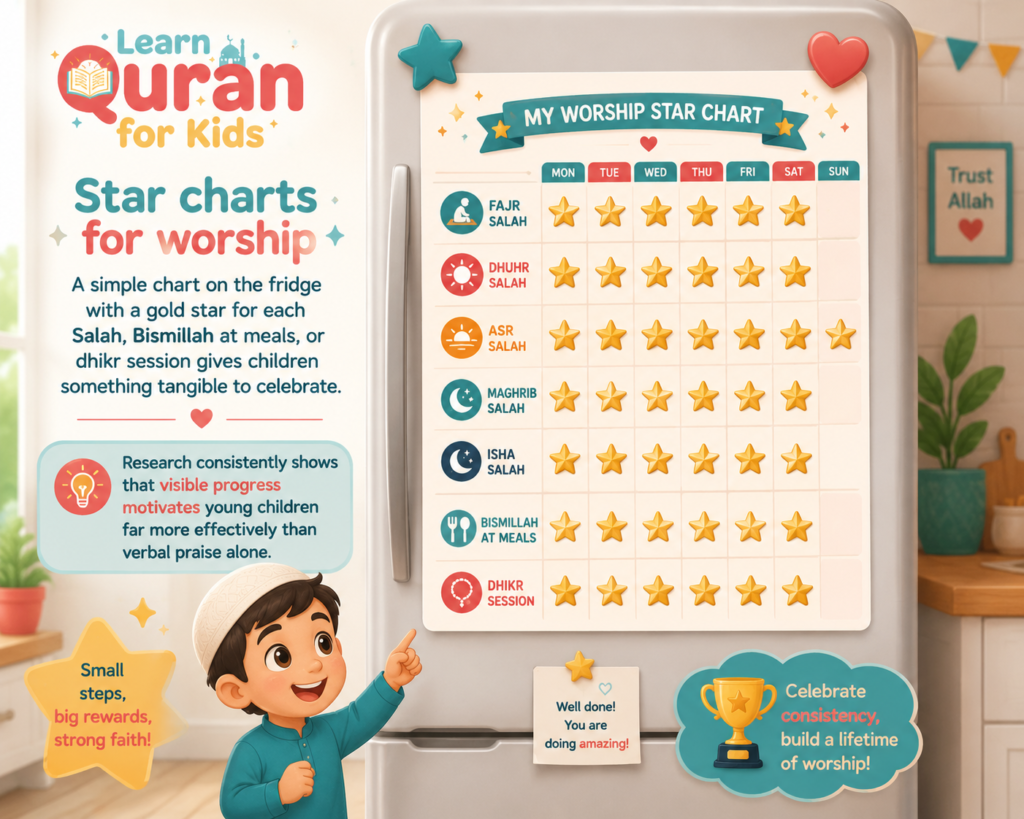
- Star charts for worship: A simple chart on the fridge with a gold star for each Salah, Bismillah at meals, or dhikr session gives children something tangible to celebrate. Research consistently shows that visible progress motivates young children far more effectively than verbal praise alone.
- Prayer as an adventure: A colorful prayer mat that belongs to your child alone transforms Salah from a parent’s obligation into their own special activity. Let them choose it from the shop if possible — ownership builds attachment.
- Prophetic phrases in daily life: Teach Bismillah, Alhamdulillah, and SubhanAllah not as recitations but as reactions to real moments. Spilled water → SubhanAllah. Finishing lunch → Alhamdulillah. These become automatic, emotionally anchored habits far faster than memorized lessons.
Read Also: Islamic Questions for Kids
2. Motivating School-Age Children Ages 8–12
At this stage, children are developing moral reasoning and social identity. They want to understand why, and they want to feel proud of who they are.
- Prophets as role models, not just stories: The Prophet ﷺ, Bilal ibn Rabah, and the young Companions were courageous, loyal, and strong. Present them as heroes your child genuinely admires — not just as historical figures. Ask: “What would Prophet Yunus have done if he felt scared like that?” This moves the prophetic model from abstract to personally applicable.
- The “moment hijacking” method: During ordinary outings — passing a masjid, seeing the sea, watching the rain — pause and connect the moment to an Islamic story or name of Allah. “That masjid made me think of Bilal — do you remember who the first mu’adhdhin was?” Children who are prompted this way regularly build a Quranic lens on the world without it ever feeling like a lesson.
- Meaningful rewards: At this age, rewards should be tied to effort and character, not performance alone. “You were really patient during Salah today, MashaAllah” hits differently than a sticker — it tells them what kind of person they are becoming.
Shots Videos from Our Courses
Start Your Child’s Quran Learning Journey Today!
Join Kids Learning Quran Academy and help your child read the Quran with confidence through fun and guided lessons.
Book a Free Trial ClassRead also: Prophet Yunus Story for Kids
3. Motivating Pre-Teens and Teens Ages 13 and Up
Teens push back against authority but respond powerfully to respect and genuine conversation.
- Ask, don’t lecture: “What do you think Allah meant when He said that?” involves a teenager in their own Islamic development. Lectures create passive resistance; questions create active engagement.
- Connect Islam to their real concerns: Fairness, identity, purpose, what happens after death — these are questions teenagers are already asking. Islam answers all of them. Meet your teen where their questions already are.
- Model without performing: Teens are highly sensitive to hypocrisy. The most powerful Islamic motivation at this stage is watching their parents live with genuine taqwa — not perfectly, but honestly. A parent who says, “I made a mistake, and I asked Allah for forgiveness,” teaches more than any lesson could.
Read also: Islamic Topics for Children
4. Using Stories to Build Motivation
Stories are the oldest Islamic teaching tool. The Quran itself uses narrative as its primary vehicle for moral instruction — the stories of Ibrahim, Musa, Maryam, and Yunus (peace be upon them all) are there precisely because humans, especially children, learn through story before they learn through rules.
For maximum impact: tell stories interactively, with pauses and questions. “What do you think Yunus felt inside the whale?” This is not just more engaging — it activates the child’s moral imagination and anchors the lesson to an emotion, making it far more likely to be remembered and applied.
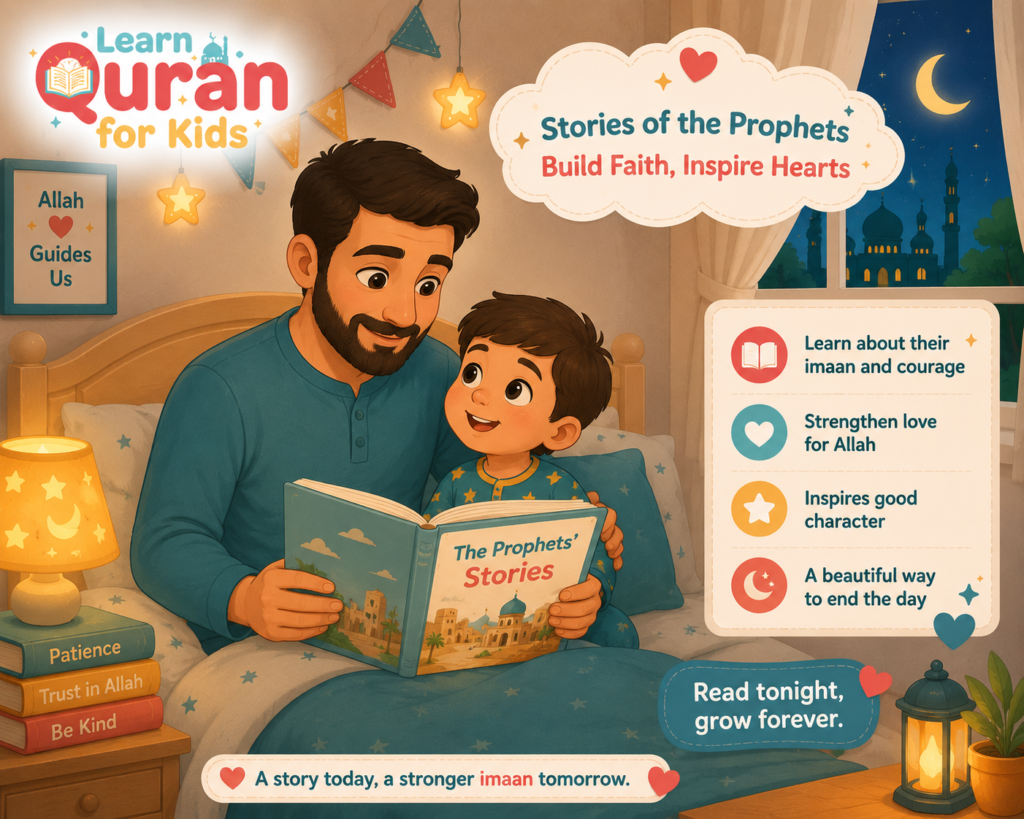
At bedtime, replace screen time with a five-minute Companion story. A child who falls asleep with a story about young Mu’adh ibn Jabal’s loyalty or Usama ibn Zayd’s courage goes to sleep with an Islamic identity that compounds quietly over time.
Read also: Prophet Stories for Kids
5. Using the Environment to Motivate Without Words
The environment you create communicates values continuously — without effort from you. A home where Quran plays softly in the morning, where a small prayer mat sits ready, where Islamic artwork includes children’s names written in Arabic calligraphy — this environment tells a child daily: this is who we are.
This principle directly addresses one of the most common parenting mistakes: relying solely on verbal instruction and forgetting that children absorb far more from atmosphere than from advice. The physical and acoustic environment of your home is a motivational tool you can set once and let work continuously.
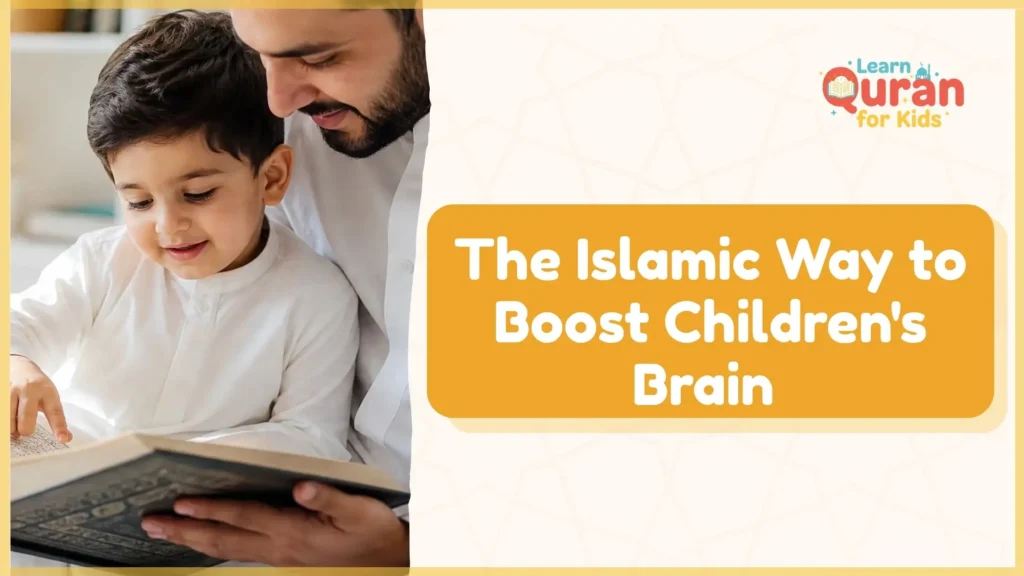
Read Also: The Islamic Way to Boost Children’s Brain
6. Using Rewards Correctly
Rewards motivate reliably — but the type of reward matters enormously. Material rewards work well as short-term tools but should always be paired with a verbal acknowledgment of the Islamic value being celebrated: “MashaAllah, you prayed Fajr on time. That takes real discipline, and Allah saw every second of it.” This pairing gradually transfers the source of motivation from the external reward to the internal meaning, which is exactly the direction you want.
Avoid one common mistake: rewarding completion without acknowledging effort. A child who memorized Surah Al-Mulk in seven days after struggling for weeks needs to hear “Look how hard you worked” far more than “Well done for finishing.”
Read Also: The 5 Pillars of Islam for Kids
7. Build Worship Habits That Feel Natural, Not Forced
The goal of Islamic motivation is not obedient compliance — it is the building of voluntary, joyful Islamic practice. This means introducing worship through participation before instruction.
Invite your child to stand beside you during Salah before they know any verses. Let them hold a Quran during recitation before they can read. Allow them to drop coins into a sadaqah box before they understand zakat. Physical participation before conceptual understanding is how young children build emotional ownership of Islamic practice.
This principle is summarized well in traditional Islamic pedagogy: ta’weed (habituation) precedes ta’leem (formal instruction). The habit of standing for Salah, established early through gentle invitation, becomes a part of the child’s self-concept — and that is a far stronger anchor than any rule or reward.
Our Students Reviews
Start Your Child’s Quran Learning Journey Today!
Join Kids Learning Quran Academy and help your child read the Quran with confidence through fun and guided lessons.
Book a Free Trial ClassRead also: Islamic Manners for Kids
Start Your Child’s Islamic Education Today — The Right Way
The best Islamic motivation your child can receive is structured learning with teachers who genuinely love working with children.
Learn Quran for Kids connects young learners with expert instructors who teach through encouragement, stories, and age-appropriate methods, building the love of Quran and Islam from the very first session.
Whether your child is just starting with the Arabic alphabet or is ready for Quran memorization, we have a course built for exactly where they are right now.
Register your child for a free trial session today.
Our Courses Include:
- Tajweed for Kids
- Quran Memorization for Kids
- Quran Recitation Course for Kids
- Quran Classes for Toddlers
- Quran Tafseer for Kids
- Qaida for Kids
- Quran Reading Course for Kids
- Online Arabic Classes for Kids
- Quranic Arabic for Kids
- Islamic Studies Courses for Kids
- Islamic Studies for Kindergarten
- 5 Pillars of Islam for Kids
- Islamic Education for Kids
Conclusion
Islamic motivation for kids is not a single technique — it is a consistent approach built on love, stories, daily moments, and an environment that quietly communicates Islamic identity at every turn. The Love-First Framework, age-appropriate methods, and the principle of participation before instruction give parents a practical, structured path forward regardless of their child’s age or current engagement with the deen.
The goal is a child who prays because they love Allah, who is honest. After all, the Prophet ﷺ is their role model, and who recites the Quran because it belongs to them, not because they are told to. That child does not need motivation imposed from the outside. They carry it within themselves.
Frequently Asked Questions
What Is The Best Age To Start Islamic Motivation For Kids?
The foundation begins from age three or four — not with formal obligations, but with connecting everyday moments to Allah’s love and care. Children who associate Allah with warmth and joy from an early age develop intrinsic Islamic motivation that grows naturally with them throughout childhood and adolescence.
How Do I Motivate My Child To Pray Without Forcing Them?
Start by inviting them to stand beside you during Salah rather than requiring them to pray alone. Physical participation before full comprehension builds emotional ownership. Pair this with a personal prayer mat, genuine verbal praise, and framing Salah as something they get to do — not something imposed on them.
What Islamic Stories Are Best For Motivating Children?
Stories featuring young companions and prophets facing relatable human challenges work best: Prophet Yunus (AS) feeling overwhelmed and turning to Allah, Bilal’s courage under pressure, and young Usama ibn Zayd’s loyalty. These figures offer children specific emotional role models rather than distant historical figures.
How Do I Balance Encouragement With Teaching Accountability In Islam?
Sequence matters: build love and emotional connection first, introduce reward and consequence later. At ages four to eight, focus almost exclusively on praise and positive framing. From ages nine to twelve, gently introduce the concept that Allah sees everything — both what we do well and what we could do better. Save direct accountability conversations for when a child is mature enough to process them as spiritual growth rather than punishment.
Can Rewards Be Used As An Islamic Motivation For Kids?
Yes — with a deliberate technique. Always pair material rewards with an explicit verbal statement naming the Islamic value your child demonstrated. “You showed real sabr (patience) today,” alongside the reward, gradually transfers the source of motivation from the external reward to the internal identity. The reward is a bridge, not a destination.
How Do I Keep Teenagers Motivated About Islam?
Shift from instruction to dialogue. Ask open questions about what they believe and why. Connect Islamic answers to the questions they are already wrestling with — identity, purpose, fairness, death. Most importantly, model honest, lived Islamic practice at home. Teenagers detect inauthenticity immediately, and genuine parental taqwa motivates far more powerfully than any lecture could.