 Learn Islam
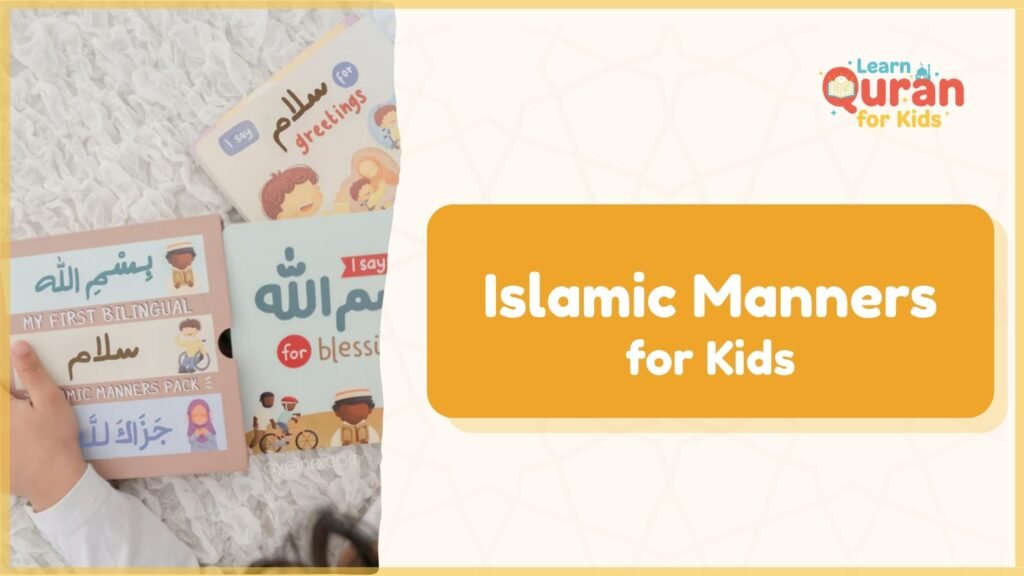
Teaching Islamic manners for kids is not only about raising polite children. It is about helping them build a strong Islamic personality that stays with them throughout life. When children learn how to speak, behave, and treat others according to Islamic teachings, good character becomes part of their daily routine.
In Islam, manners are closely connected to faith. A child who learns kindness, honesty, respect, gratitude, and modesty is not only learning social behavior, but also learning how to please Allah through everyday actions. This is why Islamic etiquette should be taught early, gently, and consistently.
The Prophet Muhammad ﷺ said:
“Nothing is heavier on the Scale of Deeds than good manners.”
— Tirmidhi
This hadith shows that good manners are not small details. They are a major part of Islam and a beautiful way for children to grow closer to Allah.
What Does Islamic Etiquette For Kids Mean?
Islamic Etiquette For Kids means teaching children how to behave with Allah, parents, family, teachers, friends, neighbors, and the wider community. It includes daily habits, respectful speech, cleanliness, kindness, honesty, patience, and love for the Sunnah.
Islamic manners are not limited to the mosque or Quran class. They appear when a child says Bismillah before eating, says Assalamu Alaikum when greeting others, speaks kindly, helps at home, respects elders, avoids lying, and treats people with mercy.
These simple habits help children understand that Islam is a complete way of life. Every good action can become an act of worship when done with the right intention.
Why Islamic Manners For Kids Are Important?
Teaching good manners gives children a strong moral foundation. It shapes how they see themselves, how they treat others, and how they understand their relationship with Allah.
Children who grow up with Islamic manners are more likely to become respectful, responsible, and emotionally balanced. They learn how to control their words, show gratitude, apologize when wrong, and care about people around them.
Good manners also prepare children for positive social interaction. Whether they are at home, school, Quran class, or online, Islamic etiquette helps them behave with confidence, humility, and kindness.
The Connection Between Faith And Good Character
In Islam, manners and faith are deeply connected. A Muslim’s Akhlaq reflects what is inside the heart. This is why teaching akhlaq for kids should begin early and continue through daily examples.
Children should understand that saying kind words, helping others, respecting parents, and telling the truth are not just “nice things.” They are beloved actions in Islam. When manners are connected to faith, children begin to see good behavior as something meaningful, not just something they are forced to do.
The Prophet Muhammad ﷺ was the best example of mercy, patience, honesty, and humility. By teaching children his manners, we help them love the Prophet ﷺ and follow his Sunnah in simple, practical ways.
Shots Videos from Our Courses
Start Your Child’s Quran Learning Journey Today!
Join Kids Learning Quran Academy and help your child read the Quran with confidence through fun and guided lessons.
Book a Free Trial Class15 Essential Islamic Manners For Kids
Children learn best when manners are simple, repeated, and connected to real life. The following Islamic manners can be taught gradually through reminders, examples, stories, and daily practice.
1. Saying Bismillah Before Starting
Children should be taught to say Bismillah before eating, drinking, writing, studying, or starting any good action. This reminds them that every blessing comes from Allah.
This simple habit helps children begin their activities with awareness, gratitude, and connection to their Creator.
2. Saying As Salamu Alaikum
One of the most important examples of Islamic good manners for kids is greeting others with Assalamu Alaikum. It spreads peace, love, and respect among Muslims.
Children can practice saying Salam when entering the home, meeting family members, joining class, or speaking to friends.
3. Respecting Parents And Elders
Respecting parents is one of the greatest Islamic teachings for kids. Children should learn to listen carefully, speak gently, avoid shouting, and help their parents whenever possible.
They should also respect grandparents, teachers, scholars, and older people by using polite words and showing humility.
4. Speaking Kindly And Truthfully
Islam teaches Muslims to speak good words or remain silent. Children should be taught to avoid lying, shouting, mocking, gossiping, or hurting others with their words.
Kind speech builds trust and makes children more loved by family, friends, and teachers.
5. Saying Alhamdulillah And Daily Duas
Children should learn to say Alhamdulillah after eating, after sneezing, and whenever they receive a blessing. They can also learn phrases like SubhanAllah, InshaAllah, and JazakAllah Khair.
These daily duas help children stay connected to Allah in simple moments.
6. Knocking Before Entering
Respecting privacy is part of Islamic etiquette. Children should learn to knock before entering a room and wait for permission.
This teaches them respect, patience, and awareness of other people’s personal space.
7. Eating And Drinking With The Right Hand
The Prophet Muhammad ﷺ taught Muslims to eat and drink with the right hand. Children can learn this Sunnah from a young age.
They should also learn not to waste food, not to criticize food, and to thank Allah after eating.
8. Saying JazakAllah Khair
Saying JazakAllah Khair teaches children gratitude. It means asking Allah to reward someone with goodness.
This habit helps children appreciate kindness from parents, teachers, friends, and siblings.
9. Being Honest And Trustworthy
Honesty is one of the strongest values children can learn. They should learn to tell the truth, keep promises, and return things that belong to others.
The Prophet Muhammad ﷺ was known as Al-Amin, the trustworthy one. Children can learn that honesty makes a Muslim strong and respected.
10. Modesty In Islam
Modesty is an important part of Islamic character. Children should learn to dress modestly, behave respectfully, and avoid rude or inappropriate actions.
Modesty should be taught gently, as a sign of dignity and love for Islam.
11. Helping Others
Helping others is one of the best good habits in Islam for kids. Children can help by sharing toys, helping parents at home, supporting classmates, or being kind to younger siblings.
Small acts of kindness help children develop empathy and generosity.
12. Respecting Teachers And Knowledge
Islam gives great importance to knowledge. Children should learn to respect teachers, listen carefully, avoid interrupting, and take learning seriously.
Respect for teachers also helps children benefit more from Quran, Islamic studies, and school lessons.
13. Keeping Clean
Cleanliness is a major part of Islam. Children should learn to wash their hands, keep their clothes clean, brush their teeth, tidy their space, and care for their surroundings.
Cleanliness teaches discipline and prepares children for worship.
Read also: Islamic Science For Kids
14. Avoiding Backbiting And Bad Language
Children should be taught not to speak badly about others, use rude words, or make fun of people. These habits damage the heart and hurt relationships.
Good speech helps children keep a clean heart and a respectful personality.
15. Being Humble
Islam teaches humility and warns against arrogance. Children should learn not to boast, look down on others, or think they are better than people.
Humility helps children treat everyone with kindness and respect.
Strengthen Your Child’s Islamic Manners Through Structured Islamic Learning
Good manners are best developed when children learn Islamic values consistently in their daily lives. Through the Islamic Studies Courses for Kids at Kids Learning Quran Academy, young learners can build strong Islamic character while studying essential topics such as Islamic manners (Adab), daily Duas, Prophet stories, Seerah, and the foundations of faith in an engaging and child-friendly environment.
The course helps children understand how to apply Islamic teachings in real-life situations through interactive lessons, storytelling, and practical examples that encourage kindness, honesty, respect, gratitude, and responsibility. By combining Islamic knowledge with character development, children grow with stronger faith and better everyday behavior.
Help your child develop beautiful Akhlaq and a deeper connection with Islam through the structured Islamic Studies programs at Kids Learning Quran Academy.
Start Your Child’s Quran Learning Journey Today!
Join Kids Learning Quran Academy and help your child read the Quran with confidence through fun and guided lessons.
Book a Free Trial Class10 Good Manners In Islam For Kids
Some parents search for 10 good manners in Islam because they want a simple list to teach at home or in class. These ten manners are a strong starting point for every Muslim child.
| Good Manner | Simple Meaning For Kids |
| Saying Bismillah | Start good actions with Allah’s name |
| Saying Salam | Spread peace when greeting others |
| Respecting Parents | Speak gently and obey in what is good |
| Telling The Truth | Be honest even when it is hard |
| Saying Alhamdulillah | Thank Allah for blessings |
| Helping Others | Be useful and kind |
| Eating With The Right Hand | Follow the Sunnah in daily life |
| Keeping Clean | Care for body, clothes, and surroundings |
| Avoiding Bad Words | Speak only good words |
| Being Humble | Do not show off or mock others |
These manners are easy to practice every day and can become the foundation for stronger Islamic character.
How To Teach Islamic Manners To Kids?
Teaching manners should be loving, practical, and consistent. Children do not learn Islamic etiquette through lectures only. They learn by watching, repeating, practicing, and receiving gentle reminders.
Parents, teachers, and caregivers should make Islamic manners part of normal daily life, not something taught only during lessons.
Lead By Example
Children copy what they see. If parents say Bismillah, speak kindly, say Salam, apologize, and show respect, children naturally absorb these manners.
The strongest Islamic manners lesson is the behavior children see at home every day.
Use Gentle Reminders
When children forget a manner, correct them calmly. Instead of harsh criticism, say things like:
“Let’s try that again the Sunnah way.”
This keeps learning positive and prevents children from feeling afraid or embarrassed.
Make Learning Fun
Children learn faster when lessons are enjoyable. You can use games, charts, stories, roleplay, songs, and reward systems.
For example, create a “Salam Challenge” where children try to greet family members with Salam throughout the day.
Use Prophet Stories
Stories from the life of Prophet Muhammad ﷺ make manners more meaningful. Children love stories, and stories help them understand how Islamic values look in real life.
After each story, ask simple questions like:
“How can we do the same thing today?”
Praise Good Effort
When a child says Alhamdulillah, helps a sibling, or speaks politely, praise the effort. Simple words like “MashaAllah, that was very respectful” encourage them to repeat the behavior.
Positive reinforcement builds confidence and love for good manners.
Create A Consistent Home Environment
Good manners should be practiced daily. Families can create simple Islamic house rules such as greeting with Salam, speaking kindly, cleaning up after eating, and thanking others.
Consistency turns Islamic manners into natural habits.
Read also: Islamic Moral Stories For Kids
Islamic Manners For Kids Book And Learning Resources
Many parents look for a manners book for children because books make learning easier and more organized. A good book can include short stories, manners charts, daily duas, Prophet stories, coloring activities, and simple questions.
However, books work best when combined with real-life practice. Children should not only read about manners, but also practice them at home, in class, with siblings, and in the community.
Islamic Manners In Digital Life
Today, good manners should also include online behavior. Children need to understand that good Akhlaq applies on phones, tablets, games, and online classes too.
They should learn not to bully others online, not to use rude words, not to share private information, and not to mock people in comments or messages. They should also show respect to online teachers and classmates.
Digital manners help children understand that Islam guides behavior everywhere, not only face-to-face.
Our Students Reviews
Start Your Child’s Quran Learning Journey Today!
Join Kids Learning Quran Academy and help your child read the Quran with confidence through fun and guided lessons.
Book a Free Trial ClassBuild Strong Islamic Character With Learn Quran For Kids Academy
Teaching children good manners becomes easier when Islamic values are part of their daily learning journey. At Learn Quran For Kids, children are guided through Quran learning, Islamic studies, daily duas, and character development in a supportive and engaging environment designed especially for kids. The goal is not only to teach knowledge, but also to help children apply Islamic manners in real life with confidence and understanding.
Through interactive lessons and experienced teachers, children can develop important Islamic qualities such as honesty, kindness, respect, patience, and gratitude. Learning in a positive Islamic environment helps kids strengthen their connection with Allah while building good habits that stay with them as they grow.
Help your child grow with strong faith, beautiful manners, and authentic Islamic values through the structured programs at Learn Quran For Kids.
Our Courses Include:
- Tajweed for Kids
- Quran Memorization for Kids
- Quran Recitation Course for Kids
- Quran Classes for Toddlers
- Quran Tafseer for Kids
- Qaida for Kids
- Quran Reading Course for Kids
- Online Arabic Classes for Kids
- Quranic Arabic for Kids
- Islamic Studies Courses for Kids
- Islamic Studies for Kindergarten
- 5 Pillars of Islam for Kids
- Islamic Education for Kids
Don’t wait to invest in your child’s Akhirah and future. Enroll today and watch your child grow with confidence, knowledge, and love for the Quran.
Join Kids Learning Quran Academy now and start your child’s learning journey today!
Start Your Child’s Quran Learning Journey Today!
Join Kids Learning Quran Academy and help your child read the Quran with confidence through fun and guided lessons.
Book a Free Trial ClassConclusion
Teaching Islamic manners for kids is one of the most valuable gifts parents and teachers can give. Good manners help children grow into kind, respectful, honest, and confident Muslims.
When children learn Islamic etiquette early, they begin to understand that Islam is not only about what we say, but also about how we live. Every Salam, every kind word, every act of honesty, and every moment of gratitude can bring them closer to Allah.
FAQ
What Are Islamic Manners For Kids?
Good manners are the behaviors Islam teaches children, such as kindness, honesty, respect, cleanliness, gratitude, modesty, and good speech.
Why Are Good Manners Important In Islam For Kids?
Good manners are important because they reflect faith and help children build strong relationships with Allah, family, teachers, friends, and society.
What Are The Best Good Habits In Islam For Kids?
The best good habits include saying Bismillah, saying Salam, respecting parents, telling the truth, helping others, keeping clean, and saying Alhamdulillah.
How Can Parents Teach Islamic Etiquette For Kids At Home?
Parents can teach Islamic etiquette through daily examples, gentle reminders, Prophet stories, reward charts, roleplay, and consistent Islamic house rules.
What Is Akhlaq For Kids?
Akhlaq for kids means teaching children good Islamic character, including kindness, humility, honesty, patience, respect, and mercy.
Can Islamic Manners Be Taught Through Stories?
Yes. Stories from the Quran, Seerah, and the life of Prophet Muhammad ﷺ make Islamic teachings for kids easier to understand and remember.
Related Articles
Learn Islam