 Learn Arabic
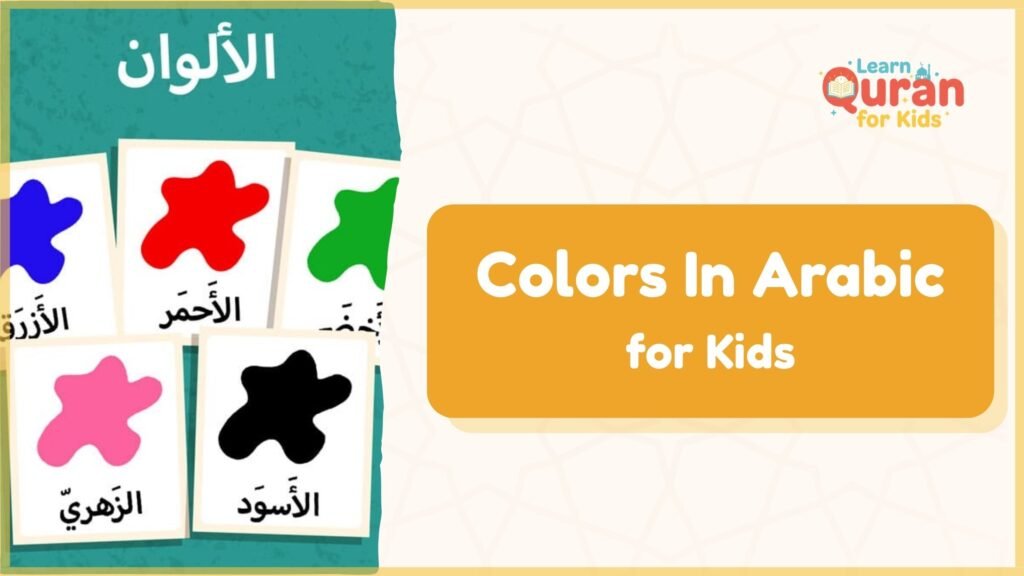
Parents and teachers are looking for a simple, child-friendly guide that helps kids learn Arabic color names, pronunciation, examples, and fun practice activities at home or in class.
Learning Arabic becomes much easier for children when they start with words they can see, touch, and use every day. Colors are one of the best starting points because children see them everywhere: in toys, clothes, fruits, school supplies, drawings, books, cars, and nature.
This guide to colors in arabic for kids helps parents and teachers introduce Arabic color vocabulary in a fun, simple, and practical way. Children will learn common color names in Arabic, how to pronounce them, how to use them in short sentences, and how to practice them through games, songs, coloring pages, and daily activities.
Why Learning Arabic Colors Is Great for Children?
Colors are usually among the first words children learn in any language. They are visual, easy to remember, and simple to connect with real objects around the child.
When kids learn colors in Arabic, they do more than memorize new words. They start recognizing Arabic sounds, letters, adjective patterns, and simple sentence structures. This makes color vocabulary a strong first step toward learning Arabic naturally.
For example, a child can look at a red apple and say:
التفاحة حمراء
At-tuffāḥah ḥamrāʾ
The apple is red.
This short sentence teaches vocabulary, pronunciation, and basic Arabic sentence structure at the same time.
Arabic colors are also easy to practice at home. Parents can point to a blue cup, a yellow banana, a green tree, or a red toy and repeat the Arabic word naturally during the day. Over time, children begin to connect the Arabic word with the object and color without feeling like they are studying.
Arabic Color Vocabulary for Kids
The best way to teach Arabic colors is to start with common colors children already know in English. Then, connect each Arabic word to an object, picture, or activity.
Here is a simple vocabulary list that parents and teachers can use with children:
| English Color | Arabic | Pronunciation | Example |
| Red | أحمر | Ahmar | السيارة حمراء — The car is red |
| Blue | أزرق | Azraq | السماء زرقاء — The sky is blue |
| Yellow | أصفر | Asfar | الموز أصفر — The banana is yellow |
| Green | أخضر | Akhdar | الشجرة خضراء — The tree is green |
| White | أبيض | Abyad | القميص أبيض — The shirt is white |
| Black | أسود | Aswad | الحذاء أسود — The shoes are black |
| Orange | برتقالي | Burtuqali | البرتقال برتقالي — The orange is orange |
| Pink | وردي | Wardi | الفستان وردي — The dress is pink |
| Purple | بنفسجي | Banafsaji | الزهرة بنفسجية — The flower is purple |
| Brown | بني | Bunni | الشوكولاتة بنية — The chocolate is brown |
| Gray | رمادي | Ramadi | السحابة رمادية — The cloud is gray |
| Gold | ذهبي | Dhahabi | الخاتم ذهبي — The ring is gold |
| Silver | فضي | Fiddi | الساعة فضية — The watch is silver |
This list gives children practical Arabic words they can use immediately in daily conversation.
Shots Videos from Our Courses
Start Your Child’s Quran Learning Journey Today!
Join Kids Learning Quran Academy and help your child read the Quran with confidence through fun and guided lessons.
Book a Free Trial ClassPrimary Colors in Arabic
Primary colors are usually the easiest colors to teach first. They are common, bright, and easy for children to recognize in toys, drawings, fruits, and classroom materials.
The three primary colors are red, blue, and yellow.
Red In Arabic — أحمر / حمراء
Red is one of the easiest colors to teach because children often see it in apples, cars, crayons, balloons, and clothes.
In Arabic, red is:
أحمر
Ahmar
Used with masculine nouns.
حمراء
Hamrāʾ
Used with feminine nouns.
Examples:
الباب أحمر
Al-bāb ahmar
The door is red.
التفاحة حمراء
At-tuffāḥah ḥamrāʾ
The apple is red.
A fun way to teach red is to show children a red apple, a red toy car, or a red pencil and ask them to repeat: أحمر.
Blue In Arabic — أزرق / زرقاء
Blue is another useful color because children can easily connect it with the sky, sea, water, and many toys.
In Arabic, blue is:
أزرق
Azraq
Used with masculine nouns.
زرقاء
Zarqāʾ
Used with feminine nouns.
Examples:
البحر أزرق
Al-baḥr azraq
The sea is blue.
السماء زرقاء
As-samāʾ zarqāʾ
The sky is blue.
Parents can ask children to look at the sky and say: السماء زرقاء. This makes the word easier to remember because it is connected to a real image.
Yellow In Arabic — أصفر / صفراء
Yellow is bright and easy for young learners to notice. It can be taught with bananas, lemons, toy ducks, the sun, or yellow coloring pages.
In Arabic, yellow is:
أصفر
Asfar
Used with masculine nouns.
صفراء
Safrāʾ
Used with feminine nouns.
Examples:
الموز أصفر
Al-mawz asfar
The banana is yellow.
الشمس صفراء
Ash-shams ṣafrāʾ
The sun is yellow.
To make practice more fun, give the child a yellow crayon and ask them to color a sun while saying: أصفر.
Secondary Colors In Arabic
After children learn the primary colors, they can move to secondary colors. These colors are also common in stories, cartoons, clothes, nature, and classroom activities.
The most useful secondary colors for children are green, orange, and purple.
Green In Arabic — أخضر / خضراء
Green is perfect for nature-based learning because children can connect it with trees, grass, leaves, vegetables, and gardens.
In Arabic, green is:
أخضر
Akhdar
Used with masculine nouns.
خضراء
Khaḍrāʾ
Used with feminine nouns.
Examples:
العشب أخضر
Al-ʿushb akhdar
The grass is green.
الشجرة خضراء
Ash-shajarah khaḍrāʾ
The tree is green.
A simple activity is to take children outside and ask them to point to anything green while repeating: أخضر.
Orange In Arabic — برتقالي / برتقالية
Orange is a fun color to teach because the Arabic word is closely connected to the word for orange fruit.
In Arabic, orange is:
برتقالي
Burtuqālī
Used with masculine nouns.
برتقالية
Burtuqāliyyah
Used with feminine nouns.
Examples:
القلم برتقالي
Al-qalam burtuqālī
The pen is orange.
البرتقالة برتقالية
Al-burtuqālah burtuqāliyyah
The orange is orange.
Parents can use real oranges, orange flashcards, or orange toys to make this word easier for children to remember.
Purple In Arabic — بنفسجي / بنفسجية
Purple may be a little longer to pronounce, but children can learn it easily through repetition and visual examples.
In Arabic, purple is:
بنفسجي
Banafsajī
Used with masculine nouns.
بنفسجية
Banafsajiyyah
Used with feminine nouns.
Examples:
الكتاب بنفسجي
Al-kitāb banafsajī
The book is purple.
الزهرة بنفسجية
Az-zahrah banafsajiyyah
The flower is purple.
To help children pronounce it, break the word into smaller parts:
Ba-naf-sa-ji
This makes the word less difficult and easier to repeat.
Neutral Colors In Arabic
Neutral colors are very useful because children see them in clothes, shoes, bags, animals, furniture, school items, and household objects.
Children do not need to learn all neutral colors in one lesson. Parents can introduce them gradually through real-life examples.
Black In Arabic — أسود / سوداء
Black is common in shoes, bags, clothes, pens, and school supplies.
Examples:
الحذاء أسود
The shoes are black.
الحقيبة سوداء
The bag is black.
White In Arabic — أبيض / بيضاء
White can be practiced with shirts, paper, flowers, clouds, milk, or classroom boards.
Examples:
القميص أبيض
The shirt is white.
الزهرة بيضاء
The flower is white.
Brown In Arabic — بني / بنية
Brown is easy to connect with chocolate, chairs, wood, bears, and bags.
Examples:
الكرسي بني
The chair is brown.
الشوكولاتة بنية
The chocolate is brown.
Gray In Arabic — رمادي / رمادية
Gray appears in clouds, animals, clothes, cars, and pencils.
Examples:
الذئب رمادي
The wolf is gray.
السحابة رمادية
The cloud is gray.
Gold And Silver In Arabic — ذهبي / فضي
Gold and silver are useful for describing rings, watches, stars, decorations, and special objects.
Examples:
الخاتم ذهبي
The ring is gold.
السيارة فضية
The car is silver.
These colors may be more advanced, but they add richness to a child’s Arabic vocabulary.
Take Arabic Colors Further With Online Arabic Classes for Kids
Learning Arabic colors is a great first step because children start with words they can see, touch, and use every day. But after a child learns words like أحمر, أزرق, and أصفر, the next step is learning how Arabic letters, sounds, words, and short sentences work together.
That is where Kids Learning Quran Academy’s online Arabic classes for kids can help. Through child-friendly lessons, young learners build stronger Arabic skills by practicing letter recognition, Harakat, pronunciation, word formation, reading, writing, and simple conversation. These structured classes help children move from basic color vocabulary to understanding Arabic as the language of the Quran with more confidence and love.
To help your child continue learning Arabic beyond colors and build a stronger connection with the Quran, explore the online Arabic classes for kids at Kids Learning Quran Academy.
Read also: Body Parts In Arabic For Kids
Why Arabic Color Words Change In Sentences?
Arabic color words can change depending on the noun they describe. This is because Arabic nouns are usually masculine or feminine, and adjectives often match the noun.
For example, the word red can appear in two forms:
أحمر
Masculine form.
حمراء
Feminine form.
Examples:
الكتاب أحمر
The book is red.
التفاحة حمراء
The apple is red.
The word كتاب is masculine, so we use أحمر. The word تفاحة is feminine, so we use حمراء.
This may sound advanced for young learners, so parents do not need to explain grammar in detail at the beginning. It is better to let children hear correct examples many times. With repetition, they gradually understand the pattern naturally.
Simple Teaching Method For Parents And Teachers
Children learn better when Arabic feels connected to play, movement, and real life. A simple routine can make learning easier and more enjoyable.
When teaching colors in arabic for kids, focus first on recognition and pronunciation. Grammar can come later through repetition and examples.
A helpful method is:
- Say the Arabic color word clearly.
- Show an object with that color.
- Use the color in a short sentence.
- Ask the child to repeat.
- Ask the child to find another object with the same color.
For example:
هذا أحمر
This is red.
التفاحة حمراء
The apple is red.
ابحث عن شيء أحمر
Find something red.
This method helps children connect Arabic words with objects, movement, and simple conversation.
Start Your Child’s Quran Learning Journey Today!
Join Kids Learning Quran Academy and help your child read the Quran with confidence through fun and guided lessons.
Book a Free Trial ClassHow To Pronounce Arabic Colors Correctly?
Pronunciation is important, but children should not feel pressured. Young learners improve through listening, repeating, and hearing the same words in different situations.
The goal is not perfect pronunciation from the first lesson. The goal is confidence, repetition, and gradual improvement.
Listen First
Children should hear the Arabic color many times before they are asked to repeat it. This helps them recognize the sound naturally.
For example, show a red object and say:
أحمر
Ahmar
Repeat the word several times during the day in different situations.
Repeat Slowly
Some Arabic color words are longer than others. Breaking them into smaller sounds makes them easier for children.
Examples:
بنفسجي
Ba-naf-sa-ji
برتقالي
Bur-tu-qa-li
This simple method helps children pronounce difficult words without stress.
Use Actions
Children remember words faster when they move, point, touch, color, or choose objects.
For example:
- Say أزرق while pointing to the sky.
- Say أخضر while touching leaves.
- Say أصفر while holding a banana.
- Say أحمر while showing a red toy.
This turns pronunciation practice into a fun activity.
Practice Daily
Five minutes of daily practice is better than one long lesson once a week. Children need short, repeated exposure to build memory.
Parents can review one or two colors every day during breakfast, playtime, dressing, reading, or coloring.
Fun Games And Activities For Learning Arabic Colors
Children learn best when they are playing. Games make Arabic feel natural instead of difficult.
These activities can be used at home, in class, or during online Arabic lessons.
Arabic Color Scavenger Hunt
A scavenger hunt is a simple and exciting way to practice Arabic colors.
Ask the child to find objects around the room or house.
Examples:
- Find something أحمر.
- Find something أزرق.
- Find something أخضر.
- Find something أصفر.
You can give the child a basket and ask them to collect small items of different colors. After that, review the items together in Arabic.
Color Matching Game
Use colored blocks, buttons, cards, toys, or crayons. Place Arabic color words on paper and ask the child to match each object with the correct word.
Examples:
- Red block → أحمر
- Blue toy → أزرق
- Green crayon → أخضر
- Yellow card → أصفر
This activity helps children connect written Arabic words with visual color recognition.
Arabic Color Flashcards
Flashcards are simple, quick, and effective. On one side, write the Arabic color word. On the other side, add the English meaning and a picture.
Example:
Front: أحمر
Back: Red apple
Use the cards for short daily review. Keep the session cheerful and avoid making it feel like a test.
Coloring Pages
Coloring pages are excellent for children because they combine creativity with language practice.
Give simple instructions in Arabic and English.
Examples:
لون التفاحة باللون الأحمر
Color the apple red.
لون السماء باللون الأزرق
Color the sky blue.
لون الشجرة باللون الأخضر
Color the tree green.
This activity helps children listen, understand, color, and remember the Arabic word at the same time.
“I Spy” In Arabic
“I Spy” is a simple game that can be adapted for Arabic learning.
Say:
“I spy something أصفر.”
The child looks around and guesses the yellow object.
At first, parents can use English for the main sentence and Arabic for the color word. Later, they can add more Arabic as the child improves.
Build From Arabic Colors to Quranic Arabic
Learning Arabic colors helps children take their first simple step into Arabic vocabulary, pronunciation, and sentence patterns. Once a child can recognize words like أحمر, أزرق, and أخضر, they are already beginning to understand how Arabic words describe the world around them.
To take this foundation further, Kids Learning Quran Academy’s Quranic Arabic Course for Kids helps young learners move from everyday Arabic words to the sacred language of the Quran. Children learn essential Quranic vocabulary, simple grammar, common phrases, and sentence structures found in Quranic verses, helping them understand meanings during recitation and build a stronger connection with Allah’s words.
Start your child’s journey from simple Arabic words and colors to understanding the language of the Quran with Kids Learning Quran Academy.
Read also: Dua For Sick Child In Arabic
Arabic Color Song For Kids
Songs help children remember words because rhythm and repetition make learning easier. A simple color song can turn vocabulary practice into a fun routine.
Parents can sing this song while showing color cards, toys, or crayons.
Arabic Lyrics:
أحمر، أزرق، أصفر
كل الألوان جميلة
أخضر، وردي، بنفسجي
كل شيء حولي ملون
أحمر، أزرق، أصفر
كل الألوان جميلة
Pronunciation:
Ahmar, Azraq, Asfar
Kullu al-alwān jamīlah
Akhdar, Wardi, Banafsaji
Kullu shayʾ ḥawlī mulawwan
Ahmar, Azraq, Asfar
Kullu al-alwān jamīlah
English Meaning:
Red, blue, yellow
All the colors are beautiful
Green, pink, purple
Everything around me is colorful
Red, blue, yellow
All the colors are beautiful
This song can be repeated during playtime, morning routines, or Arabic lessons.
Everyday Sentences Using Arabic Colors
Once children know the color names, they should practice them in short sentences. This helps them move from single words to real communication.
Here are useful examples for daily practice:
القلم أزرق
The pen is blue.
الموز أصفر
The banana is yellow.
الكتاب أخضر
The book is green.
السيارة حمراء
The car is red.
القميص أبيض
The shirt is white.
الحذاء أسود
The shoes are black.
الزهرة بنفسجية
The flower is purple.
الفستان وردي
The dress is pink.
الشوكولاتة بنية
The chocolate is brown.
السحابة رمادية
The cloud is gray.
Best Tips For Teaching Colors In Arabic
Children need repetition, fun, and real-life examples. They should feel that Arabic is something they can use, not just something they study.
Here are helpful tips for teaching colors in arabic for kids:
- Start with common colors first.
- Use real objects instead of only written words.
- Repeat words during normal daily activities.
- Keep lessons short and positive.
- Praise the child for trying.
- Use songs, movement, and games.
- Review old colors before adding new ones.
- Mix Arabic with drawing, storytelling, and play.
For example, when your child chooses clothes, ask:
“What color is your shirt?”
Then answer together:
القميص أزرق
The shirt is blue.
This turns everyday moments into Arabic learning opportunities.
Common Mistakes Children Make When Learning Arabic Colors
Mistakes are normal when children learn new sounds, words, and sentence patterns. Parents should correct gently and repeat the correct form.
The goal is to help children feel confident, not afraid of making mistakes.
Using One Form For Every Sentence
A child may use أحمر for everything, even when the noun needs حمراء. This is normal at the beginning.
Example:
Child: التفاحة أحمر
Parent: Good try! التفاحة حمراء.
Instead of giving a grammar lesson, simply repeat the correct sentence naturally.
Confusing Similar Arabic Sounds
Some Arabic sounds may be new for children, especially letters like خ, ض, and ق.
Words like أخضر and أصفر may need extra practice. Parents can help by repeating the words slowly and clearly.
Forgetting Longer Words
Words like برتقالي and بنفسجي are longer than basic colors. Children may forget them at first.
Break them into syllables:
بر-تقا-لي
بن-فس-جي
Repeating the words with rhythm makes them easier to remember.
Arabic Colors Worksheet Ideas
Worksheets are useful for practicing reading, writing, and recognition. They work best when they are simple, colorful, and not too crowded.
Here are some worksheet ideas:
- Match the Arabic color word to the correct color.
- Trace Arabic color words.
- Color the object according to the Arabic instruction.
- Circle all objects that are أحمر.
- Write the missing color word.
- Connect the English color to the Arabic word.
- Choose the correct color for each picture.
Young children need clear spacing, large words, and simple visuals. A worksheet should support learning, not overwhelm the child.
How To Make Arabic Color Learning More Interactive?
The more senses children use, the better they remember. Arabic learning becomes stronger when children see, hear, touch, move, and speak.
Instead of only saying أخضر, let the child touch a green leaf, color a tree, say the word, and hear it in a sentence.
You can also create a “color of the day” routine.
If today’s color is blue, use blue objects all day:
- Blue cup
- Blue shirt
- Blue toy
- Blue sky
- Blue crayon
Repeat:
أزرق
هذا أزرق
القلم أزرق
This simple repetition builds memory naturally.
How Teachers Can Use Arabic Colors In The Classroom?
Teachers can use Arabic colors in many classroom activities. The goal is to keep lessons active, visual, and enjoyable.
Classroom activities should help children listen, repeat, move, match, draw, and answer simple questions.
Useful classroom ideas include:
- A color wall with Arabic words.
- Group sorting activities.
- Arabic color bingo.
- Flashcard races.
- Drawing and labeling activities.
- Color-based storytelling.
- Question-and-answer practice.
Teachers can ask:
ما لون هذا؟
What color is this?
Children can answer:
هذا أحمر
This is red.
Or:
هذه صفراء
This is yellow.
This question-and-answer format helps children practice real Arabic conversation in a simple way.
Our Students Reviews
Start Your Child’s Quran Learning Journey Today!
Join Kids Learning Quran Academy and help your child read the Quran with confidence through fun and guided lessons.
Book a Free Trial ClassBuild Your Child’s Arabic Skills Through Colors
Learning colors in Arabic is a simple and enjoyable way to help children become familiar with Arabic words, sounds, and pronunciation. At Learn Quran For Kids, this early confidence is developed through structured online Arabic classes designed for young learners. With patient teachers, interactive lessons, and child-friendly methods, your child can move from simple color words to reading Arabic letters, building vocabulary, forming short sentences, and using Arabic more confidently.
Help your child take the next step from learning Arabic colors to building a strong foundation in Quran reading with Learn Quran For Kids.
Our Courses Include:
- Tajweed for Kids
- Quran Memorization for Kids
- Quran Recitation Course for Kids
- Quran Classes for Toddlers
- Quran Tafseer for Kids
- Qaida for Kids
- Quran Reading Course for Kids
- Online Arabic Classes for Kids
- Quranic Arabic for Kids
- Islamic Studies Courses for Kids
- Islamic Studies for Kindergarten
- 5 Pillars of Islam for Kids
- Islamic Education for Kids
Don’t wait to invest in your child’s Akhirah and future. Enroll today and watch your child grow with confidence, knowledge, and love for the Quran.
Join Kids Learning Quran Academy now and start your child’s learning journey today!
Start Your Child’s Quran Learning Journey Today!
Join Kids Learning Quran Academy and help your child read the Quran with confidence through fun and guided lessons.
Book a Free Trial ClassConclusion
Learning Arabic colors is a fun and practical way to introduce children to the Arabic language. Colors are visual, simple, and easy to connect with objects children already know.
With songs, flashcards, scavenger hunts, coloring pages, and short daily practice, colors in arabic for kids can become an enjoyable learning routine for both parents and children. Start with one color today, repeat it through play, and help your child build Arabic confidence step by step.
Frequently Asked Questions
What Are The Basic Colors In Arabic For Kids?
The basic colors in Arabic for kids include أحمر red, أزرق blue, أصفر yellow, أخضر green, أبيض white, and أسود black. These are the best colors to teach first because children see them often in daily life.
How Can I Teach Arabic Colors To My Child At Home?
You can teach Arabic colors at home by using real objects, flashcards, coloring pages, songs, and simple games. For example, point to a red apple and say التفاحة حمراء to help your child connect the word with something real.
Why Do Arabic Color Words Change In Sentences?
Arabic color words change because adjectives often match the noun. For example, أحمر is used with masculine words, while حمراء is used with feminine words. Children do not need to memorize the rule at first; repeated examples help them learn naturally.
What Is The Easiest Way To Practice Arabic Colors Daily?
The easiest way is to practice for a few minutes every day during normal activities. Parents can ask about the color of clothes, toys, fruits, books, or crayons and repeat the Arabic color word in a short sentence.
Are Arabic Color Songs Useful For Kids?
Yes, Arabic color songs are very useful because rhythm and repetition help children remember new words faster. Songs also make Arabic learning more fun and less stressful for young learners.
Can Learning Arabic Colors Help Children Learn Arabic Better?
Yes, learning Arabic colors gives children a simple foundation in Arabic vocabulary, pronunciation, and sentence patterns. It helps them move from single words to short Arabic sentences with more confidence.
Related Articles
Learn Arabic