 Quran Learning Resources
Finding the best Tajweed books for kids proved to be a challenging endeavor. While many publications exert effort in their presentation, often emphasizing colorful illustrations and cartoons with large, simplistic text, these elements sometimes overshadow the essence of Tajweed itself. Although stories and interactive games can enhance the learning experience, they may not fully capture a child’s genuine interest accurately or deepen their understanding of Tajweed.
In this article, I provide a selection of books suitable for children themselves, serving as inspirational tools or introductions to ignite their curiosity and pave the way for more profound exploration. Also, the teacher or the parent can take ideas from these selections in their honorable teaching journey paving the way for his detailed work.
Most importantly, I highlight Tajweed resources tailored for educators and parents who seek to delve into this sacred mission of teaching kids effectively. By focusing on books that present Tajweed in a clear, comprehensive manner, educators can better equip themselves to teach with depth and authenticity.
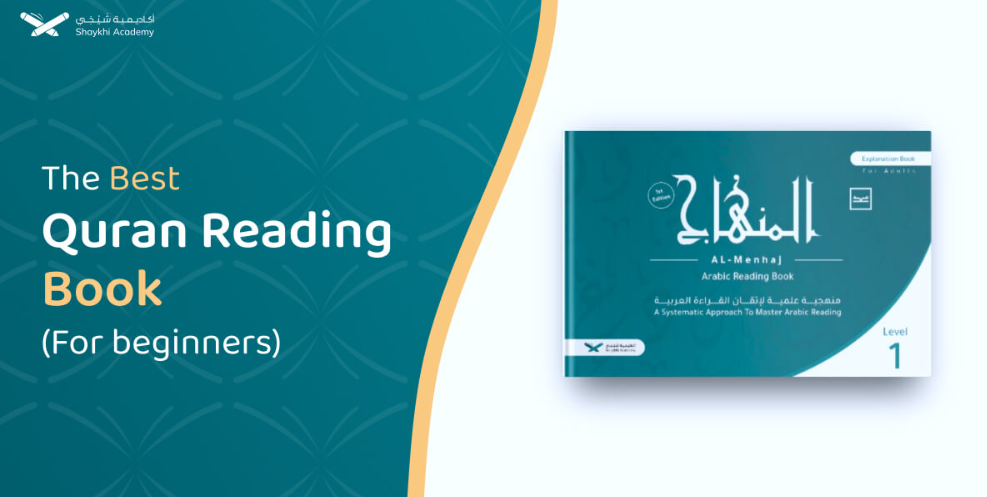
1. Al-Menhaj Book Provides Structured Path for Non-Arabic Speaking Families
Al-Menhaj Book by Luqman ElKasabany was designed specifically for children who have no Arabic language background — making it one of the most practically relevant books for Muslim families in English-speaking countries.
It covers the Arabic alphabet, letter forms, vowel marks, and foundational recitation rules in a logical sequence that does not assume prior knowledge.
What distinguishes Al-Menhaj Book from Noorani Qaida is its structured English-language support framework. Instructions, guidance notes, and rule explanations are accessible to parents who want to support their child’s learning at home — even if the parent themselves did not grow up learning Tajweed formally.
For families teaching Quran reading at home, Al-Menhaj Book offers a systematic learn-to-read Quran curriculum designed for non-Arabic speakers, covering Arabic alphabet and reading fundamentals step by step.
Explore and Study Al-Menhaj Book for FREE
2. Read and Rise By Learning Roots
To begin with, the first Tajweed book for kids is “Read and Rise.” This book is a meticulously designed Quran learning tool that blends fun, speed, and efficacy. Tailored for young learners, it employs graded levels to guide children seamlessly from mastering the Arabic alphabet to confidently reciting the Quran with Tajweed.
Advantages of “Read and Rise”:
Learning Map: Each chapter transforms into an adventure island, igniting curiosity and enhancing engagement at every turn.
Reward Stickers: The inclusion of reward stickers fosters a sense of accomplishment as children mark their progress page by page.
Motivational Hadiths: Enriches the experience by connecting young minds with the deeper spiritual purpose behind Quranic recitation through motivational Hadiths about the significance of Quranic learning.
In conclusion, “Read and Rise” provides a dynamic and engaging approach to teaching Tajweed to children. Its combination of adventure-based learning, motivational rewards, and spiritual insights makes it a good tool for parents and educators dedicated to nurturing a love for Quranic recitation in young learners.
Shots Videos from Our Courses
Start Your Child’s Quran Learning Journey Today!
Join Kids Learning Quran Academy and help your child read the Quran with confidence through fun and guided lessons.
Book a Free Trial Class3. The Tajweed City series by Hatim Suhaimat
Another Tajweed book directed towards kids is “The Tajweed City” series by Hatim Suhaimat. This captivating educational series is designed to foster Quranic education in an engaging manner, suitable for children aged 7 and above. It provides an age-appropriate and immersive introduction to the principles of Tajweed, making learning both fun and effective.
Advantages of “The Tajweed City” Series:
- Age-Appropriate Content: Tailored for children aged 7 and above, ensuring the material is accessible and engaging.
- Engaging Adventures: Introduces Tajweed rules through exciting adventures in a world that blends reality and fantasy.
- Comprehensive Learning: Covers four key topics, including intricate rules of Tajweed, characteristics, letters, and makharij.
- Interactive Activities: Enhances understanding through reading and coloring activities, making learning hands-on and enjoyable.
- Protagonist Role Model: Follows a young protagonist, allowing children to relate and learn alongside the character.
In conclusion, “The Tajweed City” series by Hatim Suhaimat offers a well-rounded and engaging approach to teaching Tajweed to children, making it a suitable resource for both parents and educators looking to inspire a love for Quranic recitation.
Working with certified instructors from Kids Learning Quran Academy through our Tajweed for Kids course provides the patient, age-appropriate instruction needed to make full use of color-coded Quran texts, with flexible scheduling that fits family routines.
Enroll your child in Tajweed for kids with a free trial class

Read also: Quran books for kids
4. Noorani Qaidah by Noor Muhammad
Though essential but not limited to kids, “Noorani Qaidah” is helpful for beginners aiming to master the fundamentals of Quranic recitation. This comprehensive book introduces learners to the Arabic alphabet and the foundational rules of pronunciation, ensuring a solid base for accurate and fluent recitation. Designed to facilitate easy learning, “Noorani Qaidah” incorporates clear explanations, practical exercises, and illustrative examples.
Advantages of “Noorani Qaidah”:
- Comprehensive Introduction: Provides a thorough introduction to the Arabic alphabet and basic pronunciation rules, establishing a strong foundation for Quranic recitation.
- Clear Explanations: Offers straightforward and easy-to-understand explanations, making it accessible for young learners.
- Practical Exercises: Includes a variety of practical exercises that reinforce learning and help students practice correct pronunciation.
- Illustrative Examples: Uses visual aids and examples to demonstrate proper articulation, enhancing understanding and retention.
- Step-by-Step Approach: Guides learners through a gradual process of mastering Tajweed principles and practicing correct points of articulation.
Thus, “Noorani Qaidah” is a valuable resource for beginner students. Its structured and comprehensive approach makes it an excellent choice for parents and educators dedicated to providing a solid foundation in Quranic studies.
At Kids Learning Quran Academy, instructors working through our Qaida for Kids course use this exact foundation-first methodology. Children who master letter articulation — their Makharij — before encountering rules almost always develop cleaner recitation than those rushed into full Quran text.
Enroll your child in Noorani Qaida for kids with a free trial class

5. Tajweed Made Easy by Ruquiyah Islam
“Tajweed Made Easy” is a beginner-friendly guide designed to simplify the learning of Quranic recitation. This book breaks down the rules of Tajweed into easy-to-understand segments, providing clear explanations, practical exercises, and relevant Quranic examples. Additionally, it features unique questions at the end of every chapter to enhance understanding and retention.
Advantages of “Tajweed Made Easy”:
- Beginner-Friendly Format: Simplifies complex Tajweed rules into easy-to-understand segments, making it accessible for learners of all ages.
- Clear Explanations: Offers straightforward explanations that demystify the principles of Tajweed.
- Practical Exercises: Provides practical exercises that help reinforce learning and ensure the correct application of Tajweed rules.
- Quranic Examples: illustrate the rules, making the learning process more relatable and meaningful.
- Comprehension Questions: Includes questions at the end of each chapter to test understanding and solidify knowledge.
Overall, “Tajweed Made Easy” by Ruquiyah Islam is an excellent resource for anyone beginning their journey in mastering Quranic recitation. With its user-friendly layout, engaging exercises, and practical examples, this book makes learning Tajweed both accessible and enjoyable for all ages.
Read also: Islamic Story Books for Kids
Does a Child Need a Teacher If They Are Using a Tajweed Book?
A Tajweed book alone cannot correct a child’s pronunciation errors in real time — only a qualified teacher can do that. Books are essential tools, but they cannot hear a child mispronounce the letter ع (Ayn) as a regular vowel, or miss the Qalqalah bounce on the letter ق. These errors become ingrained habits without live correction.
This is one of the most consistent patterns observed across hundreds of students: children who use Tajweed books independently without teacher guidance often develop confident but incorrect recitation. The confidence makes the errors harder to correct later because the child does not perceive a problem.
The appropriate model is: book as structure + certified instructor as corrector. The book provides the progression map; the teacher ensures each step is completed correctly before moving to the next. For non-Arabic-speaking families especially, this combination is not optional — it is the difference between genuine Tajweed and a rough approximation.
You can explore the role of qualified teaching in our detailed guide on finding the right Quran Teachers for Kids and what credentials to look for when selecting an instructor for your child.
Book a FREE Trial session for your kid with one of our Ijazah-certified Quran teachers
What Other Tools Help Children Apply What They Learn From Tajweed Books?
Tajweed books work best when supported by audio resources, interactive practice, and structured review. Children retain rule application far better when they can hear correct recitation modeled — not just read about how it should sound. Audio Quran recitations by qualified Qaris, child-friendly Tajweed apps, and regular recitation sessions with a teacher each play a distinct reinforcement role.
For a broader look at resources that complement Tajweed book learning, our guide on Quran Learning Tools for Kids covers digital tools, audio resources, and practice aids that work well alongside structured book learning.
Kids Learning Quran Academy’s Quran Memorization for Kids program combines book-structured rule learning with interactive audio practice and certified instructor feedback — ensuring children do not just read the rules but hear, practice, and apply them in real recitation.
Our Students Reviews
Start Your Child’s Quran Learning Journey Today!
Join Kids Learning Quran Academy and help your child read the Quran with confidence through fun and guided lessons.
Book a Free Trial ClassBook a Free Trial for Your Child in the Best Hifz Course for Kids
Start Your Child’s Tajweed Journey With the Right Guidance Today
Choosing the right Tajweed book is the first step — but the real progress happens when that book is paired with qualified, child-focused instruction.
At Kids Learning Quran Academy, our certified instructors specialized in teaching children provide:
- 1-on-1 personalized sessions tailored to each child’s learning pace and level
- Age-appropriate, engaging teaching methods that keep children motivated
- Flexible scheduling that fits around your family’s routine
- Safe, monitored online learning environment designed for young students
- Interactive, gamified learning experiences that make Tajweed enjoyable
- Progress tracking so parents always know where their child stands
- Free trial session available — no commitment required
Book your child’s free trial session at Kids Learning Quran Academy today and give them the foundation for beautiful, accurate Quran recitation. Insha’Allah, every letter they learn correctly is a sadaqah for your family.
Check out our top courses for children in Hifz Quran, Arabic language skills, and Islamic studies:
- Online Arabic Classes for Kids
- Noorani Qaida for Kids
- Tajweed for kids
- Quran Reading Course for Kids
- Quran Memorization Course for Kids
- Quran Tafseer for Kids
- Islamic Studies Courses for Kids
Book your child’s free trial session today.
Frequently Asked Questions About Tajweed Books for Kids
At What Age Can a Child Start Using a Tajweed Book?
Children can begin using a foundational Tajweed book like Noorani Qaida as early as age 4, provided it is introduced with a qualified teacher rather than independently. At this age, the focus is entirely on letter sounds and articulation — formal Tajweed rules are not introduced until the child reads Arabic letters confidently, typically around ages 7–9.
Is Noorani Qaida the Same as a Tajweed Book?
Noorani Qaida is a pre-Tajweed foundational book, not a full Tajweed rulebook. It builds the letter recognition, articulation, and basic reading skills that make Tajweed instruction possible. Children who skip the Qaida stage and move directly into Tajweed rules typically struggle with pronunciation accuracy because their foundational letter sounds are not yet stable.
Can a Child Learn Tajweed From a Book Without a Teacher?
A child cannot develop accurate Tajweed from a book alone. Books provide structure and visual reference, but they cannot hear or correct mispronunciation in real time. A certified instructor is needed to identify errors before they become ingrained habits — particularly for non-Arabic-speaking children who have no home environment modeling correct Arabic pronunciation.
Which Tajweed Book Works Best for Children Who Struggle to Stay Focused?
For children with shorter attention spans or focus challenges, Noorani Qaida works best because its short, repetitive lesson units are naturally compatible with brief daily sessions. The book’s incremental structure means meaningful progress is visible after each session — which maintains a child’s motivation. Pairing it with a teacher who uses gamified review techniques produces the strongest results.
How Long Does It Take a Child to Finish a Tajweed Book?
Completion time varies significantly by age, consistency, and session length. A child aged 6–8 working through Noorani Qaida with daily 15-minute sessions typically completes it in 4–6 months. Older children aged 9–12 using a rule-based book like Tajweed Made Easy may take 3–5 months to work through it meaningfully. Rushing completion at the cost of accuracy always slows progress long-term.
Related Articles
Quran Learning Resources