 Quran Stories
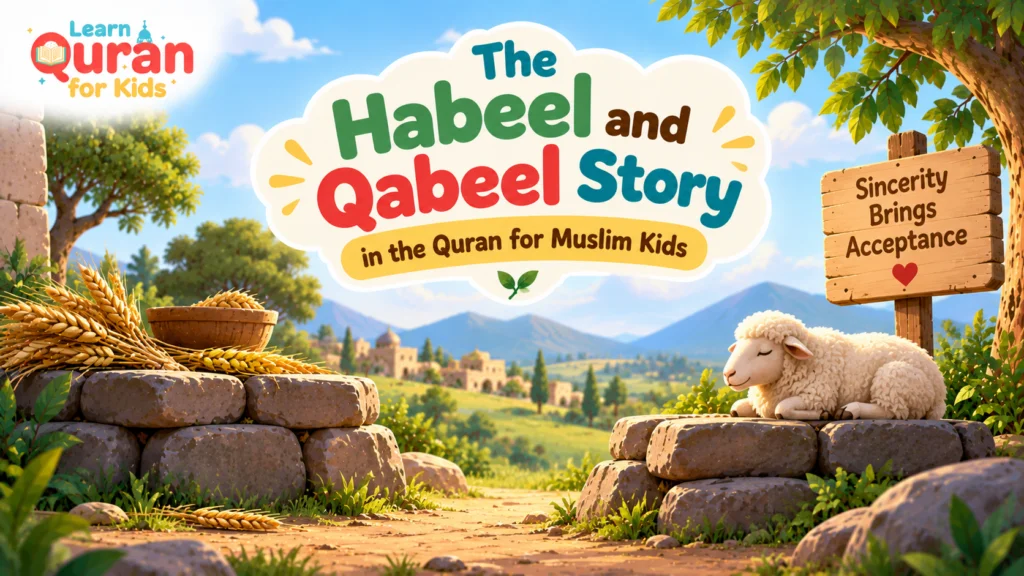
The Habeel and qabeel story in the Quran for kids teaches one simple truth: Allah only accepts a good deed when it comes from a sincere, humble heart.
It is one of the very first stories of human history, and Allah placed it in the Quran so every family could learn from it, forever.
At its core, this is a story about two brothers, two gifts, and one choice that changed the world. It shows what happens when jealousy is allowed to grow, and what it means to truly fear Allah even when someone wrongs you.
If your child ever asks why Allah accepted one gift and not the other, Kids Learning Quran Academy’s Quran Tafseer for Kids course is a warm, gentle way to explore the meaning behind verses like this together, guided by teachers who love helping young hearts understand the Quran.
How Habeel and Qabeel Offered Their Sacrifices to Allah
Long ago, Prophet Adam (peace be upon him) had two sons. Islamic tradition and tafsir call them Habeel and Qabeel.
Both young men grew up wanting to please Allah, so Habeel offered his best sheep, while Qabeel offered poor wheat he did not really value.
Both young men grew up wanting to please Allah, so Habeel offered his best sheep, while Qabeel offered poor wheat he did not really value.
Habeel chose a plump, healthy young sheep, the finest in his flock. Qabeel chose a small, unwanted bundle of grain from his harvest.
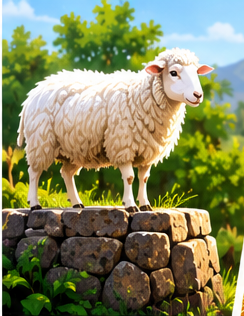

In some narrations, a fire came down from the sky and consumed Habeel’s sheep, showing that it had been accepted, while Qabeel’s grain was left untouched. Allah describes this moment for us in the Quran:
وَاتْلُ عَلَيْهِمْ نَبَأَ ابْنَيْ آدَمَ بِالْحَقِّ إِذْ قَرَّبَا قُرْبَانًا فَتُقُبِّلَ مِنْ أَحَدِهِمَا وَلَمْ يُتَقَبَّلْ مِنَ الْآخَرِ قَالَ لَأَقْتُلَنَّكَ ۖ قَالَ إِنَّمَا يَتَقَبَّلُ اللَّهُ مِنَ الْمُتَّقِينَ
Watlu ‘alayhim naba-abnay adama bilhaqqi idh qarraba qurbanan fatuqubbila min ahadihima walam yutaqabbal minal-akhari qala la-aqtulannaka qala innama yataqabbalu Allahu minal-muttaqeen
“And recite to them the story of Adam’s two sons, in truth, when they both offered a sacrifice, and it was accepted from one of them but was not accepted from the other.” (Al-Ma’idah 5:27)
Why Allah Accepted Habeel’s Sacrifice
Allah accepted Habeel’s sincere sacrifice and rejected Qabeel’s because the acceptance was never about the sheep or the wheat itself. It was about the heart each brother brought along with his gift.
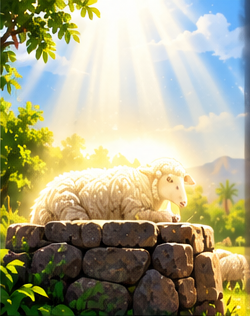
Allah does not need the sheep or the wheat at all. The Quran makes this same point about sacrifices in another surah, reminding every generation that the gift itself was never the goal:
لَن يَنَالَ اللَّهَ لُحُومُهَا وَلَا دِمَاؤُهَا وَلَكِن يَنَالُهُ التَّقْوَىٰ مِنكُمْ
Lan yanala Allaha luhoomuha wala dima’uha walakin yanaluhu at-taqwa minkum
“Their meat will not reach Allah, nor will their blood, but what reaches Him is piety from you.” (Al-Hajj 22:37)
See Our Classes in Action!
Wondering what a typical lesson looks like? Take a peek inside our virtual classrooms below to see how our patient teachers keep students smiling, engaged, and learning every step of the way.
Start Your Child’s Quran Learning Journey Today!
Join Kids Learning Quran Academy and help your child read the Quran with confidence through fun and guided lessons.
Book a Free Trial ClassHow Jealousy Led Qabeel to Threaten His Brother
Qabeel’s jealousy grew into a threat to kill his brother the moment he learned his gift was rejected. Instead of asking Allah to forgive him and trying again with a better heart, he turned his anger toward Habeel with a terrible threat:
قَالَ لَأَقْتُلَنَّكَ
Qala la-aqtulannaka
“He said, ‘I will surely kill you.'” (Al-Ma’idah 5:27)
Some early scholars, including a narration from Ibn Abbas, mention that Qabeel even boasted about the matter beforehand, saying that he and his sister came from a purer, more favored birth, and that this pride was part of what made him unwilling to accept his brother’s claim in the first place.
Habeel did not shout back or threaten him. He simply reminded Qabeel of the truth: acceptance belongs to Allah alone, and it is earned through taqwa, not through force, pride, or fear.
Learning what the Quran teaches about right and wrong helps children build a strong moral compass early in life.
Our Islamic Studies Courses for Kids walk young learners through lessons just like this one, step by step.
Book Your Free Trial for Islamic Studies Courses for Kids

How Habeel Responded to Qabeel Without Violence
Habeel refused to raise his hand even to save his own life, choosing gentle words over anger instead. He told Qabeel something every child should remember when someone is unkind to them:
لَئِن بَسَطتَ إِلَيَّ يَدَكَ لِتَقْتُلَنِي مَا أَنَا بِبَاسِطٍ يَدِيَ إِلَيْكَ لِأَقْتُلَكَ ۖ إِنِّي أَخَافُ اللَّهَ رَبَّ الْعَالَمِينَ
La-in basatta ilayya yadaka litaqtulani ma ana bibasitin yadiya ilayka li’aqtulaka inni akhafu Allaha rabbal ‘alameen
“If you should raise your hand against me to kill me, I shall not raise my hand against you to kill you. Indeed, I fear Allah, Lord of the worlds.” (Al-Ma’idah 5:28)
Habeel even told his brother that he would rather let Qabeel carry the sin alone than fight back and share in any wrongdoing:
إِنِّي أُرِيدُ أَن تَبُوءَ بِإِثْمِي وَإِثْمِكَ فَتَكُونَ مِنْ أَصْحَابِ النَّارِ وَذَٰلِكَ جَزَاءُ الظَّالِمِينَ
Inni oridu an tabu’a bi-ithmi wa-ithmika fatakoona min as-habin-nari wa-dhalika jaza’ud-dhalimeen
“Indeed I want you to bear my sin and your sin, so you will be among the companions of the Fire. That is the recompense of wrongdoers.” (Al-Ma’idah 5:29)
These were not empty words. Habeel truly meant it, and tafsir narrations describe him going about his ordinary life afterward, tending to his flock, never once trying to defend himself by force, even though he understood the danger he was in.
Read Also: The Story Of Ayyub In The Quran For Kids
How Qabeel’s Jealousy Led Him to Kill Habeel
Qabeel killed his brother Habeel and became one of the losers, letting his own soul talk him into the worst crime a person could commit.

The Quran describes this heartbreaking moment plainly:
فَطَوَّعَتْ لَهُ نَفْسُهُ قَتْلَ أَخِيهِ فَقَتَلَهُ فَأَصْبَحَ مِنَ الْخَاسِرِينَ
Fatawwa’at lahu nafsuhu qatla akheehi faqatalahu fa-asbaha minal khasireen
“And his soul permitted him to murder his brother, so he killed him and became among the losers.” (Al-Ma’idah 5:30)
This became the very first murder in human history, and it began with something as small as an unkind, jealous feeling that was never dealt with.
A hadith recorded in Sahih al-Bukhari and Sahih Muslim reflects just how far-reaching this first crime was, noting that the first son of Adam carries a share of the burden for every unjust killing committed afterward, since he was the one who first introduced murder to humanity.
As with any hadith reference, it’s worth confirming the exact wording and numbering with a trusted source such as Sunnah.com before sharing it further.
Read Also: The Story of Prophet Hud in the Quran for Kids
How a Crow Taught Qabeel to Bury His Brother
A crow taught Qabeel how to bury his brother’s body after Qabeel realized he did not even know what to do with it.
Tafsir accounts add a vivid detail to this scene: Allah sent two crows, and the two birds began to fight until one killed the other. The surviving crow then dug into the earth with its beak and claws and buried its dead companion, right in front of Qabeel’s eyes.
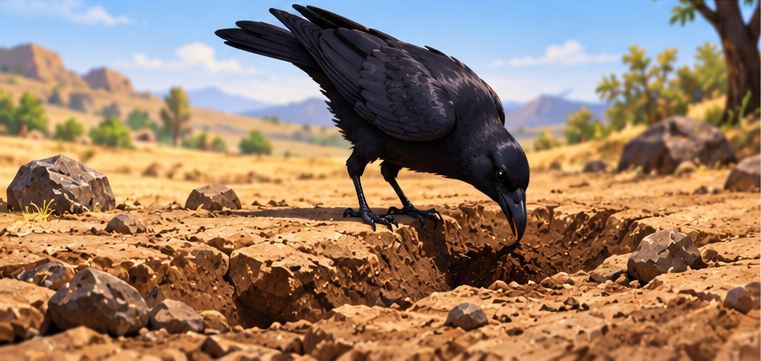
Allah, in His mercy, sent a lesson through one of His smallest creatures:
فَبَعَثَ اللَّهُ غُرَابًا يَبْحَثُ فِي الْأَرْضِ لِيُرِيَهُ كَيْفَ يُوَارِي سَوْءَةَ أَخِيهِ ۚ قَالَ يَا وَيْلَتَىٰ أَعَجَزْتُ أَنْ أَكُونَ مِثْلَ هَٰذَا الْغُرَابِ فَأُوَارِيَ سَوْءَةَ أَخِي ۖ فَأَصْبَحَ مِنَ النَّادِمِينَ
Faba’atha Allahu ghuraban yabhathu fil-ardi liyuriyahu kayfa yuwari saw’ata akheehi qala ya waylata a’ajaztu an akoona mithla hadhal ghurabi fa-uwariya saw’ata akhi fa-asbaha minan-nadimeen
“Then Allah sent a crow searching the ground to show him how to hide the disgrace of his brother. He said, ‘O woe to me! Have I failed to be like this crow and hide the body of my brother?’ And he became regretful.” (Al-Ma’idah 5:31)
Qabeel’s regret came too late to undo what he had done, and it is this ending that gives the story of Habeel and Qabeel in the Quran its lasting, sobering lesson for every generation.
Some scholars, including a narration from Mujahid, even describe Qabeel as being punished right away in this world, carrying visible signs of his crime for the rest of his life as a constant reminder of what he had done.
Read Also: The Story Of Qaroon In The Quran For Muslim Kids
5 Lessons Kids Can Learn From the Story of Habeel and Qabeel
This short story carries some of the biggest lessons in the whole Quran. Here is what it teaches every child, in the order the story reveals them.
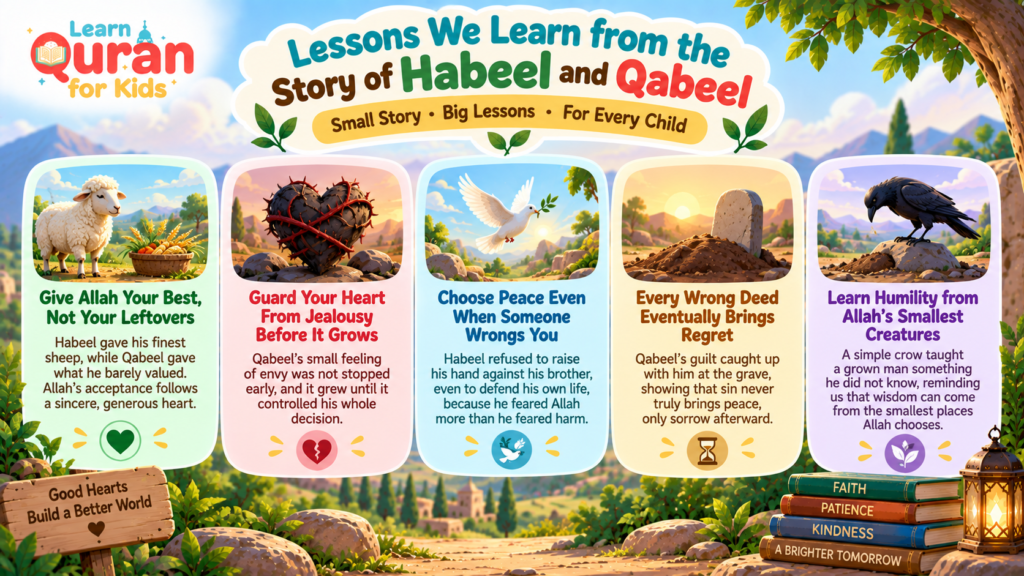
- Give Allah your best, not your leftovers: Habeel gave his finest sheep, while Qabeel gave what he barely valued. Allah’s acceptance follows a sincere, generous heart.
- Guard your heart from jealousy before it grows: Qabeel’s small feeling of envy was not stopped early, and it grew until it controlled his whole decision.
- Choose peace even when someone wrongs you: Habeel refused to raise his hand against his brother, even to defend his own life, because he feared Allah more than he feared harm.
- Every wrong deed eventually brings regret: Qabeel’s guilt caught up with him at the grave, showing that sin never truly brings peace, only sorrow afterward.
- Learn humility from Allah’s smallest creatures: A simple crow taught a grown man something he did not know, reminding us that wisdom can come from the smallest places Allah chooses.
Experience the Magic Firsthand
Watch these short clips from our live classes to see our interactive teaching tools, vibrant student-teacher interactions, and the fun, stress-free ways we make learning easy for kids!
Start Your Child’s Quran Learning Journey Today!
Join Kids Learning Quran Academy and help your child read the Quran with confidence through fun and guided lessons.
Book a Free Trial ClassHelp Your Child Discover More Quran Stories
The habeel and qabeel story in the Quran, which surah tells it, Al-Ma’idah, is only one of many powerful stories waiting to be explored with your child.
Understanding why Allah accepts some deeds and not others, and how to build real taqwa, is exactly what our certified children’s program is built around at Kids Learning Quran Academy.
Here is what our program offers:
- Certified tutors trained in child psychology and Quranic education.
- 10+ years of experience teaching Muslim families across the UK, USA, Canada, and UAE.
- Personalized learning plans tailored to your child’s age and pace.
- Flexible, one-on-one live sessions that fit around school and family schedules.
- Real-time progress reports so parents see growth after every lesson.
- Interactive, gamified lessons that keep kids engaged and excited to learn.
Our Courses Include:
- Tajweed Course for Kids
- Quran Memorization Course for Kids
- Quran Recitation Course for Kids
- Quran Classes for Toddlers
- Quran Tafseer Course for Kids
- Qaida Course for Kids
- Quran Reading Course for Kids
- Online Arabic Classes for Kids
- Quranic Arabic Course for Kids
- Islamic Studies Courses for Kids
- Islamic Studies Course for Kindergarten
- 5 Pillars of Islam Course for Kids
- Islamic Education Course for Kids
Book your free trial lesson today and help your child build a lasting, joyful connection with the Quran and its prophets.
Start a Free Trial With Kids Learning Quran Academy!

Conclusion
The habeel and qabeel story in the Quran for kids leaves behind a lesson that never grows old: sincerity matters more than size, and a heart free of envy protects a person from the worst mistakes.
Habeel is remembered for his patience and his fear of Allah, even when it cost him his life. Qabeel is remembered as a warning, a reminder that unchecked jealousy can destroy everything good in a person’s heart.
Every child who hears this story, Insha’Allah, walks away understanding one thing clearly: Allah sees the heart behind every deed, and that is where true acceptance always begins.
Frequently Asked Questions
Why did Qabeel kill Habeel?
Qabeel killed Habeel out of jealousy, because Allah accepted Habeel’s offering and not his own. Rather than correcting his own heart, he let anger and envy push him toward violence, as described in Al-Ma’idah 5:27–30.
The habeel and qabeel story in Quran, which surah is it found in?
This story is told in Surah Al-Ma’idah, verses 27 to 31. It is one of only a few detailed stories about the very earliest days of humanity found in the Quran.
Are the names Habeel and Qabeel actually written in the Quran?
No, the Quran refers to them only as “the two sons of Adam.” The names Habeel and Qabeel come from long-established tafsir and Islamic tradition, not from the Quranic text itself.
What does this story teach children about jealousy?
It teaches that jealousy left unchecked can grow into something dangerous, and that the better response to disappointment is to look inward and improve one’s own sincerity, not to blame or harm others.
At what age should kids start learning stories like this one?
Many parents begin introducing simple Prophet and Quranic stories around ages 5 to 7, growing the detail as children mature. Our Islamic studies-style lessons can be softly paced to match your child’s age and understanding.
Is there a hadith connected to this story?
Yes, a hadith found in Sahih al-Bukhari and Sahih Muslim notes that the first son of Adam carries a share of the burden for every unjust killing afterward, since he was the first to introduce murder to humanity. As with any hadith reference, it’s worth confirming the exact wording and numbering with a trusted source such as Sunnah.com before sharing it further.
Related Articles
Quran Stories