 Arabic Learning Resources
Arabic opens a world of stories, culture, and faith for young learners. From colorful illustrations to engaging narratives, children can explore letters, words, and sentences while connecting with their heritage and the natural rhythms of language. Learning Arabic becomes an adventure rather than a task.
Through carefully structured books and curricula, children gradually acquire reading, writing, and speaking skills. Picture dictionaries, story collections, and phonics-based adventures strengthen vocabulary, pronunciation, and comprehension while integrating moral lessons and Islamic knowledge for a truly holistic learning experience.
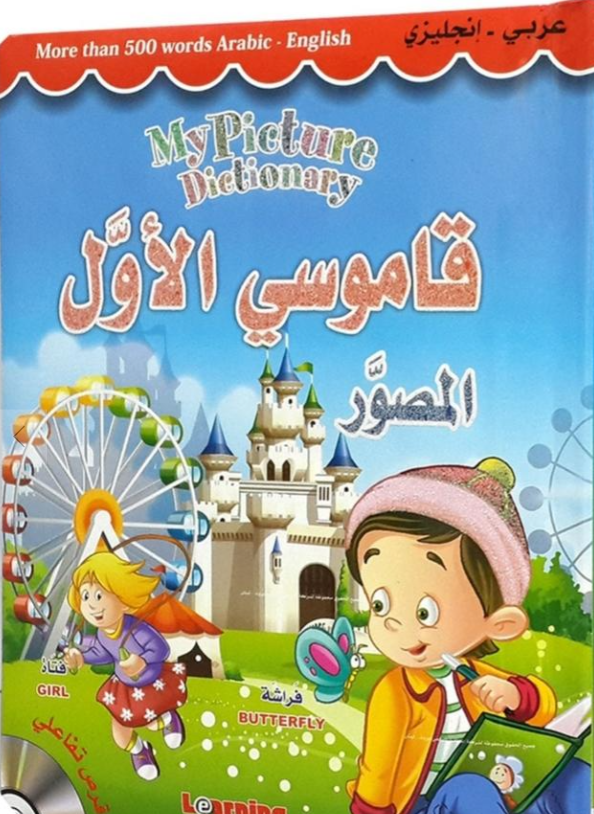
1. My First Arabic Words Picture Dictionary Build Strong Vocabulary Foundations
My First Arabic Words Picture Dictionary organizes over 500 common words into thematic categories children encounter daily. Topics include family, food, animals, colors, numbers, and household items.
Each word appears in clear Arabic script alongside phonetic English transliteration. Vibrant illustrations accompany every entry, creating visual associations that strengthen memory retention in young learners.
The dictionary format allows children to explore independently or with guidance. Parents can turn to specific themes matching their child’s current interests, maintaining engagement through relevant content.
This resource works exceptionally well for non-Arabic speaking families. The transliteration guides correct pronunciation, preventing the frustration that comes from mispronouncing unfamiliar sounds.
Children using this dictionary alongside structured lessons develop vocabulary faster. The visual categorization helps their brains organize new words logically, similar to how they learned their first language.
At Kids Learning Quran Academy, our Online Arabic Classes for Kids build on this foundation with certified instructors who use similar story-based methods to develop Arabic fluency through engaging, age-appropriate content.
Start your kid’s Arabic journey with a free lesson
2. I Love Arabic Is A Structured Curriculum Often Found In Arabic Kids Books For School Settings
The I Love Arabic series offers a complete curriculum that covers reading, writing, and speaking. These arabic kids books are widely used in schools because they provide a logical progression for students of all ages.
This series is excellent for older children who want a more academic approach to the language. Using these Arabic kids books ensures that every aspect of Arabic is covered in a thorough and systematic manner.
This curriculum includes workbooks that allow children to practice writing letters and forming sentences. These Arabic kids books are essential for developing the literacy skills needed to eventually read and understand the holy Quran.
Consider the beauty of the Arabic language used in the Quran to describe Allah’s infinite mercy. Teaching these concepts through specialized Arabic kids books makes the meaning accessible to young hearts and curious minds.
At Kids Learning Quran Academy, our Noorani Qaida for Kids program uses similar phonics-based approaches combined with Quranic vocabulary, making Arabic letter sounds meaningful through words children will encounter in their Quran studies.
Enroll your child in Noorani Qaida for kids with a free trial class
3. The Prophets Stories Collection Connect Arabic Learning With Islamic Knowledge
The Prophets Stories Collection presents beloved Islamic narratives in simplified Arabic suitable for elementary readers. Stories of Prophet Nuh, Ibrahim, Musa, and Muhammad ﷺ appear with age-appropriate language and engaging illustrations.
Each story includes key Quranic verses in Arabic with translations. For example:
وَمَا أَرْسَلْنَاكَ إِلَّا رَحْمَةً لِّلْعَالَمِينَ
Wa maa arsalnaaka illaa rahmatan lil-‘aalameen
“And We have not sent you, [O Muhammad], except as a mercy to the worlds.” (Al-Anbiya 21:107)
The dual benefit of language acquisition and Islamic education makes this collection valuable. Children absorb Arabic while learning stories that shape their Islamic identity and moral development.
Vocabulary sections at each chapter’s end highlight new words with definitions. This feature helps parents without Arabic backgrounds support their children’s reading comprehension effectively.
The collection uses graduated difficulty levels. Early stories feature simpler vocabulary and shorter sentences, while later narratives introduce more complex grammatical structures as children’s skills develop.
Start Your Child’s Quran Learning Journey Today!
Join Kids Learning Quran Academy and help your child read the Quran with confidence through fun and guided lessons.
Book a Free Trial Class4. Arabic Alphabet Animal Adventure Combine Phonics With Wildlife Fascination
Arabic Alphabet Animal Adventure pairs each Arabic letter with an animal whose name starts with that letter. The approach mimics successful English phonics methods adapted for Arabic’s unique sounds.
Detailed animal illustrations captivate children’s natural curiosity about wildlife. Each page provides interesting facts about the featured animal in simple Arabic, expanding vocabulary beyond just the alphabet.
The book emphasizes correct pronunciation of challenging letters like ق (Qaaf), ص (Saad), and ح (Haa). Phonetic guides help parents pronounce these sounds accurately when reading aloud.
Children enjoy returning to this book repeatedly because the animal content remains interesting beyond initial letter learning. This repeat exposure reinforces letter-sound associations without feeling like drill work.
Read Also: Arabic Games for Kids
5. Kalila Wa Dimna For Children Is A Classic Selection Of Arabic Kids Books For Moral Lessons
Kalila wa Dimna introduces children to ancient animal fables that teach important ethical lessons. These arabic kids books are adapted for young readers to ensure the language remains accessible while preserving the rich cultural heritage.
These stories encourage critical thinking and discussion between parents and children. Using these arabic kids books at home creates a wonderful opportunity to discuss manners and wisdom in a way that resonates with kids.
At Kids Learning Quran Academy, our Islamic Studies Courses for Kids often draw parallels between these fables and Quranic teachings. This helps children build a strong character while they’re improving their language proficiency.
Book a Free Session for Your Child in the Best Islamic Studies Courses for Kids
Read Also: Arabic Sentences for Kids
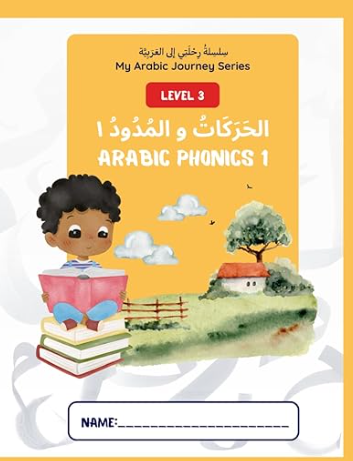
6. My Arabic Journey Build Progressive Reading Skills Step by Step
My Arabic Journey offers a graduated reading program across multiple books. Level 1 starts with three-letter words using basic Arabic letter forms children learn first in alphabet studies.
Each subsequent level introduces longer words, different letter combinations, and new grammatical patterns. The progression matches natural language acquisition stages, preventing overwhelming jumps in difficulty.
Short comprehension questions follow each story, helping parents assess understanding. These questions use simple Arabic, encouraging children to formulate basic answers in the target language.
The series includes audio recordings of native speakers reading each story. Children develop proper pronunciation and rhythm by listening repeatedly before attempting to read independently.
Parents appreciate the clear leveling system that removes guesswork about which book suits their child’s current abilities. Success at each level builds confidence that motivates continued learning.
Using fables is an excellent way to keep children engaged while teaching them about honesty, bravery, and friendship. These Arabic kids books make moral education enjoyable rather than feeling like a repetitive or boring lecture.
At Kids Learning Quran Academy, our tutors help students relate these stories to the life of the Prophet (PBUH). This holistic approach ensures that your child’s education is both linguistically rich and spiritually grounding.
Sharing these stories at bedtime can also strengthen the bond between parents and children through the Arabic language. These Arabic kids books provide a bridge between cultural history and modern daily life for young Muslims.
Read Also: Learning Arabic Numbers for Kids
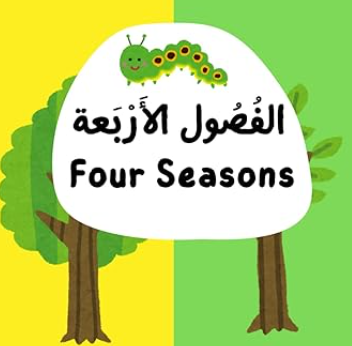
7. The Seasons in Arabic Teach Vocabulary Through Natural Cycles Children Experience
The Seasons in Arabic explores spring, summer, autumn, and winter through rich descriptive language and seasonal activities familiar to children. Weather words, clothing vocabulary, and seasonal foods appear in natural contexts.
Each season’s section uses repetitive sentence structures that help children predict and understand new words. “In summer we…” followed by various activities creates predictable patterns that build reading confidence.
The book incorporates cultural elements showing how Arabic-speaking families celebrate seasonal occasions. Children learn vocabulary for Islamic holidays like Ramadan and Eid alongside seasonal changes.
Hands-on activity suggestions encourage families to practice Arabic while experiencing seasons together. Autumn leaf collection becomes vocabulary practice when children name colors and leaf types in Arabic.
Parents find this book opens natural conversations in Arabic about daily observations. “What season is it today?” becomes an Arabic language learning opportunity integrated into regular family life.
Read Also: How to Learn Arabic for Kids?
Start Your Child’s Quran Learning Journey Today!
Join Kids Learning Quran Academy and help your child read the Quran with confidence through fun and guided lessons.
Book a Free Trial ClassRead Also: Learn Arabic for Kids
Enroll Your Child at Kids Learning Quran Academy Today
These Arabic kids books provide excellent supplementary resources for your child’s language development. However, books alone cannot replace the personalized guidance certified instructors provide.
Kids Learning Quran Academy offers comprehensive Arabic education through:
- Certified instructors specialized in teaching children Arabic and Quran
- Age-appropriate, engaging teaching methods that maintain young learners’ interest
- 1-on-1 personalized attention addressing each child’s unique learning pace
- Flexible scheduling accommodating busy family routines
- Safe, monitored online learning environment with progress tracking
- Interactive, gamified experiences making Arabic learning enjoyable
- Free trial session to experience our child-focused approach
Check out our top courses for children in Hifz Quran, Arabic language skills, and Islamic studies:
- Online Arabic Classes for Kids
- Noorani Qaida for Kids
- Tajweed for kids
- Quran Reading Course for Kids
- Quran Memorization Course for Kids
- Quran Tafseer for Kids
- Islamic Studies Courses for Kids
Book your child’s free trial session today.
Conclusion
Arabic kids’ books provide a playful yet structured path to language mastery, blending visual cues, phonics, and thematic learning. Each resource builds vocabulary, supports comprehension, and encourages children to explore independently while reinforcing family and cultural connections.
Story-based and curriculum-driven materials, from fables to Quranic narratives, ensure gradual progression in reading skills. Young learners engage with letters, words, and sentences at their own pace, while practicing pronunciation and understanding through repetition and audio support.
Combined with certified instruction and interactive lessons, these books become more than reading tools—they nurture linguistic confidence, moral insight, and spiritual awareness, making Arabic learning meaningful, memorable, and enjoyable for children of all backgrounds.
Related Articles
Arabic Learning Resources

Leave a Reply