 Learn Islam
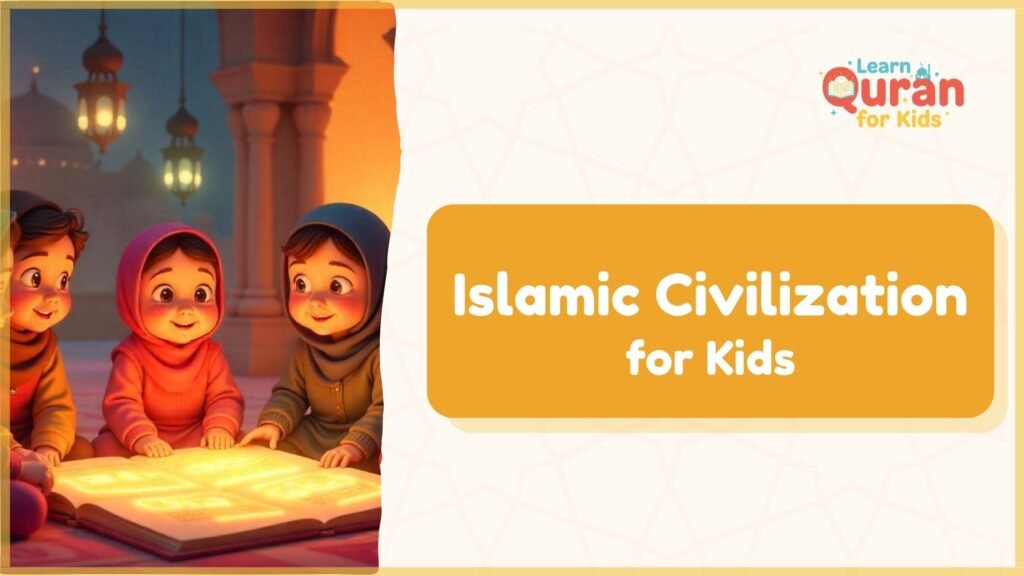
Learning about islamic civilization for kids is an exciting way to explore history, science, culture, and faith. Early Islamic civilization helped shape the world through discoveries in mathematics, medicine, architecture, trade, and education. From the beautiful mosques of Cairo to the great libraries of Baghdad, Muslim societies built one of the most advanced civilizations in history.
Children who study the islamic golden age for kids can discover how Muslim scholars, travelers, teachers, and leaders changed the world through learning and innovation. They can also understand how kindness, honesty, education, and respect became important values in Islamic society.
In this guide, we will explore the beginning of Islamic civilization, famous Islamic cities, the Islamic Golden Age, important Muslim inventions, and practical ideas about how to teach Islamic civilization in fun and engaging ways.
When Did Early Islamic Civilization Begin?
The early Islamic civilization began around AD 600 during the lifetime of Prophet Muhammad ﷺ. In AD 610, Prophet Muhammad began receiving revelations from Allah in the city of Mecca. These revelations later became the Quran, the holy book of Islam.
The people who followed Prophet Muhammad became known as Muslims, and the religion they practiced was called Islam. Over time, Islam spread across many regions including the Middle East, North Africa, Spain, and parts of Asia.
Many historians believe the early Islamic period continued until the 13th century, especially before the destruction of Baghdad in 1258. During these centuries, Islamic civilization became one of the most powerful and educated societies in the world.
How Did Islamic Civilization Begin?
Islamic civilization started in Mecca, located in present-day Saudi Arabia. Prophet Muhammad ﷺ taught people to worship one God, Allah, and to live with honesty, kindness, fairness, and compassion.
After facing difficulties in Mecca, Prophet Muhammad migrated to Medina in AD 622. This important journey is called the Hijra and marks the beginning of the Islamic calendar.
In Medina, Muslims built a strong community based on faith, cooperation, and justice. Later, Prophet Muhammad returned to Mecca, and many more people accepted Islam.
After the Prophet’s death, leaders called caliphs continued leading the Muslim world. Under their leadership, the Islamic Empire expanded rapidly across different continents.
Important Cities in Early Islamic Civilization
The Islamic world included many important cities that became centers of trade, education, science, and culture.
Baghdad
Baghdad became one of the greatest cities in the world during the Abbasid Caliphate. It was famous for its libraries, schools, scholars, and the House of Wisdom. Scholars from different cultures gathered there to study science, medicine, astronomy, and mathematics.
Cairo
Cairo became a major center of Islamic learning and architecture. Mosques, schools, and markets filled the city. Islamic Cairo still contains many historical buildings and beautiful Islamic designs today.
Córdoba
Córdoba in Spain became one of Europe’s most advanced cities during Muslim rule. It had libraries, hospitals, paved roads, and advanced systems for water and lighting.
Mecca and Medina
Mecca is the birthplace of Islam and the holiest city for Muslims. Medina became the first Islamic community established by Prophet Muhammad ﷺ. Both cities remain deeply important to Muslims worldwide.
The Islamic Golden Age for Kids
The islamic golden age for kids refers to a period between the 8th and 13th centuries when Islamic civilization experienced incredible growth in knowledge, science, and culture.
Muslim scholars translated books from Greek, Persian, and Indian civilizations into Arabic. They improved scientific knowledge and made new discoveries that influenced the world for centuries.
During this time:
- Libraries were built across Islamic cities.
- Schools and universities welcomed students.
- Doctors studied medicine and surgery.
- Astronomers explored the stars.
- Mathematicians developed algebra.
- Architects built beautiful mosques and palaces.
The Islamic Golden Age teaches children that learning and education are highly valued in Islam.
Learn Islamic Civilization Through Interactive Islamic Education
Learning about Islamic civilization helps children understand the rich history, values, and achievements of Muslims throughout history. However, building a strong connection with Islam also requires structured Islamic learning that teaches children the Quran, Hadith, Islamic manners, and daily worship in an engaging way.
At Kids Learning Quran Academy, families can access The Best Islamic Education for Kids through interactive online classes designed especially for young learners. The academy helps children learn Quran with Tajweed, understand Aqeedah and Seerah, practice Salah correctly, and build confidence in their Muslim identity through child-friendly lessons taught by qualified Quran teachers.
Help your child learn Islamic history and strengthen their faith with the Islamic Education for Kids course at Kids Learning Quran Academy today.
Shots Videos from Our Courses
Start Your Child’s Quran Learning Journey Today!
Join Kids Learning Quran Academy and help your child read the Quran with confidence through fun and guided lessons.
Book a Free Trial ClassAmazing Muslim Contributions to the World
One of the most exciting parts of studying Islamic civilization is discovering how Muslims helped improve everyday life.
Mathematics
Muslim scholars developed algebra and improved number systems. Many mathematical ideas used today were expanded during the Islamic Golden Age. The word “algebra” even comes from the Arabic language.
Medicine
Muslim doctors built hospitals and studied diseases carefully. They wrote medical books that were used in Europe for hundreds of years.
Astronomy
Astronomers observed planets and stars using advanced tools. They helped improve calendars, navigation, and scientific understanding.
Architecture
Islamic architecture became famous for beautiful mosques, domes, geometric patterns, and detailed decorations. Buildings like mosques in Cairo and Córdoba still amaze people today.
Trade and Travel
Muslim traders traveled across Africa, Asia, and Europe. They shared goods, ideas, inventions, and cultures with different societies.
Islamic Empire Facts for Kids
Learning islamic empire facts for kids can make history exciting and memorable.
Here are some interesting facts children enjoy learning:
- The Islamic Empire became one of the largest empires in history.
- Baghdad was once one of the biggest cities in the world.
- Córdoba had street lights and hospitals long before many European cities.
- The House of Wisdom in Baghdad contained thousands of books.
- Muslim scholars translated ancient books into Arabic to preserve knowledge.
- Islamic civilization connected people from many cultures and languages.
- Education was highly respected in Islamic society.
- Many inventions from the Islamic world still influence modern life today.
Daily Life in Early Islamic Civilization
Children often enjoy learning what daily life looked like in the past.
In early Islamic civilization:
- Families lived in strong communities.
- Children learned reading, writing, and Quran studies.
- Markets sold spices, fabrics, books, and food.
- Mosques served as places for worship and learning.
- Hospitality and kindness were important values.
- Scholars and teachers were respected by society.
Education played a central role in daily life. Many cities had schools and libraries where students could study religion, science, and literature.
Read also: Islamic Astronomy For Kids
The Importance of Women in Islamic Civilization
Women played important roles in early Islamic society.
Khadijah RA
Khadijah RA was the first wife of Prophet Muhammad ﷺ. She was a successful businesswoman and supported the early Muslim community.
Ayesha RA
Ayesha RA became one of the most knowledgeable scholars in Islamic history. Many Muslims learned about Islam through her teachings.
Teaching children about these inspiring women helps them understand leadership, intelligence, and courage in Islamic history.
Start Your Child’s Quran Learning Journey Today!
Join Kids Learning Quran Academy and help your child read the Quran with confidence through fun and guided lessons.
Book a Free Trial ClassHelp Young Children Build a Strong Islamic Foundation
Teaching islamic civilization for kids becomes more effective when children begin learning Islamic values and Quran basics from an early age. As kids explore Islamic history, Muslim achievements, and the Islamic Golden Age, they also benefit from understanding the foundations of Islam through engaging and age-appropriate lessons.
The Islamic Studies Course for Kindergarten at Kids Learning Quran Academy introduces young learners to Arabic letters, short surahs, simple duas, and essential Islamic manners through stories, songs, and interactive activities. Kindergarten children also learn basic Wudu steps, early Tajweed awareness, and the pillars of Islam in a fun and supportive environment that helps build love for Allah and His Messenger from an early age.
Start your child’s Islamic learning journey today with the Islamic Studies Course for Kindergarten at Kids Learning Quran Academy and help them build strong Islamic values from an early age.
Islamic Art and Geometric Patterns
Islamic art is famous for beautiful geometric patterns and designs.
Muslim artists often used shapes, symmetry, and repeating patterns in mosques, books, and decorations. These designs were both artistic and meaningful.
Children can enjoy drawing Islamic geometric patterns while learning about mathematics and creativity at the same time.
The Islamic Calendar and Celebrations
The Islamic calendar includes important events and celebrations that help children understand Muslim traditions.
Ramadan
Ramadan is the month of fasting, prayer, charity, and reflection.
Eid al-Fitr
This celebration marks the end of Ramadan and includes prayers, family gatherings, and gifts.
Eid al-Adha
Eid al-Adha remembers Prophet Ibrahim’s obedience to Allah.
Learning about these events helps children appreciate Islamic culture and traditions.
How to Teach Islamic Civilization for Kids?
Parents and teachers often ask: how to teach Islamic civilization to kids in an engaging and simple way?
Here are some effective ideas:
1. Use Stories
Children love stories. Teach them about Prophet Muhammad ﷺ, Muslim explorers, scholars, and famous Islamic cities through storytelling.
2. Create Art Activities
Islamic geometric patterns, mosque drawings, and calligraphy projects help children connect creativity with history.
3. Explore Maps
Show children how the Islamic Empire spread from Arabia to Africa, Spain, and Asia. Maps make history easier to understand.
4. Make Timeline Projects
Children can create timelines showing important events like:
- The birth of Islam
- The Hijra
- The rise of Baghdad
- The Islamic Golden Age
5. Read Fact Files
Fact sheets and research activities help children remember key information about Islamic civilization.
6. Cook Traditional Foods
Cooking Eid recipes or traditional dishes can make learning fun and interactive for children.
7. Encourage Questions
Ask children:
- What inventions surprised you most?
- Which Islamic city would you like to visit?
- Why was education important in Islamic civilization?
This encourages curiosity and deeper understanding.
Why Children Should Learn About Islamic Civilization?
Teaching Islamic civilization helps children understand:
- The importance of education
- Respect for different cultures
- Contributions of Muslims to world history
- Islamic values of kindness, honesty, and learning
It also helps children see history as a shared human story where different civilizations contributed to science, medicine, mathematics, and culture.
Learning about the islamic golden age for kids can inspire children to become curious learners and appreciate knowledge just as Muslim scholars did centuries ago.
Read also: Islamic Hadiths For Kids
Our Students Reviews
Start Your Child’s Quran Learning Journey Today!
Join Kids Learning Quran Academy and help your child read the Quran with confidence through fun and guided lessons.
Book a Free Trial ClassHelp Your Child Explore Islamic Civilization and Quran Learning With Learn Quran for Kids Academy
Teaching children about islamic civilization for kids is a wonderful way to connect them with Islamic history, values, and knowledge. Alongside learning about the Islamic Golden Age, Muslim scholars, and famous Islamic cities, children also benefit from building a strong relationship with the Quran and Islamic teachings from an early age.
At Learn Quran for Kids, families can access engaging online Quran and Islamic studies classes designed especially for children. The academy helps kids learn Quran with Tajweed, improve Arabic reading skills, and understand Islamic values through interactive and age-appropriate lessons taught by qualified teachers. Whether your child is a beginner or already learning Quran, the academy provides a supportive environment that makes Islamic learning enjoyable, structured, and meaningful for young learners.
Start your child’s Islamic learning journey today with Learn Quran for Kids and help them explore Quran, Islamic history, and Islamic values through engaging online classes designed especially for young learners.
Our Courses Include:
- Tajweed for Kids
- Quran Memorization for Kids
- Quran Recitation Course for Kids
- Quran Classes for Toddlers
- Quran Tafseer for Kids
- Qaida for Kids
- Quran Reading Course for Kids
- Online Arabic Classes for Kids
- Quranic Arabic for Kids
- Islamic Studies Courses for Kids
- Islamic Studies for Kindergarten
- 5 Pillars of Islam for Kids
- Islamic Education for Kids
Don’t wait to invest in your child’s Akhirah and future. Enroll today and watch your child grow with confidence, knowledge, and love for the Quran.
Join Kids Learning Quran Academy now and start your child’s learning journey today!
Start Your Child’s Quran Learning Journey Today!
Join Kids Learning Quran Academy and help your child read the Quran with confidence through fun and guided lessons.
Book a Free Trial ClassConclusion
The story of Islamic civilization is filled with knowledge, discovery, creativity, and faith. From the early teachings of Prophet Muhammad ﷺ to the scientific achievements of Baghdad and Córdoba, Islamic civilization shaped world history in remarkable ways.
Teaching children about islamic empire facts for kids and the islamic golden age for kids allows them to explore a world of scholars, travelers, inventors, and leaders who valued education and community.
Most importantly, learning How to teach islamic civilization for kids through stories, activities, art, and discussion can make history exciting, meaningful, and inspiring for young minds.
Frequently Asked Questions
What is Islamic civilization for kids?
Islamic civilization teaches children about Muslim history, culture, discoveries, and achievements in a simple and engaging way. It helps kids learn about famous Islamic cities, Muslim scholars, Islamic values, and how Islamic civilization influenced science, education, and architecture.
What was the Islamic Golden Age?
The Islamic Golden Age was a period between the 8th and 13th centuries when Muslim scholars made important discoveries in science, medicine, mathematics, astronomy, and architecture. During this time, cities like Baghdad and Córdoba became major centers of learning and innovation.
Why should children learn about Islamic civilization?
Learning about Islamic civilization helps children understand Muslim contributions to world history while teaching important values such as kindness, honesty, respect, and the importance of education and knowledge.
What are some interesting Islamic empire facts for kids?
The Islamic Empire became one of the largest empires in history, and cities like Baghdad and Córdoba became famous for libraries, hospitals, and scientific discoveries. Muslim scholars also helped develop algebra and preserved important knowledge from earlier civilizations.
How can parents teach Islamic civilization to children?
Parents can teach Islamic civilization through storytelling, educational activities, art projects, timelines, maps, books, and fun discussions about Muslim history, famous scholars, and Islamic culture.
What did Muslims contribute during the Islamic Golden Age?
Muslims contributed to many fields during the Islamic Golden Age, including mathematics, medicine, astronomy, engineering, architecture, and education. Many discoveries from that period still influence the modern world today.
Related Articles
Learn Islam