 Learn Islam
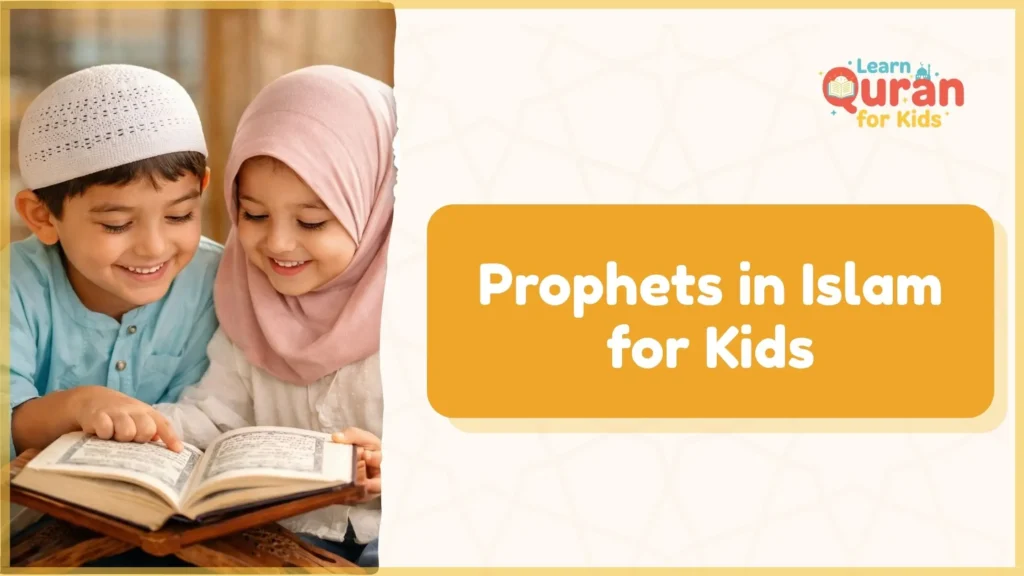
Children often ask big questions about faith, courage, and the purpose of life. The stories of the prophets answer many of these questions, showing how real people faced challenges, trusted Allah, and guided others toward truth and righteousness.
Learning about prophets in islam for kids introduces children to the twenty-five prophets mentioned in the Quran, from Adam to Prophet Muhammad ﷺ. Through their stories, children discover powerful lessons about patience, honesty, trust in Allah, and the shared mission of calling people to worship Him alone.
Prophets in Islam for Kids
From Adam to Muhammad ﷺ, every prophet carried one message: worship Allah alone. What changed was only the law, the context, and the nation being addressed.
Allah says:
“وَمَا أَرْسَلْنَا مِن قَبْلِكَ مِن رَّسُولٍ إِلَّا نُوحِي إِلَيْهِ أَنَّهُ لَا إِلَٰهَ إِلَّا أَنَا فَاعْبُدُونِ” {25}
Wama arsalna min qablika min rasoolin illa noohee ilayhi annahu la ilaha illa ana faAAbudoon {25}
And We sent not before you any messenger except that We revealed to him that, “There is no deity except Me, so worship Me.” {25}
Surah Al-Anbiya: 25
Scholars of Aqeedah use the term Ismah to describe the divine protection given to all prophets from major sins and from anything that would damage their trustworthiness as messengers. Prophets experienced hunger, fear, and sadness like all humans. However, they were fully protected from any act that would make them unfit to carry Allah’s message.
| Prophets’ Shared Qualities | Details |
| Core message | Tawheed: worship Allah alone |
| Protection (Ismah) | Guarded from major sins |
| Humanity | Ate, slept, and faced trials like all humans |
| Number named in Quran | 25 prophets |
1. Adam Was the First Prophet and the Father of All Humanity
Adam was created from clay, taught the names of all things, and placed in Jannah. He made a mistake, but unlike Iblees, he turned back to Allah immediately with sincere repentance. Allah forgave him entirely and sent him to earth as the first prophet. Allah says:
“Indeed, I will make upon the earth a successive authority.” (Al-Baqarah 2:30)
Adam’s story is the perfect story to share with children after they make a significant mistake. A parent who says “Allah forgave Adam, and He will forgive you too if you ask Him sincerely” plants a seed of hope that protects a child’s relationship with Allah throughout their entire life.
2. Idris Was a Man of Truth Raised to a Lofty Station by Allah
Prophet Idris lived after Adam and is described in the Quran as a man of truth who was raised to a high station. The Prophet ﷺ met him in the fourth heaven during the Miraj. Idris was the first human being to write with a pen and to teach his people this skill.
Allah says:
“وَاذْكُرْ فِي الْكِتَابِ إِدْرِيسَ ۚ إِنَّهُ كَانَ صِدِّيقًا نَّبِيًّا {56} وَرَفَعْنَاهُ مَكَانًا عَلِيًّا {57}”
Wathkur fee alkitabi idreesa innahu kana siddeeqan nabiyyan {56} WarafaAAnahu makanan AAaliyyan {57}
“And mention in the Book, Idris. Indeed, he was a man of truth and a prophet. {56} And We raised him to a high station.” {57}
Surah Maryam: 56-57
Children find the detail about writing fascinating because the skill they use every day in school was first given to humanity through a prophet of Allah.
3. Nuh Preached for Nine Hundred and Fifty Years Before the Great Flood
Prophet Nuh called his people to Allah for nine hundred and fifty years and most of them refused. He built the ark by Allah’s command, gathered the believers and the animals, and was saved when the great flood came. His own son refused to believe and drowned.
Allah says:
“وَلَقَدْ أَرْسَلْنَا نُوحًا إِلَىٰ قَوْمِهِ فَلَبِثَ فِيهِمْ أَلْفَ سَنَةٍ إِلَّا خَمْسِينَ عَامًا” {14}
Walaqad arsalna noohan ila qawmihi falabitha feehim alfa sanatin illa kham-seena AAaman {14}
“And We certainly sent Noah to his people, and he remained among them a thousand years minus fifty years.” {14}
Surah Al-Ankabut: 14
When a child feels that being good is too hard, a parent who connects Nuh’s nine hundred and fifty years of effort to their child’s daily struggles plants an understanding of Sabr that no other story can match.
Shots Videos from Our Courses
Start Your Child’s Quran Learning Journey Today!
Join Kids Learning Quran Academy and help your child read the Quran with confidence through fun and guided lessons.
Book a Free Trial Class4. Hud Salih and Shuaib Were Sent to the Ancient Arab Tribes
Three prophets were each sent to a different Arab nation, and all three stories share the same pattern: rejection led to destruction.
Hud was sent to Ad, a powerful nation that refused and was destroyed by a devastating storm. Salih was sent to Thamud who carved houses from rock. When they killed his miraculous she-camel in arrogance, a punishment destroyed them three days later. Shuaib was sent to Madyan, a tribe known for cheating in trade. Ibn Kathir records the Prophet ﷺ called him “the eloquent preacher among the prophets.” When they refused, an earthquake destroyed them.
Allah says:
“وَإِلَىٰ عَادٍ أَخَاهُمْ هُودًا” {50}
Wa-ila AAadin akhahum hoodan {50}
“And to ‘Aad [We sent] their brother Hud.” {50}
Surah Hud: 50
Shuaib’s story opens natural conversations with children about honesty in everyday dealings at school and in life.
5. Ibrahim and His Son Ismail Built the Kaaba Together for All Humanity
Ibrahim was thrown into a fire by his people and Allah commanded it to be cool and safe for him. He settled his wife Hajar and infant son Ismail in Makkah by Allah’s command and faced the ultimate test: the command to sacrifice his son. Father and son together then built the Kaaba.
Allah says:
“وَإِذْ يَرْفَعُ إِبْرَاهِيمُ الْقَوَاعِدَ مِنَ الْبَيْتِ وَإِسْمَاعِيلُ” {127}
Wa-ith yarfaAAu ibraheemu alqawaAAida mina albayti wa-ismaAAeelu {127}
“And [mention] when Abraham was raising the foundations of the House and [with him] Ishmael.” {127}
Surah Al-Baqarah: 127
Every time a child faces the Kaaba in prayer, they face something Ibrahim and Ismail built with their own hands. Ibrahim’s story is also the story of Eid al-Adha, giving children natural emotional context before the lesson even begins.
6. Ishaq Yaqub and Yusuf Carried the Legacy of Ibrahim Across Generations
Ishaq was given to Ibrahim in his old age as a miracle and continued his father’s mission. His son Yaqub, known as Israel, was the father of twelve sons and was renowned for his extraordinary patience through decades of grief after losing Yusuf.
Yusuf was thrown into a well by his brothers, sold into slavery, and falsely imprisoned for years, yet he never lost trust in Allah.
He rose to become the highest official in Egypt and forgave his brothers completely. Allah calls his story
“نَحْنُ نَقُصُّ عَلَيْكَ أَحْسَنَ الْقَصَصِ بِمَا أَوْحَيْنَا إِلَيْكَ هَٰذَا الْقُرْآنَ” {3}
Nahnu naqussu AAalayka ahsana alqasasi bima awhayna ilayka hatha alqur-ana {3}
“We relate to you, [O Muhammad], the best of stories in what We have revealed to you of this Qur’an” {3}
Surah Yusuf: 3
Surah Yusuf is the ideal chapter to read with children around ages ten and above because its themes of sibling jealousy, patience, and forgiveness mirror real situations children face in their own lives.
Kids Learning Quran Academy’s Quran Tafseer for Kids course helps children understand the deeper meanings of surahs like Yusuf through certified instructors who connect each verse to lessons children can actually apply in their daily lives.
Book a Free Trial for Your Child in Quran Tafseer Course for Kids
Read also: History of Islam for Kids
7. Lut Warned His People Against a Sin That Led to Their Total Destruction
Prophet Lut was a nephew of Ibrahim, sent to a people who had fallen into a deeply deviant sin explicitly condemned in the Quran. He was saved along with his family, except his wife. Allah says:
“فَلَمَّا جَاءَ أَمْرُنَا جَعَلْنَا عَالِيَهَا سَافِلَهَا وَأَمْطَرْنَا عَلَيْهَا حِجَارَةً مِّن سِجِّيلٍ مَّنضُودٍ” {82}
Falamma jaa amruna jaAAalna AAaliyaha safilaha waamtarna AAalayha hijaratan min sijjeelin mandoodin {82}
“So when Our command came, We made the highest part [of the city] its lowest and rained upon them stones of layered, hard clay.” {82}
Surah Hud: 82
Lut’s story teaches children that some boundaries in Islam are absolute, and that speaking truth even when the entire society rejects it is the mark of every true prophet of Allah.
8. Ayyub Demonstrated a Level of Patience That Children Find Genuinely Awe-Inspiring
Ayyub was blessed with wealth, health, and family, then lost all of it. He suffered a severe illness for years yet never complained.
Allah says:
“أَنِّي مَسَّنِيَ الضُّرُّ وَأَنْتَ أَرْحَمُ الرَّاحِمِينَ” {83}
Annee massaniya addurru waanta arhamu alrrahimeena {83}
“Indeed, adversity has touched me, and You are the Most Merciful of the merciful.” {83}
Surah Al-Anbiya: 83
Allah healed him and restored everything he had lost. When a child is sick or struggling, a parent who says “Do you remember what Ayyub did?” redirects their child’s heart toward Allah rather than toward complaint, and that single redirection builds a lifelong habit of turning to Allah in every difficulty.
Read also: Angels in Islam for Kids
9. Musa and Harun Were Sent Together to Face the Greatest Tyrant in History
Musa is mentioned more times in the Quran than any other prophet. Born during Pharaoh’s campaign to kill Israelite boys, he was raised inside Pharaoh’s own palace. Allah later commanded him to return to Egypt with his brother Harun as his companion.
Allah says:
“اذْهَبْ أَنْتَ وَأَخُوكَ بِآيَاتِي وَلَا تَنِيَا فِي ذِكْرِي” {42}
Ithhab anta waakhooka bi-ayatee wala taniya fee thikree {42}
“Go, you and your brother, with My signs and do not slacken in My remembrance.” {42}
Surah Taha: 42
Allah gave Musa nine clear signs including the splitting of the Red Sea. Pharaoh rejected all of them.
Musa’s story teaches children that no power on earth can stand against the will of Allah, and Harun’s story shows that standing loyally beside someone who is doing something hard is itself a form of worship.
Start Your Child’s Quran Learning Journey Today!
Join Kids Learning Quran Academy and help your child read the Quran with confidence through fun and guided lessons.
Book a Free Trial Class10. Dawud and Sulaiman Were Father and Son Who Ruled with Both Prophethood and Power
Dawud defeated the giant Jalut as a young man, then received prophethood, kingship, and the Zabur. Allah made iron soft for him with his bare hands.
Sulaiman inherited from his father both prophethood and kingship and was given control over the wind, the jinn, and the speech of animals.
Upon receiving all of this, Sulaiman’s first response was:
“رَبِّ أَوْزِعْنِي أَنْ أَشْكُرَ نِعْمَتَكَ الَّتِي أَنْعَمْتَ عَلَيَّ” {19}
Rabbi awziAAnee an ashkura niAAmataka allatee anAAamta AAalayya {19}
“My Lord, enable me to be grateful for Your favor which You have bestowed upon me” {19}
Surah An-Naml: 27:19
Teaching children Sulaiman’s response to blessing builds the habit of Shukr in moments of happiness, which is one of the most important character habits in a Muslim child’s formation.
11. Several Prophets Are Mentioned Briefly in the Quran with Clear Evidence
Not every prophet has a long detailed story. Some are mentioned briefly with confirmed prophethood and we say only what the Quran and authentic Sunnah confirm.
Prophet Yunus left his people without Allah’s permission and was swallowed by a whale. From inside the darkness he made one of the most powerful supplications in the Quran:
“لَّا إِلَٰهَ إِلَّا أَنْتَ سُبْحَانَكَ إِنِّي كُنتُ مِنَ الظَّالِمِينَ” {87}
La ilaha illa anta subhanaka innee kuntu mina aththalimeena {87}
“There is no deity except You; exalted are You. Indeed, I have been of the wrongdoers.” {87}
Surah Al-Anbiya: 87
Allah answered and saved him. This dua is one of the first supplications children can memorize, and its backstory makes it completely unforgettable.
| Prophet | Sent To | Quranic Reference |
| Ilyas | Bani Israel, against idol worship | As-Saffat 37:123 |
| Al-Yasa | Bani Israel, succeeded Ilyas | Al-Anam 6:86 |
| Dhul-Kifl | Among the patient and righteous | Al-Anbiya 21:85 |
Read also: Cleanliness in Islam for Kids
12. Zakariyya and Yahya Were Father and Son United by Miraculous Birth and Deep Piety
Zakariyya was an elderly prophet who prayed for a son at an age when fatherhood seemed impossible. Allah gave him Yahya, a son whose name had never been given to any human before.
Allah says:
“رَبِّ لَا تَذَرْنِي فَرْدًا وَأَنْتَ خَيْرُ الْوَارِثِينَ” {89}
Rabbi la tatharnee fardan waanta khayru alwaritheena {89}
“My Lord, do not leave me alone [with no heir], while You are the best of inheritors.” {89}
Surah Al-Anbiya: 89
Yahya received wisdom and the Scriptures while still a child. His story tells children that it is never too early to be serious about Allah, and that age is no barrier to genuine closeness with Him.
13. Isa Was Born of a Virgin Birth and Brought Extraordinary Signs from Allah
Isa is mentioned in the Quran more times than the Prophet Muhammad ﷺ himself. Born without a father by Allah’s direct command, he spoke from the cradle in his mother Maryam’s defense:
“قَالَ إِنِّي عَبْدُ اللَّهِ آتَانِيَ الْكِتَابَ وَجَعَلَنِي نَبِيًّا” {30}
Qala innee AAabdu Allahi ataniya alkitaba wajaAAalanee nabiyyan {30}
“[Jesus] said, ‘Indeed, I am the servant of Allah. He has given me the Scripture and made me a prophet.'” {30}
Surah Maryam: 30
He healed the blind and the leper, raised the dead, and created a bird from clay, all by Allah’s permission. Allah raised him to the heavens and he was not crucified. He will return before the Day of Judgment.
Teaching Isa’s story with clarity protects children in non-Muslim environments where they will encounter claims that directly contradict Islamic belief.
Kids Learning Quran Academy’s Islamic Studies Courses for Kids covers the stories of all twenty-five prophets with the theological precision and child-friendly language that young Muslims need to navigate the world with confidence and a grounded Islamic identity.
Book a Free Session for Your Child in the Best Islamic Studies Courses for Kids

14. Muhammad ﷺ Is the Seal and Final Messenger Sent to All of Humanity
All twenty-five prophets before him came to specific nations. Muhammad ﷺ alone was sent to all of humanity for all time. Allah says:
“مَّا كَانَ مُحَمَّدٌ أَبَا أَحَدٍ مِّن رِّجَالِكُمْ وَلَٰكِن رَّسُولَ اللَّهِ وَخَاتَمَ النَّبِيِّينَ” {40}
Ma kana muhammadun aba ahadin min rijalikum walakin rasoola Allahi wakhatama alnnabiyyeena {40}
“Muhammad is not the father of [any] one of your men, but [he is] the Messenger of Allah and last of the prophets.” {40}
Surah Al-Ahzab: 40
The Prophet ﷺ described himself saying:
“مَثَلِي وَمَثَلُ الأَنْبِيَاءِ مِنْ قَبْلِي كَمَثَلِ رَجُلٍ بَنَى بُنْيَانًا فَأَحْسَنَهُ وَأَجْمَلَهُ، إِلاَّ مَوْضِعَ لَبِنَةٍ مِنْ زَاوِيَةٍ، فَجَعَلَ النَّاسُ يَطُوفُونَ بِهِ وَيَعْجَبُونَ لَهُ، وَيَقُولُونَ: هَلاَّ وُضِعَتْ هَذِهِ اللَّبِنَةُ؟ قَالَ: فَأَنَا اللَّبِنَةُ، وَأَنَا خَاتَمُ النَّبِيِّينَ”
“My likeness and the likeness of the prophets before me is the likeness of a person who built a building and very well, and he beautified it except for one brick in a corner. So people began to go round it and wonder at it and say: ‘Why was this brick not placed?’ He said: ‘I am that brick and I am the last of the prophets.’”
Kids Learning Quran Academy’s Quran Memorization for Kids program is designed so that children who memorize the Quran also absorb the stories of all the prophets within its surahs, building a deeply connected Islamic identity from the inside out.
Our Students Reviews
Start Your Child’s Quran Learning Journey Today!
Join Kids Learning Quran Academy and help your child read the Quran with confidence through fun and guided lessons.
Book a Free Trial ClassBook a Free Trial for Your Child in the Best Hifz Course for Kids
Belief in Prophets Is the Fourth Pillar of Iman Every Child Must Know
Believing in the prophets is one of the Six Pillars of Iman. Without it, a Muslim’s faith is incomplete.
When a child understands that this belief is a direct command from Allah, the list of twenty-five names becomes a personal act of worship rather than a memorization task.
Allah says:
“يَا أَيُّهَا الَّذِينَ آمَنُوا آمِنُوا بِاللَّهِ وَرَسُولِهِ وَالْكِتَابِ الَّذِي نَزَّلَ عَلَىٰ رَسُولِهِ وَالْكِتَابِ الَّذِي أَنزَلَ مِن قَبْلُ” {136}
Ya ayyuha allatheena amanoo aminoo billahi warasoolihi walkitabi allathee nazzala AAala rasoolihi walkitabi allathee anzala min qablu {136}
O you who have believed, believe in Allah and His Messenger and the Book that He sent down upon His Messenger and the Scripture which He sent down before. {136}
Surah An-Nisa: 136
Teaching prophets in Islam for kids works best within a structured Islamic curriculum that connects each prophet’s story to a child’s daily life.
Kids Learning Quran Academy’s Islamic Studies Courses for Kids covers the full Aqeedah of the prophets through age-appropriate lessons with certified instructors who make theology feel real and immediate for young Muslim minds.
Book a Free Session for Your Child in the Best Islamic Studies Courses for Kids

Enroll Your Child at Kids Learning Quran Academy Today
Teaching prophets in Islam for kids builds the full Aqeedah foundation every Muslim child needs to navigate life with certainty and strong faith.
Kids Learning Quran Academy offers:
- Islamic Studies Courses for Kids covering all prophets with age-appropriate depth
- Quran Memorization for Kids and Quran Tafseer for Kids with certified instructors
- Live one-on-one sessions with flexible scheduling for busy Muslim families worldwide
- A safe, encouraging environment built specifically for non-Arabic speaking children globally
Check out our top courses for children in Hifz Quran, Arabic language skills, and Islamic studies:
- Online Arabic Classes for Kids
- Noorani Qaida for Kids
- Tajweed for kids
- Quran Reading Course for Kids
- Quran Memorization Course for Kids
- Quran Tafseer for Kids
- Islamic Studies Courses for Kids
Start Your Child’s Quran Learning Journey Today!
Join Kids Learning Quran Academy and help your child read the Quran with confidence through fun and guided lessons.
Book a Free Trial ClassConclusion
The lives of the prophets provide children with powerful examples of faith, perseverance, and moral strength. Each prophet faced unique trials yet remained committed to delivering Allah’s message and guiding their people toward righteousness.
Studying prophets in islam for kids helps children connect deeply with the lessons of the Quran while learning about the challenges and victories of prophets such as Nuh, Ibrahim, Musa, and Yusuf. Their stories inspire courage, patience, and strong belief.
As children grow familiar with the lives of the prophets, they gain role models who demonstrate how to live with faith and integrity. These stories build a strong foundation of belief that helps guide their choices and character throughout their lives.
Related Articles
Learn Islam