 Learn Islam
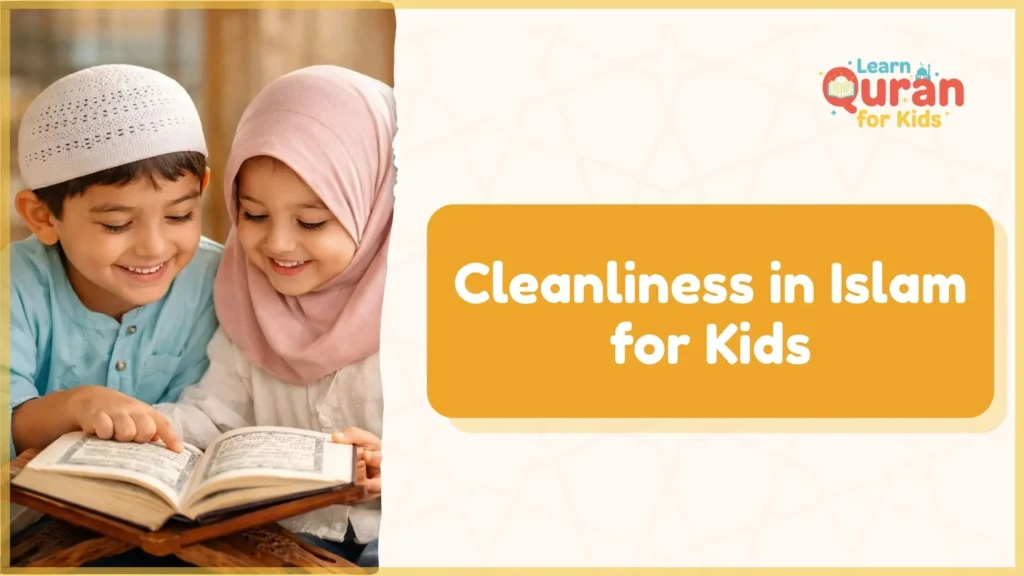
Cleanliness holds a central place in Islam, shaping both personal habits and spiritual awareness from an early age. When children learn that hygiene is connected to faith, everyday actions like washing hands, brushing teeth, and keeping their surroundings tidy gain deeper meaning beyond simple routines.
Understanding cleanliness in islam for kids helps children recognize that purity is part of their worship. Through practices such as washing before prayer, maintaining personal hygiene, and caring for their environment, young Muslims learn that physical cleanliness reflects spiritual discipline and respect for Allah’s guidance.
The Islamic Ruling on Cleanliness Establishes It as Half of Faith for Every Child
The starting point of every cleanliness in Islam for kids education is the most foundational declaration on the subject in the entire Sunnah. The Prophet ﷺ said:
“الطُّهُورُ شَطْرُ الْإِيمَانِ”
“Cleanliness is half of faith.”
Sahih Muslim: 223
The Arabic word used in this Hadith is Tahara, meaning purity, which carries both physical and spiritual dimensions simultaneously.
Inner Tahara is achieved by upholding the five pillars of Islam, having pure thinking, avoiding sins, and ensuring the heart is free of spiritual maladies.
Outer Tahara is attained by proper bodily purification through Wudu, bathing, cleaning the teeth, using perfume, and keeping the home and clothes clean.
A child who understands that cleanliness constitutes half their faith approaches every act of hygiene with a completely different awareness than one who sees it as a parental rule.
Every time they wash their hands, brush their teeth, or change their clothes, they are fulfilling half of their Iman.
Allah ﷻ affirms His love for those who pursue purity:
“إِنَّ اللَّهَ يُحِبُّ التَّوَّابِينَ وَيُحِبُّ الْمُتَطَهِّرِينَ” {222}
Inna Allaha yuhibbu alttawwabeena wayuhibbu almuta-tahhireena {222}
“Indeed, Allah loves those who are constantly repentant and loves those who purify themselves.” {222}
Surah Al-Baqarah: 222
Kids Learning Quran Academy’s Islamic Studies Courses for Kids introduces Tahara and its Quranic foundation through age-appropriate interactive lessons taught by certified instructors who specialize in building genuine Islamic understanding in young children.
Book a Free Session for Your Child in the Best Islamic Studies Courses for Kids
1. Hand Washing
Hand washing is among the most specifically detailed cleanliness in Islam for kids practices in the entire Sunnah. Aisha reported in an authenticated narration:
“أَنَّ رَسُولَ اللَّهِ صلى الله عليه وسلم كَانَ إِذَا أَرَادَ أَنْ يَأْكُلَ أَوْ يَشْرَبَ – وَهُوَ جُنُبٌ – غَسَلَ يَدَيْهِ ثُمَّ يَأْكُلُ أَوْ يَشْرَبُ”
“When the Messenger of Allah (ﷺ) wanted to eat or drink – while he was Junub – he would wash his hands, then eat or drink.”
Sunan an-Nasa’i: 257
This narration establishes hand washing before eating as a directly Prophetic practice, not a modern hygiene recommendation.
A child who knows the Prophet ﷺ washed his hands before every meal follows this practice with genuine Sunnah awareness rather than mere habit compliance.
Handwashing before and after eating is one of the simplest but most established Islamic hygiene practices for children, protecting them against germs while teaching them respect for food as a divine blessing.
The scholars have also established that washing hands upon waking from sleep is recommended, as the Prophet ﷺ said:
“إِذَا اسْتَيْقَظَ أَحَدُكُمْ مِنْ نَوْمِهِ فَلاَ يَغْمِسْ يَدَهُ فِي الإِنَاءِ حَتَّى يَغْسِلَهَا ثَلاَثًا فَإِنَّهُ لاَ يَدْرِي أَيْنَ بَاتَتْ يَدُهُ”
“When one of you wakes from sleep, he must not put his hand in the utensil till he has washed it three times, for he does not know where his hand was during the night.”
Sahih Muslim: 278a
Teaching children this specific Sunnah upon waking builds a morning cleanliness habit grounded in direct Prophetic guidance rather than arbitrary parental instruction.
Shots Videos from Our Courses
Start Your Child’s Quran Learning Journey Today!
Join Kids Learning Quran Academy and help your child read the Quran with confidence through fun and guided lessons.
Book a Free Trial Class2. Toilet Etiquette in Islam
Toilet etiquette is among the most specifically detailed chapters in Islamic jurisprudence, and every child benefits from learning its rulings precisely rather than approximating them from general hygiene education.
Islam has outlined very specific ways for Muslims to use the toilet. The crux of the Islamic hygiene routine in this regard is the usage of water for purification after answering the call of nature, whether urination or defecation.
The Prophet ﷺ said:
“اتَّقُوا اللَّعَّانَيْنِ. قَالُوا وَمَا اللَّعَّانَانِ يَا رَسُولَ اللَّهِ قَالَ: الَّذِي يَتَخَلَّى فِي طَرِيقِ النَّاسِ أَوْ فِي ظِلِّهِمْ”
“Beware of the two things which bring curses. They (the companions) said: What are these two, Messenger of Allah? He said: When one relieves himself in the people’s thoroughfare or in their shade.”
Sahih Muslim: 269
This Hadith teaches children that Islamic toilet etiquette extends beyond personal hygiene into communal responsibility, a dimension of cleanliness that secular hygiene education rarely addresses.
Specific rulings children must learn include entering with the left foot while saying the dua of entry, never facing or turning one’s back to the Qiblah while relieving oneself, using water for purification, and exiting with the right foot while saying the exiting supplication.
Each of these rulings is backed by authenticated Prophetic practice, giving children a complete, principled framework rather than disconnected hygiene instructions.
3. Nail Trimming
Among the most important dimensions of cleanliness in Islam for kids is the obligation of nail trimming as a Fitra practice. The Prophet ﷺ said:
“الْفِطْرَةُ خَمْسٌ ـ أَوْ خَمْسٌ مِنَ الْفِطْرَةِ ـ الْخِتَانُ، وَالاِسْتِحْدَادُ، وَتَقْلِيمُ الأَظْفَارِ، وَنَتْفُ الإِبْطِ، وَقَصُّ الشَّارِبِ”
“Five things are part of the Fitra: circumcision, shaving the pubic hair, trimming the mustache, cutting the nails, and plucking the armpit hair.”
Sahih al-Bukhari: 5889
Anas ibn Malik reported that
“وُقِّتَ لَنَا فِي قَصِّ الشَّارِبِ وَتَقْلِيمِ الأَظْفَارِ وَنَتْفِ الإِبْطِ وَحَلْقِ الْعَانَةِ أَنْ لاَ نَتْرُكَ أَكْثَرَ مِنْ أَرْبَعِينَ لَيْلَةً”
Wuqqita lana fee qassi alshsharibi wataqleemi al-athfari wanatfi al-ibti wahalqi alAAanati an la natruka akthara min arbaAAeena laylatan.
“A time limit was set for us for clipping the mustache, cutting the nails, plucking the hair of the armpits and shaving the pubic hair, that it should not be left for more than forty nights.”
Sahih Muslim: 258
This forty-day maximum constitutes a binding Prophetic limit that Islamic scholars have confirmed as obligatory to observe.
For children, nail trimming is the most immediately applicable Fitra practice from the earliest years. Long nails accumulate najasah under them, invalidating the completeness of Wudu according to scholars who require water to reach the skin beneath.
A child who understands this ruling maintains trimmed nails not from parental pressure but from genuine awareness of its effect on their worship.
Read also: Manners in Islam for Kids
4. The Siwak
The Siwak occupies a unique position in Islamic jurisprudence: it is one of the most consistently recommended acts in the entire Sunnah, to the degree that several scholars have considered it obligatory for Wudu.
Every child involved in cleanliness in Islam for kids education deserves to know this status precisely.
The Prophet ﷺ said:
“لَوْلاَ أَنْ أَشُقَّ عَلَى أُمَّتِي لأَمَرْتُهُمْ بِالسِّوَاكِ عِنْدَ كُلِّ صَلاَةٍ”
“Were it not that I might over-burden my followers, I would have ordered them to use the Siwak before every prayer.”
Sahih al-Bukhari: 887
The scholars explain that this Hadith indicates the Prophet ﷺ’s personal practice was to use the Siwak before every prayer, and that the only reason he did not make it obligatory was to avoid hardship on the Ummah.
The Prophet ﷺ was very particular about oral hygiene and cleaning the mouth and teeth. The use of Siwak was a regular practice of the Prophet ﷺ, and it is Sunnah to use it at the time of every Wudu.
Introducing children to the Siwak alongside the toothbrush from an early age connects their oral hygiene directly to an established Prophetic Sunnah that carries enormous reward.
Kids Learning Quran Academy’s Quran Memorization Course for Kids program builds the consistent daily routines, including pre-lesson Wudu and Siwak use, that give children a complete Islamic cleanliness framework integrated into their Quranic education from the very beginning.
Book a Free Trial for Your Child in the Best Hifz Course for Kids
5. Removing Najasah from Clothing
One of the most practically important dimensions of cleanliness in Islam for kids is the ruling on Najasah, ritual impurity, on clothing.
This is not a recommendation but a condition for the validity of Salah itself, making it among the most consequential cleanliness rulings a child can learn.
The Prophet ﷺ was informed during prayer that there was impurity on his sandals. He removed them immediately and continued praying.
“إِنَّ جِبْرِيلَ عليه السلام أَتَانِي فَأَخْبَرَنِي أَنَّ فِيهِمَا قَذَرًا”
“Jibril (peace be upon him) came to me and informed me that there was impurity in them (sandals).”
Sunan Abi Dawud: 650
The scholars derived from this narration that removing Najasah from clothing and footwear during prayer is both obligatory and immediately required upon awareness.
Allah ﷻ commands this directly in the Quran:
“وَثِيَابَكَ فَطَهِّرْ” {4}
Wathiyabaka fatah-hir {4}
“And your garments purify.” {4}
Surah Al-Muddaththir: 4
It is very desirable to wear decent and clean clothes, especially at the time of performing the prayers.
A child who understands that soiled clothing makes their Salah invalid checks their clothing before prayer with genuine religious motivation rather than compliance with a parental preference.
Read also: Respecting Parents in Islam for Kids
6. Ghusl
Ghusl, the full ritual bath, is obligatory in specific circumstances that children must learn as they approach and reach puberty.
Understanding these occasions prepares children for their religious obligations before they arrive rather than after.
The Prophet ﷺ said:
“حَق عَلَى كُلِّ مُسْلِمٍ أَنْ يَغْتَسِلَ فِي كُلِّ سَبْعَةِ أَيَّامٍ، يَغْسِلُ رَأْسَهُ وَجَسَدَهُ”
“It is the duty of every Muslim to take a bath (at least) once every seven days, and to wash his head and body.”
Sahih al-Bukhari: 897
Friday Ghusl is established as a strongly recommended Sunnah with significant reward. The Prophet ﷺ said:
“مَنْ غَسَّلَ يَوْمَ الْجُمُعَةِ وَاغْتَسَلَ ثُمَّ بَكَّرَ وَابْتَكَرَ وَمَشَى وَلَمْ يَرْكَبْ وَدَنَا مِنَ الإِمَامِ فَاسْتَمَعَ وَلَمْ يَلْغُ كَانَ لَهُ بِكُلِّ خُطْوَةٍ عَمَلُ سَنَةٍ أَجْرُ صِيَامِهَا وَقِيَامِهَا”
Man ghassala yawma aljumuAAati wa-ightasala thumma bakkara wa-ibtakara wamasha walam yarkab wadana mina al-imami fa-istamaAAa walam yalghu kana lahu bikulli khutwatin AAamalu sanatin ajru siyamiha waqiyamiha.
“Whoever performs Ghusl on Friday… he will have for every step the reward of a year’s fasting and praying.”
Jami` at-Tirmidhi: 496
Teaching children this reward from an early age builds the Friday Ghusl habit before obligation arrives.
7. The Cleanliness of the Home and Environment
Cleanliness in Islam for kids extends beyond the body to encompass the living environment as a direct expression of Islamic values.
Cleanliness is both personal and communal. It is keeping oneself clean, wearing clean clothes, keeping the room and home clean, and keeping the environment clean. Removing stones or garbage from the path is also an act of good deed in Islam.
The Prophet ﷺ said:
“الإِيمَانُ بِضْعٌ وَسَبْعُونَ شُعْبَةً – أَوْ بِضْعٌ وَسِتُّونَ شُعْبَةً – فَأَفْضَلُهَا قَوْلُ لاَ إِلَهَ إِلاَّ اللَّهُ وَأَدْنَاهَا إِمَاطَةُ الأَذَى عَنِ الطَّرِيقِ”
“Faith has over seventy branches or over sixty branches, the most excellent of which is the declaration that there is no god but Allah, and the humblest of which is the removal of what is injurious from the road.”
Sahih Muslim: 35b
This Hadith places environmental cleanliness at the very foundation of Iman, making the act of removing litter from a path a branch of faith rather than a civic nicety.
Children who understand this ruling approach their home, school, and outdoor environments with a distinctly Islamic sense of responsibility.
A child who picks up litter from the school corridor or tidies their room is performing a deed connected to the seventy-plus branches of faith, a motivation no secular environmental education can provide.
8. Cleanliness of Food and What Enters the Body
The final essential dimension of cleanliness in Islam for kids concerns what enters the body through food and drink.
Islamic dietary law is not merely a list of prohibitions. It is a comprehensive framework for ensuring the body remains in a state of purity and spiritual readiness for worship.
Allah ﷻ commands the believers directly:
“يَا أَيُّهَا النَّاسُ كُلُوا مِمَّا فِي الْأَرْضِ حَلَالًا طَيِّبًا” {168}
Ya ayyuha allatheena amanoo kuloo mimma fee al-ardi halalan tayyiban {168}
“O mankind, eat from whatever is on earth [that is] lawful and good.” {168}
Surah Al-Baqarah: 168
The two conditions in this verse, Halal and Tayyib, meaning lawful and pure, are cumulative. Food must be both permissible in its source and clean in its preparation.
Islam even gave guidelines about food and eating such as not filling the stomach, and slaughtering the animal in a way whereby the impure blood is removed from the meat.
Teaching children to check for Halal certification, to wash fruits and vegetables, and to understand why certain foods are prohibited grounds their dietary choices in Quranic obligation rather than cultural habit.
A child who chooses Halal food because of Al-Baqarah 2:168 makes that choice with genuine Islamic conviction that holds far more firmly under social pressure than a choice made from family tradition alone.
Our Students Reviews
Start Your Child’s Quran Learning Journey Today!
Join Kids Learning Quran Academy and help your child read the Quran with confidence through fun and guided lessons.
Book a Free Trial ClassRaise Children of Genuine Tahara at Kids Learning Quran Academy
Every ruling in this guide reaches its deepest impact when supported by structured Islamic education taught by a certified instructor who understands both authentic Islamic scholarship and how children genuinely learn.
Kids Learning Quran Academy offers:
- Certified instructors experienced in teaching cleanliness in Islam for kids to non-Arabic speaking children worldwide
- Comprehensive courses including Islamic Studies Courses for Kids, 5 Pillars of Islam for Kids, Quran Memorization for Kids, Quran Recitation Course for Kids, and Quran Tafseer for Kids
- One-on-one live sessions tailored to your child’s age, level, and learning pace
- Safe, monitored online environment with fully verified instructors
- Flexible scheduling that integrates naturally into your family’s daily routine
- Regular progress updates keeping parents fully informed at every stage
Check out our top courses for children in Hifz Quran, Arabic language skills, and Islamic studies:
- Online Arabic Classes for Kids
- Noorani Qaida for Kids
- Tajweed for kids
- Quran Reading Course for Kids
- Quran Memorization Course for Kids
- Quran Tafseer for Kids
- Islamic Studies Courses for Kids
Book your child’s free trial session today.
Conclusion
Islamic teachings emphasize purity in every aspect of daily life, from personal hygiene and clean clothing to maintaining a clean home and environment. These habits prepare children to approach acts of worship, especially prayer, with proper care and awareness.
Teaching cleanliness in islam for kids encourages children to see hygiene as a meaningful part of their faith rather than a simple routine. When linked to Quranic guidance and the Sunnah, these practices become lasting habits rooted in spiritual responsibility.
As children consistently practice these acts of purity, they develop discipline, respect for their surroundings, and a deeper connection to Islamic teachings. This foundation helps them carry the value of cleanliness and faith into every stage of their lives.
Related Articles
Learn Islam