 Learn Islam
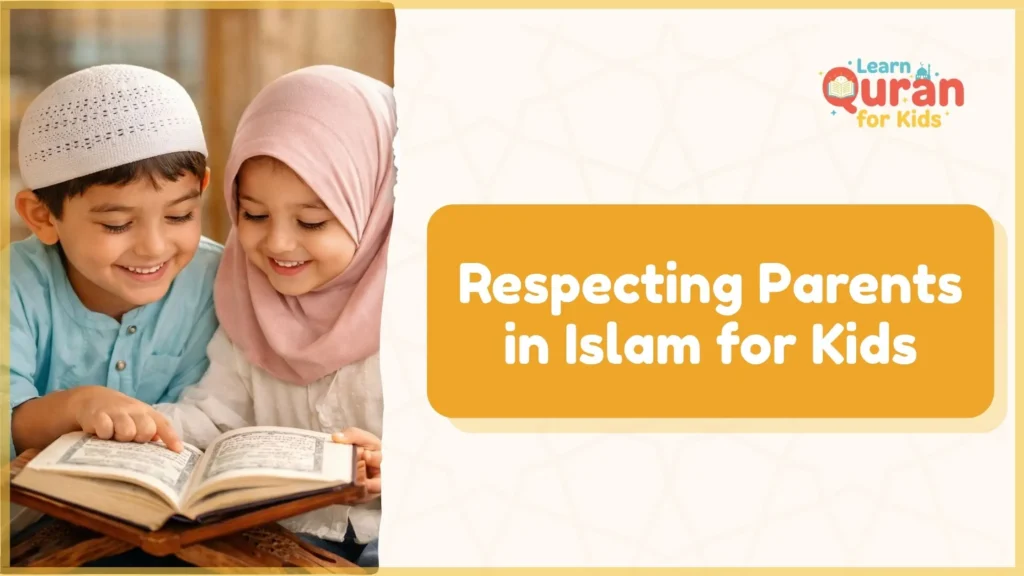
Family relationships hold a special place in Islam, and children are taught from an early age that kindness, gratitude, and patience toward their parents are among the most valued acts in their faith. Everyday interactions at home become opportunities for children to practice respect and strengthen their character.
Learning about respecting parents in islam for kids helps children understand that honoring their parents is not merely good behavior but a command from Allah. Through kindness in speech, obedience in daily matters, and sincere gratitude, children develop a deeper appreciation for the care and sacrifices their parents provide.
Respecting Parents in Islam for Kids Comes Directly After Tawhid
Classical commentators like Ibn Kathir and Al-Tabari explain that the specific sequence placing the command to be good to parents immediately after the command to worship Allah alone is a divine indication that after fulfilling the rights of the Creator, the most important rights to be fulfilled are those of one’s parents.
This sequence is not coincidental. It appears repeatedly across multiple Surahs, making it one of the most consistently emphasized pairings in the entire Quran.
A child who understands this understands that respecting parents is not optional devotion. It is foundational Islamic obligation.
Allah ﷻ states with unmistakable clarity:
“وَقَضَىٰ رَبُّكَ أَلَّا تَعْبُدُوا إِلَّا إِيَّاهُ وَبِالْوَالِدَيْنِ إِحْسَانًا” {23}
Waqada rabbuka alla taAAbudoo illa iyyahu wabialwalidayni ihsanan {23}
And your Lord has decreed that you not worship except Him, and to parents, good treatment. {23}
Surah Al-Isra: 23
The word used is Qaḍā, meaning decreed, carrying the weight of a divine ruling rather than a recommendation.
Disobedience to parents is considered one of the major sins, and displeasing one’s parents without just cause threatens one’s relationship with Allah.
The Prophet ﷺ confirmed this in Sahih Bukhari with explicit gravity. Anas ibn Malik reported that the Prophet ﷺ said:
“أَكْبَرُ الْكَبَائِرِ: الإِشْرَاكُ بِاللَّهِ، وَعُقُوقُ الْوَالِدَيْنِ، وَقَتْلُ النَّفْسِ، وَشَهَادَةُ الزُّورِ”
“The biggest of Al-Kaba’ir (the great sins) are: To join others as partners in worship with Allah, to be undutiful to one’s parents, to kill a soul, and to give a false witness.”
Sahih al-Bukhari: 6919
Kids Learning Quran Academy’s Islamic Studies Courses for Kids introduces Birr Al-Walidayn through age-appropriate stories, discussions, and Quranic evidence that help children understand why this obligation holds the rank it does in the entire Islamic tradition.
Book a Free Session for Your Child in the Best Islamic Studies Courses for Kids
The Mother Deserves Three Times The Devoted Companionship Owed to the Father
Islam does not treat both parents as equal in the degree of honor owed to them. The mother is given explicit, authenticated precedence, and every child deserves to understand precisely why this is the case.
Imam Bukhari opens his book Al-Adab Al-Mufrad with a chapter on Birr Al-Walidayn, placing the section on good treatment of the mother before that on good treatment of the father, consistent with the teachings of the Prophet ﷺ.
A man came to the Prophet ﷺ and asked
“يَا رَسُولَ اللَّهِ مَنْ أَحَقُّ النَّاسِ بِحُسْنِ صَحَابَتِي؟ قَالَ: أُمُّكَ، قَالَ ثُمَّ مَنْ؟ قَالَ: أُمُّكَ، قَالَ ثُمَّ مَنْ؟ قَالَ: أُمُّكَ، قَالَ ثُمَّ مَنْ؟ قَالَ: أَبُوكَ”
“A man came to Allah’s Messenger (ﷺ) and said, ‘O Allah’s Messenger (ﷺ)! Who is more entitled to be treated with the best companionship by me?’ The Prophet (ﷺ) said, ‘Your mother.’ The man said. ‘Who is next?’ The Prophet (ﷺ) said, ‘Your mother.’ The man further said, ‘Who is next?’ The Prophet (ﷺ) said, ‘Your mother.’ The man asked for the fourth time, ‘Who is next?’ The Prophet (ﷺ) said, ‘Your father.’”
Sahih al-Bukhari: 5971
The threefold repetition is deliberate and precise. The mother is owed three times the devoted companionship owed to the father.
“وَوَصَّيْنَا الْإِنسَانَ بِوَالِدَيْهِ حَمَلَتْهُ أُمُّهُ وَهْنًا عَلَىٰ وَهْنٍ” {14}
Wawassayna al-insana biwalidayhi hamalat-hu ommuhu wahnan AAala wahnin {14}
And We have enjoined upon man [care] for his parents. His mother carried him, [increasing her] in weakness upon weakness. {14}
Surah Luqman: 14
Allah ties giving thanks and being grateful to Him directly to giving thanks and being grateful to one’s parents.
The scholars said this verse indicates that the opposite is also true: ingratitude to parents is connected to ingratitude to Allah ﷻ.
Ibn Abbas said: I know of no other deed that brings people closer to Allah than kind treatment and respect towards one’s mother.
This statement from one of the greatest scholars among the Companions places the mother’s right at an extraordinary spiritual height that every child must know.
Shots Videos from Our Courses
Start Your Child’s Quran Learning Journey Today!
Join Kids Learning Quran Academy and help your child read the Quran with confidence through fun and guided lessons.
Book a Free Trial ClassRead also: Manners in Islam for Kids
Say Not To Them [So Much As] “Uff.”
The Quran does not speak in generalities when it comes to the minimum standard of respect owed to parents.
It specifies exactly what is prohibited, leaving no room for misinterpretation or cultural relativism in how a child is expected to conduct themselves.
Ibn Kathir said: the meaning of the verse is: do not let your parents hear any bad speech from you, not even the word Uff, which is the mildest level of disrespect and bad speech.
Allah ﷻ states in Surah Al-Isra:
“فَلَا تَقُل لَّهُمَا أُفٍّ وَلَا تَنْهَرْهُمَا وَقُل لَّهُمَا قَوْلًا كَرِيمًا” {23}
Fala taqul lahuma uffin wala tanharhuma waqul lahuma qawlan kareeman {23}
Say not to them [so much as], “uff,” and do not repel them but speak to them a noble word. {23}
Surah Al-Isra: 23
The Islamic standard is not just avoiding harm but the proactive pursuit of the parents’ absolute comfort and happiness.
Even an angry look at parents is condemned in authentic narrations, as the scholars of Hadith have confirmed.
Children must understand that the sighing, the eye-rolling, the dismissive tone that seems ordinary in secular culture is explicitly prohibited in Islam by name.
A child who knows that even Uff is forbidden will measure their speech and expressions with their parents against a far higher standard than their peers apply.
Start Your Child’s Quran Learning Journey Today!
Join Kids Learning Quran Academy and help your child read the Quran with confidence through fun and guided lessons.
Book a Free Trial ClassDaily Practical Expressions of Respecting Parents in Islam for kids Begin at Home
Birr is not a grand occasional gesture. It is a collection of small consistent daily actions that accumulate into the comprehensive virtue that scholars have called the best deed after Iman itself.
Deeds of Birr include not interrupting parents when they speak, using kind words to address them, and making dua for them consistently.
How beautifully does Prophet Yusuf ﷺ call his father Ya Abati, O my dear father, demonstrating the tenderness of speech Islam expects from children toward their parents.
Responding immediately when called, not raising the voice, greeting parents first upon entering the home, and never interrupting when they speak are all daily expressions of the Quranic command.
A man came to the Prophet ﷺ seeking permission to participate in Jihad.
The Prophet ﷺ asked:
“أَحَيٌّ وَالِدَاكَ؟ قَالَ: نَعَمْ.
قَالَ: فَفِيهِمَا فَجَاهِدْ”
“The Prophet (ﷺ) asked him, ‘Are your parents living?’ He replied in the affirmative. The Prophet (ﷺ) said to him, ‘Then exert yourself in their service (Jihad).’”
Sahih al-Bukhari: 3004
the Prophet ﷺ placed caring for living parents above voluntary Jihad, demonstrating the extraordinary daily priority this obligation holds.
Kids Learning Quran Academy’s Quran Memorization Course for Kids helps children memorize the Quranic dua for parents alongside its full meaning, ensuring this specific obligation is fulfilled from an early age with genuine understanding and consistent practice.
Book a Free Trial for Your Child in the Best Hifz Course for Kids
Special Dua for Parents Fulfills a Direct Quranic Command
Among the most beautiful practical expressions of respecting parents in Islam for kids is the dua Allah ﷻ Himself taught every believer to make for their parents.
It is not a recommended addition to Islamic education. It is embedded directly in the Quranic command itself.
“رَّبِّ ارْحَمْهُمَا كَمَا رَبَّيَانِي صَغِيرًا” {24}
Rabbi irhamhuma kama rabbayanee sagheeran {24}
My Lord, have mercy upon them as they brought me up [when I was] small. {24}
Surah Al-Isra: 24
Making dua for parents in every Salah, especially in Sujud, is one of the greatest acts of Birr Al-Walidayn a child can perform.
The angels repeat the dua for anyone who makes it sincerely, multiplying its reward for both the child and the parents.
Teaching children to make this dua in Sujud, the closest position to Allah ﷻ as confirmed in Sahih Muslim, gives respecting parents in Islam for kids its most spiritually powerful daily expression.
A child who asks Allah’s mercy for their parents at the moment they are closest to Him is practicing one of the highest forms of Birr available.
Accompany Them In This World With Appropriate Kindness
Birr Al-Walidayn is comprehensive but not unconditional. Every Muslim child benefits from understanding precisely where obedience ends, so that respect for parents never becomes a path to disobeying Allah ﷻ.
The orders and restraints of parents are of no significance with respect to the obligatory acts and the divine prohibitions.
If parents order the child to drink wine or restrain him from obligatory prayers and fasts, they should not be obeyed.
Allah ﷻ establishes this boundary with clarity in Surah Luqman:
“وَإِن جَاهَدَاكَ عَلَىٰ أَن تُشْرِكَ بِي مَا لَيْسَ لَكَ بِهِ عِلْمٌ فَلَا تُطِعْهُمَا ۖ وَصَاحِبْهُمَا فِي الدُّنْيَا مَعْرُوفًا” {15}
Wa-in jahadaka AAala an tushrika bee ma laysa laka bihi AAilmun fala tutiAAhuma wasahibhuma fee alddunya maAAroofan {15}
But if they endeavor to make you associate with Me that of which you have no knowledge, do not obey them but accompany them in this world with appropriate kindness. {15}
Surah Luqman: 15
The balance this verse establishes is extraordinary in its precision: disobey the sinful instruction, but maintain kindness in the relationship.
Islam commands kindness and respect toward non-Muslim parents as long as their requests do not lead to disobedience to Allah.
A child who knows this boundary serves their parents with love while maintaining their Islamic obligations with confidence.
Birr Al-Walidayn Continues After Death
One of the most important lessons a Muslim child can receive about respecting parents is that the obligation does not end with the parent’s death.
The Sunnah establishes specific acts of Birr that continue after a parent passes away, extending the child’s service into the next life.
The Prophet ﷺ was asked: is there anything left of Birr Al-Walidayn that a person can do for their parents after their death? The Prophet ﷺ replied:
“نَعَمْ، الصَّلَاةُ عَلَيْهِمَا، وَالِاسْتِغْفَارُ لَهُمَا، وَإِنْفَاذُ عَهْدِهِمَا مِنْ بَعْدِهِمَا، وَصِلَةُ الرَّحِمِ الَّتِي لَا تُوصَلُ إِلَّا بِهِمَا، وَإِكْرَامُ صَدِيقِهِمَا”
“Yes, praying for them, asking forgiveness for them, fulfilling their pledges after their death, maintaining the ties of kinship which can only be maintained through them, and honoring their friends.”
Sunan Abi Dawud: 5142
This Hadith, recorded in Sunan Abu Dawud, gives children a complete framework for ongoing Birr that continues long after the parent’s passing.
Teaching children this narration plants the understanding that their relationship with their parents is not temporary but extends across both lives.
Pleasing one’s parents is considered a way to attain Allah’s pleasure, while disobedience to parents incurs His displeasure.
This spiritual connection between parental pleasure and divine pleasure makes continuing to honor parents after death one of the most far-reaching acts of worship available to a believing child.
Read also: Good Deeds for Kids
The Consequences of Disrespecting Parents
The opposite of Birr, known as Uquq Al-Walidayn, carries consequences that are documented in some of the most serious warnings in the entire Sunnah.
Every child who learns about respecting parents in Islam for kids must also understand what disobedience to parents actually costs.
The Prophet ﷺ said:
“رِضَى الرَّبِّ فِي رِضَى الْوَالِدِ، وَسَخَطُ الرَّبِّ فِي سَخَطِ الْوَالِدِ”
“The Lord’s pleasure is in the parent’s pleasure, and the Lord’s anger is in the parent’s anger.”
Jami` at-Tirmidhi: 1899
This Hadith, recorded in Sunan al-Tirmidhi and graded Hasan by al-Tirmidhi himself, establishes a direct equation: displeasing parents without justification displaces Allah’s pleasure from the child’s life.
The Islamic standard is not just avoiding harm but the proactive pursuit of the parents’ absolute comfort and happiness.
Even an angry look at parents is condemned, and Imam Ahmad Ibn Hanbal said that dutifulness to parents is an expiation of major sins.
The story narrated in Sahih Bukhari of the young man on his deathbed who could not recite the Shahada because of his disobedience to his mother, until the Prophet ﷺ interceded, is one of the most powerful and memorable warnings against Uquq available for children’s Islamic education.
A child who knows this story carries a vivid, lasting awareness of the real spiritual consequences of disrespecting parents in any form.
Birr Al-Walidayn in Practice
Understanding the ruling and its evidence is only the beginning. The authentic Sunnah provides specific, practical daily expressions of Birr that translate the obligation into lived behavior a child can practice from their earliest years.
The Prophet ﷺ said:
“الْوَالِدُ أَوْسَطُ أَبْوَابِ الْجَنَّةِ، فَإِنْ شِئْتَ فَأَضِعْ ذَلِكَ الْبَابَ أَوِ احْفَظْهُ”
“The parent is the middle door of Paradise, so if you wish, then neglect that door, or protect it.”
Sunan Ibn Majah: 3663
This Hadith connects the daily practice of Birr directly to the highest possible reward, giving every small act of respect for parents an enormous spiritual weight.
From now on, make it a productive habit of asking for your parents’ forgiveness in every Salah.
In Sujud ask Allah to forgive your parents and give them Paradise. The angels will repeat the dua for you, making it Birr Al-Walidayn and one of the greatest deeds you can do.
Practical daily expressions every Muslim child can establish include greeting parents first upon entering the home, responding immediately and cheerfully when called, never sighing or expressing annoyance even silently, consulting parents before decisions, completing tasks asked of them without delay, and consistently making the Quranic dua after every Salah.
Each of these small acts is an investment in a relationship that Allah ﷻ has tied directly to His own pleasure, Alhamdulillah.
Kids Learning Quran Academy’s Islamic Studies Courses for Kids weaves Birr Al-Walidayn into comprehensive Islamic character education, taught by certified instructors who help children understand and practice this obligation through age-appropriate discussions, stories, and Quranic evidence.
Our Students Reviews
Start Your Child’s Quran Learning Journey Today!
Join Kids Learning Quran Academy and help your child read the Quran with confidence through fun and guided lessons.
Book a Free Trial ClassRaise Children Who Honor Their Parents at Kids Learning Quran Academy
Every ruling and every practical guidance in this guide reaches its fullest depth when a child learns in a structured Islamic environment led by a certified instructor who genuinely understands child development and authentic Islamic education.
Kids Learning Quran Academy offers:
- Certified instructors experienced in teaching non-Arabic speaking children at every level
- Comprehensive courses including Islamic Studies Courses for Kids, Quran Memorization for Kids, Quran Recitation Course for Kids, 5 Pillars of Islam for Kids, and Quran Tafseer for Kids
- One-on-one live sessions tailored to your child’s age, character, and learning pace
- Safe, monitored online environment with fully verified instructors
- Flexible scheduling that integrates naturally into your family’s daily routine
- Regular progress reports keeping parents fully informed at every stage
Check out our top courses for children in Hifz Quran, Arabic language skills, and Islamic studies:
- Online Arabic Classes for Kids
- Noorani Qaida for Kids
- Tajweed for kids
- Quran Reading Course for Kids
- Quran Memorization Course for Kids
- Quran Tafseer for Kids
- Islamic Studies Courses for Kids
Book your child’s free trial session today.
Conclusion
Islam places the rights of parents immediately after the command to worship Allah alone, highlighting the immense importance of honoring them in daily life. Simple actions such as speaking kindly, helping at home, and making dua for parents carry great spiritual reward.
Teaching respecting parents in islam for kids helps children understand the value of patience, gratitude, and humility within the family. These qualities strengthen family bonds and encourage children to treat their parents with consistent kindness and care.
When children grow up recognizing their parents’ sacrifices and praying for them regularly, they develop a lifelong sense of responsibility and love toward their family. This attitude reflects one of the most beautiful teachings of Islam and leads to lasting blessings in both this life and the Hereafter.
Related Articles
Learn Islam